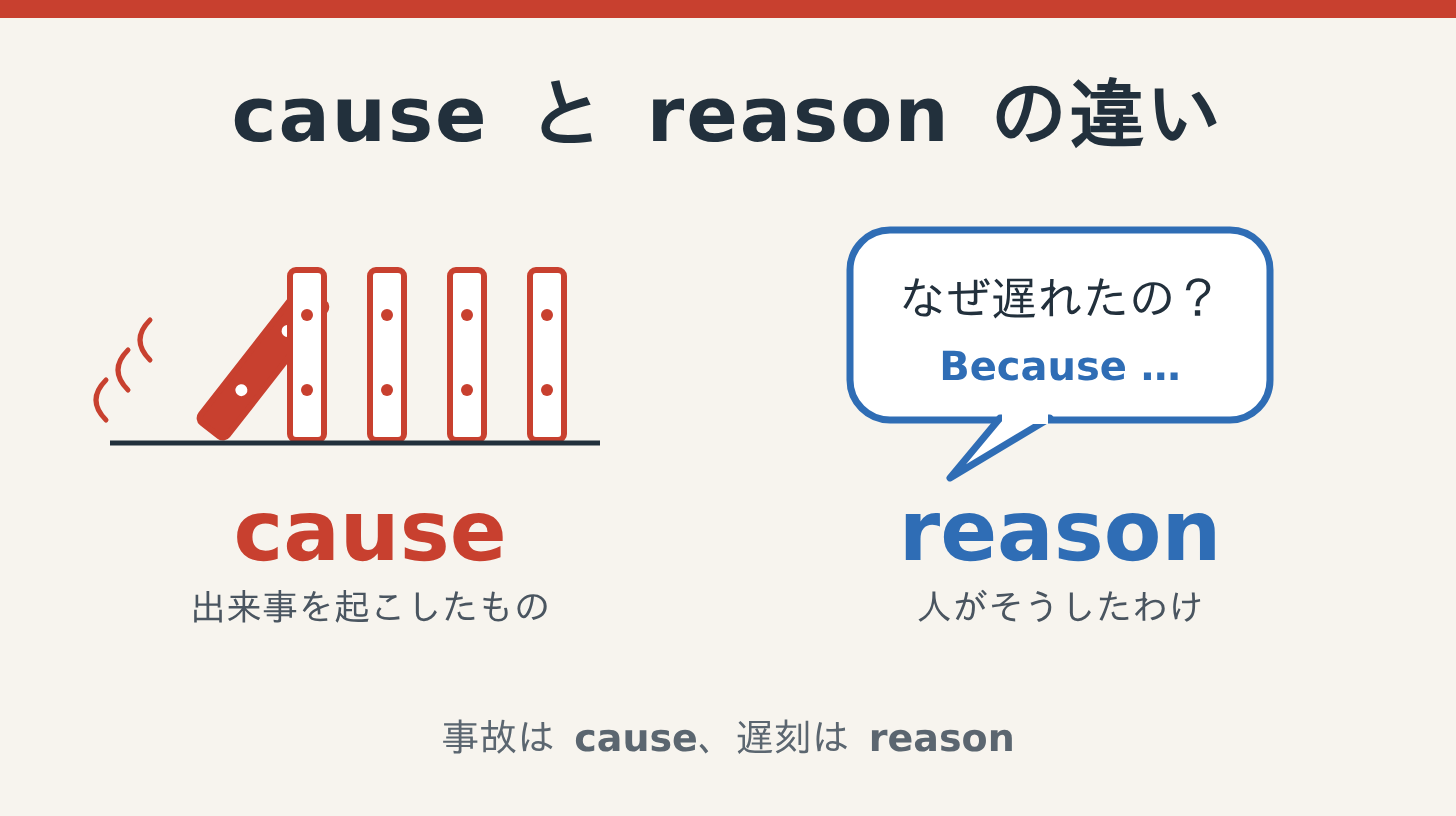
A “cause” is something that makes an event happen, while a “reason” explains why someone does something or why something is true.
「cause」と「reason」は、どちらも「原因」「理由」と訳される名詞です。
結論から言うと、cause は事故・病気・火事などの出来事を「起こしたもの」、reason は遅刻・欠席・決断など、人がそうした「わけ」や、なぜそう言えるのかという「説明」です。形にも違いがあり、the cause of ~(〜の原因)、the reason for ~(〜の理由)と前置詞が変わります。cause は「〜を引き起こす」という動詞としてもよく使います。
ひと目でわかる比較表
| 項目 | cause | reason |
|---|---|---|
| 意味 | 原因 | 理由、わけ |
| 重点 | 出来事を起こしたもの | なぜそうしたか・なぜそう言えるかの説明 |
| よく使う相手 | 事故、病気、火事、問題、(電車などの)遅れ | 遅刻、欠席、決断、行動、意見 |
| 前置詞 | the cause of ~ | the reason for ~ |
| 後ろに文を続ける形 | ふつうは使わない | the reason (why / that) +文 |
| 動詞の意味 | 〜を引き起こす、〜の原因になる | 筋道を立てて考える |
| 決まった言い方 | cause and effect(原因と結果) | for some reason(なぜか) |
| 発音(IPA) | /kɔːz/ | /ˈriːzn/ |
イメージでつかむ違い
- 「その事故の原因はスピードの出しすぎだった」 → Speeding was the cause of the accident.(事故を起こしたもの)
- 「遅れた理由を言ってください」 → Please tell me the reason for your delay.(人の行動のわけ)
- 「今日は早く帰りたい。そのわけは…」 → The reason I want to go home early is that I have a headache.(自分の行動の説明)
cause はドミノの最初の1枚のように「それがあったから、次のことが起きた」というもとを指します。reason は「なぜ?」と聞かれたときに口で説明する答えです。そのため reason は、後ろに文を続けて説明する形とよく結びつきます。
○×で確認する例文
- ○ The police are still looking into the cause of the accident.(警察はまだ事故の原因を調べている)
- × What’s the reason of your absence? → ○ What’s the reason for your absence?(欠席の理由は何ですか。「〜の理由」は reason for)
- △ The reason is because I missed the bus. → ○ The reason is that I missed the bus.(理由はバスに乗り遅れたことだ。会話では because もよく聞くが、書くときは that がふつう)
よくある間違い
1. 人の行動や決断の「理由」に cause を使う
日本語では「転職の原因」とも「転職の理由」とも言えますが、英語で人がなぜそうしたか・なぜそうなったかを説明するなら reason です。cause を使うと、何かに「引き起こされた」出来事のように聞こえます。
- ○ What was your reason for changing jobs?(転職の理由は何でしたか)
- △ What was the cause of your job change?(文としては正しいが、転職を事故や病気のような出来事として見る言い方になる)
ただし、ストレスや病気など外から引き起こされたことなら、Stress was the main cause of his resignation.(辞職の主な原因はストレスだった)のように cause も自然です。
2. 「〜の理由」を reason of にする
「〜の原因」は the cause of ~、「〜の理由」は the reason for ~ です。日本語の「〜の」につられて reason of にしないよう注意しましょう。
- ○ The cause of the leak is unknown.(水もれの原因は分かっていない)
- × I don’t know the reason of his anger. → ○ I don’t know the reason for his anger.(彼が怒っている理由が分からない)
3. reason を「〜の原因になる」という動詞で使う
reason の動詞は「筋道を立てて考える」という意味で、「〜を引き起こす」にはなりません。「〜の原因になる」は cause を使い、cause +名詞、または cause +人+ to do(人に〜させる)の形にします。
- ○ The heavy rain caused a lot of damage.(大雨で大きな被害が出た)
- × The storm reasoned a power cut. → ○ The storm caused a power cut.(嵐で停電が起きた)
- ○ The noise caused me to wake up.(その音で目が覚めた。会話では The noise woke me up. のほうが自然)
よく使う組み合わせ(コロケーション)
| cause | 意味 | reason | 意味 |
|---|---|---|---|
| the main cause of ~ | 〜の主な原因 | for some reason | なぜか |
| the cause of death | 死因 | for this reason | こういうわけで |
| cause damage / trouble | 被害・面倒を起こす | have no reason to ~ | 〜する理由がない |
| cause and effect | 原因と結果 | a good reason | 正当な理由 |
| for a good cause | 世の中のためになる目的で | the reason why ~ | 〜する理由 |
cause and effect の effect(結果)は affectとeffectの違い でも解説しています。for a good cause の cause は「(社会のための)目的、大義」という別の意味で、チャリティーの場面でよく使います。
短い会話で確認
A: Why was the train so late this morning?(今朝、電車はなんであんなに遅れたの?)
B: The announcement said the cause was a signal problem.(アナウンスでは、原因は信号のトラブルだって)
A: I see. I told my boss that was the reason I was late.(なるほど。上司には、それが遅刻の理由だって言ったよ)
B: Good. It wasn’t your fault.(よかった。あなたのせいじゃないもんね)
同じ「信号のトラブル」でも、電車が遅れた出来事のもととしては cause、自分が遅刻したわけの説明としては reason になっています。出来事でも、The reason for the delay was ~ のように「なぜ起きたか」を説明する形はよく使います。
確認クイズ
- Q「消防は、火事の原因が古いストーブだったと突き止めた」Firefighters found that the ___ of the fire was an old heater. (A) cause (B) reason (C) result
- A
正解は (A) cause。火事という出来事を起こしたもとなので cause です。reason は人の行動のわけや説明に使い、「〜の理由」なら reason for の形になります。result は「結果」で、原因とは反対の意味です。
- Q「彼女はその仕事を断った理由を話してくれなかった」She didn’t tell me the ___ she turned down the job. (A) reason (B) cause (C) because
- A
正解は (A) reason。仕事を断ったのは本人が選んだことで、後ろに she turned down the job という文が続いているので、the reason (why) +文の形になります。cause はふつう後ろに文を続けません。because は接続詞なので、the の後ろには置けません。
- Q「なぜか、きょうは道がいつもよりすいていた」For some ___, the roads were empty today. (A) reason (B) cause (C) result
- A
正解は (A) reason。for some reason は「(理由は分からないが)なぜか」という決まった言い方で、道がすいているような出来事の話でも reason を使います。cause と result では「なぜか」の意味になりません。
よくある質問
- Qcause に「理由」の意味はありますか?
- A
かための言い方で、There’s no cause for concern.(心配する理由はありません)のように「〜するだけの根拠」という意味で使うことがあります。ただ、会話で「理由」と言うなら reason がふつうです。
- Qexcuse とはどう違いますか?
- A
excuse は「言い訳」で、本当の理由かどうかは分かりません。She always has an excuse for not doing her homework.(彼女は宿題をしないことにいつも言い訳をする)のように、少し責める気持ちが入ります。くわしくは excuse の解説記事 へ。
- Qbecause と reason はどう使い分けますか?
- A
because は「〜だから」と文と文をつなぐ接続詞で、reason は「理由」という名詞です。I was late because I overslept. と The reason I was late is that I overslept. は同じ内容で、後ろの形は理由を強く打ち出したいときに使います。because はもともと by cause(原因によって)から来た語です。because の使い方は because の解説記事 へ。
もっと詳しく知りたい人へ
それぞれの単語の意味・語源・例文は、次の記事でくわしく解説しています。