A “country” is an area of land with its own government and borders, while a “nation” is a large group of people who share the same history, culture, or language and live in one country.
「country」と「nation」はどちらも「国」と訳せますが、見ているところが違います。
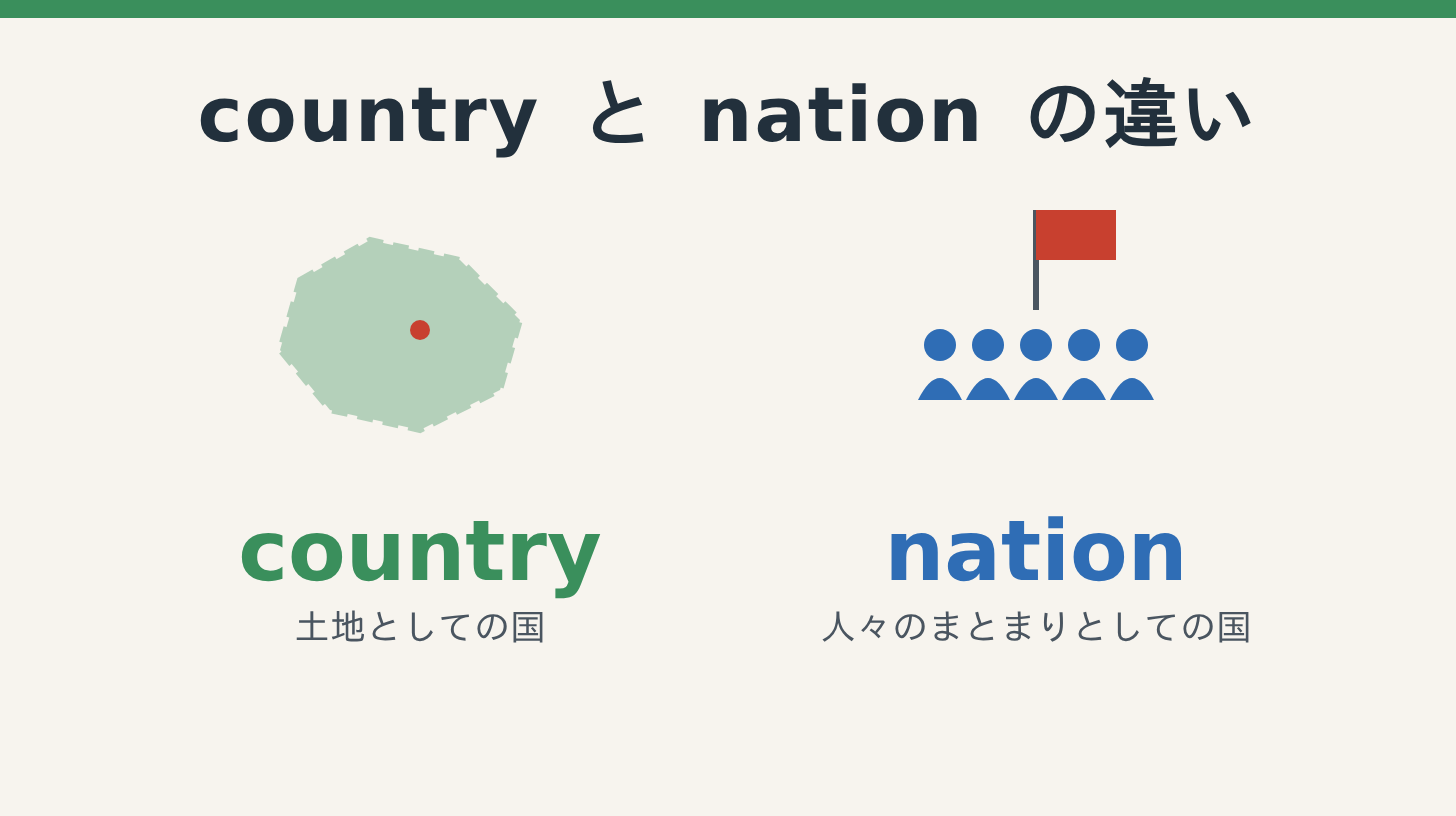
結論から言うと、country は「地図で見る国(土地・領土)」、nation は「そこに住む人々のまとまりとしての国(国民・国家)」です。「どこの国から来たの?」は country、「国民全体が喜んだ」のように人々に目を向けるときは nation がよく使われます。会話では country を使えばほとんど通じます。
ひと目でわかる比較表
| 項目 | country | nation |
|---|---|---|
| 意味 | 国、国土/(the country で)いなか | 国民、国家、民族 |
| 重点 | 土地・場所・国境 | 人々・歴史・文化のまとまり |
| かたさ | ふつう。会話でよく使う | ややかたい。ニュース・演説で多い |
| 形容詞 | (なし。national を使う) | national(国の、国民の) |
| よくある言い方 | foreign countries, my home country | the whole nation, the United Nations |
| 発音(IPA) | /ˈkʌntri/ | /ˈneɪʃən/ |
| 例文 | Japan is an island country. | The whole nation watched the final. |
イメージでつかむ違い
- 「日本は島国だ」 → Japan is an island country.(地図の上の土地)
- 「その試合を国民全体が見ていた」 → The whole nation watched the game.(人々のまとまり)
- 「週末はいなかで過ごした」 → We spent the weekend in the country.(町の外の土地)
country は「線で囲まれた土地」、nation は「同じ旗のもとに集まった人々」と考えると区別しやすくなります。
○×で確認する例文
- ○ Which country are you from?(どこの国の出身ですか)
- △ Which nation are you from?(通じるが、かたく不自然。出身国を聞くなら country)
- ○ The whole nation was excited about the Olympics.(国民全体がオリンピックにわくわくしていた)
- ○ The whole country was excited about the Olympics.(こちらも正しい。country も「国民」の意味で使える)
- ○ The President spoke to the nation on TV.(大統領はテレビで国民に語りかけた)
- ○ I’d like to live in the country someday.(いつかいなかに住みたい)
- △ I’d like to live in the nation someday.(どの国のことか分からず不自然。nation には「いなか」の意味もない)
- ○ The United Nations was founded in 1945.(国際連合は1945年に設立された)
よくある間違い
1. 出身国を聞くときに nation を使う
旅行や自己紹介で「どこの国?」と聞くときは country がふつうです。
- △ What nation are you from?(通じるが、かたく不自然)
- ○ What country are you from?(どこの国の出身ですか)
- ○ Where are you from?(会話ではこれがいちばん自然)
2. the country の「いなか」を知らない
the country(the がつく)や countryside は「いなか、田園地帯」の意味になります。in the country を「その国で」と訳すと意味がずれることがあります。
- ○ My grandparents live in the country.(祖父母はいなかに住んでいる)
- ○ Life in the country is quiet.(いなかの生活は静かだ)
3. 「国の」を country で言う
country には決まった形容詞がないので、「国の、国民の」は national を使います。
- ○ a national holiday(国民の祝日)
- ○ the national team(代表チーム)
- △ a country holiday(「いなかでの休日」の意味に聞こえる)
よく使う組み合わせ(コロケーション)
| country | 意味 | nation | 意味 |
|---|---|---|---|
| home country | 母国 | the whole nation | 国民全体 |
| foreign country | 外国 | the United Nations | 国際連合 |
| developing country | 発展途上国 | a nation of ~ | 〜好きの国民(a nation of tea drinkers) |
| country music | カントリー音楽 | speak to the nation | 国民に向けて話す |
| all over the country | 国じゅうで | nationwide(形容詞) | 全国的な |
短い会話で確認
A: What country are you from?(どこの国から来たの?)
B: I’m from New Zealand. It’s a small country, but it’s beautiful.(ニュージーランドだよ。小さな国だけど、きれいなところだよ)
A: I heard rugby is really popular there.(ラグビーがすごく人気だって聞いたよ)
B: Yes! When our team plays, the whole nation watches.(そう! 代表が試合をすると、国じゅうの人が見るんだ)
確認クイズ
- Q「彼の国籍はカナダです」His ___ is Canadian. (A) nationality (B) country (C) nation
- A
正解は (A) nationality。「国籍」は nationality です。country と nation は「国」そのものなので、Canadian(カナダの)とは結びつきません。
- Q「おじはいなかで農場をやっている」My uncle runs a farm in the ___. (A) country (B) nation
- A
正解は (A) country。the country は「いなか」の意味になります。nation にこの意味はありません。
- Q「国際連合」は英語で? the United ___ (A) Nations (B) Countries
- A
正解は (A) Nations。国際連合は the United Nations(略して UN)です。
よくある質問
- Qstate とはどう違いますか?
- A
state は「政府を持つ国家(政治の単位)」という意味で、the state(国家、政府)のように使います。アメリカやオーストラリアでは「州」の意味でも使います。くわしくは state の解説記事 へ。
- Qnationality はどういう意味ですか?
- A
「国籍」です。What is your nationality?(国籍はどこですか)は書類や入国審査でよく使われるかたい聞き方です。くわしくは nationality の解説記事 へ。
- Q「外国」は英語で何と言いますか?
- A
foreign country です。「外国に行く」は go abroad や go overseas がよく使われます。くわしくは foreign の解説記事 と abroad の解説記事 へ。
もっと詳しく知りたい人へ
それぞれの単語の意味・語源・例文は、次の記事でくわしく解説しています。