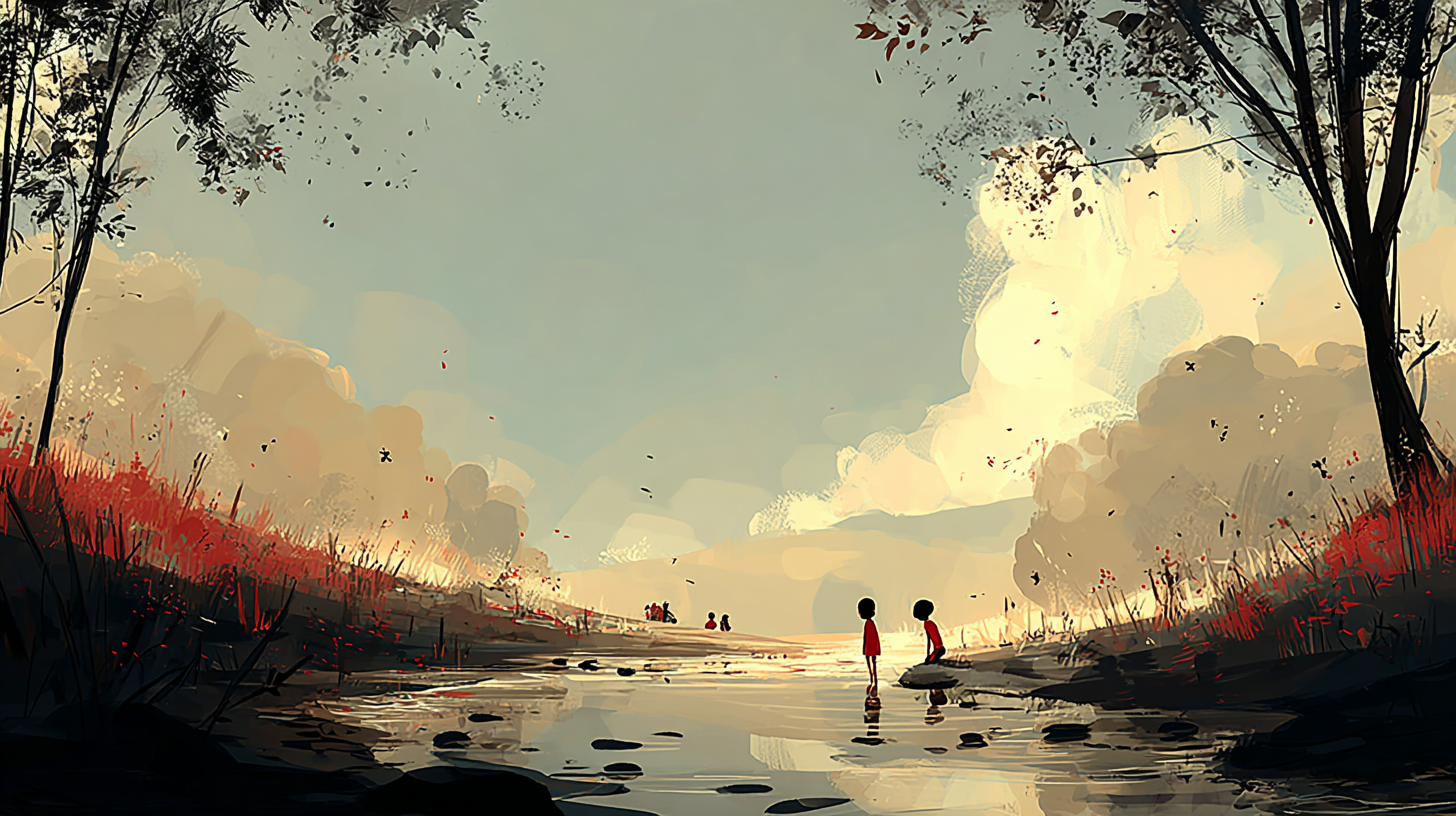
A river is a large stream of water that flows across the land.
川は地面の上を流れる大きな水の道のことです。
以下は英単語 “river” に関するストーリー型学習コンテンツです。まずは大枠の意味を理解して最後の文章で確認しましょう。
主な意味(main meaning)
| 品詞 | 意味 | 発音記号 | 英語例文 |
|---|---|---|---|
| 名詞 | 地面を流れる大きな水の流れ | /ˈrɪv.ər/ | The river flows through the center of the city. |
語源(etymology)
「river」はラテン語 ripa(川岸)に由来し、古フランス語 rivere を経て英語に入りました。イメージは「岸のある大きな水の流れ」です。
類義語(synonyms)
| 類義語 | 例文 |
|---|---|
| stream | We crossed a small stream in the forest. |
| creek | The kids played in the creek behind their house. |
| brook | A peaceful brook runs near the cabin. |
| waterway | The boat traveled along the waterway. |
| canal | The canal connects two major rivers. |
反義語(antonyms)
| 反義語 | 例文 |
|---|---|
| desert | Unlike a river, a desert has almost no water. |
| drought | The drought caused the river to dry up. |
コロケーション(collocations)
| コロケーション | 例文 |
|---|---|
| river bank | We had a picnic by the river bank. |
| river flow | The river flow is strong after heavy rain. |
| cross the river | They built a bridge to cross the river. |
| river water | River water can be cold even in summer. |
| wide river | The wide river made swimming difficult. |
2項表現(binomials)
| 表現 | 例文 |
|---|---|
| rivers and lakes | They enjoy fishing in rivers and lakes. |
| rain and rivers | Heavy rain and rivers can cause floods.表現 例文 rivers and lakes They enjoy fishing in rivers and lakes. rain and rivers Heavy rain and rivers can cause floods. |
英語ストーリー(english story)
Title: A Day by the River
On a sunny Saturday, Mia and her friend Ken decided to spend the afternoon by the river. The river flowed gently, reflecting the clear blue sky. They sat on the river bank, talking about school and summer plans.
“I read that this river connects to a canal that leads to the lake,” Ken said.
“Really? I’ve only ever seen creeks and small streams near my grandparents’ house,” Mia replied.
They soon found a spot where the river water was shallow. They rolled up their pants and stepped in. “It’s cold!” Mia laughed.
Across the river, they saw a family having a picnic. “I wish we could cross the river and join them,” said Ken. “But it’s a wide river.”
Mia nodded. “Let’s come back next week and bring a small boat. This place is perfect.”
Later, they heard on the radio that heavy rain and rivers had caused floods in another town. “We’re lucky it’s peaceful here,” Mia said.
Ken smiled. “Rivers and lakes are beautiful, but we should always be careful.”
That day, they promised to explore more waterways during their summer break.
和訳
川辺の一日
ある晴れた土曜日、ミアと友達のケンは午後を**川(river)**のそばで過ごすことにしました。**川の流れ(river flowed)は穏やかで、澄んだ青空を映していました。彼らは川岸(river bank)**に座り、学校や夏の予定について話していました。
「この川は**運河(canal)**につながっていて、それが湖に続いているらしいよ」とケンが言いました。
「ほんと?おじいちゃんの家の近くには**小川(creeks)とか細い流れ(streams)**しか見たことないよ」とミアが答えました。
すぐに彼らは**川の水(river water)**が浅い場所を見つけました。ズボンのすそをまくって中に入りました。「冷たい!」とミアが笑いました。
川の向こうでは家族がピクニックをしていました。「**川を渡って(cross the river)あっちに行けたらいいのに」とケンが言いました。「でもここは広い川(wide river)**だね」
ミアがうなずきました。「来週また来て、小さなボートを持ってこようよ。この場所、最高だね」
後で彼らはラジオで、他の町では**大雨と川(rain and rivers)**で洪水が起きたと聞きました。「ここが平和でよかったね」とミアが言いました。
ケンが笑いました。「**川や湖(rivers and lakes)**ってきれいだけど、気をつけないとね」
その日、ふたりは夏休みにもっと水辺を探検しようと約束しました。
Q&A
「river」と「stream」の違いは?
「river(川)」は一般的に幅が広く、水量も多い自然の水の流れです。一方、「stream(小川)」はそれよりも小さく、幅も狭く、水量も少ない傾向があります。どちらも自然のものですが、規模が違います。
「river」と「creek」の違いは?
「creek(小川)」はアメリカ英語でよく使われ、通常は「stream」と同じく小さな水の流れを指します。地域によっては「creek」と「stream」の使い方が重なることもありますが、いずれも「river」より小規模です。
「river」と「brook」の違いは?
「brook(小川)」は特に文学的な表現や田舎の自然描写などで使われます。「stream」や「creek」よりもさらに静かで小さい水の流れをイメージさせます。「river」は実用的で現代的、「brook」は詩的で古風な印象です。
「river」と「waterway」の違いは?
「waterway(航路、水路)」は自然の川だけでなく、運河など人工的に作られた通路も含みます。船やボートが通れる「水の道」としての意味が強く、交通手段としての用途が重視されます。
「river」と「canal」の違いは?
「canal(運河)」は人工的に掘られた水の通り道です。川(river)は自然のもの、運河(canal)は人間が作ったものという点で大きく異なります。目的も異なり、canalは主に輸送や灌漑用に使われます。
「river」と「river bank」の違いは?
「river(川)」は水そのものの流れを指しますが、「river bank(川岸)」はその川の両側の陸地部分を指します。川のそばに座る、散歩するなどは「river bank」で行う行為です。
「river」と「river flow」の違いは?
「river flow(川の流れ)」は、川の水の流れる速さや量などの動きに注目した表現です。静かな川か、急な流れかといったときに「flow」が使われます。
「river」と「cross the river」の違いは?
「river」は川そのものを意味しますが、「cross the river(川を渡る)」はその川の片側から反対側へ行く行為を指します。橋や船を使って移動する動作が含まれます。
「river」と「river water」の違いは?
「river water(川の水)」は川にある水そのものに注目しています。飲めるかどうか、水温、きれいさなどに関心があるときに使われます。
「river」と「wide river」の違いは?
「wide river(広い川)」は、川のサイズ・特に横幅に注目した表現です。泳いだり渡ったりするのが大変な川というニュアンスになります。
「river」と「rivers and lakes」の違いは?
「rivers and lakes(川や湖)」は、川だけでなく湖を含めた「水辺の自然」をまとめた表現です。アウトドアや自然を楽しむ話題でよく使われます。
「river」と「rain and rivers」の違いは?
「rain and rivers(雨と川)」は、気象と川の関係を語るときに使われます。たとえば洪水や水位の変化など、雨が川に与える影響に関連して使われます。


コメント