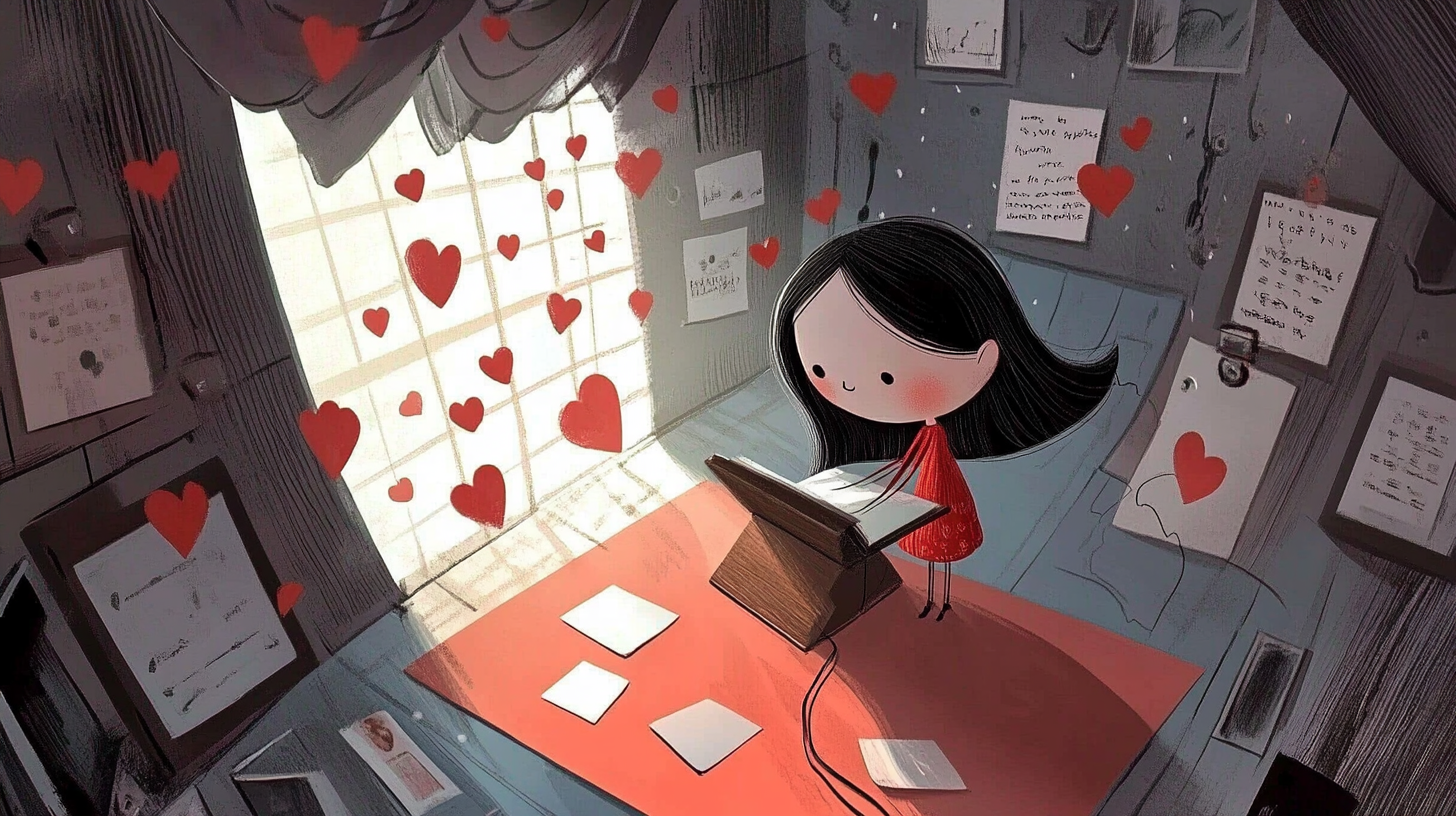
“Abstract” is a word used to describe ideas or feelings that are not clearly visible, or to summarize only the most important parts.
以下は英単語 “abstract” に関するストーリー型学習コンテンツです。まずは大枠の意味を理解して最後の文章で確認しましょう。
主な意味(main meaning)
| 品詞 | 意味 | 発音記号 | 例文 |
|---|---|---|---|
| 形容詞 | 抽象的な、理論的な | /ˈæb.strækt/ | The concept of freedom is very abstract. |
| 名詞 | 要約、概要 | /ˈæb.strækt/ | She wrote an abstract of her research paper. |
| 動詞 | 要約する、抽出する | /æbˈstrækt/ | He abstracted the key ideas from the article. |
語源(etymology)
「abstract」はラテン語 abstrahere(引き離す)から来ており、「本質を取り出す」や「物事から分離して考える」というイメージがあります。
類義語(synonyms)
| 類義語 | 例文 |
|---|---|
| conceptual | Her ideas are very conceptual and hard to understand. |
| theoretical | This is a theoretical discussion, not a practical one. |
| summary | I read the summary before the full report. |
| outline | He gave me a rough outline of his plan. |
| extract | This book includes an extract from the original diary. |
反義語(antonyms)
| 反義語 | 例文 |
|---|---|
| concrete | We need a concrete plan, not just ideas. |
| specific | Please give me a specific example. |
コロケーション(collocations)
| コロケーション | 例文 |
|---|---|
| abstract idea | Love is an abstract idea. |
| abstract concept | Justice is an abstract concept. |
| write an abstract | She needs to write an abstract for her thesis. |
| abstract painting | He enjoys abstract painting. |
| abstract thinking | Children develop abstract thinking around age 12. |
2項表現(binomials)
| 表現 | 例文 |
|---|---|
| black and white | It’s not just black and white; there’s a lot of gray area. |
| pros and cons | Let’s consider the pros and cons before deciding. |
英語ストーリー(english story)
Title: The Abstract Report
Lisa was preparing for an important meeting at work. Her manager asked her to create an abstract of a long research paper. At first, Lisa found it hard. The paper was full of abstract concepts like freedom, justice, and identity. She had to abstract the most important points and explain them simply.
She talked with her teammate, Mike, who preferred concrete examples. “Don’t make it too theoretical,” he said. “Our clients need a summary they can understand easily.”
Lisa agreed. She created a clear and short abstract. She explained one abstract idea with a real-life example. She even added an outline of the key points.
In the meeting, their boss was impressed. “Great job! This kind of abstract thinking helps us see the bigger picture.”
Afterward, Lisa and Mike celebrated. They talked about the pros and cons of working on such reports. Though hard, Lisa now felt more confident in dealing with abstract topics.
和訳
タイトル:要約レポート
リサは職場での重要な会議の準備をしていました。上司から長い研究論文の*要約(abstract)を作るように頼まれていたのです。最初はとても難しく感じました。その論文には「自由」や「正義」、「アイデンティティ」といった抽象的な概念(abstract concepts)がたくさん含まれていたからです。リサは重要なポイントを抽出(abstract)*し、わかりやすく説明しなければなりませんでした。
同僚のマイクは*具体的(concrete)な例を好みました。「あまり理論的(theoretical)にしすぎないで。クライアントにはわかりやすい要約(summary)*が必要だよ」と彼は言いました。
リサは納得し、明確で簡潔なabstractを作りました。1つの*抽象的なアイデア(abstract idea)には実際の例を使い、主要な点のアウトライン(outline)*も加えました。
会議では上司が感心して言いました。「素晴らしい!こういう*抽象的思考(abstract thinking)*は全体像を理解するのに役立つね。」
その後、リサとマイクは成功を祝って、こういったレポート作成の*良い点と悪い点(pros and cons)*について話し合いました。大変ではありましたが、リサは抽象的なトピックに自信を持てるようになっていました。


コメント