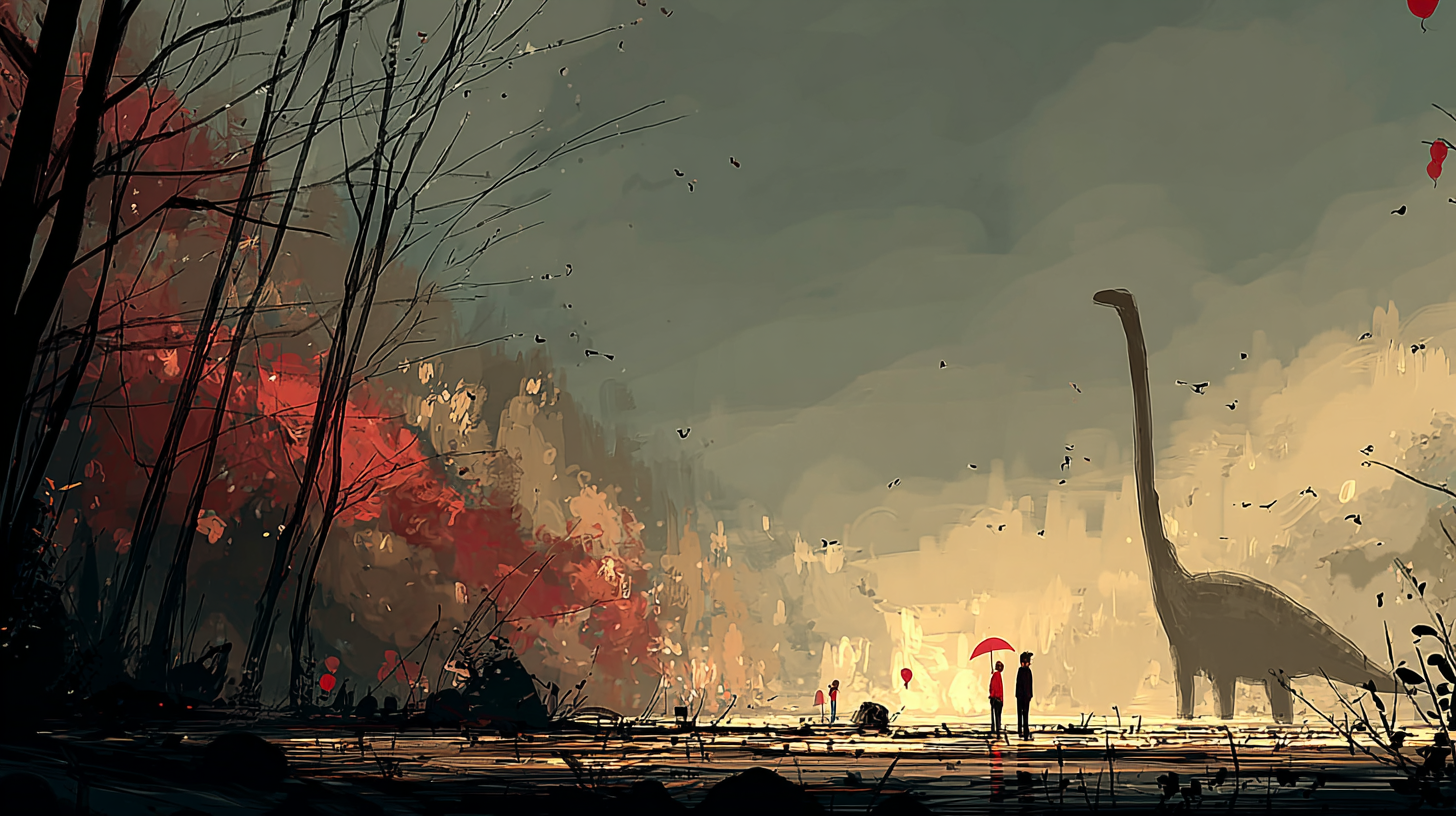
Dinosaur means a big animal from long ago, or someone who is old-fashioned.
dinosaur は「恐竜」または「古くて変われない人や物」という意味です。
以下は英単語 “dinosaur” に関するストーリー型学習コンテンツです。まずは大枠の意味を理解して最後の文章で確認しましょう。
「dinosaur」の主な意味(main meaning)
| 品詞 | 主要な意味 | 英語定義(簡潔) | 例文(1文) | 発音記号(IPA) |
|---|---|---|---|---|
| noun | 恐竜 | a prehistoric reptile that lived millions of years ago | My little brother loves reading books about dinosaurs. | /ˈdaɪ.nə.sɔːr/ |
| noun | 時代遅れの人や物(比喩) | a person or thing that is old-fashioned and slow to change | He refuses to use email, so his coworkers call him a dinosaur. | /ˈdaɪ.nə.sɔːr/ |
「dinosaur」の語源(etymology)
dinosaur はギリシャ語の deinós(恐ろしい)と saûros(トカゲ)から来ています。
核のイメージは「こわいほど大きい昔のトカゲ」です。そこから比喩で「古くて動きが遅いもの」にもつながります。
「dinosaur」の類義語(synonyms)
| 類義語 | 基本的な意味 | 指定単語とのニュアンスの違い | 英語例文 |
|---|---|---|---|
| prehistoric animal | 先史時代の動物 | dinosaur より広い言い方で、恐竜以外も含む | Mammoths are prehistoric animals, but they are not dinosaurs. |
| reptile | は虫類 | 現代のは虫類も含むので、恐竜だけを指さない | A crocodile is a reptile that can be very dangerous. |
| fossil | 化石 | 生き物そのものではなく、残った骨や跡を指す | We saw a dinosaur fossil in the museum. |
| relic | 遺物、昔の名残 | 比喩で「古いもの」を言うが、dinosaur ほど強いからかいがない | That old computer is a relic from my childhood. |
| old-timer | 年配の人、古参 | 人に使うカジュアル表現で、dinosaur より失礼さが弱いことが多い | The old-timer taught me how the office worked years ago. |
「dinosaur」の反義語(antonyms)
| 反義語 | 基本的な意味 | 英語例文 |
|---|---|---|
| innovator | 革新する人 | Our company needs an innovator who tries new ideas. |
| modernizer | 近代化する人、刷新する人 | She is a modernizer who updates old systems quickly. |
「dinosaur」のコロケーション(collocations)
| コロケーション | 意味 | 英語例文 |
|---|---|---|
| dinosaur fossils | 恐竜の化石 | The kids were excited to see dinosaur fossils at the exhibit. |
| dinosaur museum | 恐竜の博物館 | We visited a dinosaur museum during our school trip. |
| a dinosaur in the industry | 業界の時代遅れの人 | Some people say he is a dinosaur in the industry because he hates change. |
| study dinosaurs | 恐竜を研究する | She wants to study dinosaurs when she grows up. |
| dinosaur era | 恐竜の時代 | The movie showed scenes from the dinosaur era. |
「dinosaur」の2項表現(binomials)
| 2項表現 | 意味(だいたい) | 英語例文 |
|---|---|---|
| past and present | 過去と現在 | The report compares the past and present of our sales. |
| sink or swim | 成功するか失敗するか | On my first day, it felt like sink or swim in the new team. |
英語ストーリー(english story)
On Monday morning, Kana walked into the office and saw a new poster near the elevator. It showed huge bones and the words “Dinosaur Museum Weekend Event.” She smiled because she loved dinosaurs when she was a child. She even remembered reading about the dinosaur era and dreaming about being someone who could study dinosaurs.
At her desk, she opened her laptop and checked her email. Then she noticed Mr. Sato, the senior manager, standing next to the old printer again. The printer made strange noises every day, and everyone wished it would be replaced. Kana heard someone whisper, “That machine is a relic.” Another coworker joked, “And Mr. Sato is a dinosaur in the industry.”
Kana did not laugh. Mr. Sato was strict, but he worked hard. Still, he refused to use the new project app. He only liked paper, stamps, and long meetings. To him, the past and present should not be mixed. Kana understood that change could feel scary, but the team was falling behind.
That afternoon, the team had a meeting about improving their workflow. Aya, a young innovator on the team, showed a simple plan on the screen. “If we use the app,” she said, “we can share files, track tasks, and reduce mistakes. It’s faster, and everyone can see updates.”
Mr. Sato crossed his arms. “I don’t trust it,” he said. “Paper is safer.”
Aya tried to stay calm. “We can keep backups,” she answered. “And we can train everyone. It’s not sink or swim. We will support each other.”
Kana raised her hand. “May I say something?” she asked. “I understand Mr. Sato’s worry. But this office is changing. If we never modernize, our clients will choose other companies. We don’t need to throw away everything. We can combine what works with what is new.”
Mr. Sato looked at her. “So you think I’m a dinosaur?” he asked.
Kana felt her face get warm. “No,” she said carefully. “I think you have experience like an old-timer. That is valuable. But the system we use is becoming a fossil. It is stuck. We can respect the past and still move forward.”
The room became quiet. Then Mr. Sato sighed. “When I started here,” he said, “I learned everything by watching others. There were no apps, no cloud, nothing. I am not proud of refusing change. I am just afraid of making a big mistake.”
Aya nodded. “That makes sense,” she said. “How about this? We can do a two-week trial. You can choose one small project. Kana and I will help. If it fails, we will stop and return to paper.”
Mr. Sato thought for a moment. “A trial,” he repeated. “All right. But I want clear rules.”
Kana smiled. “Deal,” she said.
Two weeks later, the office was calmer. People were not running around to find papers. The printer was still old, but it was used less. Mr. Sato still liked paper, but he began to use the app for simple tasks. One day, he even sent a short message to Kana: “Thank you for your patience.”
On Friday evening, Kana saw the same museum poster again. She imagined dinosaur fossils and huge skeletons. She realized something: dinosaurs were powerful, but they could not change with the world. In the office, being called a dinosaur was not about age. It was about refusing to adapt. Kana hoped their team would keep learning, so they would not become a relic of the past.
和訳
月曜の朝、香奈はオフィスに入ると、エレベーターの近くに新しいポスターがあるのを見た。大きな骨の写真と「恐竜博物館の週末イベント」と書いてある。彼女は子どものころ恐竜が好きだったので笑顔になった。恐竜の時代のことを読んで、恐竜を研究する人になりたいと夢見たことも思い出した。
席に着くと、香奈はノートパソコンを開いてメールを確認した。そのとき、佐藤部長がまた古いプリンターのそばに立っているのに気づいた。プリンターは毎日変な音を出し、みんな交換してほしいと思っていた。誰かが「その機械は遺物(relic:遺物、昔の名残)だね」とささやくのが聞こえた。別の同僚は冗談で「それに佐藤部長は業界の恐竜(a dinosaur in the industry:業界の時代遅れの人)だ」と言った。
香奈は笑わなかった。佐藤部長は厳しいが、よく働く人だった。それでも新しいプロジェクト用アプリを使おうとしない。紙、ハンコ、長い会議が好きだった。彼にとって、過去と現在(past and present:過去と現在)は混ぜるべきではなかった。香奈は変化が怖い気持ちは分かったが、チームは遅れ始めていた。
その日の午後、仕事の進め方を良くする会議が開かれた。チームの若い革新する人(innovator:革新する人)である彩が、画面に簡単な計画を映した。「このアプリを使えば、ファイル共有、作業の追跡、ミスの減少ができます。速いし、更新も全員が見られます」と彩は言った。
佐藤部長は腕を組んだ。「信用できない。紙のほうが安全だ」と言った。
彩は落ち着こうとして言った。「バックアップも取れますし、全員に練習してもらえます。成功するか失敗するか(sink or swim:成功するか失敗するか)ではありません。支え合ってやれます。」
香奈は手を挙げた。「一言いいですか。佐藤部長の心配は分かります。でもこのオフィスは変わっています。近代化(modernize:近代化する)しないと、取引先は他社を選びます。全部捨てる必要はありません。良いところは残し、新しいものも取り入れられます。」
佐藤部長は香奈を見た。「つまり私は恐竜だと言いたいのか」と聞いた。
香奈は顔が熱くなった。「いいえ。部長は古参(old-timer:年配の人、古参)の経験があると思います。それは大切です。でも今の仕組みは化石(fossil:化石)のように固まっています。過去を大事にしながら前に進めます。」
部屋は静かになった。すると佐藤部長はため息をついた。「私がここに入ったころは、見て覚えるしかなかった。アプリもクラウドもなかった。変化を拒むのは誇りではない。ただ大きな失敗をするのが怖いんだ。」
彩はうなずいた。「分かります。では二週間の試し運用はどうですか。小さなプロジェクトを一つ選んでください。香奈と私が手伝います。うまくいかなければ止めて紙に戻します。」
佐藤部長は少し考えた。「試し運用か。分かった。ただしルールは明確にしてくれ。」
香奈は笑った。「約束です。」
二週間後、オフィスは落ち着いた。紙を探して走り回ることが減った。プリンターはまだ古いが、使う回数が減った。佐藤部長は紙が好きなままだったが、簡単な作業ではアプリも使い始めた。ある日、香奈に短いメッセージを送った。「辛抱してくれてありがとう。」
金曜の夕方、香奈はまた博物館のポスターを見た。恐竜の化石(dinosaur fossils:恐竜の化石)や大きな骨格を想像した。そして気づいた。恐竜は強かったが、世界の変化に合わせられなかった。オフィスで「恐竜」と呼ばれるのは年齢の話ではない。適応しないことの話だ。香奈はチームが学び続け、過去の遺物(relic:遺物、昔の名残)にならないよう願った。
「dinosaur」のQ&A
- Qdinosaur はどんな意味ですか
- A
dinosaur は恐竜という意味のほかに、古くて変われない人や物という比喩でも使います
- Qdinosaur を人に使うと失礼ですか
- A
場合によっては失礼なので、冗談が通じる相手かどうかに注意します
- Qprehistoric animal と dinosaur の違いは何ですか
- A
prehistoric animal は先史時代の動物全体で、dinosaur はその中でも恐竜にしぼった言い方です
- Qreptile と dinosaur の違いは何ですか
- A
reptile は現代のは虫類も含む広い言葉で、dinosaur は昔の特定の生き物を指します
- Qfossil と dinosaur の違いは何ですか
- A
fossil は化石で、dinosaur は生き物そのものを指すので対象が違います
- Qrelic と dinosaur のニュアンスの違いは何ですか
- A
relic は昔の名残という感じで、dinosaur は変化に反対する感じが強く出やすいです
- Qold-timer と dinosaur の使い分けはどうしますか
- A
old-timer は年配や古参をやわらかく言い、dinosaur は時代遅れで変わらない人をからかう感じが出やすいです
- Qdinosaur の反義語には何がありますか
- A
innovator や modernizer のように新しいことを進める人が反対の意味になります
- Qdinosaur fossils はどんな意味でよく使いますか
- A
博物館や展示で見る恐竜の化石のことを自然に言うコロケーションです
- Qa dinosaur in the industry はどんな場面で使いますか
- A
業界で古いやり方にこだわって変わらない人を言うときに使います


コメント