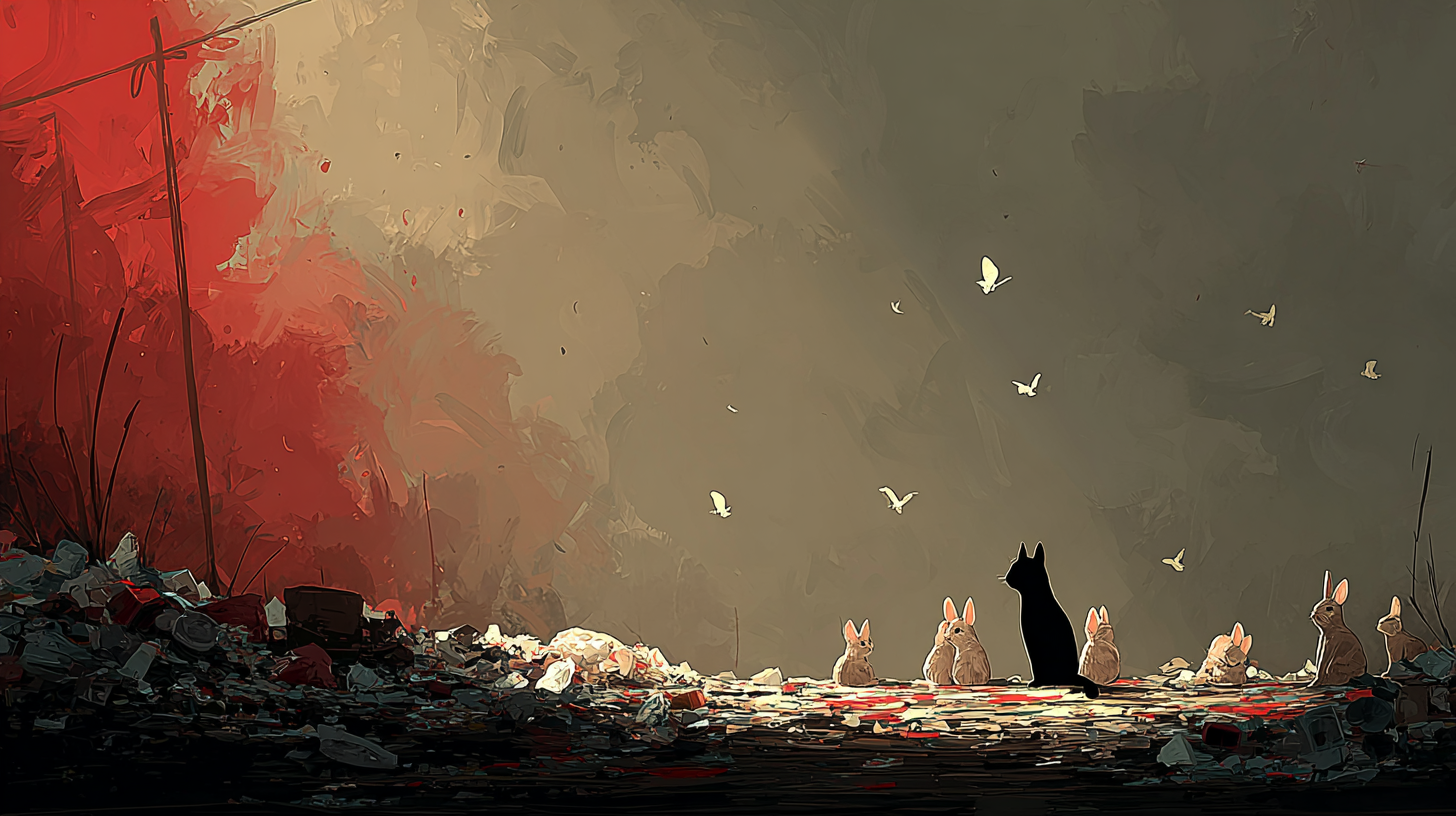
Litter means trash left around, and it can also mean a group of baby animals; as a verb, it means to leave trash.
litter は「捨てられたごみ」や「同時に生まれた動物の赤ちゃんの集まり」を表し、動詞だと「ごみを散らかす」。
以下は英単語 “litter” に関するストーリー型学習コンテンツです。まずは大枠の意味を理解して最後の文章で確認しましょう。
「litter」の主な意味(main meaning)
| 品詞 | 主要な意味 | 英語定義(簡潔) | 英語例文(1文) | 発音記号(IPA) |
|---|---|---|---|---|
| noun | 公共の場所などに捨てられたごみ | trash left carelessly in public places | There was litter all along the sidewalk. | /ˈlɪtər/ |
| noun | 同じ母親から同時に生まれた子ども(動物) | a group of baby animals born at the same time | The dog had a litter of six puppies. | /ˈlɪtər/ |
| noun | 動物の寝わら、敷きわら | bedding material for animals | The farmer spread fresh litter in the barn. | /ˈlɪtər/ |
| noun | 担架、運搬用の寝台 | a stretcher-like bed for carrying someone | They carried the injured hiker on a litter. | /ˈlɪtər/ |
| verb | ごみを散らかす、捨てる | to drop or leave trash in a place | People who litter should be fined. | /ˈlɪtər/ |
| verb | 物を散らして散乱させる | to scatter things in a messy way | Files and papers littered his desk. | /ˈlɪtər/ |
| verb | (動物が)子を産む | to give birth to baby animals | The cat littered in early spring. | /ˈlɪtər/ |
「litter」の語源(etymology)
litter はもともと「ベッド」を意味するラテン語 lectus(横になる場所)から来て、フランス語を経て英語に入った言葉です。
核となるイメージは 「床に敷くもの、床の上に広がるもの」。そこから「敷きわら」や「散らかったもの(ごみ)」、さらに「同じ場所で同時に生まれた子ども(動物)」へ連想が広がります。
「litter」の類義語(synonyms)
| 類義語 | 基本的な意味 | 指定単語とのニュアンスの違い | 英語例文 |
|---|---|---|---|
| trash | ごみ(一般) | litter は「道や公園などに捨てられているごみ」によく使う。trash は家の中のごみも含む。 | Please take the trash out after lunch. |
| rubbish | ごみ(英語圏でよく使う) | 意味は近いが、rubbish は「ごみ全般」。litter は「散らかって外に落ちているごみ」の感じが強い。 | Don’t leave rubbish in the hallway. |
| garbage | 生ごみ、捨てるごみ | 特に食べ物の捨てる部分などに寄りやすい。litter は「ポイ捨て」のニュアンスが中心。 | The garbage smells bad in summer. |
| debris | 破片、散らばった残骸 | 壊れた物のかけらや災害後の「散乱物」。litter はもっと日常の小さなごみに多い。 | Workers cleared debris from the road. |
| clutter | 物が多くてごちゃごちゃ | ごみというより「物が多すぎて散らかった状態」。litter は捨てられたごみ。 | His desk was full of clutter. |
「litter」の反義語(antonyms)
| 反義語 | 基本的な意味 | 英語例文 |
|---|---|---|
| clean | きれいにする、清潔な | We clean the break room every evening. |
| tidy | 片づける、整える | She tidied the meeting room before guests arrived. |
「litter」のコロケーション(collocations)
| コロケーション | 意味 | 英語例文 |
|---|---|---|
| litter bin | ごみ箱(主に屋外) | Put the wrapper in the litter bin. |
| pick up litter | ごみを拾う | Our team will pick up litter after work. |
| litter-free | ごみのない状態 | We want to keep the park litter-free. |
| litter the ground | 地面を散らかす | Bottles littered the ground after the event. |
| litter box | 猫のトイレ(砂箱) | The litter box needs to be cleaned today. |
「litter」の2項表現(binomials)
| 2項表現 | 意味 | 英語例文 |
|---|---|---|
| clean and tidy | きれいで整った | The office should look clean and tidy for visitors. |
| rules and regulations | 規則と決まり | Please follow the rules and regulations of the building. |
| bits and pieces | こまごました物 | I found bits and pieces of paper under the sofa. |
英語ストーリー(english story)
On Friday afternoon, our office felt unusually busy. We were preparing for a small event with clients, and our manager, Ms. Tanaka, wanted everything to look professional. She walked into the break room, looked around, and sighed.
“Why is there so much trash on the table?” she asked. “And look at the floor. It’s covered in litter.”
I glanced down and saw candy wrappers, a plastic spoon, and a few paper cups. It wasn’t a mountain of garbage, but it looked bad. In a place where people ate and relaxed, even a little mess could send the wrong message.
Ken, who always ate quickly and rushed back to his desk, said, “Sorry. I thought someone else would throw it away.”
Ms. Tanaka crossed her arms. “We need to keep this office clean and tidy, especially today.”
Her words reminded me of the new building notice that had been posted near the elevator. It talked about the rules and regulations for shared spaces. It said we should use the litter bin outside the entrance and not leave rubbish in hallways or near the parking lot. I had seen people ignore it before, but now it mattered.
“I’ll take care of it,” I said. “Ken, can you help me tidy up?”
Ken nodded, looking a little embarrassed. We started by collecting the obvious trash. Then we noticed more: bits and pieces of paper under the chairs, and some clutter on the counter. Old flyers, extra chopsticks, and empty boxes were scattered everywhere.
While we worked, Yumi from the design team walked in with a small bag and a big smile. “Good news,” she said. “The rescue center called. The office cat we’re fostering gave birth last night. She has a litter of kittens.”
Ken’s eyes widened. “A litter? In our office?”
Yumi laughed. “Not here. At the foster room near the center. But I brought something for her.” She opened the bag and showed us cat food and a new litter box.
Ms. Tanaka’s expression softened. “That’s sweet, Yumi. But please remember to store those supplies properly. We can’t have them cluttering the hallway.”
Yumi agreed. “Of course. I’ll put everything in the storage room.”
After we finished in the break room, Ms. Tanaka checked the space again. “Better,” she said. “But I also heard complaints about the area outside. Some visitors saw debris near the side entrance.”
That surprised me. The side entrance was usually quiet. Still, if there was debris or litter, it could make the whole building look careless.
Ms. Tanaka looked at us. “We have twenty minutes before the clients arrive. Can a few of you pick up litter outside?”
I raised my hand, and Ken did too. Yumi joined us. We grabbed gloves from the cabinet and walked out together. The winter air was cold, but the sky was clear. Near the side entrance, we found the problem: a broken cardboard box, a few plastic bottles, and napkins stuck to the ground.
Ken muttered, “People really just drop things anywhere.”
“Maybe the wind blew it,” Yumi said, but she didn’t sound convinced.
We worked quickly. The bottles went into a recycling bag, and the rest went into the litter bin by the gate. Some of the napkins were wet, and they tore easily, leaving small pieces behind. I picked them up carefully until the area looked litter-free.
As we finished, an older security guard walked over. “Thank you,” he said. “If everyone did this, the building would stay much nicer.”
Ken smiled awkwardly. “Yeah. I guess we were part of the problem inside, too.”
When we returned, Ms. Tanaka was arranging chairs in the meeting room. She looked up and noticed our gloves. “Done?”
“Yes,” I said. “It’s clean now.”
“Good,” she replied. “Small actions change how people feel about a place.”
A few minutes later, the clients arrived. The office smelled like fresh coffee instead of old garbage. The break room looked calm, and the hallway was clear. Even Ken’s desk, usually covered with clutter, had only a laptop and a notebook.
During the meeting, Yumi quietly showed Ms. Tanaka a photo of the kittens. Ms. Tanaka smiled and whispered, “They’re safe and sound.”
At the end of the day, Ken stopped by my desk. “Thanks,” he said. “I didn’t realize a little litter could make us look so unprofessional.”
I nodded. “It’s not just about looks. It’s about respect. For coworkers, for visitors, and for the place we share.”
Ken glanced toward the break room and then toward the door outside. “From now on, I’ll clean up after myself. No more excuses.”
And for the first time in a while, I believed him.
和訳
金曜日の午後、私たちのオフィスはいつもより忙しく感じられた。クライアントを招く小さなイベントの準備をしていて、田中さんはすべてをプロらしく見せたかった。彼女は休憩室に入ると周りを見て、ため息をついた。
「どうしてテーブルにこんなにごみがあるの」と彼女は言った。「それに床を見て。ごみが散らかっている(litter:散らかったごみ)じゃない。」
私は下を見た。キャンディの包み紙、プラスチックのスプーン、紙コップがいくつかあった。山のような生ごみ(garbage:生ごみ)ではないが、見た目は悪い。人が食べたり休んだりする場所では、少しの散らかりでも悪い印象になる。
いつも急いで食べて席に戻る健が言った。「すみません。誰かが捨てると思ってました。」
田中さんは腕を組んだ。「今日は特に、きれいで整った状態(clean and tidy:きれいで整った)にしないといけない。」
その言葉で、エレベーター近くに貼られていた建物の新しい掲示を思い出した。共有スペースの規則と決まり(rules and regulations:規則と決まり)が書いてあり、入口の外のごみ箱(litter bin:屋外のごみ箱)を使い、廊下や駐車場の近くにごみ(rubbish:ごみ)を放置しないように、とあった。
「私がやります」と私は言った。「健、片づけ(tidy:片づける)を手伝ってくれる?」
健は少し恥ずかしそうにうなずいた。まず目につくごみ(trash:ごみ)を集めた。するともっと見つかった。椅子の下に紙のこまごました物(bits and pieces:こまごました物)、そしてカウンターの上には物が多くてごちゃごちゃ(clutter:ごちゃごちゃ)があった。
作業中、デザインチームの由美が小さな袋を持って笑顔で入ってきた。「いい知らせ」と彼女は言った。「保護センターから連絡があって、私たちが預かっているオフィス猫が昨夜出産したの。子猫がひと腹(litter:同時に生まれた子猫の集まり)いるって。」
健は目を丸くした。「ひと腹? オフィスで?」
由美は笑った。「ここじゃないよ。センターの近くの預かり部屋。でも、持っていく物を持ってきたの。」彼女は袋を開け、猫のえさと新しい猫トイレ(litter box:猫のトイレ)を見せた。
田中さんの表情はやわらいだ。「それは素敵ね、由美。でも備品はちゃんとしまってね。廊下がごちゃごちゃ(clutter:ごちゃごちゃ)になるのは困るから。」
休憩室が終わると、田中さんはもう一度確認した。「よくなった。でも外の脇の入口に破片や散乱物(debris:破片・散乱物)があるって苦情も聞いたの。」
田中さんは私たちを見た。「クライアントが来るまで20分。外のごみを拾って(pick up litter:ごみを拾う)くれる人はいる?」
私と健、そして由美が手を挙げた。手袋を持って外に出ると、冬の空気は冷たかったが空は澄んでいた。脇の入口付近に、壊れた段ボール箱、ペットボトル、地面に貼りついたナプキンがあった。
健がつぶやいた。「本当に、みんな適当に捨てるんだな。」
私たちは急いで片づけた。ボトルは分別袋へ、残りは門のそばのごみ箱(litter bin:屋外のごみ箱)へ入れた。ナプキンは湿っていて破れやすく、小さなかけらが残ったので丁寧に拾い、外をごみのない状態(litter-free:ごみのない状態)にした。
戻ると田中さんは会議室の椅子を並べていた。「終わった?」
「はい。きれい(clean:きれい)になりました。」
「いいわ。小さな行動で、場所の感じ方は変わるのよ。」
その後クライアントが来た。オフィスは古い生ごみ(garbage:生ごみ)の匂いではなく、コーヒーの香りがした。休憩室は落ち着き、廊下もすっきりしていた。健の机も、いつものごちゃごちゃ(clutter:ごちゃごちゃ)がなく、ノートとパソコンだけだった。
会議中、由美が子猫の写真を田中さんにそっと見せた。田中さんは笑って小声で言った。「元気で無事(safe and sound:元気で無事)ね。」
一日の終わり、健が私の机に来た。「ありがとう」と彼は言った。「少しのごみ(litter:散らかったごみ)でも、こんなに印象が悪くなると思わなかった。」
私はうなずいた。「見た目だけじゃないよ。ここを一緒に使う人への敬意だと思う。」
健は休憩室の方と外の入口の方を見た。「これからは自分で片づける。言い訳はしない。」
私は久しぶりに、その言葉を信じられる気がした。
「litter」のQ&A
- Qlitter ってどういう意味?
- A
litter は道や公園などに捨てられて散らかったごみ、または同時に生まれた動物の赤ちゃんの集まりのことです。
- Qlitter と trash はどう違う?
- A
trash はごみ全般で家の中でも使えますが、litter は外にポイ捨てされて散らかっているごみの感じが強いです。
- Qlitter と rubbish はどう使い分ける?
- A
rubbish はごみ全般の言い方で、litter は外で落ちているごみを特に指しやすいです。
- Qlitter は動詞でどう使う?
- A
litter は「ごみを散らかす」「ポイ捨てする」という意味で People litter here. のように使えます。
- Qa litter of puppies はどういう意味?
- A
a litter of puppies は同じ母犬から同時に生まれた子犬の集まりという意味です。
- Qlitter box は何?
- A
litter box は猫のトイレの箱や砂箱のことです。
- Qlitter bin は何?
- A
litter bin は屋外などに置かれているごみ箱のことです。
- Qpick up litter はどんな場面で使う?
- A
pick up litter は道や公園でごみ拾いをするときによく使います。
- Qlitter-free はどういう意味?
- A
litter-free はごみが落ちていないきれいな状態という意味です。
- Qclean と tidy は litter の反対としてどう違う?
- A
clean は汚れを落として清潔にすることで、tidy は物をきちんと並べて整えることに強いです。


コメント