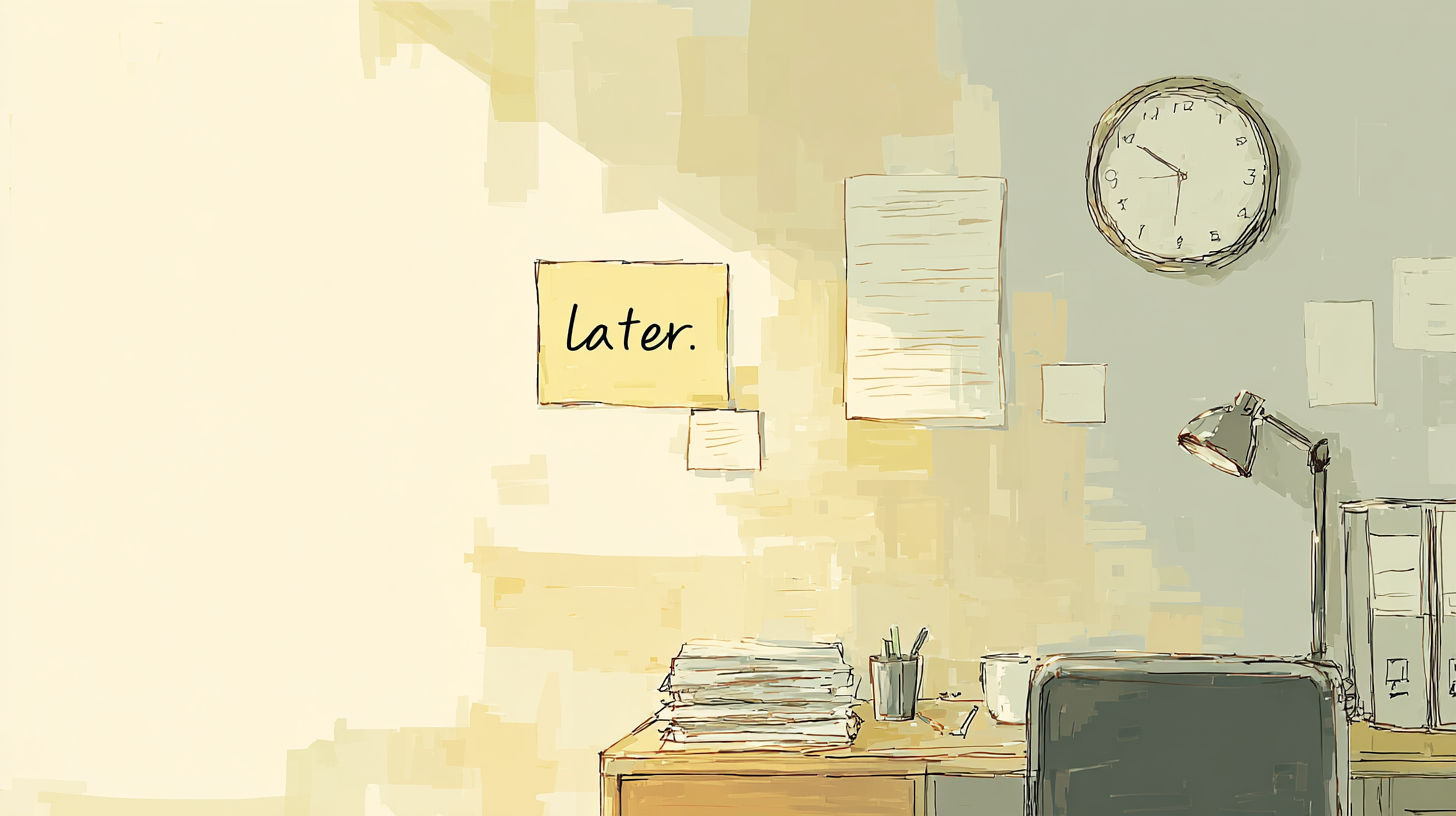
Later means “after now” or “after something else.”
laterは「今よりあと」や「別のことのあと」のタイミングを言う。
以下は英単語 “later” に関するストーリー型学習コンテンツです。まずは大枠の意味を理解して最後の文章で確認しましょう。
「later」の主な意味(main meaning)
| 品詞 | 主要な意味 | 英語定義(簡潔) | 例文 | 発音(IPA) |
|---|---|---|---|---|
| 副詞 | 後で、のちに | at a time after the present or after another time | I’ll call you later. | /ˈleɪtər/ |
| 形容詞 | 後の、次の(時間的に) | coming after in time | We will discuss it at a later date. | /ˈleɪtər/ |
「later」の語源(etymology)
古英語のlate(遅い)に由来し、「時間が後ろにずれる」イメージが核。
コアイメージは「時間の線で、今より右側に動く」。
「later」の類義語(synonyms)
| 類義語 | 基本的な意味 | laterとのニュアンスの違い | 英語例文 |
|---|---|---|---|
| afterward | その後(出来事のあと) | laterより「ある出来事のあと」に強く結びつく | We went for coffee afterward. |
| subsequently | その後に(かたい) | laterよりフォーマルで文書っぽい | The plan was changed subsequently. |
| later on | 後で(少しあと) | laterより会話でやわらかく、少し先の感じ | I’ll explain later on. |
| eventually | 結局は、最終的に | laterは単に時間の後だが、eventuallyは「長い時間の末に」 | Eventually, he agreed. |
| soon | もうすぐ | laterが「あと」全般なのに対し、soonは「わりと早く」 | I’ll be back soon. |
「later」の反義語(antonyms)
| 反義語 | 基本的な意味 | 英語例文 |
|---|---|---|
| now | 今 | I need it now. |
| earlier | もっと前に | I arrived earlier than usual. |
「later」のコロケーション(collocations)
| コロケーション | 意味 | 英語例文 |
|---|---|---|
| see you later | また後でね | See you later at the office. |
| talk later | 後で話す | Let’s talk later. |
| come back later | 後で戻る | Please come back later. |
| later today | 今日のこのあと | I’ll send it later today. |
| a little later | 少し後で | Can we meet a little later? |
「later」の2項表現(binomials)
| 2項表現 | 意味 | 英語例文 |
|---|---|---|
| sooner or later | 遅かれ早かれ | Sooner or later, we must decide. |
| now and then | 時々 | I go running now and then. |
英語ストーリー(english story)
At our office, Monday mornings are always busy. I work in the sales team, and I usually start by checking emails. That day, my manager, Mr. Sato, walked in with a serious face. He said we needed to update our monthly report, but we had a meeting in ten minutes.
I opened the file and saw many numbers that didn’t match. I wanted to fix everything right away, but there wasn’t enough time. Mr. Sato said, “We can’t do it now. Let’s talk later.” I nodded, although I felt nervous. I didn’t want to make a mistake.
During the meeting, my coworker Mika explained the plan. She spoke clearly, but I noticed one part was missing. I thought about asking a question, but I decided to wait. I told myself I could bring it up later on, when the meeting ended.
After the meeting, Mr. Sato came to my desk. “Can you check the customer list?” he asked. I said, “Sure, but I also found problems in the report.” He replied, “Let’s handle the customer list first, and we’ll fix the report afterward.”
I worked carefully. I found that one customer’s order was entered twice. If we left it like that, the final total would be wrong. I corrected it and sent a message to Mr. Sato. He answered soon and thanked me. His quick reply made me feel better.
Later today, Mr. Sato called me into a small meeting room. “Good job,” he said. “Now, about the report. We need to adjust these numbers.” He showed me the mistake and explained how it happened. I realized it was not my fault, but I still learned something important.
We continued working, and the report slowly became accurate. The work took longer than I expected, but eventually we finished it. When we were done, Mr. Sato smiled and said, “So, sooner or later, we always face problems. The important thing is how we solve them.”
Before leaving, I said, “See you later.” Mika laughed and said she would go home now and then without checking email. I agreed. We all need a break. I felt tired, but I also felt proud because I handled the problem calmly, not only now, but also for the future.
和訳
私たちの職場では、月曜の朝はいつも忙しい。私は営業チームで働いていて、ふだんはメールを確認するところから始める。その日、佐藤さん(マネージャー)が真剣な顔で入ってきた。月次レポートを更新する必要があると言ったが、10分後に会議があった。
私はファイルを開き、たくさんの数字が合っていないのを見た。すぐに全部直したかったが、時間が足りなかった。佐藤さんは「今(now)は無理だ。後で(later)話そう」と言った。私はうなずいたが、不安だった。ミスをしたくなかった。
会議中、同僚のミカが計画を説明した。分かりやすく話していたが、ある部分が抜けているのに気づいた。質問したかったが、私は待つことにした。会議が終わったら後で(later on)言えばいい、と自分に言い聞かせた。
会議のあと、佐藤さんが私の席に来た。「顧客リストを確認できる?」と聞かれ、私は「もちろん。でもレポートにも問題がありました」と言った。佐藤さんは「まず顧客リストをやって、(afterward:その後で)レポートを直そう」と答えた。
私は注意深く作業した。ある顧客の注文が二重に入力されているのを見つけた。これを残すと最終合計が間違う。私は修正して佐藤さんにメッセージを送った。佐藤さんは(soon:もうすぐ、すぐに)返信して感謝してくれた。早い返事で気持ちが楽になった。
(later today:今日のこのあと)佐藤さんが私を小さな会議室に呼んだ。「よくやったね」と言い、「ではレポートについて。数字を調整しよう」と続けた。ミスと原因を説明してくれた。私のせいではないと分かったが、大事なことを学んだ。
私たちは作業を続け、レポートは少しずつ正確になった。思ったより時間がかかったが、(eventually:最終的に)終わらせた。終わると佐藤さんは笑って言った。「(sooner or later:遅かれ早かれ)問題は起きる。大事なのは解決のしかただ。」
帰る前に私は「(see you later:また後で)」と言った。ミカは笑って、(now and then:時々)メールを確認せずに帰ると言った。私は同意した。私たちには休憩も必要だ。疲れたが、落ち着いて対応できたことが誇らしかった。今(now)だけでなく、未来のためにも。
「later」のQ&A
- Qlaterはどんな意味ですか
- A
laterは「今より後の時間」を表します
- Qlaterは副詞と形容詞でどう違いますか
- A
laterは「後で」という副詞にも「後の」という形容詞にもなります
- Qlaterとafterwardはどう使い分けますか
- A
afterwardは「ある出来事のあと」に強く結びついて使います
- Qlaterとeventuallyの違いは何ですか
- A
eventuallyは「長い時間の末に結局は」という結果の感じが強いです
- Qlaterとsoonはどこが反対に近いですか
- A
soonは「わりと早く」でlaterは「もっと後」で時間の距離が違います
- Qsee you laterはどんな場面で使いますか
- A
see you laterは別れ際に「また後で」と気軽に言う表現です
- Qlater todayはいつのことですか
- A
later todayは「今日のこのあと」で夕方などを指すことが多いです
- Qa little laterはどれくらい後ですか
- A
a little laterは「少し後で」で短い待ち時間のときに使います
- Qsooner or laterはどんな意味ですか
- A
sooner or laterは「遅かれ早かれ」でいつかは起きるという意味です
- Qlater onはlaterとどう違いますか
- A
later onは会話でやわらかく「このあとで」と言いたいときに便利です


コメント