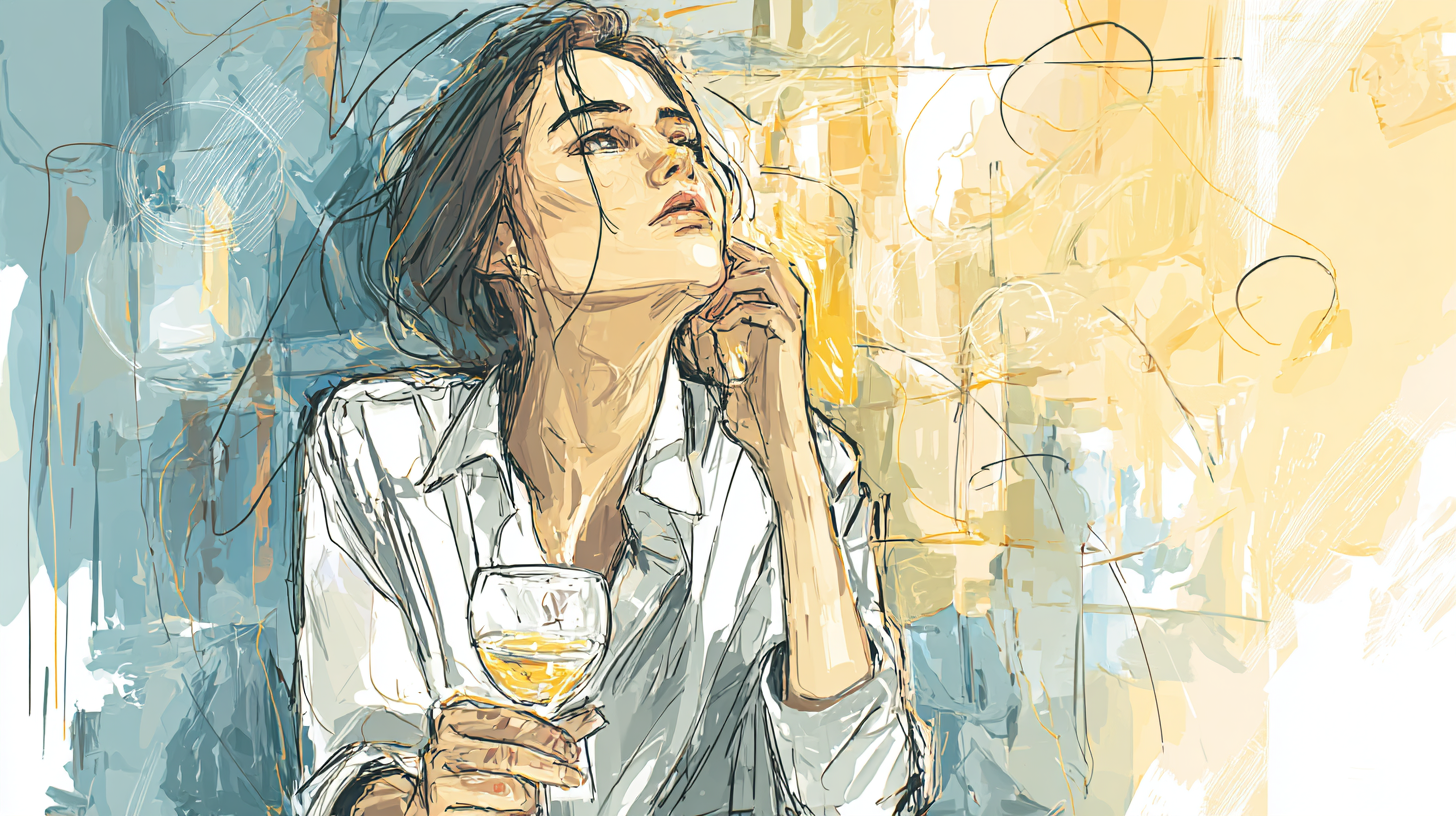
Drunk means you drank too much alcohol, or you feel too excited like you cannot think well.
drunk は「お酒で酔っている」または「(比喩で)気持ちが高ぶって判断が弱い」という意味です。
以下は英単語 “drunk” に関するストーリー型学習コンテンツです。まずは大枠の意味を理解して最後の文章で確認しましょう。
「drunk」の主な意味(main meaning)
| 品詞 | 主要な意味 | 簡潔な英語定義 | 英語例文(1文) | 発音記号(IPA) |
|---|---|---|---|---|
| adjective | 酒に酔った | having drunk too much alcohol | He was drunk and could not walk straight. | /drʌŋk/ |
| adjective | 酔って判断が弱い(比喩) | behaving as if excited or overwhelmed | She was drunk with joy after hearing the news. | /drʌŋk/ |
| noun | 酔っぱらい(人) | a person who is often drunk | A drunk was sleeping on the bench. | /drʌŋk/ |
「drunk」の語源(etymology)
古英語の「druncen(飲まれた、飲んだ)」に由来します。
核となるイメージは「飲みすぎて、頭や体がいつも通り動かない状態」です。
「drunk」の類義語(synonyms)
| 類義語 | 基本的な意味 | 指定単語とのニュアンスの違い | 英語例文 |
|---|---|---|---|
| intoxicated | 酔っている | drunk より少し硬くて、説明やニュースっぽい言い方 | The driver was intoxicated and was arrested. |
| tipsy | ほろ酔い | drunk ほど強くない、軽く気分がふわっとしている感じ | I felt tipsy after one glass of wine. |
| inebriated | ひどく酔った | とても硬い語で、書き言葉っぽい | He appeared inebriated at the party. |
| wasted | べろべろに酔った | くだけた言い方で、「かなりひどい」印象が強い | He got wasted and said something rude. |
| drunkard | 大酒飲み | 「酔っている状態」より「習慣として酒に溺れる人」を強く言う | His family worried that he was becoming a drunkard. |
「drunk」の反義語(antonyms)
| 反義語 | 基本的な意味 | 英語例文 |
|---|---|---|
| sober | しらふの、冷静な | She stayed sober so she could drive home safely. |
| clear-headed | 頭がはっきりしている | He was clear-headed during the emergency. |
「drunk」のコロケーション(collocations)
| コロケーション | 意味 | 英語例文 |
|---|---|---|
| get drunk | 酔っぱらう | He got drunk at the company party. |
| drunk driving | 飲酒運転 | Drunk driving can ruin lives. |
| drunk on power | 権力に酔っている | The manager became drunk on power and ignored advice. |
| drunk with joy | 喜びで舞い上がっている | She was drunk with joy when the deal succeeded. |
| dead drunk | 泥酔して | He was dead drunk and fell asleep immediately. |
「drunk」の2項表現(binomials)
| 2項表現 | 意味 | 英語例文 |
|---|---|---|
| safe and sound | 無事に | We arrived safe and sound after the storm. |
| black and white | 白黒はっきりした | The rules are not always black and white. |
| now and then | ときどき | I eat out now and then. |
| give and take | 譲り合い | Good teamwork needs give and take. |
英語ストーリー(english story)
On Friday evening, our office held a small celebration in the meeting room. We had finished a difficult project, and even our strict director smiled. There were snacks on the table, and someone had brought sparkling juice and a few bottles of beer. I told myself I would stay sober, because I needed to take the train home and I didn’t want any trouble.
My coworker Kenji was already in a cheerful mood. He raised his glass and said, “Just one drink. Come on.” I answered, “I’ll start with juice. I want to be clear-headed tomorrow.” He laughed and said, “You always worry too much.”
At first, everything was calm. People talked about the project, and we practiced give and take as usual, letting quieter members speak. Our manager, Ms. Takeda, thanked everyone and reminded us about safety. “Please be careful,” she said. “No drunk driving. If you drink, take a taxi or the train.”
An hour later, I noticed Kenji’s face turning red. He had switched from beer to something stronger. He wasn’t falling over, but he was clearly tipsy. He began telling the same joke again and again, and his voice got louder. A few people smiled politely, but others looked uncomfortable.
Then a client called Ms. Takeda’s phone. The celebration suddenly paused. She stepped into the hallway to answer, but Kenji followed her, insisting he could help. I heard him say, “I’m fine. I’m not drunk.” But his words were not steady.
A minute later, Ms. Takeda returned with a serious expression. “There is a problem,” she announced. “The client found an error in the report we sent this afternoon. We need to check it now.”
Everyone sat down quickly. The room changed from warm to tense in seconds. The situation was not black and white, because the data itself seemed correct, but the final numbers were different from what the client expected. We opened the files and compared the earlier versions.
Kenji tried to lead, but he was getting more intoxicated by the minute. He pointed at the screen and said, “Look, it’s obvious. They are wrong.” Ms. Takeda replied gently, “Kenji, please let others confirm it too.” But Kenji waved his hand like a king. He was acting drunk on power, as if his confidence could replace careful checking.
I took a deep breath and stayed calm. “Let’s do this step by step,” I said. “We’ll trace the calculation and find where the number changed.” Another coworker, Mai, nodded. “Yes. We need a clear process.”
We divided tasks. Mai checked the formulas, I checked the data source, and Ms. Takeda reviewed the email history. It was late, but we worked quietly. Now and then, Kenji interrupted with a loud comment. “I can fix it in five minutes,” he declared. Yet each time he touched the spreadsheet, he made a careless mistake.
Finally, Mai found it. A single cell referenced the wrong column after a copy-and-paste. It was a small human error, but it created a big difference in the final report. Ms. Takeda immediately wrote to the client, explaining the mistake and attaching the corrected file.
For a moment, everyone felt relief. Ms. Takeda even smiled, and Mai looked drunk with joy, because she had saved the team from a serious complaint. Kenji, however, suddenly stood up and said, “See? I told you it was simple.” He reached for another drink.
Ms. Takeda stopped him with a firm voice. “Kenji, that’s enough. You are not in a condition to drink more.” Kenji’s eyes narrowed. “Are you calling me a drunk?” he asked.
“No,” she said, keeping her tone respectful. “I’m saying you have had too much. I want you to get home safe and sound. Please call a taxi.”
Kenji looked at us. His face showed anger, then embarrassment. For a second, I worried he might become wasted and start shouting. But the room was quiet, and he seemed to realize what he had done. He sat down slowly and rubbed his forehead.
“I’m sorry,” he murmured. “I thought I was helping.”
“We all want to help,” I said. “But we need to stay clear-headed when something urgent happens.”
Ms. Takeda nodded. “Work is sometimes stressful,” she said. “Celebrations are fine, but we must stay responsible.”
We cleaned up the room together. Kenji drank water and ate a few snacks. When his taxi arrived, I walked him to the entrance. The cold air outside helped him. He didn’t look dead drunk, but he was tired and ashamed.
“Thanks,” he said quietly. “Next time, I’ll stop earlier.”
On the train home, I thought about the evening. A party can change quickly, and one person’s choices can affect the whole team. I was glad we solved the problem, but I was even more glad we handled it with give and take, and made sure everyone got home safe and sound.
和訳
金曜日の夕方、私たちのオフィスは会議室で小さなお祝いをしました。難しいプロジェクトが終わり、厳しい部長でさえ笑顔でした。テーブルには軽食があり、誰かが炭酸ジュースと数本のビールを持ってきました。私は、しらふでいる(sober:しらふ)と自分に言い聞かせました。電車で帰る必要があり、面倒なことは避けたかったからです。
同僚の健司はすでに上機嫌でした。彼はグラスを上げて「1杯だけ。さあ」と言いました。私は「まずはジュースにするよ。明日は頭をはっきりさせて(clear-headed:頭がはっきりして)いたい」と答えました。彼は笑って「君はいつも心配しすぎだ」と言いました。
最初はすべて穏やかでした。人々はプロジェクトの話をし、いつものように譲り合い(give and take:譲り合い)で、静かなメンバーにも話す機会を作りました。上司の武田さんは皆に感謝し、安全について注意しました。「気をつけてください。飲酒運転(drunk driving:飲酒運転)は絶対だめ。飲むならタクシーか電車で帰ってください。」
1時間ほどすると、健司の顔が赤くなっているのに気づきました。ビールからもっと強い酒に変えていました。倒れるほどではないけれど、明らかにほろ酔い(tipsy:ほろ酔い)でした。同じ冗談を何度も言い始め、声も大きくなりました。何人かは愛想笑いをしましたが、居心地悪そうな人もいました。
そのとき、取引先から武田さんの携帯に電話が入りました。お祝いの空気が急に止まりました。武田さんは廊下で電話に出ましたが、健司が「手伝える」と言ってついて行きました。私は彼が「大丈夫。酔ってない(drunk:酔っている)よ」と言うのを聞きました。でも言葉が安定していませんでした。
少しして武田さんは真剣な顔で戻ってきました。「問題がある」と言いました。「今日の午後に送った報告書に、取引先が誤りを見つけました。今すぐ確認が必要です。」
全員がすぐ座りました。部屋の空気は、あたたかいものから緊張したものへ一瞬で変わりました。状況は白黒はっきり(black and white:白黒はっきり)していませんでした。データ自体は正しそうなのに、最終の数字が取引先の期待と違っていたのです。私たちはファイルを開き、以前の版と比べました。
健司は主導しようとしましたが、だんだん酔って(intoxicated:酔って)きていました。画面を指さして「ほら、明らかだ。向こうが間違ってる」と言いました。武田さんはやさしく「健司さん、ほかの人にも確認させてください」と言いました。しかし健司は王様のように手を振りました。権力に酔っている(drunk on power:権力に酔っている)みたいに、勢いだけで慎重さを押しのけていました。
私は深呼吸して落ち着きました。「順番に確認しよう」と言いました。「計算をたどって、どこで数字が変わったか見つけよう。」別の同僚の舞も「うん。はっきりした手順が必要」とうなずきました。
私たちは役割分担しました。舞は数式を確認し、私はデータ元を確認し、武田さんはメールの履歴を見直しました。遅い時間でしたが、静かに作業しました。ときどき(now and then:ときどき)、健司が大声で割り込んできました。「5分で直せる」と言うのに、彼が表計算に触るたびに不注意なミスをしました。
ついに舞が原因を見つけました。コピーと貼り付けのあと、1つのセルが間違った列を参照していました。小さな人為ミスでしたが、最終報告では大きな差になっていました。武田さんはすぐに取引先へ、ミスの説明と修正版のファイルを送りました。
一瞬、全員がほっとしました。武田さんも少し笑い、舞は解決できた喜びで舞い上がり(drunk with joy:喜びで舞い上がって)ているようでした。深刻なクレームを防いだからです。ところが健司は立ち上がり「ほらね。簡単だって言っただろ」と言い、さらに酒を取ろうとしました。
武田さんははっきりした声で止めました。「健司さん、もう十分です。これ以上飲める状態ではありません。」健司は目を細めて「俺を酔っぱらい(drunkard:大酒飲み)扱いするのか?」と言いました。
「いいえ」と武田さんは敬意を保って言いました。「飲みすぎです。無事に(safe and sound:無事に)帰ってほしい。タクシーを呼んでください。」
健司は私たちを見ました。顔には怒り、そのあと恥ずかしさが出ました。一瞬、彼がべろべろ(wasted:べろべろに酔った)になって怒鳴り出すのではと心配しました。でも部屋は静かで、彼は自分の行動に気づいたようでした。ゆっくり座り、額を押さえました。
「ごめん」と彼は小さく言いました。「手伝ってるつもりだった。」
「みんな助けたい気持ちは同じだよ」と私は言いました。「でも急なことが起きたら、頭をはっきりさせて(clear-headed:頭がはっきりして)いないといけない。」
武田さんはうなずきました。「仕事は時々ストレスがある。お祝いはいいけど、責任は守りましょう。」
私たちは一緒に片づけました。健司は水を飲み、軽食も少し食べました。タクシーが来たので、私は入口まで送っていきました。外の冷たい空気が彼を少し落ち着かせました。泥酔(dead drunk:泥酔)ではなかったけれど、疲れていて恥ずかしそうでした。
「ありがとう」と彼は静かに言いました。「次はもっと早くやめるよ。」
帰りの電車で、私はその夜のことを考えました。パーティーの空気は急に変わることがあり、1人の選択がチーム全体に影響します。問題を解決できてよかったし、何より譲り合い(give and take:譲り合い)で対応し、全員が無事に(safe and sound:無事に)帰れるようにできたのがよかったと思いました。
「drunk」のQ&A
- Qdrunk はどんな意味ですか
- A
drunk はお酒を飲みすぎて酔っている状態、または比喩で気持ちが高ぶって冷静さが弱い状態を表します
- Qdrunk と intoxicated の違いは何ですか
- A
intoxicated は drunk より硬い言い方で、説明やニュースのように客観的に言うときに使いやすいです
- Qtipsy は drunk とどう違いますか
- A
tipsy は軽い酔いで、drunk ほど強くなく少しふわっとする程度を表します
- Qinebriated はどんな場面で使いますか
- A
inebriated はとても硬い語で、書き言葉や改まった説明で強く酔った状態を言うときに使われます
- Qwasted は失礼な言い方ですか
- A
wasted はくだけた言い方で「べろべろ」を強調するので、フォーマルな場面では避けるのが安全です
- Qdrunkard は drunk と同じですか
- A
drunkard は一時的に酔っているのではなく、酒に溺れがちな人を強く言う語です
- Q反義語の sober はどう使いますか
- A
sober はしらふで冷静という意味で、運転や仕事の場面で安全を言うときによく使います
- Qコロケーション get drunk はどういう意味ですか
- A
get drunk は「酔っぱらう」という意味で、飲んだ結果として酔うことを表します
- Qdrunk driving はなぜ重要な表現ですか
- A
drunk driving は「飲酒運転」で危険行為を指し、注意やルールの文脈で頻出します
- Qdrunk with joy は本当にお酒ですか
- A
drunk with joy は比喩で「喜びで舞い上がる」という意味で、お酒を飲んだとは限りません

コメント