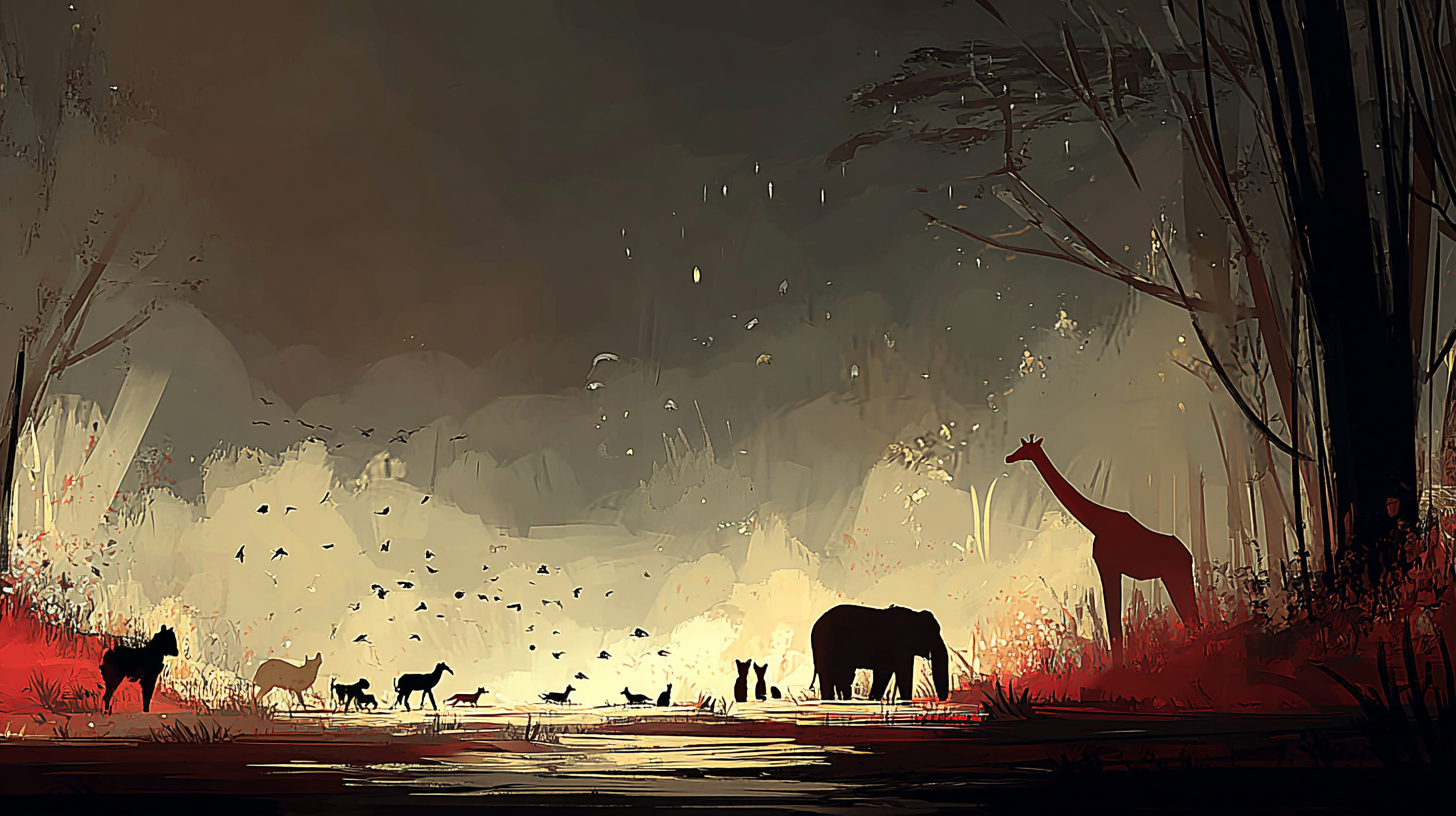
Wildlife means animals living in nature, not kept by people.
wildlife は、人に飼われていない自然の中の動物たちのことです。
以下は英単語 “wildlife” に関するストーリー型学習コンテンツです。まずは大枠の意味を理解して最後の文章で確認しましょう。
「wildlife」の主な意味(main meaning)
| 品詞 | 意味 | 英語定義 | 英語例文 | 発音記号(IPA) |
|---|---|---|---|---|
| noun | 野生生物(野生の動物たち全体) | animals and other living things that live in nature and are not controlled by people | The new road could harm local wildlife. | /ˈwaɪld.laɪf/ |
「wildlife」の語源(etymology)
wild(野生の)+ life(いのち、生活)からできた言葉です。
核となるイメージは「人の管理の外で、自然の中を自由に生きている命」です。
「wildlife」の類義語(synonyms)
| 類義語 | 基本的な意味 | 指定単語とのニュアンスの違い | 英語例文 |
|---|---|---|---|
| fauna | ある地域の動物相 | wildlife より「学術的」「地域の動物の種類全体」を言いがち | The island’s fauna is unique. |
| wild animals | 野生の動物 | wildlife より「動物そのもの」に焦点が当たり、会話で言いやすい | Keep a safe distance from wild animals. |
| animals | 動物 | 一般語。ペットや家畜も含めるので wildlife より広い | Many animals live near the river. |
| creatures | 生き物 | くだけた言い方で、動物をやさしく言う感じ。wildlife ほど「野生」の情報は強くない | Small creatures hide under rocks. |
| animal life | 動物の命や動物の世界 | wildlife より少し文章的で、「動物が生きている状態」まで含む言い方 | The lake supports rich animal life. |
「wildlife」の反義語(antonyms)
| 反義語 | 基本的な意味 | 英語例文 |
|---|---|---|
| domestic animals | 家畜・飼われている動物 | Domestic animals depend on humans for food. |
| urban life | 都会の生活(自然の反対側の環境) | Urban life is busy and noisy. |
「wildlife」のコロケーション(collocations)
| コロケーション | 意味 | 英語例文 |
|---|---|---|
| protect wildlife | 野生生物を守る | We must protect wildlife along the coast. |
| wildlife conservation | 野生生物保護 | She works in wildlife conservation. |
| wildlife habitat | 野生生物のすみか | The forest is an important wildlife habitat. |
| wildlife reserve | 野生生物保護区 | They visited a wildlife reserve on Sunday. |
| observe wildlife | 野生生物を観察する | Tourists came to observe wildlife quietly. |
「wildlife」の2項表現(binomials)
| 2項表現 | 意味 | 英語例文 |
|---|---|---|
| flora and fauna | 植物と動物 | The guide explained the local flora and fauna. |
| fish and wildlife | 魚類と野生生物(保護や管理の文脈でよく使う) | The report was shared with fish and wildlife officials. |
英語ストーリー(english story)
On Monday morning, our office was unusually quiet. Then Ms. Tanaka from the Planning Team walked in with a thick folder and a tired smile.
“We have a new client,” she said. “They want to build a small logistics center near the river. The schedule is tight, but there is a big issue: wildlife.”
Everyone sat up. I work in corporate communications, so I’m usually thinking about press releases, not forests. But I knew this project could become a problem if we made a careless decision.
Ms. Tanaka continued, “The area is beautiful, and the local community loves it. People go there to observe wildlife, especially in spring. If we damage the wildlife habitat, we will lose trust.”
Our team leader, Mr. Sato, nodded. “We need facts first. We must protect wildlife and also keep the project realistic.”
After the meeting, Ms. Tanaka asked me to join her and an engineer, Kato, for a site visit. “You can help us explain our plan to the community later,” she said.
Two days later, we drove to the river. The place looked peaceful, with tall grass and trees bending over the water. A small sign warned visitors not to feed wild animals. Kato pointed at the ground. “Those tracks are probably from deer,” he said. “And there are birds nesting near that line of trees.”
A volunteer guide from a local group met us there. Her name was Yumi, and she spoke calmly but directly. “This river supports rich animal life,” she said. “Not only the big animals, but also small creatures. If you build too close, noise and lights will change everything.”
Kato opened his tablet. “We can adjust the building position,” he said. “We can also reduce night lighting.”
Yumi looked at me. “Companies often say that. But do they really do it?”
I took a breath. “That’s why we’re here,” I said. “We want a plan we can explain clearly. We don’t want to replace nature with urban life.”
Yumi’s expression softened a little. “If you are serious, talk to the experts. There is a wildlife reserve upstream, and they know this area well. Also, the local museum has records about the fauna.”
Back at the office, we organized what we learned. Ms. Tanaka wrote “wildlife conservation” in big letters on the whiteboard. “We need a strong policy,” she said. “Not just a promise.”
Mr. Sato suggested a partnership. “Let’s invite people from the reserve and the city office,” he said. “We can create a monitoring plan. We can share data and adjust our actions.”
A week later, we held a joint meeting in our conference room. A biologist from the reserve showed maps and photos. “This corridor connects the river to the forest,” she explained. “If you block it, wild animals will lose a safe route.”
A city official added, “Our fish and wildlife department has similar guidelines. If your company follows them, the approval process will be smoother.”
Kato asked practical questions. “How wide should the corridor be? What kind of fence is safe?”
The biologist replied, “Use a low-impact fence, and keep a quiet zone near the trees. Also, plan work hours carefully during nesting season.”
As the discussion continued, I noticed something important: everyone was talking about solutions, not blaming. It felt like a balanced approach, like flora and fauna both mattered in one picture, not just one side.
After the meeting, I drafted a message for the community. I avoided fancy words, but I kept the key points: we would protect wildlife, keep the wildlife habitat connected, and report results every month. I also wrote honestly that the project would bring some change, but we would measure it and respond.
On the day of the community briefing, I expected angry voices. Instead, the room was tense but open. Yumi was there, sitting in the front row. I explained the corridor plan, the lighting limits, and the monitoring schedule. I also said we would share our data with the reserve and the city.
A man raised his hand. “So you will still build it. Why should we believe you?”
Mr. Sato answered calmly. “Because we are making the plan public, and because experts will check it. We are not treating this place like a blank space on a map. It is a home for wildlife. We want to work with you.”
After the meeting, Yumi came to me. “Your explanation was clear,” she said. “I still worry, but I can see you are trying.”
I looked out at the river through the window. In my mind, I could still see the tracks in the mud and the birds in the trees. This project wasn’t just about buildings. It was about learning to share space—between people and nature, between progress and responsibility.
和訳
月曜日の朝、私たちのオフィスはいつもより静かでした。そこへ企画チームの田中さんが分厚いファイルを持って入り、疲れた笑顔で言いました。
「新しいクライアントが来ました。川の近くに小さな物流センターを建てたいそうです。スケジュールは厳しいけれど、大きな問題があります。野生生物(wildlife)です。」
みんなが背筋を伸ばしました。私は広報の仕事なので、普段は森ではなくプレスリリースのことを考えています。でも、軽い判断をすると問題になる案件だと分かりました。
田中さんは続けました。「その場所はきれいで、地域の人が大切にしています。人々は野生生物を観察する(observe wildlife)ために行きます。もし野生生物のすみか(wildlife habitat)を壊したら、信頼を失います。」
リーダーの佐藤さんはうなずきました。「まず事実が必要だ。野生生物を守る(protect wildlife)ことと、現実的な計画の両方が必要だ。」
会議のあと、田中さんは私と技術者の加藤さんに現地視察に来てほしいと言いました。「あとで地域に説明するとき、あなたが助けてくれるはず」と。
二日後、私たちは川へ向かいました。背の高い草と木々が水面に影を落としていて、とても静かな場所でした。「野生動物(wild animals)に餌をやらないでください」という注意書きもありました。加藤さんは地面を指して言いました。「この足跡はたぶんシカだね。それに、あの木の並びの近くで鳥が巣を作っている。」
地元団体のボランティアガイドの由美さんが合流しました。彼女は落ち着いて、でもはっきり言いました。「この川は豊かな動物の世界(animal life)を支えています。大きい動物(animals)だけじゃなく、小さな生き物(creatures)もいます。近くに建てたら、騒音や光で全部が変わります。」
加藤さんはタブレットを開きました。「建物の位置は調整できます。夜の照明も減らせます。」
由美さんは私を見て言いました。「会社はよくそう言います。でも本当にやるんですか?」
私は息を整えて言いました。「だから来ました。あとで説明できる、はっきりした計画がほしいんです。自然を都会の生活(urban life)に置き換えたくありません。」
由美さんの表情が少し和らぎました。「本気なら専門家に話してください。上流に野生生物保護区(wildlife reserve)があって、この地域に詳しいです。あと、博物館に動物相(fauna)の記録もあります。」
オフィスに戻って、学んだことを整理しました。田中さんはホワイトボードに野生生物保護(wildlife conservation)と大きく書きました。「強い方針が必要。約束だけじゃだめ。」
佐藤さんは提携を提案しました。「保護区の人と市役所の人を招こう。監視計画を作って、データを共有し、行動を調整する。」
一週間後、会議室で合同会議を開きました。保護区の生物学者が地図と写真を見せました。「この通り道は川と森をつないでいます。ふさぐと、野生動物(wild animals)が安全に移動できなくなります。」
市の担当者も言いました。「私たちの魚類と野生生物(fish and wildlife)部門にも似たガイドラインがあります。あなたの会社が従えば、許可は進めやすいです。」
加藤さんは実務的に質問しました。「通り道はどのくらいの幅が必要ですか。どんなフェンスが安全ですか?」
生物学者は答えました。「影響の少ないフェンスにして、木の近くは静かな区域を保ってください。あと、巣作りの季節は工事時間も計画してください。」
議論が続くうちに、私は大事なことに気づきました。誰も責める話をしていない。解決策を話していました。植物と動物(flora and fauna)の両方が一つの絵の中にある、そんなバランスの感覚でした。
会議のあと、私は地域向けの文章案を作りました。難しい言葉は避け、要点は残しました。野生生物を守る(protect wildlife)こと、野生生物のすみか(wildlife habitat)をつなげて保つこと、毎月結果を報告すること。変化がゼロではないことも正直に書き、測定して対応すると伝えました。
説明会当日、私は怒りの声を覚悟していました。でも会場は緊張しつつも、話を聞く空気でした。由美さんも最前列にいました。私は通り道の計画、照明制限、監視スケジュールを説明しました。データを保護区と市に共有することも話しました。
男性が手を挙げました。「結局建てるんだろう。なぜ信じろと?」
佐藤さんは落ち着いて答えました。「計画を公開し、専門家に確認してもらうからです。ここを地図の空白みたいに扱いません。ここは野生生物(wildlife)の家です。みなさんと一緒に進めたい。」
説明会のあと、由美さんが私のところに来ました。「説明が分かりやすかった。まだ心配はあるけど、ちゃんとやろうとしているのは見えました。」
私は窓の向こうの川を見ました。泥の足跡や、木々の鳥を思い出しました。これは建物の話だけじゃない。人と自然、進歩と責任が、同じ場所をどう分け合うかの学びでした。
「wildlife」のQ&A
- Qwildlife はどんな意味ですか
- A
wildlife は自然の中で人に飼われずに生きている野生の動物たち全体のことです。
- Qwildlife は animals とどう違いますか
- A
animals は動物全般なのでペットや家畜も含みますが、wildlife は野生の動物にしぼった言い方です。
- Qfauna と wildlife の違いは何ですか
- A
fauna はある地域にいる動物の種類全体を学術的に言う感じで、wildlife よりかたい言い方です。
- Qwild animals と wildlife は同じですか
- A
wild animals は野生の動物そのものを指しやすく、wildlife は野生生物全体というまとめ方になりやすいです。
- Qcreatures は wildlife の代わりに使えますか
- A
creatures はくだけた言い方で生き物をやさしく言えますが、野生という意味は wildlife ほど強くありません。
- Qanimal life はどんな場面で使いますか
- A
animal life は動物が豊かに生きている状態や動物の世界を文章的に表すときに使えます。
- Qprotect wildlife はどんな意味で使いますか
- A
protect wildlife は野生生物を守るという意味で、開発や観光のルールを話すときによく使います。
- Qwildlife habitat は何を指しますか
- A
wildlife habitat は野生生物が食べたり隠れたり子育てしたりする場所、つまりすみかのことです。
- Qflora and fauna はどんな意味ですか
- A
flora and fauna は植物と動物という意味で、自然全体をまとめて言いたいときに使います。
- Qwildlife の反対の言い方は何ですか
- A
反対の考え方として domestic animals は人に飼われる動物で、環境の反対側として urban life は都会の生活を指します。


コメント