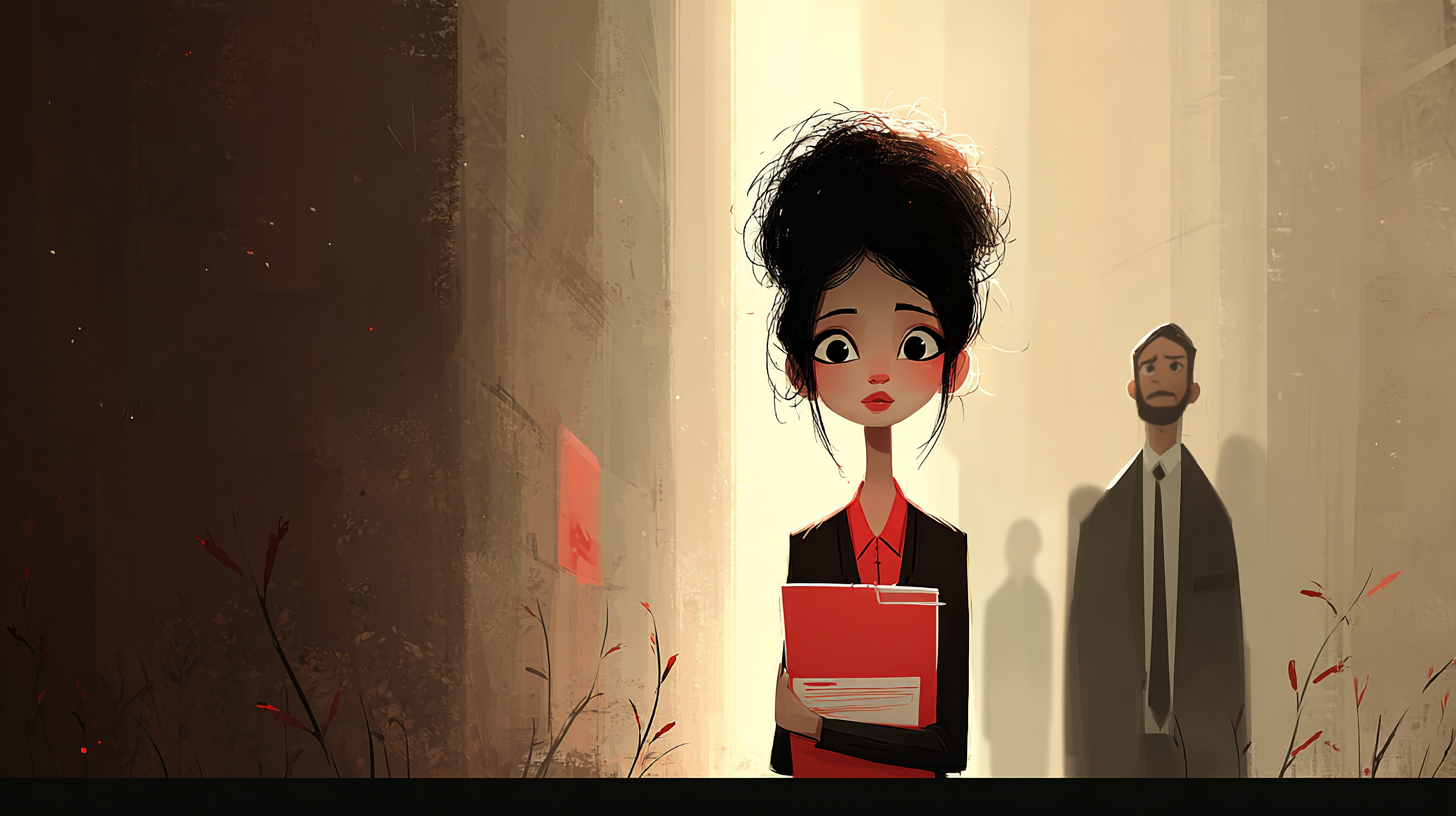
“Anxiety” means feeling nervous or worried because something bad might happen.
「anxiety」は、何か悪いことが起こるかもしれないと心配したり、落ち着かない気持ちのこと。
以下は英単語 “anxiety” に関するストーリー型学習コンテンツです。まずは大枠の意味を理解して最後の文章で確認しましょう。
主な意味(main meaning)
| 品詞 | 意味 | 発音記号 | 例文 |
|---|---|---|---|
| 名詞 (noun) | 不安、心配、緊張した気持ち | /æŋˈzaɪəti/ | She felt a lot of anxiety before the job interview. |
語源(etymology)
ラテン語「anxietas(心配)」から来ており、「締めつけられるような感情」というイメージを持っています。
核となるイメージは「心の圧迫感・緊張感」。
類義語(synonyms)
| 類義語 | 例文 |
|---|---|
| worry | I have a lot of worry about my test results. |
| nervousness | His nervousness was clear before the speech. |
| fear | The child felt fear when the lights went out. |
| stress | She has a lot of stress from work. |
| uneasiness | There was a sense of uneasiness in the room. |
反義語(antonyms)
| 反義語 | 例文 |
|---|---|
| calmness | His calmness helped everyone relax. |
| confidence | She spoke with confidence during the meeting. |
コロケーション(collocations)
| コロケーション | 例文 |
|---|---|
| feel anxiety | Many people feel anxiety before flying. |
| anxiety attack | He had an anxiety attack before the test. |
| social anxiety | She suffers from social anxiety at parties. |
| reduce anxiety | Exercise can help reduce anxiety. |
| anxiety disorder | He was diagnosed with an anxiety disorder. |
2項表現(binomials)
| 表現 | 例文 |
|---|---|
| fear and anxiety | Fear and anxiety are common before big changes. |
| stress and anxiety | Stress and anxiety affect many students during exams. |
英語ストーリー(english story)
Title: A Big Presentation
Emma had always dreamed of working in a big company. After years of studying, she finally got her dream job. One day, her boss asked her to give a presentation in front of the whole department. At first, she felt excited, but soon she was filled with anxiety. She began to worry about what might go wrong. “What if I forget my words?” she thought. Her hands were shaking, and she couldn’t sleep the night before.
In the morning, Emma had a small anxiety attack. Her friend Alex noticed and said, “Take a deep breath. Try to reduce your anxiety with a short walk.” They walked around the building, and Emma started to feel better. Alex also reminded her, “You have confidence. I’ve seen your work. You’ll do great.”
During the presentation, Emma still felt a little nervousness, but she managed to speak clearly. She talked about how stress and anxiety can affect work performance and gave tips to deal with them. She even mentioned social anxiety and how support from coworkers can help.
When the meeting ended, her boss smiled and said, “That was excellent.” Emma felt a great sense of calmness. She was proud of herself. She learned that fear and anxiety are natural, but they don’t have to stop you.
和訳
タイトル:大きなプレゼンテーション
エマはずっと大きな会社で働くことを夢見てきました。何年も勉強したあと、ついに夢の仕事を手に入れました。ある日、上司から部署全体の前でプレゼンをするように言われました。最初はわくわくしましたが、すぐに*anxiety(不安)でいっぱいになりました。何か失敗したらどうしようとworry(心配)*が頭から離れませんでした。手が震え、前の晩は眠れませんでした。
朝になると、エマは小さな*anxiety attack(不安発作)を起こしました。友人のアレックスがそれに気づいて、「深呼吸して。短い散歩でanxiety(不安)をreduce(減らす)といいよ」と言いました。二人は建物の周りを歩き、エマは少し落ち着いてきました。アレックスはさらに「君にはconfidence(自信)*があるよ。君の仕事ぶりを見てきたから大丈夫」と励ましました。
プレゼン中も少し*nervousness(緊張)がありましたが、エマははっきり話すことができました。仕事のパフォーマンスにstress and anxiety(ストレスと不安)*がどのように影響するかについて話し、それに対処する方法を紹介しました。*social anxiety(対人不安)*についても触れ、同僚の支えが助けになることを伝えました。
会議が終わると、上司がにっこり笑って「素晴らしかったよ」と言いました。エマは大きな*calmness(落ち着き)*を感じました。自分を誇らしく思いました。彼女は、*fear and anxiety(恐れと不安)*は自然なことだけれど、それに負ける必要はないと学びました。
Q&A
Q: “anxiety” と “worry” の違いは何ですか?
A: “worry” は具体的な問題(例:明日のテスト)に対する心配で、比較的軽めです。一方 “anxiety” は、はっきりしない未来の不安や緊張感を表し、心や体に強い影響を及ぼすことがあります。
Q: “anxiety” と “nervousness” の違いは何ですか?
A: “nervousness” は一時的な緊張感(例:スピーチの直前)を表します。”anxiety” はもっと長く続く、深くて重い不安感を表すことが多いです。
Q: “anxiety” と “fear” の違いは何ですか?
A: “fear” は目の前の危険や明確な対象(例:犬が怖い)に対する恐れです。”anxiety” ははっきりとした対象がない不安で、将来への心配が中心です。
Q: “anxiety” と “stress” の違いは何ですか?
A: “stress” は外部からのプレッシャー(例:仕事や勉強の負担)によって生じる緊張です。”anxiety” はそのプレッシャーによって心の中で起こる不安や心配です。つまり、stressが原因でanxietyになることがあります。
Q: “anxiety” と “uneasiness” の違いは何ですか?
A: “uneasiness” は何となく落ち着かない気持ちを指し、軽めの感情です。”anxiety” はより強く、継続的な不安を表す語です。たとえば、”uneasiness” は違和感程度ですが、”anxiety” は病気にもつながるレベルの不安です。
Q: “anxiety” と “anxiety attack” の違いは何ですか?
A: “anxiety” は日常的な不安感を表すのに対し、”anxiety attack” はその不安が急激に高まって体に強く出る発作的な状態(例:動悸、息苦しさなど)です。
Q: “anxiety” と “social anxiety” の違いは何ですか?
A: “anxiety” は一般的な不安全体を指します。”social anxiety” は特に人前に出る場面や他人と関わるときに感じる強い不安のことです。
Q: “anxiety” と “confidence” の関係は?
A: “confidence”(自信)があるとき、人は自分に対して安心感を持てるので、”anxiety”(不安)は起こりにくくなります。つまり、この2つは感情として反対の意味を持ちます。


コメント