“In time” means early enough to do something, and “on time” means at exactly the planned time.
日本語の「間に合う」と「時間どおり」は似ていますが、英語では in time と on time で意味が少し変わります。
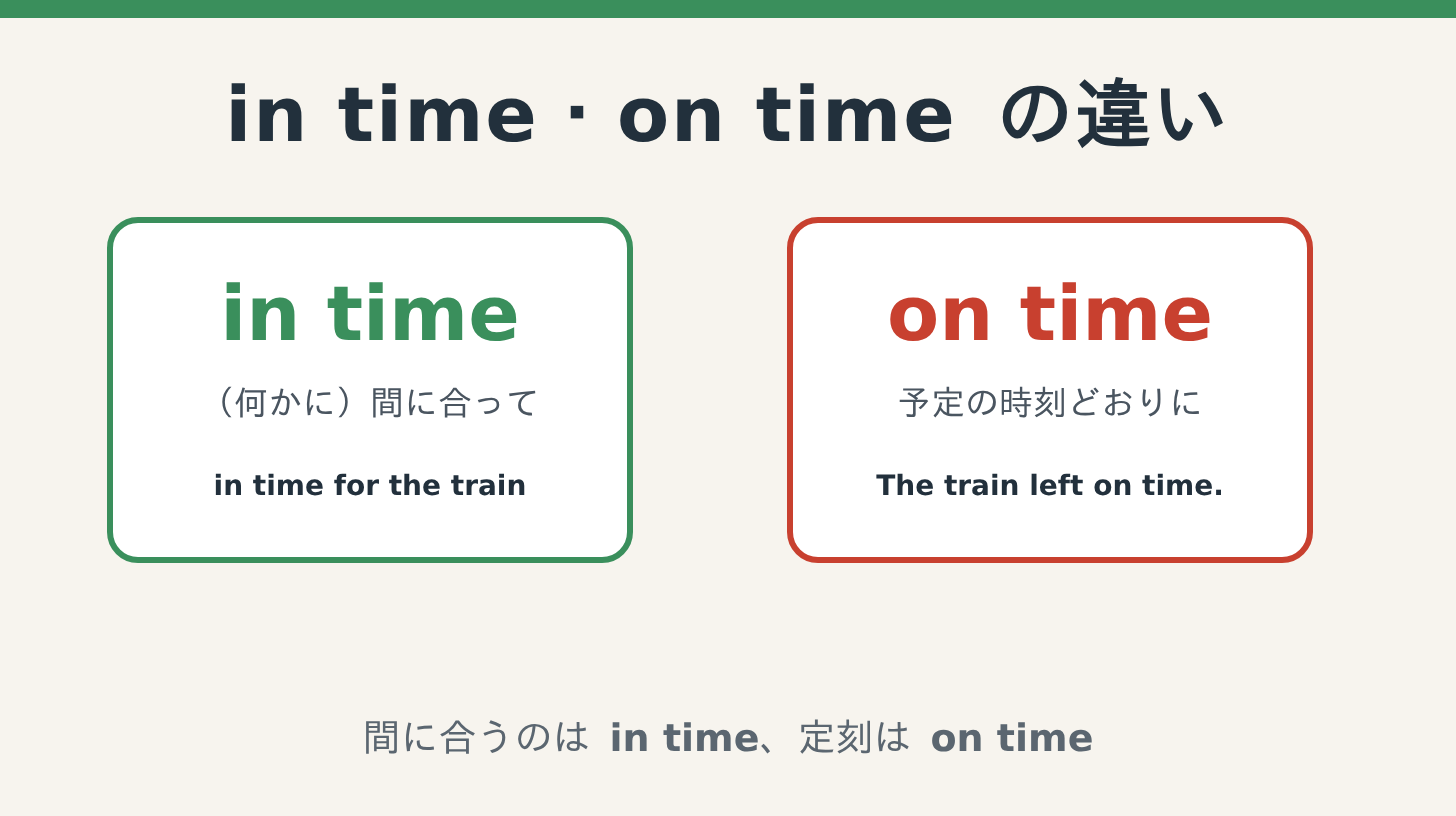
結論から言うと、in time は「何かに遅れずに、余裕をもって間に合う」、on time は「決められた時刻ぴったりに」 です。I arrived in time for the meeting.(会議に間に合った)は、会議が始まる前に着いたということ。The meeting started on time.(会議は時間どおりに始まった)は、予定の時刻に始まったということです。
ひと目でわかる比較表
| 項目 | in time | on time |
|---|---|---|
| 意味 | 間に合って、遅れずに(早くてもぎりぎりでも) | 時刻どおりに、定刻に |
| 見ているもの | 「何か」に間に合うか | 予定の時刻と合っているか |
| 後ろに続く形 | in time for +名詞/in time to +動詞 | 単独、または on time for +名詞 |
| 早く着いたとき | OK(間に合えばよい) | 5分前でも言う。早すぎるなら early |
| 少し強める言い方 | just in time(ぎりぎり間に合って) | right on time(ちょうど時間どおり) |
| 反対の言い方 | too late(遅すぎる) | late(遅れて) |
| 発音(IPA) | /ɪn taɪm/ | /ɒn taɪm/(米 /ɑːn taɪm/) |
in time は「何かに」間に合うことを言うので、for や to を続けて、何に間に合うのかを示します。on time は予定の時刻が前提で、その時刻に合っていれば使います。
イメージでつかむ違い
- in time は、「ある出来事より前に、間に合った」というイメージです。電車の出発、映画の開始、締め切りなど、ゴールの前に滑りこめたことを言います。
- on time は、時計の針とぴったり合うイメージです。予定表の時刻と実際の時刻が一致していることを言います。
たとえば、電車が10時発として、9時50分に駅に着けば I got there in time.(間に合った)です。電車が時刻表どおり10時に出発したなら The train left on time.(定刻に出発した)です。
○×で確認する例文
- ○ We got to the airport in time for our flight.(飛行機に間に合う時間に空港に着いた)
- ○ The train arrived on time.(電車は定刻に着いた)
- ○ She finished the report in time to submit it.(提出に間に合うように報告書を仕上げた)
- ○ The concert started on time at seven.(コンサートは7時ちょうどに始まった)
- × I arrived in time for the train, but it had already left. → ○ I didn’t arrive in time for the train. / ○ I missed the train.(電車には間に合わなかった)
- × The class began in time. → ○ The class began on time.(授業は定刻に始まった)
よくある間違い
1. 「定刻に始まった」を in time で言う
予定の時刻ぴったりに始まったことは on time です。in time は「何かに間に合う」ときの言い方で、始まりそのものには使いません。
- × The movie started in time. → ○ The movie started on time.(映画は定刻に始まった)
- ○ We reached the theater in time for the movie.(映画に間に合うように劇場に着いた)
2. 「間に合って」と「時刻どおり」を混ぜる
in time for は「何かの前に間に合う」、on time for は「その予定の時刻どおり」で、意味が違います。
- ○ I came in time for dinner.(夕食に間に合って帰ってきた。始まる前に)
- ○ I came on time for dinner.(夕食の時刻どおりに来た)
- ○ I came on time.(約束の時刻どおりに来た)
3. for や to をつけ忘れる
in time の後ろには、何に間に合うのかを入れます。for +名詞、または to +動詞です。
- × I was in time the test. → ○ I was in time for the test.(テストに間に合った)
- ○ He ran so he would be in time to catch the bus.(バスに間に合うように走った)
4. just in time と right on time を混ぜる
just in time は「ぎりぎり間に合って」、right on time は「ちょうど時間どおり」です。どちらも強める語ですが、意味は別です。
- × The train left just in time.(定刻に出発した、の意味で) → ○ The train left right on time.
- ○ We got to the station just in time.(ぎりぎり駅に間に合った)
- ○ The bus came right on time.(バスはちょうど時間どおりに来た)
よく使う組み合わせ(コロケーション)
| in time | 意味 | on time | 意味 |
|---|---|---|---|
| in time for dinner | 夕食に間に合って | arrive on time | 定刻に着く |
| in time to catch the train | 電車に間に合うように | start on time | 定刻に始まる |
| just in time | ぎりぎり間に合って | finish on time | 期限どおりに終える |
| get there in time | 間に合って着く | right on time | ちょうど時間どおり |
| in time for the deadline | 締め切りに間に合って | pay on time | 期日どおりに払う |
短い会話で確認
A: Did you make it to the station in time?(駅、間に合った?)
B: Yes, just in time. The train left a minute later.(うん、ぎりぎり。電車は1分後に出た)
A: Was the train on time?(その電車は定刻だった?)
B: Yes, it left right on time.(うん、ちょうど時刻どおりに出たよ)
間に合ったかどうかは in time、時刻どおりかどうかは on time です。
確認クイズ
- Q「会議に間に合うように、タクシーに乗った」I took a taxi to get there ___ to attend the meeting. (A) on time (B) in time (C) at time
- A
正解は (B) in time。「〜するのに間に合って」は in time to +動詞です。on time のあとに to +動詞は続かず、at time という言い方もありません。
- Q「その新幹線はいつも定刻に着く」The bullet train always arrives ___. (A) in time (B) on time (C) in times
- A
正解は (B) on time。時刻表どおりという意味なので on time です。in time だけだと「何かに間に合う」の意味になり、何に間に合うのかが足りません。
- Q「ぎりぎり間に合って、飛行機に乗れた」I caught the plane ___. (A) just in time (B) right on time (C) on the time
- A
正解は (A) just in time。「ぎりぎり間に合って」は just in time です。right on time は「ちょうど時間どおり」で、あわてて間に合った感じは出ません。
よくある質問
- Qon time と punctual はどう違いますか?
- A
on time は「そのとき時間どおりだった」という出来事、punctual は「時間を守る人」という性格や習慣を言います。He is punctual. は「彼は時間に正確だ」で、He was on time. は「彼は時間どおりに来た」です。
- Q約束の時間より早く着いたら on time ですか?
- A
5分前くらいなら on time と言うことが多いです。ずいぶん早すぎるなら early、何かに間に合ったなら in time と言います。
- Qin time と in the time はどう違いますか?
- A
in time は「間に合って」という決まった言い方です。in the time は「その時間のあいだに」のように、時間のかたまりを指す別の表現で、意味がちがいます。
- Qin time には「いずれ、そのうち」の意味もありますか?
- A
あります。Things will get better in time.(時がたてば、よくなるよ)のように、「やがて」の意味で使います。この意味では「何かに間に合う」の for や to は続きません。
もっと詳しく知りたい人へ
それぞれの単語の意味・語源・例文は、次の記事でくわしく解説しています。