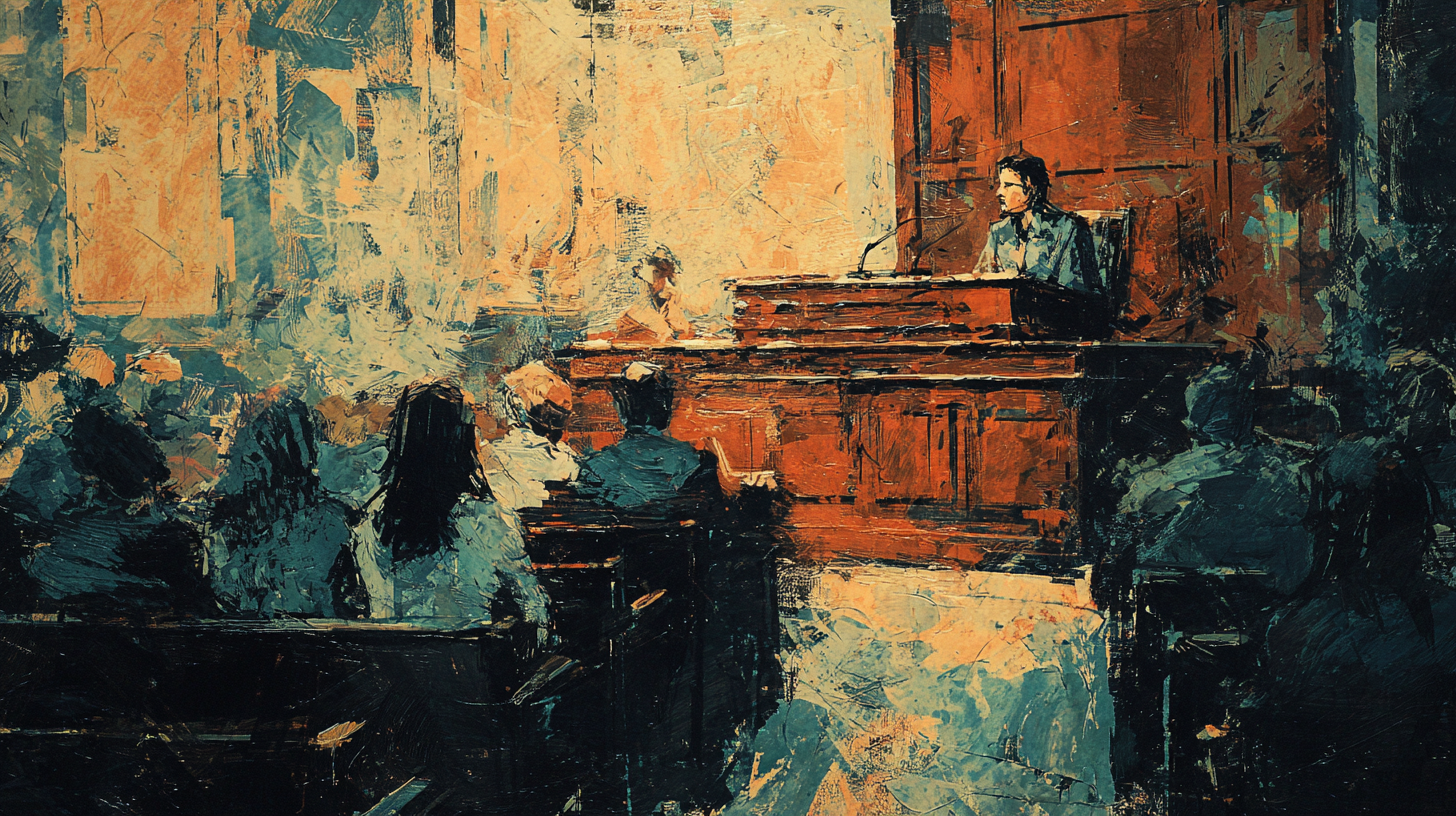
A verdict is a final decision, especially in court or by people’s opinion.
verdict は「裁判や世間で出る最終的な結論や判断」のこと。
以下は英単語 “verdict” に関するストーリー型学習コンテンツです。まずは大枠の意味を理解して最後の文章で確認しましょう。
「verdict」の主な意味(main meaning)
| 品詞 | 主要な意味 | 英語定義(簡潔) | 英語例文(1文) | 発音記号(IPA) |
|---|---|---|---|---|
| noun | 評決 判決(裁判の結論) | a decision made by a jury or judge in a court case | The jury returned a guilty verdict after two hours. | /ˈvɝːdɪkt/ |
| noun | 判断 結論(出来事への評価) | a judgment or conclusion about something | The public’s verdict on the new policy was negative. | /ˈvɝːdɪkt/ |
「verdict」の語源(etymology)
ラテン語の「真実(ver)」と「言う(dict)」に由来し、「真実を言い渡す」という感じから来ている。
核のイメージは「最後にきっぱり結論を言い渡す」。
「verdict」の類義語(synonyms)
| 類義語 | 基本的な意味 | 指定単語とのニュアンスの違い | 英語例文 |
|---|---|---|---|
| judgment | 判断 判決 | verdict より広く使え、裁判以外の「判断」にもよく使う。verdict は「最終結論」の響きが強い。 | It’s too early to make a judgment. |
| decision | 決定 | ただの「決めたこと」。verdict のような「審理や評価の末の結論」という重さは弱い。 | We made a decision to postpone the meeting. |
| ruling | 裁定(裁判官の判断) | 裁判官が出す判断に寄りやすい。verdict は陪審や裁判全体の「最終評決」によく使う。 | The judge issued a ruling on the motion. |
| conclusion | 結論 | 話し合い・調査の結果の結論。verdict は「白黒をつける結論」という感じが強い。 | The report reached the conclusion that costs would rise. |
| opinion | 意見 評価 | 個人の考えに近い。verdict は「多くの人や正式な場で出る結論」に近い。 | In my opinion, the plan will work. |
「verdict」の反義語(antonyms)
| 反義語 | 基本的な意味 | 英語例文 |
|---|---|---|
| uncertainty | 不確かさ | There is still uncertainty about the cause of the problem. |
| indecision | 優柔不断 決められない状態 | Her indecision delayed the project. |
「verdict」のコロケーション(collocations)
| コロケーション | 意味 | 英語例文 |
|---|---|---|
| reach a verdict | 評決に達する | The jury couldn’t reach a verdict on the first day. |
| deliver a verdict | 評決を言い渡す | The court will deliver a verdict tomorrow morning. |
| return a verdict | 評決を下す | The jury returned a unanimous verdict. |
| a guilty verdict | 有罪評決 | A guilty verdict shocked his supporters. |
| a not-guilty verdict | 無罪評決 | The defendant celebrated a not-guilty verdict. |
「verdict」の2項表現(binomials)
| 2項表現 | 意味 | 英語例文 |
|---|---|---|
| guilty or innocent | 有罪か無罪か | The trial was about whether he was guilty or innocent. |
| right or wrong | 正しいか間違いか | We need to decide what is right or wrong in this situation. |
英語ストーリー(english story)
On Monday morning, our office was unusually quiet. Everyone was waiting for the company’s internal committee to announce its verdict about a serious complaint. It was not a court case, but it felt similar. The committee had investigated a claim that some sales reports were changed to make results look better.
I worked in the finance team, so I had helped prepare documents for the investigation. For two weeks, we checked emails, meeting notes, and the numbers in the system. My manager, Ms. Tanaka, told us to stay calm and focus on facts. “This is not about rumors,” she said. “We need a clear conclusion.”
At 10 a.m., we gathered in the conference room. The HR director began speaking in a steady voice. “After careful review,” she said, “the committee will deliver a verdict today.” People sat up straight. I could hear the air conditioner and nothing else.
Before she continued, she explained the process. They had interviewed five people, including Mr. Saito from sales. They compared different versions of the same report and looked at who had access. It sounded like a formal ruling, even though it was inside the company.
Then the director shared the decision. “The committee has reached a verdict: the reports were altered intentionally.” A few people gasped. The verdict was not about guilty or innocent in a legal sense, but it clearly placed responsibility. The director added, “We will take action based on this judgment.”
My coworker Yuki whispered, “So it’s really true.” I understood her reaction, but I also remembered Ms. Tanaka’s words. The public’s opinion can change quickly, but we needed evidence, not emotion.
After the meeting, Ms. Tanaka asked me to walk with her to the break area. “I know this is uncomfortable,” she said, “but we should not act like judges in daily conversations.” She meant that we should avoid attacking Mr. Saito with our words. Still, we could not ignore what happened. Right or wrong, the company had to protect trust.
Later that day, Mr. Saito sent a message to the whole department. He did not deny the conclusion. Instead, he apologized and said he had been under pressure. He wrote that he was ready to accept the outcome and cooperate fully. Reading it, I felt a strange mix of anger and sympathy.
In the afternoon, HR announced next steps. Mr. Saito would be removed from the project immediately, and the sales team would receive training. Also, the company would update its system to reduce uncertainty and prevent the same problem. The plan sounded reasonable, and it helped reduce indecision among employees who were worried about the future.
At my desk, I reviewed the final report. The committee had returned a unanimous verdict, and the evidence was clearly organized. I realized something important: a verdict is not only about punishment. It can also be a starting point. Once a final judgment is made, people can stop guessing and begin fixing what is broken.
Before I left the office, Ms. Tanaka thanked me for my work. “We handled this in a professional way,” she said. “Now we can move forward.” I nodded. It had been a difficult day, but the verdict gave the company a clear direction, and that mattered.
和訳
月曜の朝、私たちのオフィスはいつもより静かだった。みんなが、重大な苦情について社内委員会が出す評決(verdict)を待っていた。裁判ではないが、似た空気があった。委員会は、営業の結果を良く見せるために売上報告が変更されたという訴えを調べていた。
私は経理チームなので、調査のための書類作りを手伝ってきた。2週間、私たちはメールや会議メモ、システム上の数字を確認した。上司の田中さんは「落ち着いて事実に集中して」と言った。「うわさの話ではない。はっきりした結論(conclusion:結論)が必要だ」と。
午前10時、私たちは会議室に集まった。人事部長が落ち着いた声で話し始めた。「慎重な確認のあと、委員会は今日、評決(verdict)を言い渡します(deliver a verdict:評決を言い渡す)」と言った。みんなは背筋を伸ばした。聞こえるのは空調の音だけだった。
続ける前に、部長は手順を説明した。営業の斉藤さんを含む5人に面談し、同じ報告書の別バージョンを比べ、アクセスできた人も調べた。社内のことなのに、裁定(ruling:裁定)のように正式に聞こえた。
そして部長は決定(decision:決定)を伝えた。「委員会は評決(verdict)に達しました(reach a verdict:評決に達する)。報告書は意図的に改ざんされていました」。数人が息をのんだ。その評決(verdict)は法律上の有罪か無罪か(guilty or innocent:有罪か無罪か)という意味ではないが、責任の所在をはっきり示した。部長は「この判断(judgment:判断)にもとづいて対応します」と付け加えた。
同僚のユキは小声で「やっぱり本当だったんだ」と言った。私はその気持ちが分かったが、田中さんの言葉も思い出した。世間の意見(opinion:意見)はすぐ変わる。でも必要なのは感情ではなく証拠だ。
会議後、田中さんは私に休憩スペースまで一緒に来るよう言った。「これは気まずいよね。でも普段の会話で裁判官みたいにならないで」と言った。つまり、斉藤さんを言葉で攻撃するのは避けようということだ。それでも、起きたことは無視できない。正しいか間違いか(right or wrong:正しいか間違いか)、会社は信頼を守らなければならない。
その日の後半、斉藤さんは部署全体にメッセージを送った。彼は結論(conclusion:結論)を否定しなかった。代わりに謝罪し、強いプレッシャーがあったと書いた。そして結果を受け入れ、全面的に協力すると言った。それを読んで、私は怒りと同情が混ざった不思議な気持ちになった。
午後、人事は次の対応を発表した。斉藤さんはすぐにプロジェクトから外れ、営業チームは研修を受ける。また会社は、不確かさ(uncertainty:不確かさ)を減らし、同じ問題を防ぐためにシステムを更新する。計画は妥当に聞こえ、将来を心配していた社員の迷い(indecision:迷い)も減った。
私は机で最終報告書を確認した。委員会は満場一致の評決(verdict)を下し(return a verdict:評決を下す)、証拠は分かりやすく整理されていた。私は大事なことに気づいた。評決(verdict)は罰のためだけではない。出発点にもなりうる。最終判断(judgment:判断)が出れば、人は当て推量をやめ、壊れたものを直し始められる。
退社前、田中さんは私の仕事に礼を言った。「私たちはプロらしく対応できた。これで前に進める」と。私はうなずいた。つらい一日だったが、評決(verdict)は会社に明確な方向を与え、それが重要だった。
「verdict」のQ&A
- Qverdict ってどういう意味?
- A
verdict は最終的な結論や判断のことで、特に裁判の評決によく使います。
- Qverdict は裁判だけで使う言葉?
- A
裁判でよく使いますが、世間の評価のように「最終判断」という意味でも使えます。
- Qverdict と decision の違いは?
- A
decision はただの決定で軽めですが、verdict は調べた後に出る重い最終結論の感じです。
- Qverdict と judgment の違いは?
- A
judgment は広い意味の判断で、verdict は特に最後に言い渡される結論という響きが強いです。
- Qverdict と ruling の違いは?
- A
ruling は裁判官が出す判断に寄りやすく、verdict は陪審や審理全体の最終結論に寄りやすいです。
- Qreach a verdict はどういう意味?
- A
reach a verdict は「評決に達する」で、話し合いの末に結論が決まるときに使います。
- Qdeliver a verdict はどういう意味?
- A
deliver a verdict は「評決を言い渡す」で、正式に結果を発表するときに使います。
- Qreturn a verdict はどういう意味?
- A
return a verdict は「評決を下す」で、陪審や委員会が結論を出す場面で使います。
- Qguilty verdict はどんなときに使う?
- A
guilty verdict は「有罪評決」で、有罪だという結論が出たときに使います。
- Qverdict を自然に覚えるコツは?
- A
verdict は「最後に結論を言い渡す」という核イメージで、reach deliver return とセットで覚えると定着します。


コメント