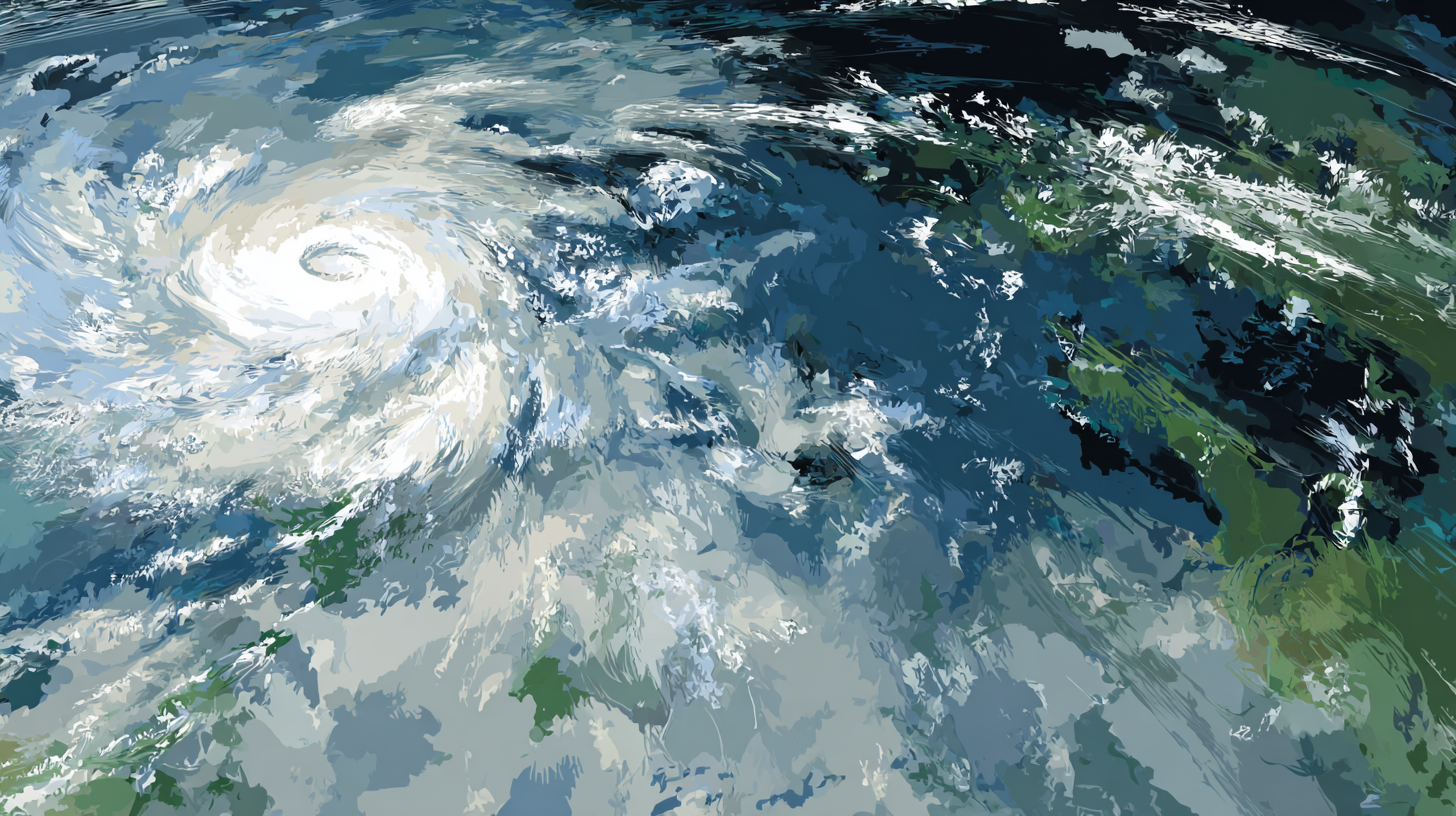
A typhoon is a very strong storm in the western Pacific.
typhoon は、西太平洋で起きるとても強い「台風」のことです。
以下は英単語 “typhoon” に関するストーリー型学習コンテンツです。まずは大枠の意味を理解して最後の文章で確認しましょう。
「typhoon」の主な意味(main meaning)
| 品詞 | 意味 | 英語定義 | 例文 | 発音記号(IPA) |
|---|---|---|---|---|
| noun | 台風 | a very strong tropical storm in the western Pacific Ocean | The typhoon caused heavy rain and strong winds across the region. | /taɪˈfuːn/ |
| noun | 大騒動を起こすもの(比喩) | something that causes sudden, great trouble or change | The new policy created a typhoon of complaints in the office. | /taɪˈfuːn/ |
「typhoon」の語源(etymology)
「typhoon」の類義語(synonyms)
| 類義語 | 基本的な意味 | 指定単語とのニュアンスの違い | 英語例文 |
|---|---|---|---|
| hurricane | 大型の熱帯低気圧 | 大西洋や北東太平洋で起きるときに使うことが多い。強さは似ているが場所が違う。 | A hurricane can destroy houses near the coast. |
| cyclone | 低気圧の渦(熱帯低気圧を含む) | もっと広い言い方。地域によっては熱帯低気圧全般を cyclone と呼ぶ。 | The cyclone brought days of rain to the island. |
| tropical storm | 熱帯暴風雨 | typhoon より弱い段階を指すことが多い。発達すると typhoon になる。 | The tropical storm may become stronger overnight. |
| storm | 嵐 | いちばん一般的。強さや種類を特定しないので、台風ほど限定的ではない。 | A storm delayed our morning meeting. |
| gale | 強風 | 雨よりも「強い風」に焦点。台風の一部の特徴だけを言う感じ。 | A gale shook the windows all night. |
「typhoon」の反義語(antonyms)
| 反義語 | 意味 | 英語例文 |
|---|---|---|
| calm | 穏やかさ、無風に近い状態 | After the storm, the sea became calm again. |
| clear skies | 晴天 | We finally saw clear skies after a week of rain. |
「typhoon」のコロケーション(collocations)
| コロケーション | 意味 | 英語例文 |
|---|---|---|
| typhoon season | 台風の多い時期 | During typhoon season, our company reviews its emergency plan. |
| typhoon warning | 台風警報 | A typhoon warning was issued in the afternoon. |
| a typhoon approaches | 台風が近づく | As a typhoon approaches, trains may stop running. |
| typhoon damage | 台風による被害 | The office checked the building for typhoon damage. |
| typhoon hits (a place) | 台風が(場所)を直撃する | When the typhoon hit the city, many roads were closed. |
「typhoon」の2項表現(binomials)
| 2項表現 | 意味 | 英語例文 |
|---|---|---|
| rain and wind | 雨と風 | The rain and wind got stronger after midnight. |
| safe and sound | 無事で | Everyone arrived home safe and sound. |
| sooner or later | 遅かれ早かれ | Sooner or later, we need a plan for emergencies. |
英語ストーリー(english story)
It was late September, right in the middle of typhoon season, and our office felt unusually quiet. Most people were working, but everyone kept checking the weather app. Around 9 a.m., an email arrived from the city office: a typhoon warning had been issued, and the storm could reach our area by evening.
I work on the third floor of a small printing company. Our manager, Ms. Sato, called a short meeting near the copy machine. “A typhoon approaches,” she said, pointing at the forecast map. “We need to finish today’s urgent orders before lunchtime. After that, we’ll decide whether to close early.”
Some of my coworkers looked nervous. Ken, who recently moved from overseas, asked, “Is a typhoon like a hurricane?” Ms. Sato nodded. “It’s similar in strength, but we usually call it a typhoon in this region. In other places, people might say hurricane or cyclone. The name changes, but the danger is real.”
We split tasks quickly. I checked the delivery schedule while Yumi prepared invoices. In the background, the sky turned gray, and the wind began to push against the windows. It wasn’t a calm morning anymore. Still, we tried to stay focused and professional.
At 11 a.m., the weather report said the system had been a tropical storm earlier, but it had grown stronger over the warm sea. “It could become severe by the time it hits the city,” the announcer said. Hearing that, I felt my stomach tighten. I remembered a time when a storm cut the power in my neighborhood, and we had to use candles.
Ms. Sato walked around the office with a checklist. “Please save your work and back up important files. Also, move anything near the windows,” she said. We taped the edges of the glass doors, put cardboard over a few weak spots, and moved the paper boxes to the center of the room. The preparations were simple, but they gave us confidence.
By early afternoon, the rain and wind became louder. The trees outside bent as if they were bowing. A strong gust, almost like a gale, made the office lights flicker once. Ken stepped away from the window and said, “Okay, I understand now. This is not just ‘bad weather.’”
At 2 p.m., Ms. Sato announced, “We will close at 3. Please contact clients and update them. We must avoid unnecessary risk.” I called our biggest customer to explain that deliveries might be delayed. Surprisingly, the customer sounded calm. “Safety first,” he said. “We will watch and wait.”
Right before 3, we checked the building one last time. The street below was already filling with water, and some shops were closing their shutters. “If the typhoon hits during the night, there may be typhoon damage tomorrow,” Ms. Sato said. “Do not come in unless we confirm it is safe.”
On the way out, Ken asked me again about the different words. I told him, “In many places, hurricane is the common word. Cyclone is also used, especially in some regions. But here, people say typhoon. If you hear tropical storm, it often means it’s weaker or still developing.”
We rode the elevator down together. The lobby was crowded with employees from other companies, all trying to leave early. Outside, the rain was heavy, and the wind felt sharp. “Let’s go straight home,” I said. “No stops.”
That night, I stayed inside, listening to the news. The typhoon finally hit the city around midnight. The sound was frightening, but the building held. By morning, the worst had passed. When I opened the curtains, I didn’t see clear skies yet, but the wind had weakened, and the rain had become light.
Later, Ms. Sato sent a message to the team: “Please check in. Are you safe and sound?” One by one, we replied. Some people had minor problems, like fallen branches or wet shoes, but everyone was okay.
When we returned to the office the next day, we found a few puddles near the entrance and a broken sign, but no serious damage. Ms. Sato smiled and said, “Good work yesterday. Sooner or later, another typhoon will come. Next time, we will be even better prepared.”
和訳
9月下旬、ちょうど台風シーズン(typhoon season:台風の多い時期)の真ん中で、私たちのオフィスはいつもより静かに感じられた。みんな仕事はしていたが、天気アプリを何度も確認していた。午前9時ごろ、市からのメールが届いた。台風警報(typhoon warning:台風警報)が出ていて、嵐が夕方にはこの地域に来る可能性があるという内容だった。
私は小さな印刷会社の3階で働いている。マネージャーの佐藤さんがコピー機の近くで短いミーティングを開いた。「台風が近づいています(a typhoon approaches:台風が近づく)」と彼女は予報図を指しながら言った。「今日の急ぎの注文は昼までに終わらせましょう。その後、早く閉めるか決めます。」
不安そうな人もいた。最近海外から引っ越してきたケンが、「台風はハリケーン(hurricane:ハリケーン)みたいなものですか」と聞いた。佐藤さんはうなずいた。「強さは似ていますが、この地域では台風と言います。別の場所ではハリケーンやサイクロン(cyclone:サイクロン)と呼ぶこともあります。名前は違っても危険なのは同じです。」
私たちはすぐに役割分担した。私は配送予定を確認し、ユミは請求書を準備した。空は灰色になり、風が窓を押し始めた。もう穏やか(calm:穏やか)な朝ではなかったが、私たちは集中しようとした。
午前11時の天気予報では、そのシステムは先ほどまで熱帯暴風雨(tropical storm:熱帯暴風雨)だったが、暖かい海の上で強くなったと言っていた。「市を直撃(typhoon hits:台風が直撃する)するころには、かなり激しくなる可能性があります」とアナウンサーが伝えた。それを聞いて胃がきゅっとなった。以前、嵐(storm:嵐)で停電になり、ろうそくで過ごしたことを思い出した。
佐藤さんはチェックリストを持ってオフィスを回った。「作業を保存して、大事なファイルはバックアップしてください。それから窓の近くの物を動かしましょう。」私たちはガラス扉の端をテープで留め、弱そうなところに段ボールを当て、紙の箱を部屋の中央へ移動した。準備は簡単だったが、自信につながった。
午後早くには、雨と風(rain and wind:雨と風)の音がさらに大きくなった。外の木々はお辞儀をするようにしなった。強い突風は、ほとんど強風(gale:強風)のようで、照明が一度だけちらついた。ケンは窓から離れて言った。「なるほど。これはただの『悪天候』じゃないですね。」
午後2時、佐藤さんは言った。「3時で閉めます。取引先に連絡して更新してください。無理なリスクは避けましょう。」私は最大の取引先に電話し、配送が遅れるかもしれないと伝えた。相手は意外と落ち着いていた。「安全第一です。私たちは様子を見て待ちます(watch and wait:様子を見て待つ)。」
3時直前、私たちは建物を最後に確認した。下の通りは水がたまり始め、店はシャッターを下ろしていた。「夜に台風が来たら、明日は台風被害(typhoon damage:台風による被害)があるかもしれません」と佐藤さんは言った。「安全が確認できるまで出社しないでください。」
帰り道、ケンは違う言葉についてもう一度聞いた。私は説明した。「多くの地域ではハリケーン(hurricane:ハリケーン)が一般的です。サイクロン(cyclone:サイクロン)も地域によってよく使われます。でもここでは台風です。熱帯暴風雨(tropical storm:熱帯暴風雨)と言うと、弱い段階や発達途中を指すことが多いです。」
エレベーターで一緒に降りた。ロビーは早退する人で混んでいた。外は激しい雨で、風が鋭く感じた。「まっすぐ帰ろう」と私は言った。「寄り道なしで。」
その夜、私は家の中でニュースを聞いて過ごした。台風は真夜中ごろに市を直撃(typhoon hits:台風が直撃する)した。怖い音だったが、建物は持ちこたえた。朝には最悪は過ぎていた。カーテンを開けると、まだ晴天(clear skies:晴天)ではなかったが、風は弱まり、雨も小降りになっていた。
後で佐藤さんがチームにメッセージを送った。「無事ですか。安全にいますか(safe and sound:無事で)。」私たちは一人ずつ返信した。枝が落ちた、靴が濡れた、など小さな問題はあったが、全員大丈夫だった。
翌日オフィスに戻ると、入口の近くに水たまりが少しあり、看板が壊れていたが大きな被害はなかった。佐藤さんは微笑んで言った。「昨日はよくやりました。遅かれ早かれ(sooner or later:遅かれ早かれ)、また台風は来ます。次はもっと準備を良くしましょう。」
「typhoon」のQ&A
- Qtyphoon って何ですか
- A
西太平洋で起きる、とても強い熱帯の嵐のことです
- Qtyphoon と hurricane はどう違いますか
- A
強さは似ていますが、hurricane は主に大西洋や北東太平洋で使われ、typhoon は西太平洋で使われることが多いです
- Qtyphoon と cyclone はどう使い分けますか
- A
cyclone はもっと広い言い方で、地域によって熱帯低気圧全般を cyclone と呼ぶことがあります
- Qtropical storm は typhoon より弱いのですか
- A
多くの場合そうで、tropical storm は発達途中の段階を指し、強くなると typhoon になります
- Qstorm は typhoon の代わりに使えますか
- A
使えますが、storm は一般的で種類を特定しないので、台風だと明確に言いたいときは typhoon が適切です
- Qgale は typhoon と同じ意味ですか
- A
gale は主に強い風を指し、台風全体ではなく風の強さに注目するときに使います
- Qtyphoon warning はどんなときに使いますか
- A
台風の危険が高まり、注意や避難の準備が必要なときに出る情報として使います
- Qtyphoon season はいつ使う表現ですか
- A
台風が多い時期について話すときに使い、備えや計画の話題でよく出ます
- Qa typhoon approaches はどんな場面で使いますか
- A
台風が近づいていて、交通や予定に影響が出そうな状況を説明するときに使います
- Qtyphoon damage はどんな意味で使いますか
- A
台風で建物や道路などが壊れたり被害が出たりしたことをまとめて言うときに使います


コメント