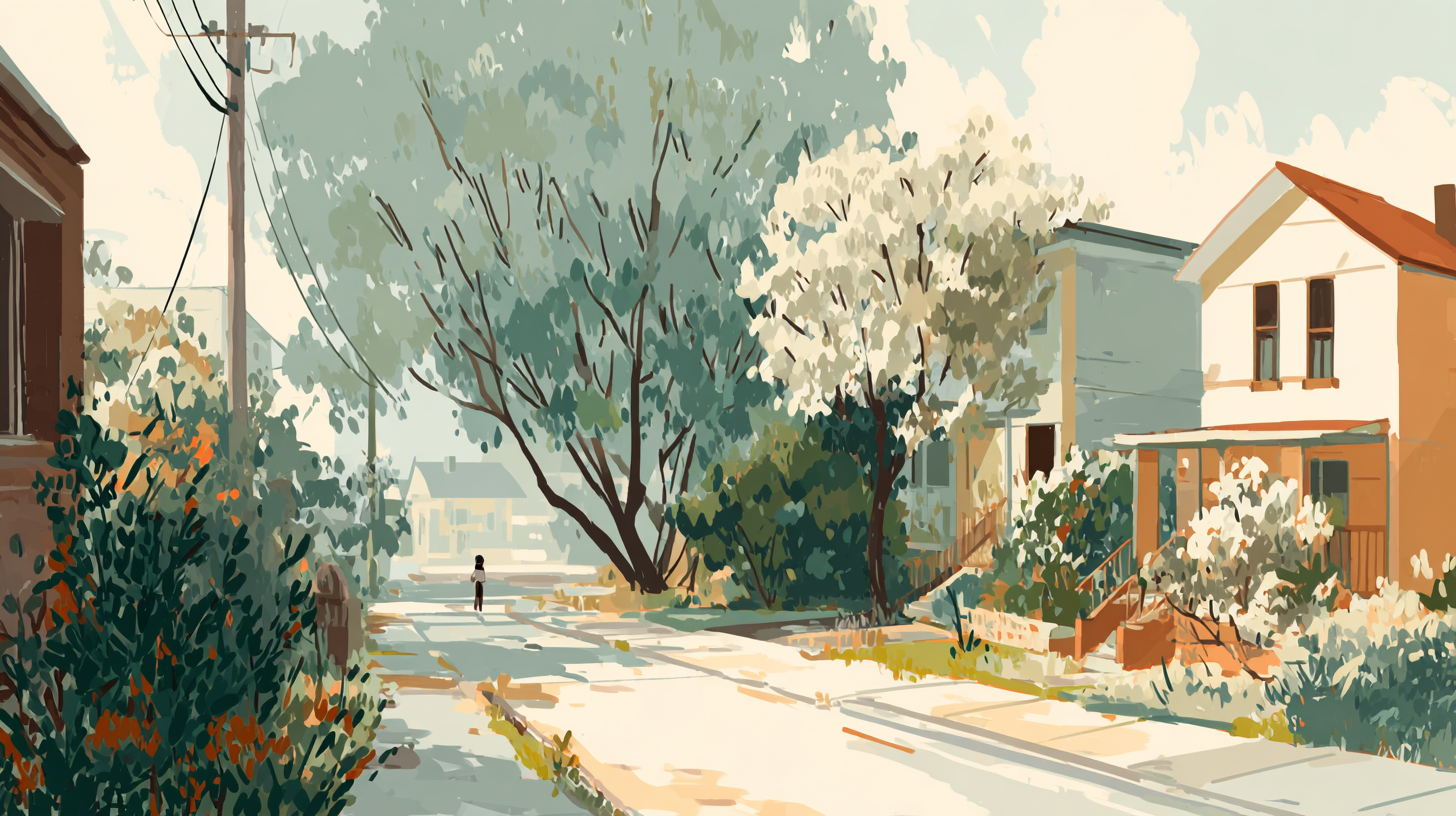
A suburb is a place outside a city center where many people live.
suburbは、町の中心から少し離れた「家が多い郊外」のこと。
以下は英単語 “suburb” に関するストーリー型学習コンテンツです。まずは大枠の意味を理解して最後の文章で確認しましょう。
「suburb」の主な意味(main meaning)
| 品詞 | 主要な意味 | 英語定義(簡潔) | 英語例文(1文) | 発音記号(IPA) |
|---|---|---|---|---|
| noun | 郊外 | an area outside the center of a city where people live | Many families move to the suburb for more space and quiet. | /ˈsʌbɝːb/ |
| noun | 郊外地域(複数なら suburbs) | the suburbs as a group; residential areas around a city | Public transportation is often less convenient in the suburbs. | /ˈsʌbɝːbz/ |
「suburb」の語源(etymology)
ラテン語の sub(下に、近くに)+ urbs(都市)に由来する。
核となるイメージは「街の外側にくっつく住む場所」。
「suburb」の類義語(synonyms)
| 類義語 | 基本的な意味 | 指定単語とのニュアンスの違い | 英語例文 |
|---|---|---|---|
| outskirts | 町のはずれ | suburbは「住宅地」の感じが強いが、outskirtsはただの「端っこ」で住宅とは限らない | They opened a warehouse on the outskirts of the city. |
| residential area | 住宅地 | suburbより広く使え、都会の中の住宅地にも言える | This is a quiet residential area with many schools. |
| commuter town | 通勤者の町 | suburbより「都心へ通う人が多い町」という働き方の要素が強い | She lives in a commuter town and takes the train every day. |
| neighborhood | 近所、地域 | suburbは「都市の外側」だが、neighborhoodは都市の中でも外でも使える | Our neighborhood has a small park and a bakery. |
| district | 地区 | 行政や区分の響きがあり、suburbほど「郊外の住宅地」感はない | The shopping district gets crowded on weekends. |
「suburb」の反義語(antonyms)
| 反義語 | 意味 | 英語例文 |
|---|---|---|
| downtown | 都心部 | I work downtown, but I live in a suburb. |
| city center | 市の中心 | The hotel is near the city center, not in the suburbs. |
「suburb」のコロケーション(collocations)
| コロケーション | 意味 | 英語例文 |
|---|---|---|
| move to the suburbs | 郊外に引っ越す | They decided to move to the suburbs after having a baby. |
| suburban life | 郊外の生活 | He enjoys suburban life because it is calmer. |
| a quiet suburb | 静かな郊外 | She grew up in a quiet suburb near the river. |
| suburban school | 郊外の学校 | The suburban school has a large sports field. |
| suburban commute | 郊外からの通勤 | The suburban commute can take more than an hour. |
「suburb」の2項表現(binomials)
| 2項表現 | 意味 | 英語例文 |
|---|---|---|
| peace and quiet | 静けさ | He moved to the suburbs for some peace and quiet. |
| home and family | 家と家族 | Weekends in the suburb are all about home and family. |
| safe and sound | 安全に | The kids arrived home safe and sound after practice. |
英語ストーリー(english story)
Kevin worked for a small software company downtown. His job was interesting, but the daily train ride was getting harder. Every morning, he stood in a crowded station, holding his laptop bag and trying to read emails. By the time he reached the office, he already felt tired.
One Monday, his manager, Ms. Patel, called him into a meeting room. “Kevin,” she said, “we’re starting a new project with a client in a quiet suburb. We’ll visit their office once a week. I want you to join the team.”
Kevin was surprised. “A suburb? I’ve only been there a few times,” he said.
Ms. Patel smiled. “You might like it. It has more peace and quiet than downtown. Also, their office is in a residential area, so it’s easy to focus.”
On Friday, Kevin and two coworkers took a company car to the client’s place. As they drove, the tall buildings slowly disappeared. The roads became wider, and there were more trees. “This is the outskirts of the city,” his coworker Mina said, looking out the window.
When they arrived, Kevin noticed something right away. The streets were clean, and there were many houses with small gardens. It felt calm, almost like time moved more slowly. The client’s office was not big, but it was bright and comfortable. During the meeting, everyone spoke politely, and the atmosphere was friendly.
After the meeting, the client’s team leader offered to show them around. “Many of us live nearby,” she said. “Some people moved to the suburbs to raise children. Schools here are good, and suburban life is safer.”
Kevin nodded. He thought about his own apartment near the city center. It was convenient, but noisy at night. Sirens and traffic often kept him awake. “Maybe living in a suburb wouldn’t be so bad,” he said quietly.
A week later, Kevin talked with Mina during lunch. “How long is your suburban commute?” he asked.
Mina laughed. “About an hour. I live in a commuter town, so I take one train and then a bus. It sounds hard, but I can sit and relax. In my neighborhood, I can actually hear birds in the morning.”
Kevin imagined that. Birds, not car horns. He also imagined weekends with home and family, walking to a park instead of rushing through crowded streets. Still, he worried about one thing. “Is it boring?” he asked.
Mina shook her head. “Not really. There are shops and cafes, just smaller ones. And when I want excitement, I go downtown. It’s a good balance.”
That evening, Kevin stayed late at the office to finish a report. When he finally stepped outside, the city lights were bright, but the air felt heavy. He checked his phone and saw a message from his sister: “If you want a bigger place, come visit us this weekend. We’re in a suburb now.”
Kevin smiled. “Maybe I will,” he thought. He pictured a quiet street, a simple house, and a life where he could come home safe and sound. For the first time in a long while, the idea of moving to the suburbs did not feel like giving something up. It felt like gaining something important.
和訳
ケビンは都心部(downtown:都心部)にある小さなソフトウェア会社で働いていた。仕事は面白かったが、毎日の電車通勤がだんだんつらくなっていた。毎朝、混んだ駅でノートPCの入ったバッグを持ち、メールを読もうとしていた。会社に着くころには、もう疲れていた。
ある月曜日、上司のパテルさんが会議室に呼んだ。
「ケビン、新しいプロジェクトを始めるの。取引先が静かな郊外(suburb:郊外)にいて、週に1回そのオフィスに行くわ。あなたもチームに入ってほしいの。」
ケビンは驚いた。
「郊外ですか。数回しか行ったことがありません。」
パテルさんは笑った。
「気に入るかもしれないわ。都心部(downtown:都心部)よりも静けさ(peace and quiet:静けさ)があるの。それに住宅地(residential area:住宅地)だから集中しやすい。」
金曜日、ケビンと同僚2人は社用車で取引先へ向かった。走っているうちに高いビルが少しずつ消え、道は広くなり、木が増えた。
「ここは町のはずれ(outskirts:町のはずれ)だね」とミナが窓の外を見ながら言った。
到着すると、ケビンはすぐに気づいた。通りはきれいで、小さな庭のある家がたくさんあった。落ち着いていて、時間がゆっくり流れるようだった。取引先のオフィスは大きくないが、明るく快適だった。会議ではみんな丁寧に話し、雰囲気も友好的だった。
会議のあと、取引先のリーダーが案内を申し出た。
「私たちの多くは近くに住んでいます。子育てのために郊外へ引っ越す(move to the suburbs:郊外に引っ越す)人も多いです。ここの学校はよくて、郊外の生活(suburban life:郊外の生活)はより安全です。」
ケビンはうなずいた。自分の家(city center:市の中心)の近くのアパートを思い出した。便利だが、夜はうるさい。サイレンや車の音で眠れないことがよくあった。
「郊外に住むのも悪くないかも」と小さく言った。
1週間後、昼食中にケビンはミナに聞いた。
「郊外からの通勤(suburban commute:郊外からの通勤)はどれくらい?」
ミナは笑った。
「1時間くらい。私は通勤者の町(commuter town:通勤者の町)に住んでるから、電車1本とバスなの。大変そうだけど、座って休めるよ。私の近所(neighborhood:近所)では、朝に鳥の声が聞こえるんだ。」
ケビンは想像した。車のクラクションではなく、鳥の声。週末は家と家族(home and family:家と家族)を大事にして、公園へ歩いて行く生活。けれど1つ心配もあった。
「退屈じゃない?」と聞いた。
ミナは首を振った。
「全然。お店やカフェもあるよ。ただ小さいだけ。刺激がほしいときは都心部(downtown:都心部)に行けばいい。いいバランスだよ。」
その夜、ケビンはレポートを終えるために遅くまで残った。外に出ると街の光は明るいが、空気は重く感じた。スマホを見ると、妹からメッセージが来ていた。
「もっと広い家がほしいなら、今週末うちに来て。私たち、郊外(suburb:郊外)に引っ越したんだ。」
ケビンは笑った。
「行ってみようかな」と思った。静かな通り、シンプルな家、そして安全に(safe and sound:安全に)帰れる暮らしを思い浮かべた。久しぶりに、郊外へ引っ越すことは何かを失うことではないと感じた。それは大事なものを得ることに思えた。
「suburb」のQ&A
- Qsuburbはどんな場所のこと?
- A
suburbは市の中心から少し離れた、家が多い郊外のことです。
- Qsuburbとoutskirtsの違いは何?
- A
outskirtsは町の端という場所の意味で、住宅地とは限らないが、suburbは住む場所の感じが強いです。
- Qsuburbとresidential areaはどう違う?
- A
residential areaは住宅地全般で、街の中の住宅地にも使えるが、suburbは都市の外側の住宅地を言うことが多いです。
- Qsuburbとneighborhoodは同じ意味?
- A
neighborhoodは近所の意味で都会でも郊外でも使えるが、suburbは都市の外側の地域を指します。
- Qsuburbは都会の中でも使える?
- A
普通は都市の外側に使い、都会の中心部にはsuburbは使いません。
- Qmove to the suburbsはどういう意味?
- A
move to the suburbsは郊外に引っ越すという意味です。
- Qsuburban lifeはどんなイメージ?
- A
suburban lifeは静かで家族向きで、家や庭がある落ち着いた生活のイメージです。
- Qsuburban commuteは何を表す?
- A
suburban commuteは郊外から都心へ通勤することや、その通勤時間を表します。
- Qpeace and quietはどんなときに使う?
- A
peace and quietはうるさくない静けさがほしいときに使います。
- Qdowntownとsuburbはどう反対?
- A
downtownは都心部で、suburbは郊外なので反対の場所としてよく並べて言います。


コメント