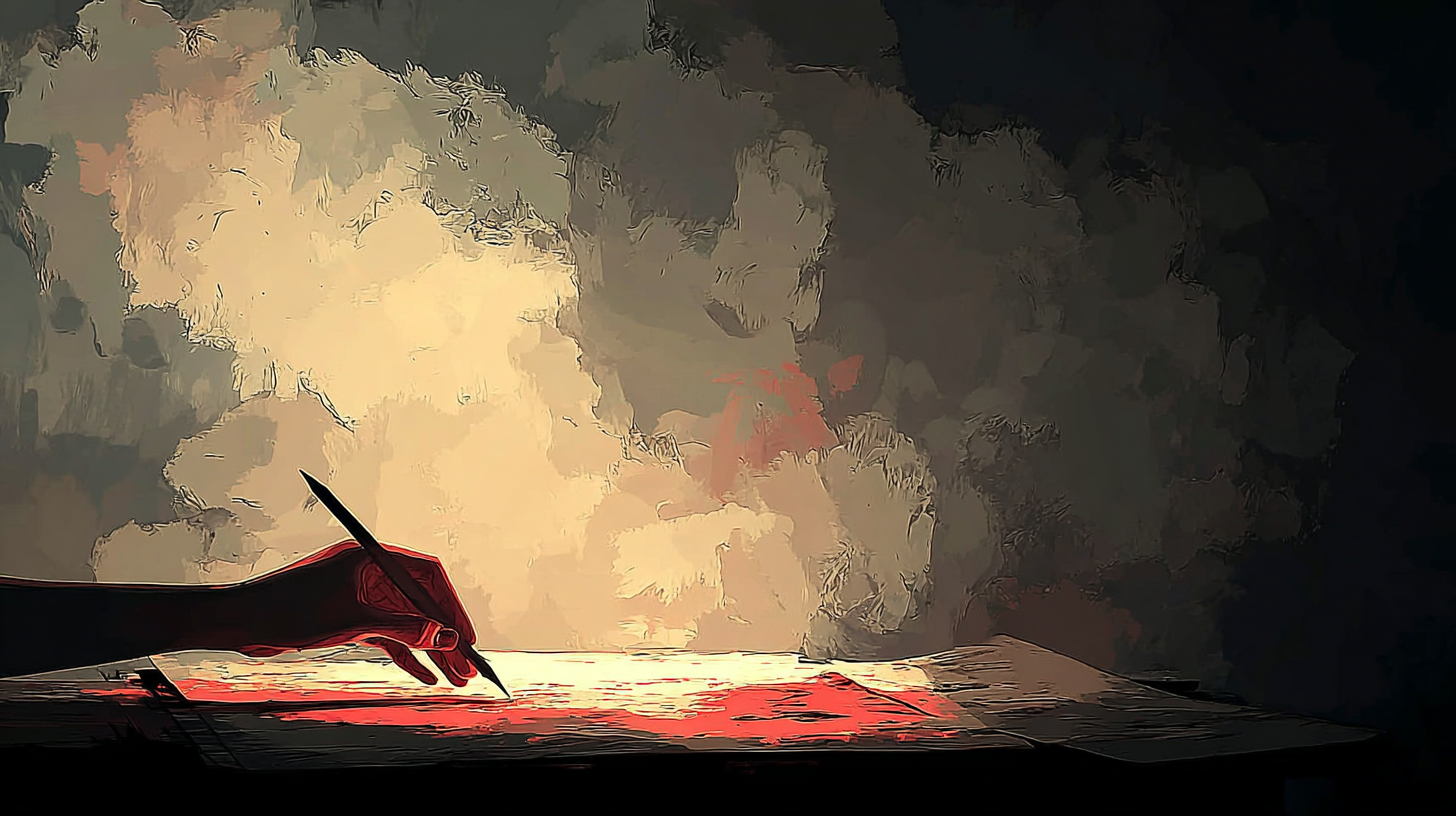
Handwriting means the way you write by hand, or words written by hand.
handwritingは「手で書いた文字や、その人の書き方のくせ」のこと。
以下は英単語 “handwriting” に関するストーリー型学習コンテンツです。まずは大枠の意味を理解して最後の文章で確認しましょう。
「handwriting」の主な意味(main meaning)
| 品詞 | 意味 | 英語定義 | 英語例文 | 発音記号(IPA) |
|---|---|---|---|---|
| noun | 手書き文字、筆跡 | a person’s style of writing with a pen or pencil | I can’t read his handwriting. | /ˈhændˌraɪtɪŋ/ |
| noun | 手書きの文章 | words written by hand (not typed or printed) | The contract includes a note in handwriting. | /ˈhændˌraɪtɪŋ/ |
「handwriting」の語源(etymology)
hand(手)+writing(書くこと)からできた言葉。
核となるイメージは「手で書いた、その人らしさが出る文字」。
「handwriting」の類義語(synonyms)
| 類義語 | 基本的な意味 | 指定単語とのニュアンスの違い | 英語例文 |
|---|---|---|---|
| penmanship | 字の上手さ、書きぶり | handwritingが「手書き全体」なのに対し、penmanshipは「上手に書く技術」や「きれいさ」に注目する | Her penmanship is excellent. |
| script | 文字の書体、筆記体 | handwritingより「字の形の種類(筆記体など)」に意識が向く | The form must be filled out in clear script. |
| writing | 書くこと、文章 | handwritingは「手書き」に限定だが、writingは手書きでもタイピングでも使える広い言葉 | His writing is easy to understand. |
| scrawl | 走り書き、読みにくい字 | handwritingの中でも「雑で読みにくい字」を強く表す(マイナス) | I found a scrawl on a sticky note. |
| calligraphy | 書道、装飾的な文字 | handwritingより「芸術的に美しく書く」ことに限定される | She practices calligraphy on weekends. |
「handwriting」の反義語(antonyms)
| 反義語 | 基本的な意味 | 英語例文 |
|---|---|---|
| typing | タイピング、タイプ入力 | Typing is faster than writing by hand. |
| printed text | 印刷された文字 | The instructions are in printed text, so they are easy to read. |
「handwriting」のコロケーション(collocations)
| コロケーション | 基本的な意味 | 英語例文 |
|---|---|---|
| neat handwriting | きれいな字 | Please use neat handwriting on the application. |
| messy handwriting | きたない字 | His messy handwriting caused a mistake. |
| read someone’s handwriting | 人の字を読む | I can usually read my boss’s handwriting. |
| improve your handwriting | 字を上達させる | She tried to improve her handwriting before the exam. |
| a handwritten note | 手書きのメモ | I left a handwritten note on your desk. |
「handwriting」の2項表現(binomials)
| 2項表現 | 基本的な意味 | 英語例文 |
|---|---|---|
| pen and paper | ペンと紙 | I always keep pen and paper in meetings. |
| read and write | 読み書きする | The new system helps staff read and write reports quickly. |
| ink and paper | インクと紙 | The smell of ink and paper reminds me of old offices. |
英語ストーリー(english story)
On Monday morning, our office was already busy. I work in the HR department, and we were preparing documents for new employees. Most of the forms were online, so we could finish them by typing. Still, a few important papers needed signatures and a short message written by hand.
My manager, Ms. Kato, placed a small stack of files on my desk. “Please check these before lunch,” she said. On top of the stack, I noticed a yellow sticky note. It was a handwritten note, but I could barely understand it. The handwriting looked like a fast scrawl, as if someone wrote it while walking.
I took the note to Ms. Kato. “I’m sorry, but I can’t read this,” I admitted. She looked at it and smiled. “That’s Mr. Sato’s handwriting,” she said. “His ideas are good, but his messy handwriting is famous.”
Ms. Kato asked me to visit Mr. Sato in the sales section and confirm what he meant. I walked over with my notebook and a pen. In sales, the phones were ringing, and people were talking about numbers. Mr. Sato was on a call, but he waved me closer when he finished.
“Do you need something?” he asked.
“Yes,” I said. “I’m checking the onboarding files. I saw your note, but I can’t read your handwriting. Could you tell me what it says?”
He laughed, not offended at all. “Ah, my handwriting again. I should improve my handwriting one day,” he said. “What I wrote is simple: the new employee, Ms. Tanaka, should start with our Tokyo clients. And please send her the welcome email today.”
“That makes sense,” I said, writing it down in clear script. “Thanks. Your note looked a bit rushed.”
“It was,” he replied. “I had no time. When I’m in a hurry, my writing turns into a scrawl.”
On the way back, I passed the printer room. The machine was producing pages of printed text for a meeting. I thought about how easy printed text is to read compared to handwriting. Still, there was something warm and personal about a handwritten note, even when it was hard to understand.
After lunch, Ms. Kato asked me to prepare a welcome card for Ms. Tanaka. “Please write a short message,” she said. “Not a typed one. A real message. Use pen and paper.”
I sat down and started carefully. My penmanship was not amazing, but I tried to keep my lines steady. I wrote, “Welcome to the team. We are happy you are here.” Then I added my name.
Just then, my coworker Yumi stopped by. She saw the card and said, “Your handwriting is neat today.”
“I’m trying,” I said. “Ms. Kato asked for a handwritten message. I guess this is different from typing a quick chat.”
Yumi nodded. “True. When you write by hand, people feel you spent time. My grandmother always says she can tell someone’s mood from their handwriting.”
That afternoon, Ms. Tanaka arrived. She looked nervous but excited. Ms. Kato introduced her to everyone, and then I handed her the welcome card. She read it and smiled.
“Thank you,” she said. “I like it. Your handwriting is easy to read.”
Mr. Sato happened to walk by at that moment. He leaned in and said, “Be careful. In this office, you will see both neat handwriting and messy handwriting. If you get one of my notes, don’t be shy. Ask me.”
Ms. Tanaka laughed. “I will,” she promised.
Later, Ms. Kato asked Ms. Tanaka to fill out a final form. It had a small box for a short self-introduction. Ms. Tanaka began to write, slowly and confidently. Her script was beautiful, almost like calligraphy, but still natural for daily work.
Yumi whispered to me, “Wow. That’s not just handwriting. That’s art.”
Ms. Tanaka finished and handed the paper to Ms. Kato. Ms. Kato looked pleased. “Excellent,” she said. “In HR, we read and write many documents every day. Clear writing helps everyone.”
As the day ended, I整理ed my desk. I found Mr. Sato’s sticky note again. I couldn’t read it at first, but now I understood it clearly. I realized that handwriting is more than letters. It is a small sign of how we work, how we think, and how we connect with others, even in a modern office full of screens.
和訳
月曜日の朝、オフィスはすでに忙しかった。私は人事部で働いていて、新入社員の書類を準備していた。ほとんどの用紙はオンラインなので、タイピング(typing:タイプ入力)で終えられた。それでも、いくつかの大事な書類は署名と、手で書いた短いメッセージが必要だった。
上司の加藤さんは、私の机にファイルの束を置いた。「昼までにこれを確認して」と言った。束の一番上に黄色い付せんがあり、手書きメモ(a handwritten note:手書きのメモ)だったが、ほとんど読めなかった。筆跡(handwriting:手書き文字)が速い走り書き(scrawl:走り書き)みたいで、歩きながら書いたようだった。
私はその付せんを加藤さんに持っていった。「すみません、これは読めません」と言った。加藤さんは見て笑った。「それは佐藤さんの筆跡(handwriting:手書き文字)よ。考えはいいけど、きたない字(messy handwriting:きたない字)で有名なの」と言った。
加藤さんは私に、営業の佐藤さんのところへ行って意味を確認してほしいと言った。私はノートとペンを持って営業へ向かった。営業では電話が鳴り、みんなが数字の話をしていた。佐藤さんは電話中だったが、終わると私を手招きした。
「どうしたの?」と佐藤さん。
「はい。入社書類を確認しています。付せんを見たのですが、佐藤さんの筆跡(handwriting:手書き文字)が読めなくて。何て書いたか教えてもらえますか?」
佐藤さんは気にせず笑った。「ああ、また筆跡(handwriting:手書き文字)か。いつか字を上達させたい(improve my handwriting:字を上達させる)んだけどね。内容は簡単だよ。新入社員の田中さんは東京の顧客から担当して、今日中に歓迎メールも送って、って書いたんだ。」
「なるほどです」と私は言い、はっきりした字(clear script:読みやすい書き方)で書きとめた。「ありがとうございます。メモが少し急いだ感じでした。」
「急いでたんだよ」と佐藤さん。「急ぐと文章(writing:文章)が走り書き(scrawl:走り書き)になるんだ。」
戻る途中、プリンター室を通った。機械は会議用の印刷文字(printed text:印刷された文字)を出していた。印刷文字(printed text:印刷された文字)は、筆跡(handwriting:手書き文字)よりずっと読みやすいと思った。でも、手書きメモ(a handwritten note:手書きのメモ)には、読みにくくても温かさがあった。
昼食後、加藤さんは私に田中さんへの歓迎カードを用意してと言った。「短いメッセージを書いて。タイプじゃなくて、ちゃんと。ペンと紙(pen and paper:ペンと紙)でね。」
私は座って慎重に書き始めた。私の字のうまさ(penmanship:字の上手さ)は特別ではないが、線がぶれないようにした。「ようこそ。あなたが来てくれてうれしいです。」と書き、名前も添えた。
すると同僚のユミが来て、カードを見て言った。「今日は字がきれい(neat handwriting:きれいな字)だね。」
「がんばってるんだ」と私は言った。「加藤さんが手書きのメッセージ(handwriting:手書き)を求めてて。すぐ打てるタイピング(typing:タイプ入力)とは違うよね。」
ユミはうなずいた。「そうだね。手で書くと、時間をかけたって伝わる。おばあちゃんは筆跡(handwriting:手書き文字)で気分がわかるって言うよ。」
午後、田中さんが来た。緊張していたけど楽しそうだった。加藤さんがみんなに紹介し、私は歓迎カードを渡した。田中さんは読んで笑った。
「ありがとうございます。読みやすい筆跡(handwriting:手書き文字)ですね。」
ちょうど佐藤さんが通りかかり、「この会社では、きれいな字(neat handwriting:きれいな字)と、きたない字(messy handwriting:きたない字)の両方が見られるよ。僕のメモが来たら遠慮せず聞いてね」と言った。
田中さんは笑って、「そうします」と答えた。
その後、加藤さんは田中さんに最後の用紙を書いてもらった。自己紹介を書く小さな欄があった。田中さんはゆっくり自信を持って書いた。その書体(script:書体)は美しく、まるでカリグラフィー(calligraphy:装飾的な文字)のようだが、仕事で自然に使える字だった。
ユミが小声で言った。「すごい。これはただの筆跡(handwriting:手書き文字)じゃない。芸術だね。」
田中さんが終えて紙を渡すと、加藤さんはうれしそうだった。「すばらしい。人事では毎日たくさんの書類を読み書きする(read and write:読み書きする)。はっきりした文章(writing:文章)はみんなを助けるよ。」
一日の終わり、私は机を片づけた。佐藤さんの付せんをまた見つけた。最初は読めなかったが、今ははっきり意味がわかった。筆跡(handwriting:手書き文字)は文字以上のものだと気づいた。画面だらけの現代のオフィスでも、それは働き方や考え方、そして人とのつながりを小さく示している。
「handwriting」のQ&A
- Qhandwritingはどんな意味ですか
- A
handwritingは手で書いた文字や、その人の書き方のくせのことです
- Qhandwritingとpenmanshipの違いは何ですか
- A
penmanshipは字の上手さや技術を言い、handwritingは手書き全体を言います
- Qhandwritingとwritingはどう違いますか
- A
writingは文章全体のことで、手書きでもタイピングでも使えますが、handwritingは手書きに限定されます
- Qhandwritingとscriptはどう使い分けますか
- A
scriptは筆記体など字の形や書体に注目する言い方で、handwritingは個人の手書きの特徴を言います
- Qscrawlはhandwritingとどう違いますか
- A
scrawlは雑で読みにくい走り書きのことで、handwritingの中でも特にマイナスの意味です
- Qcalligraphyはhandwritingとどう違いますか
- A
calligraphyは芸術的に美しく書くことで、ふだんの手書きより特別な場面で使います
- Qneat handwritingはどんな時に使いますか
- A
neat handwritingは申請書やカードなど、読みやすさが大事な場面で使います
- Qmessy handwritingは失礼になりますか
- A
messy handwritingと言うと字が汚いという意味なので、相手によっては失礼になることがあります
- Qread someone’s handwritingはどんな場面で使いますか
- A
read someone’s handwritingは上司のメモや手書きの指示などを読み取る場面で使います
- Qa handwritten noteは仕事でどんな効果がありますか
- A
a handwritten noteは気持ちがこもって見えるので、お礼や歓迎などで良い印象を与えやすいです


コメント