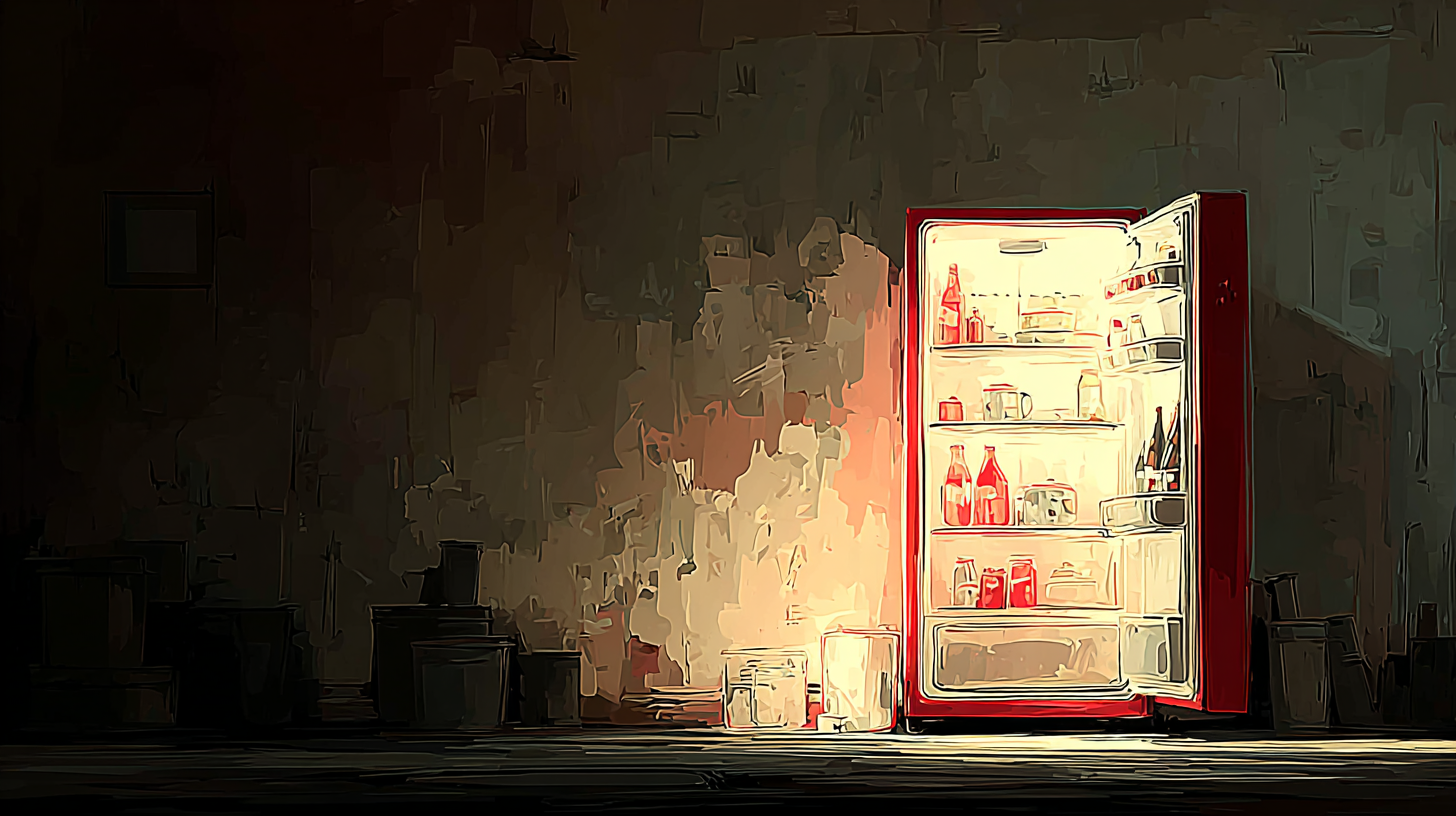
A fridge is a box that keeps food and drinks cold.
fridge は 食べ物や飲み物を冷やして保存する「冷蔵庫」のこと。
以下は英単語 “fridge” に関するストーリー型学習コンテンツです。まずは大枠の意味を理解して最後の文章で確認しましょう。
「fridge」の主な意味(main meaning)
| 品詞 | 意味 | 英語定義 | 例文 | 発音記号 |
|---|---|---|---|---|
| noun | 冷蔵庫 | a refrigerator; a machine that keeps food and drinks cold | I put the milk back in the fridge after lunch. | /frɪdʒ/ |
「fridge」の語源(etymology)
fridge は refrigerator の短い形として生まれた言い方です。refrigerator はラテン語の refrigerare(冷やす、冷たくする)につながります。
核となるイメージは「冷やして守る場所」です。
「fridge」の類義語(synonyms)
| 類義語 | 基本的な意味 | 指定単語とのニュアンスの違い | 英語例文 |
|---|---|---|---|
| refrigerator | 冷蔵庫 | fridge より正式で、書き言葉や説明でよく使う | The office refrigerator is cleaned every Friday. |
| icebox | 冷蔵庫 | 古い言い方、または冗談っぽく言うときに使うことがある | My grandpa still calls it an icebox. |
| cooler | クーラーボックス | 持ち運び用で、電気ではなく氷などで冷やすことが多い | We packed sandwiches in a cooler for the trip. |
| chiller | 冷却室、冷やす装置 | 「強く冷やす」感じがあり、飲み物用や機械の冷却にも使う | Put the soda in the chiller for ten minutes. |
| mini-fridge | 小型冷蔵庫 | 小さい冷蔵庫をはっきり言う | She keeps a mini-fridge under her desk. |
「fridge」の反義語(antonyms)
| 反義語 | 基本的な意味 | 英語例文 |
|---|---|---|
| oven | オーブン | The oven is hot, so be careful. |
| heater | 暖房器具 | The heater warms the room quickly. |
「fridge」のコロケーション(collocations)
| コロケーション | 意味 | 英語例文 |
|---|---|---|
| in the fridge | 冷蔵庫の中に | The leftovers are in the fridge. |
| put A in the fridge | Aを冷蔵庫に入れる | Please put the yogurt in the fridge. |
| keep A in the fridge | Aを冷蔵庫で保存する | We keep fruit in the fridge during summer. |
| fridge door | 冷蔵庫のドア | The fridge door won’t close all the way. |
| fridge magnet | 冷蔵庫のマグネット | He stuck the note on a fridge magnet. |
「fridge」の2項表現(binomials)
| 2項表現 | 意味 | 英語例文 |
|---|---|---|
| food and drink | 食べ物と飲み物 | We prepared food and drink for the meeting. |
| safe and sound | 無事に | The documents arrived safe and sound. |
| black and white | 白黒はっきり | The rules are not always black and white. |
英語ストーリー(english story)
On Monday morning, our office felt busier than usual. We had a small event for a new project, and our manager, Ms. Tanaka, asked everyone to bring something simple. “Just food and drink,” she said, “and please label your items.”
I arrived early with a bag of fruit and a bottle of iced tea. In the kitchen, the fridge was already packed. Someone had placed a big cake on the top shelf, and a few lunch boxes were stacked in front of it. I opened the fridge door carefully and tried to find space.
“Use the refrigerator properly,” a voice said behind me. It was Ken from the sales team. He always chose formal words when he wanted to sound strict. “If we don’t organize it, things will go bad.”
“I’m trying,” I replied. “There’s no room.”
Ken pointed at a corner. “Put your tea in the fridge, right there. And keep the fruit in the fridge too, or it will get warm.”
While I was moving my items, Yumi walked in carrying a small container. “Does anyone know whose soup this is?” she asked. “It’s been here since last week.”
Ken sighed. “That’s why we need rules. This isn’t an icebox where you can forget things forever.”
Yumi laughed. “Icebox? Are we in the 1950s?”
Ken ignored her joke and took out a pen. “I’ll make a note.” He searched the table, found a fridge magnet shaped like a cat, and stuck a message on the whiteboard: “Please clean the fridge every Friday.”
At ten o’clock, the event started. People gathered in the meeting room, sharing snacks and talking about tasks. The atmosphere was friendly, but I noticed Ms. Tanaka looking worried. After a few minutes, she called me aside.
“Can you help me?” she whispered. “We need cold bottles for the guests, but I can’t find them.”
I went back to the kitchen. I checked the fridge again, then the mini-fridge under the counter. The mini-fridge was almost empty except for a few cans. “Maybe someone moved them,” I said.
Ken entered and shook his head. “If we had a chiller for drinks only, this wouldn’t happen.”
Yumi followed him and held up a blue box. “Are you looking for these?” she asked. “I put them in the cooler with ice. The fridge was too full.”
Ken looked annoyed. “A cooler is for outdoor trips. This is an office.”
Yumi shrugged. “It worked. The bottles are cold.”
I opened the cooler. The bottles were cold enough, and they were safe and sound. “Great,” I said. “Let’s bring them.”
When we returned to the meeting room, Ms. Tanaka smiled with relief. The guests took the bottles, and the conversation became more relaxed. Still, after the event, Ms. Tanaka asked us to stay for five minutes.
“We did well today,” she said, “but the kitchen is a mess. Our fridge is not just a storage box. It’s a shared space.”
Ken immediately raised his hand. “I suggest a black and white rule: anything without a name will be thrown away on Friday.”
Yumi frowned. “That feels too strict. Sometimes people forget labels.”
I tried to speak calmly. “Maybe we can do something in between. We can keep a simple list: what goes in the fridge, and when. Also, we can check the fridge door note each Friday.”
Ms. Tanaka nodded. “That sounds reasonable. Ken, can you manage the list? Yumi, can you remind people gently?”
Ken agreed, but he still looked serious. “And one more thing,” he added. “Please don’t put hot food next to cold drinks. That’s common sense.”
Yumi smiled. “Fine. And please don’t act like the oven and the fridge are the same thing.”
Everyone laughed, even Ken. Later, as I washed the cups, I felt the office had learned something small but important: when people share a space, clear habits matter. The fridge was just a fridge, but it showed how we worked together.
和訳
月曜の朝、オフィスはいつもより忙しく感じた。新しいプロジェクトの小さなイベントがあり、田中さんはみんなに簡単なものを持ってくるよう頼んだ。「食べ物と飲み物(food and drink:食べ物と飲み物)だけでいいので、持ってきた物にはラベルを付けてください」
私は果物とアイスティーを持って早めに来た。キッチンでは冷蔵庫(fridge:冷蔵庫)がすでにいっぱいだった。誰かが大きなケーキを上の棚に置き、いくつかの弁当箱がその前に積まれていた。私は冷蔵庫のドア(fridge door:冷蔵庫のドア)をそっと開け、場所を探した。
「冷蔵庫(refrigerator:冷蔵庫)をちゃんと使ってください」後ろから声がした。営業のケンだった。彼は厳しく言いたいとき、いつも丁寧で堅い言葉を選ぶ。「整理しないと、食べ物が悪くなります」
「やってるよ。空きがないんだ」私は答えた。
ケンは隅を指さした。「そこにアイスティーを冷蔵庫に入れてください(put A in the fridge:Aを冷蔵庫に入れる)。果物も冷蔵庫で保存して(keep A in the fridge:Aを冷蔵庫で保存する)。温かくなりますから」
私が動かしていると、ユミが小さな容器を持って入ってきた。「このスープ、誰のかわかる?」彼女は聞いた。「先週からあるんだけど」
ケンはため息をついた。「だからルールが必要なんです。ここは何でも忘れていい氷箱(icebox:冷蔵庫)じゃない」
ユミは笑った。「iceboxって、1950年代みたい」
ケンは冗談を無視し、ペンを取った。「メモを書きます」彼はテーブルを探し、猫の形の冷蔵庫マグネット(fridge magnet:冷蔵庫のマグネット)を見つけて、ホワイトボードに貼った。「毎週金曜に冷蔵庫を掃除してください」
10時にイベントが始まった。みんなが会議室に集まり、お菓子を分け合い、作業の話をした。雰囲気は良かったが、田中さんが心配そうなのに気づいた。少しして彼女は私を呼んだ。
「手伝ってくれる?」彼女は小声で言った。「お客様用の冷たいボトルが必要なのに、見つからないの」
私はキッチンに戻った。冷蔵庫(fridge:冷蔵庫)をもう一度確認し、カウンター下の小型冷蔵庫(mini-fridge:小型冷蔵庫)も見た。小型冷蔵庫は缶が少しあるだけで、ほとんど空だった。「誰かが移したのかも」私は言った。
ケンが入ってきて首を振った。「飲み物専用の冷却室(chiller:冷却室)があれば、こんなことにならないのに」
ユミも来て、青い箱を持ち上げた。「これ探してる?」彼女は言った。「クーラーボックス(cooler:クーラーボックス)に氷と一緒に入れたよ。冷蔵庫がいっぱいだったから」
ケンは不満そうだった。「クーラーボックス(cooler:クーラーボックス)は外出用です。ここはオフィスです」
ユミは肩をすくめた。「でも使えたよ。ボトルは冷えてる」
私はクーラーボックスを開けた。ボトルは十分冷たく、無事に(safe and sound:無事に)守られていた。「よかった。持っていこう」
会議室に戻ると、田中さんはほっとして笑った。お客様はボトルを受け取り、会話は落ち着いた。それでもイベント後、田中さんは私たちに5分残るよう言った。
「今日はうまくいったけれど、キッチンは散らかっています。冷蔵庫(fridge:冷蔵庫)はただの置き場ではありません。共有の場所です」
ケンはすぐ手を挙げた。「白黒はっきりした(black and white:白黒はっきり)ルールを提案します。名前がない物は金曜に捨てる」
ユミは顔をしかめた。「それは厳しすぎるよ。ラベルを忘れることもあるし」
私は落ち着いて話した。「中間がいいと思います。冷蔵庫の中(in the fridge:冷蔵庫の中)に何を入れたか、いつ入れたかの簡単なリストを作るのはどうですか。あと、金曜に冷蔵庫のドアのメモ(fridge door:冷蔵庫のドア)も確認する」
田中さんはうなずいた。「いいですね。ケン、リストを管理できますか。ユミ、やさしく声かけしてくれますか」
ケンは同意したが、まだ真剣な顔だった。「もう一つ。熱い食べ物を冷たい飲み物の隣に置かないでください。常識です」
ユミは笑った。「わかった。あと、オーブン(oven:オーブン)と冷蔵庫(fridge:冷蔵庫)を同じみたいに言わないでね」
みんなが笑い、ケンまで笑った。あとで私がカップを洗いながら思った。小さいけれど大事なことを学んだのだ。共有スペースでは、わかりやすい習慣が必要だ。冷蔵庫(fridge:冷蔵庫)はただの冷蔵庫だけれど、私たちの働き方を映していた。
「fridge」のQ&A
- Qfridge の意味は何ですか
- A
fridge は冷蔵庫のことで、食べ物や飲み物を冷やして保存する機械です。
- Qfridge と refrigerator の違いは何ですか
- A
refrigerator は正式な言い方で、fridge は日常会話でよく使う短い言い方です。
- Qicebox はどんなときに使いますか
- A
icebox は古い言い方や冗談っぽい言い方として冷蔵庫の意味で使われることがあります。
- Qcooler は fridge の代わりになりますか
- A
cooler は持ち運び用のクーラーボックスなので、家やオフィスの冷蔵庫の代わりにはなりにくいです。
- Qchiller と fridge はどう違いますか
- A
chiller は強く冷やす装置や冷却室のことが多く、飲み物専用などに使われやすいです。
- Qmini-fridge はどんなものですか
- A
mini-fridge は小型の冷蔵庫で、部屋やデスクの近くに置くことが多いです。
- Qin the fridge はどういう意味ですか
- A
in the fridge は冷蔵庫の中にあるという意味です。
- Qput A in the fridge はどう使いますか
- A
put A in the fridge はAを冷蔵庫に入れるという意味で、食べ物や飲み物を冷やすときに使います。
- Qfridge door は何を指しますか
- A
fridge door は冷蔵庫のドアのことで、メモやマグネットを貼る場所としても使われます。
- Qfood and drink はどんな場面で使いますか
- A
food and drink は食べ物と飲み物という意味で、準備する物をまとめて言う場面で使います。

コメント