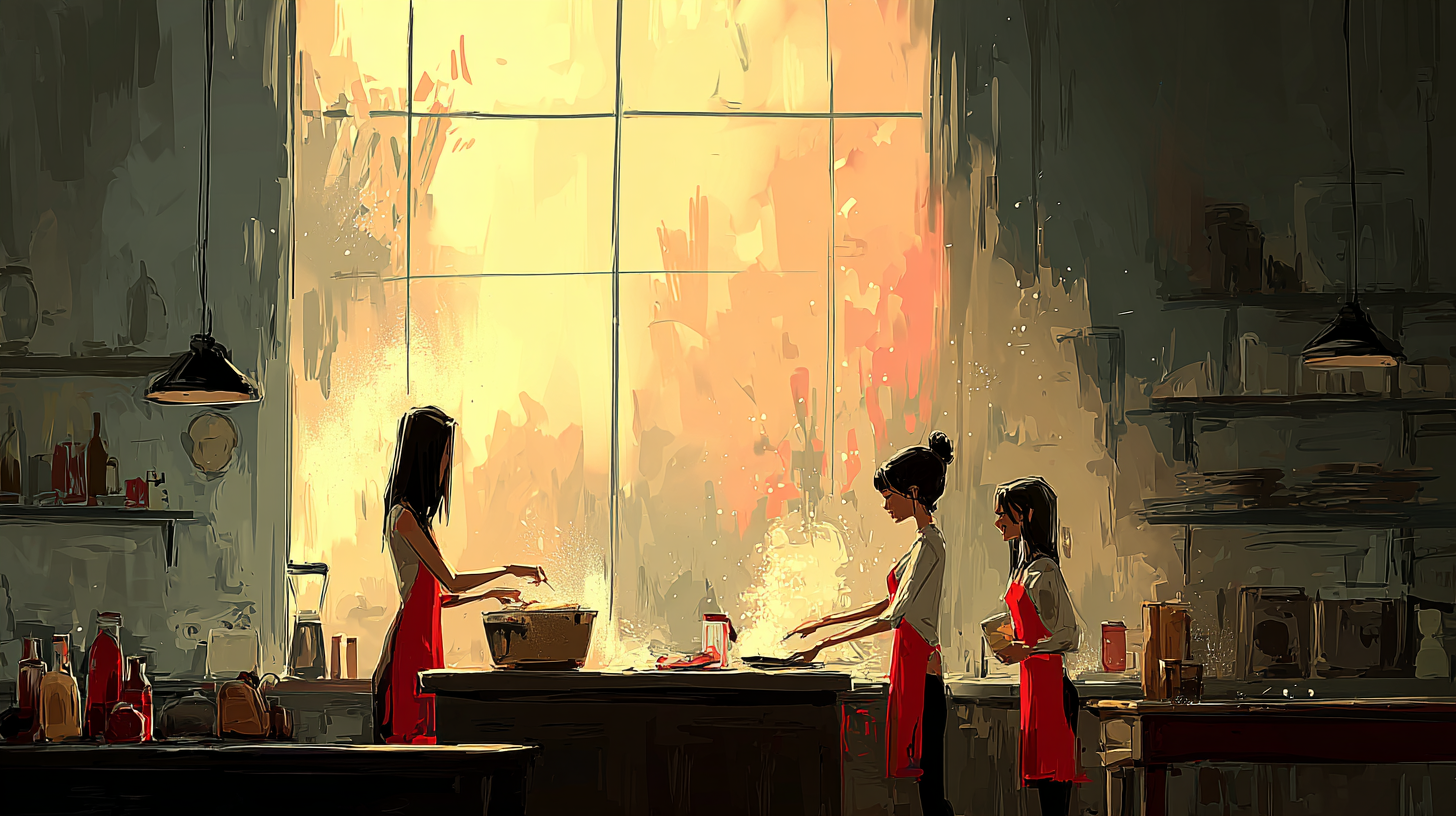
Flour is powder we use to make bread and cakes.
flourはパンやケーキを作るときに使う粉のことです。
以下は英単語 “flour” に関するストーリー型学習コンテンツです。まずは大枠の意味を理解して最後の文章で確認しましょう。
「flour」の主な意味(main meaning)
| 品詞 | 主要な意味 | 英語定義 | 例文 | 発音記号 |
|---|---|---|---|---|
| noun | 小麦粉 粉 | a powder made from grain, especially wheat, used for making bread and cakes | I bought flour to bake cookies. | /ˈflaʊər/ |
| noun | 粉状のもの | a fine powder of any kind | The table was covered with flour after cooking. | /ˈflaʊər/ |
| verb | 粉をまぶす | to cover something with flour | Flour the pan before you pour the batter. | /ˈflaʊər/ |
「flour」の語源(etymology)
flourは昔の英語で花を意味した言葉とつながりがあり、そこから最もよい部分やきれいな部分というイメージが生まれました。小麦をひいて一番細かくてよい粉になったものがflourという感覚です。
核となるイメージは、細かくて白い、さらさらした粉です。
「flour」の類義語(synonyms)
| 類義語 | 基本的な意味 | 指定単語とのニュアンスの違い | 英語例文 |
|---|---|---|---|
| powder | 粉 粉末 | flourは料理に使う粉のイメージが強いがpowderは化粧品や薬など何でも粉なら使える | This medicine comes as a powder. |
| meal | 粗くひいた粉 | flourより粒が粗めで、コーンミールなど料理素材として区別される | Add cornmeal to the mixture. |
| starch | でんぷん | flourは小麦などの粉全体だがstarchは中の成分で、とろみ付けに使うことが多い | Mix starch with water to thicken the sauce. |
| batter | 生地 | flourは粉そのものだがbatterは粉に水や卵を混ぜたドロッとした生地 | The batter is ready for pancakes. |
| dough | こねた生地 | flourは粉だがdoughはこねて形になる固めの生地 | Knead the dough for ten minutes. |
「flour」の反義語(antonyms)
| 反義語 | 意味 | 英語例文 |
|---|---|---|
| liquid | 液体 | Add milk until the mix becomes a liquid. |
| whole grain | 粉にしていない穀物 | We cooked whole grain rice for dinner. |
「flour」のコロケーション(collocations)
| コロケーション | 意味 | 英語例文 |
|---|---|---|
| all-purpose flour | 薄力と強力の中間の小麦粉 | All-purpose flour is useful for many recipes. |
| wheat flour | 小麦粉 | Wheat flour is common in bread. |
| flour mixture | 粉の混ぜたもの | Make a flour mixture with sugar and salt. |
| dust with flour | 粉を軽くふりかける | Dust the board with flour before rolling the dough. |
| sift flour | 粉をふるう | Sift flour to avoid lumps. |
「flour」の2項表現(binomials)
| 2項表現 | 意味 | 英語例文 |
|---|---|---|
| flour and water | 粉と水 | With flour and water, you can make simple dough. |
| mix and match | 組み合わせを自由に変える | You can mix and match ingredients for a new taste. |
| safe and sound | 無事に | The documents arrived safe and sound. |
英語ストーリー(english story)
On Monday morning, I arrived at the office a little early. Our team was preparing for a small welcome party for a new coworker, Maria. We wanted to make something simple but warm, so we decided to cook pancakes in the office kitchen.
When I opened the cabinet, I found a big bag of flour. It looked clean and white, but I wasn’t sure how old it was. “Is this all-purpose flour?” I asked Ken, who usually organizes supplies. He checked the label and said, “Yes, it’s all-purpose flour. It should be fine.”
We started to plan the recipe. I suggested making a flour mixture with sugar, salt, and a little baking powder. Maria would arrive in an hour, so we needed to work fast but carefully. In our office, we often have small problems, but we solve them step by step. That day was no different.
Ken brought a bowl, and I poured the flour into it. A small cloud of powder rose into the air and made me sneeze. “This is why I don’t wear black on cooking days,” I joked, looking at my sleeves. Yuki laughed and said, “Just dust with flour and you’ll match the kitchen style.”
We added milk and eggs, and soon we had a smooth batter. It was thinner than dough, but it still needed careful mixing. Yuki reminded us, “If we mix too much, the pancakes might become tough.” So we decided to mix and match our tasks. Ken heated the pan, Yuki prepared plates, and I measured the next ingredients.
Before we poured the batter, Ken said, “We should flour the pan lightly, just in case.” He shook a little flour over the surface. Then Yuki asked, “Should we sift flour next time? It could make it even smoother.” I agreed, but we didn’t have a sifter in the office, so we used a small strainer instead.
At that moment, we noticed something. The milk carton was almost empty. We needed more liquid, or the batter would become too thick. Ken ran to the convenience store downstairs. While he was gone, Yuki and I tried to keep everything safe and sound. We cleaned the counter, put away the wheat flour bag, and checked the plates.
Maria arrived right when Ken came back. She looked surprised to see us in the kitchen. “What’s going on?” she asked. I said, “Welcome to the team. We’re making pancakes.”
Maria smiled and offered to help. She said she grew up watching her grandmother bake bread. “With flour and water, you can create something comforting,” she said. Her words made the office feel warmer.
We cooked the pancakes one by one. Some were perfect, and some were a little uneven, but they still smelled great. A bit of powder was on the counter, and my sleeves had tiny white marks, but it didn’t matter. The most important thing was that everyone was together.
When we sat down to eat, Maria thanked us. She said, “I was nervous about starting a new job, but this makes me feel relaxed.” Ken replied, “We’re glad. In this office, we support each other.”
I looked around at my coworkers. The morning had started with flour and a simple plan, but it turned into a moment of teamwork. And when I saw Maria laughing with everyone, I knew our welcome party was a success.
和訳
月曜日の朝、私は少し早めにオフィスに着いた。私たちのチームは、新しい同僚のマリアのために小さな歓迎会を準備していた。私たちは簡単だけれど温かいものを作りたかったので、オフィスのキッチンでパンケーキを作ることにした。
戸棚を開けると、大きな小麦粉(flour:小麦粉)の袋が見つかった。きれいな白に見えたが、どれくらい前のものか分からなかった。私は「これってオールパーパスフラワー(all-purpose flour:万能小麦粉)?」とケンに聞いた。備品の管理をよくしているケンはラベルを見て「そうだよ。大丈夫なはず」と言った。
私たちはレシピを考え始めた。私は砂糖と塩と少しのベーキングパウダーを入れた粉の混ぜ物(flour mixture:粉の混ぜたもの)を作ろうと提案した。マリアは1時間後に来るので、急ぎつつも丁寧に進める必要があった。私たちのオフィスでは小さな問題がよく起きるが、順番に解決していく。その日も同じだった。
ケンがボウルを持ってきて、私は小麦粉(flour:小麦粉)を入れた。すると粉(powder:粉)がふわっと舞い上がり、私はくしゃみをした。「料理の日に黒い服はやめたほうがいいね」と私は袖を見て冗談を言った。ユキは笑いながら「小麦粉を軽くふりかける(dust with flour:粉を軽くふりかける)と、キッチンのスタイルに合うよ」と言った。
私たちは牛乳と卵を加え、すぐになめらかな生地(batter:ドロッとした生地)ができた。パン生地(dough:こねた生地)ほど固くはないが、混ぜ方には気をつける必要があった。ユキが「混ぜすぎると固くなるかも」と言ったので、私たちは役割を自由に組み合わせる(mix and match:組み合わせを自由に変える)ことにした。ケンがフライパンを温め、ユキが皿を用意し、私は次の材料を計った。
生地(batter:ドロッとした生地)を流す前に、ケンが「念のため、フライパンに粉をまぶそう(flour:粉をまぶす)」と言った。彼は表面に少し小麦粉(flour:小麦粉)をふった。するとユキが「次は粉をふるう(sift flour:粉をふるう)ともっとなめらかになるかも」と言った。私は賛成したが、オフィスにはふるいがなかったので、小さなこし器を代わりに使った。
そのとき、私たちは気づいた。牛乳がほとんど残っていなかった。もっと液体(liquid:液体)が必要だった。そうしないと、生地が濃くなりすぎてしまう。ケンは下のコンビニに走った。彼がいない間、ユキと私は物事を無事に(safe and sound:無事に)進めようとした。カウンターを拭き、小麦粉袋(wheat flour:小麦粉)を片づけ、皿を確認した。
マリアが来たのは、ちょうどケンが戻ってきたときだった。マリアは私たちがキッチンにいるのを見て驚いた。「何をしているの?」と聞くので、私は「チームへようこそ。パンケーキを作っているんだ」と言った。
マリアは笑って手伝うと言った。彼女は祖母がパンを焼くのを見て育ったらしい。「小麦粉(flour:小麦粉)と水(water:水)(flour and water:粉と水)があれば、ほっとするものを作れるよ」と言った。その言葉で、オフィスが少し温かく感じられた。
私たちはパンケーキを一枚ずつ焼いた。完璧なものもあれば少し形が悪いものもあったが、いい香りがした。粉(powder:粉)が少しカウンターに残り、私の袖にも白い跡がついたが、問題なかった。一番大事なのは、みんなが一緒にいることだった。
座って食べるとき、マリアは私たちにお礼を言った。「新しい仕事の初日で緊張していたけど、これで落ち着いた」と言った。ケンは「よかった。ここではお互い支え合うんだ」と答えた。
私は同僚たちを見回した。朝は小麦粉(flour:小麦粉)と簡単な計画から始まったが、チームワークの時間になった。そしてマリアがみんなと笑っているのを見て、歓迎会は成功だと確信した。
「flour」のQ&A
- Qflourの基本的な意味は何ですか
- A
flourはパンやケーキを作るときの小麦粉のことです
- Qflourは名詞と動詞でどう使い分けますか
- A
名詞は粉そのものを指し、動詞は粉を表面にまぶすときに使います
- Qflourとpowderの違いは何ですか
- A
powderは何でも粉なら使える広い言葉で、flourは料理の粉のイメージが強いです
- Qflourとmealの違いは何ですか
- A
mealは粒が粗い粉で、flourはもっと細かい粉を指すことが多いです
- Qflourとstarchの違いは何ですか
- A
starchはでんぷんという成分で、flourは小麦などをひいた粉全体を指します
- Qflourとbatterの違いは何ですか
- A
batterは粉に牛乳や卵を混ぜたドロッとした生地で、flourは混ぜる前の粉です
- Qflourとdoughの違いは何ですか
- A
doughはこねて形になる固めの生地で、flourは材料の粉の状態です
- Qよく一緒に使うflourのコロケーションは何ですか
- A
all-purpose flourやwheat flourやsift flourなどがよく使われます
- Qdust with flourはどんな場面で使いますか
- A
粉がくっつかないようにまな板や生地に軽く小麦粉をふりかけるときに使います
- Qflour and waterはどんな意味で使われますか
- A
材料が少なくても粉と水で基本の生地が作れるというイメージで使われます


コメント