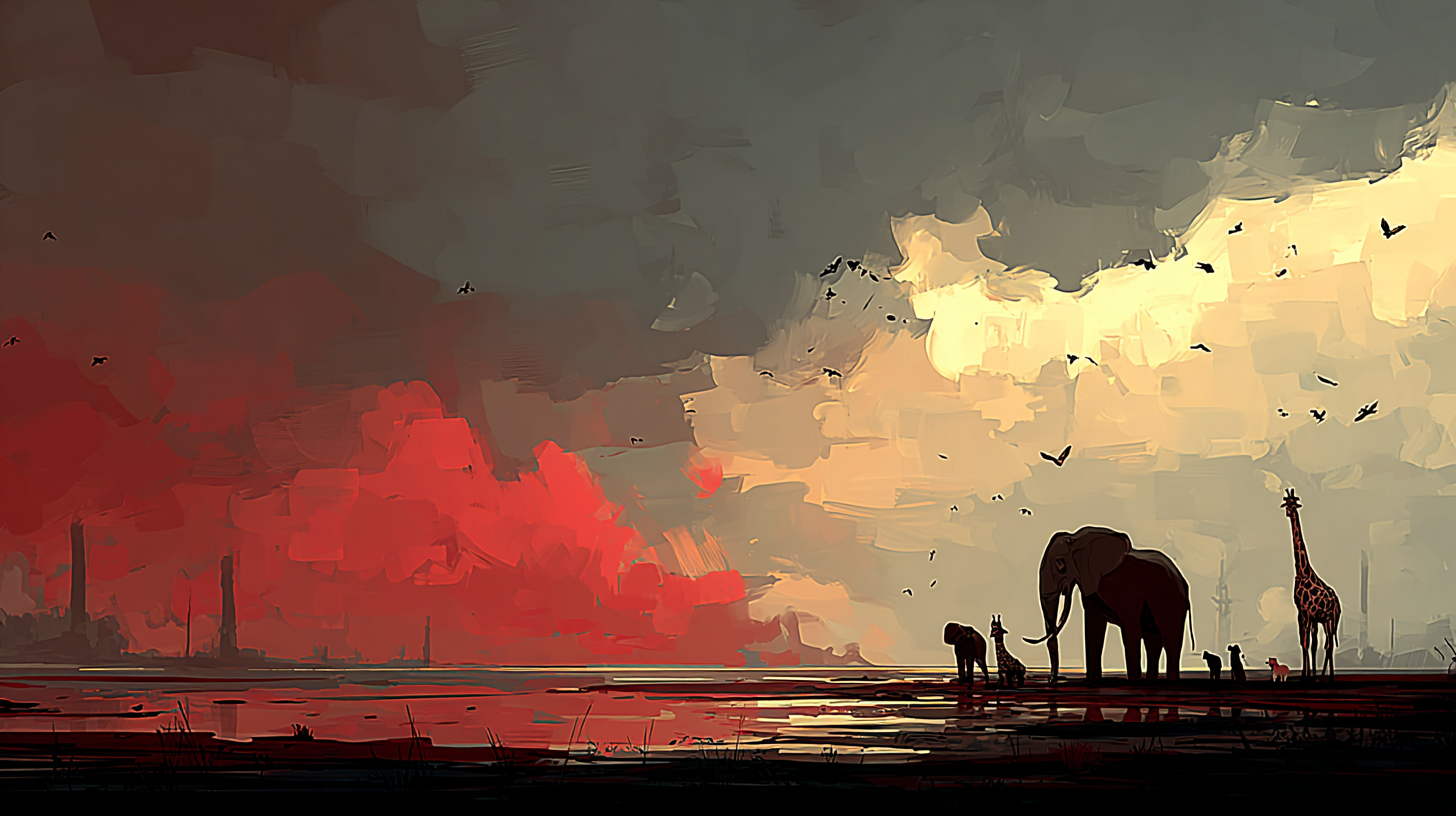
Extinction means something disappears completely, like when a species dies out.
extinction は「生き物や物事が完全にいなくなってしまうこと」です。
以下は英単語 “extinction” に関するストーリー型学習コンテンツです。まずは大枠の意味を理解して最後の文章で確認しましょう。
「extinction」の主な意味(main meaning)
| 品詞 | 主要な意味 | 簡潔な英語定義 | 英語例文(1文) | 発音記号(IPA) |
|---|---|---|---|---|
| noun | 絶滅 | the complete dying out of a species | Many animals are at risk of extinction. | /ɪkˈstɪŋkʃən/ |
| noun | 消滅(火や光などが消えること) | the act of becoming no longer visible or active | The candle went out, and the room fell into darkness after its extinction. | /ɪkˈstɪŋkʃən/ |
| noun | 消失(家系や習慣などがなくなること) | the end of something that used to exist | The tradition faced extinction as fewer people practiced it. | /ɪkˈstɪŋkʃən/ |
「extinction」の語源(etymology)
ラテン語の extinguere(消す、消し止める)がもとになった語です。
核となるイメージは「火を吹き消して、完全に消える」です。そこから「生き物がいなくなる」「文化や習慣がなくなる」という意味にも広がります。
「extinction」の類義語(synonyms)
| 類義語 | 基本的な意味 | 指定単語とのニュアンスの違い | 英語例文 |
|---|---|---|---|
| disappearance | 消えること | extinction は「もう戻らない完全な消滅」。disappearance は「見えなくなるだけ」で戻る可能性もある。 | The disappearance of the files caused confusion in the office. |
| die-out | (生き物が)絶えていくこと | die-out は「少しずつ減って絶える」感じ。extinction は「結果として完全にゼロ」。 | Some local plants may die out if the climate keeps changing. |
| eradication | 根絶 | eradication は「人が計画的にゼロにする」ニュアンスが強い。extinction は原因が自然でも人でもよい。 | The city began an eradication program to remove invasive insects. |
| annihilation | 壊滅、完全破壊 | annihilation は「強い力で一気に壊す」印象が強い。extinction は「種や文化が消える」場面でよく使う。 | The report warned that war could lead to annihilation of the region’s economy. |
| termination | 終了 | termination は「契約や計画を終わらせる」など事務的。extinction は「存在そのものがなくなる」。 | The termination of the project surprised the team. |
「extinction」の反義語(antonyms)
| 反義語 | 基本的な意味 | 英語例文 |
|---|---|---|
| survival | 生き残り | The survival of the species depends on clean water. |
| preservation | 保存、保護 | Preservation of local culture matters to the community. |
「extinction」のコロケーション(collocations)
| コロケーション | 基本的な意味 | 英語例文 |
|---|---|---|
| face extinction | 絶滅の危機に直面する | Sea turtles face extinction in some areas. |
| prevent extinction | 絶滅を防ぐ | We must act now to prevent extinction. |
| risk of extinction | 絶滅の危険性 | The risk of extinction increases when forests disappear. |
| extinction event | 大規模な絶滅出来事 | Scientists study each extinction event to learn about Earth’s past. |
| extinction rate | 絶滅の速度 | The extinction rate may rise if habitats shrink. |
「extinction」の2項表現(binomials)
| 2項表現 | 基本的な意味 | 英語例文 |
|---|---|---|
| life and death | 生死 | For the rescue team, it was a matter of life and death. |
| protect and preserve | 守って保つ | Our goal is to protect and preserve what makes the town unique. |
| cause and effect | 原因と結果 | The training explains cause and effect in simple steps. |
英語ストーリー(english story)
On Monday morning, I walked into our office with a cup of coffee and a long list of tasks. I work for a small consulting company that helps businesses improve their social projects. That day, our team had a meeting with GreenSteps, a client that supports wildlife protection.
In the conference room, Ms. Tanaka, our manager, placed a stack of papers on the table. “We need a clear plan,” she said. “Some species in the coastal area are facing extinction, and the client wants results that the public can understand.”
I opened my laptop and looked at the data. The numbers were worrying. The risk of extinction was high for several animals, and the extinction rate seemed to be rising each year. Still, we had to explain it in a calm way, not in a way that made people shut down.
Ken, my coworker, spoke first. “People get tired of bad news. If we only say ‘extinction,’ they feel helpless. We should show cause and effect, and also what actions actually work.”
Ms. Tanaka nodded. “Good. But we also need to be careful with our words. ‘Annihilation’ sounds too extreme for this report, and ‘termination’ sounds like a contract ending. This is about nature.”
I agreed. “Maybe we can mention disappearance in daily life, like when a local bird is no longer seen, then connect it to extinction. We can also explain that a die-out can happen slowly, but it still leads to a final end if nothing changes.”
We divided the work. Ken prepared a simple page on habitats, and I wrote the section about solutions. I used a clear phrase: prevent extinction. I described how companies could reduce plastic waste, support clean beaches, and fund local research. I also added a short explanation of an extinction event from history, because it helped readers understand that Earth has changed before, but human actions can speed up the process now.
After lunch, we met again to review the draft. Ms. Tanaka pointed to my paragraph and said, “This part is strong, but can you add something about community action?”
I thought about our client’s volunteers, many of whom were office workers like us. “Sure,” I said. “We can suggest weekend cleanup events, and we can include a checklist for local stores. It’s simple, but it builds momentum.”
Ken smiled. “That fits. It’s not just science; it’s a matter of life and death for these animals.”
Later in the afternoon, we had an online call with GreenSteps. Their director, Mr. Saito, looked tired but hopeful. “We have support,” he said, “but we need a message that moves people without making them feel guilty.”
Ms. Tanaka answered smoothly. “Our message is to protect and preserve the coastline together. We will show clear steps and real examples.”
I presented the key chart and explained the main point. “If the habitat continues to shrink,” I said, “the die-out will speed up. But if we act now, we can prevent extinction. This is not about fear; it’s about practical choices.”
Mr. Saito leaned closer to the camera. “Can you also mention what happens if we do nothing?”
I took a breath. “If we do nothing, the disappearance of key species will change the whole ecosystem. Fish populations can drop, tourism can suffer, and the local community can lose jobs. It’s a chain reaction.”
When the call ended, the office felt quieter. I looked around at my teammates. We were just ordinary workers, writing reports and making slides, but the words on our screens mattered. They could lead to funding, action, and real change.
Before going home, Ms. Tanaka sent the final draft to the client. “Good work,” she said. “Today we didn’t solve everything, but we built a path forward.”
As I shut down my computer, I felt a small sense of hope. Extinction is a hard word, like a light going out. But in our office, we were trying to keep that light on, one clear plan at a time.
和訳
月曜日の朝、私はコーヒーを持ってオフィスに入り、やることの多いリストを思い浮かべました。私は、企業の社会活動を良くする手伝いをする小さなコンサル会社で働いています。その日は、野生生物の保護を支えるクライアントのGreenStepsと打ち合わせがありました。
会議室で、田中さん(上司)が書類の束を机に置きました。「はっきりした計画が必要ね」と彼女は言いました。「沿岸地域のいくつかの種が絶滅(extinction)に直面していて、クライアントは一般の人にも分かる形で成果を求めているの。」
私はノートパソコンを開き、データを見ました。数字は心配になるものでした。絶滅の危険性(risk of extinction)が高い動物がいくつかいて、絶滅の速度(extinction rate)も毎年上がっているように見えました。それでも、私たちは落ち着いた説明をしなければなりません。人が目をそらしたくなるような言い方は避ける必要がありました。
同僚のケンが先に話しました。「みんな悪いニュースに疲れます。『絶滅(extinction)』だけを言うと、どうしようもない気持ちになります。原因と結果(cause and effect)を示して、実際に効く行動も見せるべきです。」
田中さんはうなずきました。「いいわ。でも言葉選びにも気をつけて。壊滅(annihilation)はこの報告書には強すぎるし、終了(termination)は契約が終わるみたいに聞こえる。これは自然の話よ。」
私は同意しました。「日常の場面の消失(disappearance)、たとえば地元の鳥を見なくなることから話して、それを絶滅(extinction)につなげるのがいいかもしれません。あと、絶えていくこと(die-out)はゆっくり起きる場合もあるけれど、何もしなければ最後は完全な終わりになる、と説明できます。」
私たちは作業を分担しました。ケンは生息地についての分かりやすいページを作り、私は解決策の章を書きました。私は「絶滅を防ぐ(prevent extinction)」という分かりやすい表現を使いました。企業がプラスチックごみを減らし、きれいな海岸を支え、地域の研究に資金を出せることを説明しました。さらに、過去の大規模な絶滅出来事(extinction event)について短く書き、地球は以前から変化してきたが、人間の行動が今はその進み方を速めうる、と読者が理解しやすいようにしました。
昼食の後、私たちはもう一度集まって下書きを確認しました。田中さんは私の段落を指して言いました。「ここは強いけど、地域の行動についても入れられる?」
私は、クライアントのボランティアの多くが私たちと同じ会社員だと考えました。「もちろんです」と私は言いました。「週末の清掃イベントを提案して、地元の店向けのチェックリストも入れます。簡単だけど、流れが生まれます。」
ケンは笑いました。「それは合ってる。これは科学だけじゃない。動物にとっては生死(life and death)の問題だ。」
その日の午後遅く、私たちはGreenStepsとオンライン会議をしました。代表の斎藤さんは疲れて見えましたが、希望も感じられました。「支援はあります」と彼は言いました。「でも、人を動かしつつ、罪悪感だけを与えないメッセージが必要なんです。」
田中さんは落ち着いて答えました。「私たちのメッセージは、海岸を一緒に守って保つ(protect and preserve)ことです。分かりやすい手順と実例を示します。」
私は重要なグラフを見せ、要点を説明しました。「生息地が縮み続けるなら」と私は言いました。「絶えていくこと(die-out)は速くなります。でも、今動けば、絶滅を防ぐ(prevent extinction)ことができます。これは恐怖ではなく、実用的な選択の話です。」
斎藤さんはカメラに近づきました。「何もしなければどうなるかも書けますか?」
私は息を整えました。「何もしなければ、重要な種の消失(disappearance)が生態系全体を変えます。魚の数が減り、観光が落ち込み、地域の人が仕事を失うことにもつながります。連鎖反応です。」
会議が終わると、オフィスは少し静かになりました。私はチームメイトを見渡しました。私たちは普通の会社員で、報告書を書き、スライドを作っているだけです。でも、画面の言葉には力がありました。資金、行動、そして本当の変化につながりうるのです。
帰る前に、田中さんは最終版をクライアントに送りました。「よくやったわ」と彼女は言いました。「今日は全部を解決したわけじゃない。でも前に進む道を作れた。」
私はパソコンを閉じながら、小さな希望を感じました。絶滅(extinction)は、光が消えるような重い言葉です。でも私たちのオフィスでは、その光を消さないために、はっきりした計画を一つずつ作ろうとしていました。
「extinction」のQ&A
- Qextinction とはどんな意味ですか
- A
extinction は生き物や文化などが完全に消えてしまい、もう戻らないことです
- Qextinction は動物の話でしか使えませんか
- A
extinction は火や伝統などが消える話にも使えますが、よくあるのは生き物の絶滅です
- Qdisappearance と extinction はどう違いますか
- A
disappearance は見えなくなるだけで戻る可能性があり、extinction は完全にいなくなることです
- Qdie-out と extinction の違いは何ですか
- A
die-out は少しずつ減っていく過程を強く感じさせて、extinction は結果としてゼロになることです
- Qeradication は extinction と同じですか
- A
eradication は人が計画して根絶する意味が強く、extinction は原因が自然でも人でも使えます
- Qannihilation を extinction の代わりに使えますか
- A
annihilation は強い力で一気に壊す感じが強く、extinction のように種が消える場面には重すぎることがあります
- Q反対の意味を表す単語は何ですか
- A
survival と preservation がよく使われ、どちらも消えるのではなく守って残る方向の意味です
- Qface extinction はどういうときに使いますか
- A
face extinction は絶滅の危機に直面している状況を説明するときに使います
- Qprevent extinction はどんな文で使いますか
- A
prevent extinction は行動して絶滅を起こさないようにする、という解決策の文で使います
- Qlife and death は extinction の話とどう関係しますか
- A
life and death は生死の意味で、絶滅が起きるかどうかが生き物にとって生死の問題だと強調できます


コメント