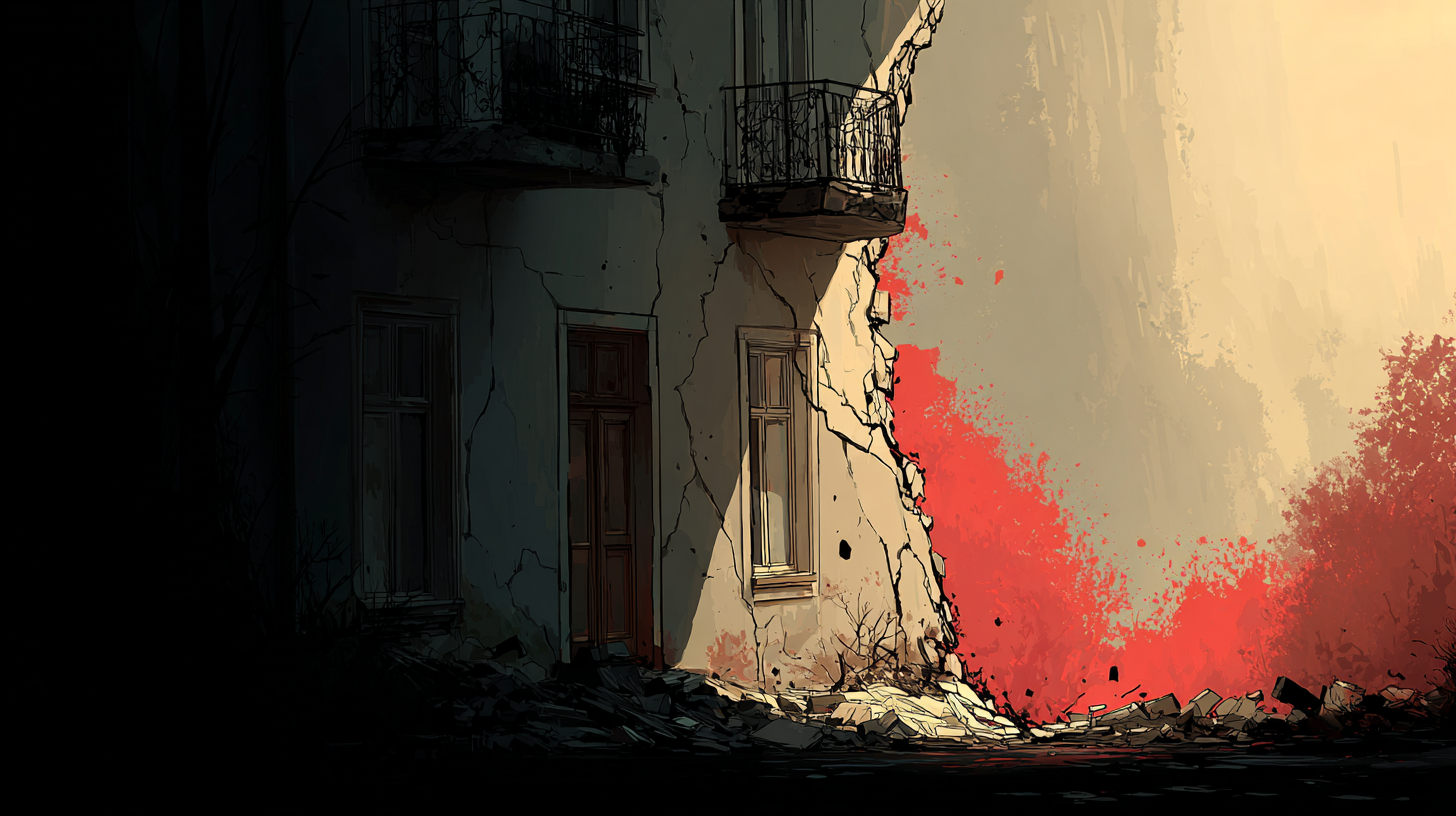
An earthquake is when the ground suddenly shakes.
earthquake は「地面が急に大きくゆれる地震」のことです。
以下は英単語 “earthquake” に関するストーリー型学習コンテンツです。まずは大枠の意味を理解して最後の文章で確認しましょう。
「earthquake」の主な意味(main meaning)
| 品詞 | 意味 | 英語定義 | 例文 | 発音記号(IPA) |
|---|---|---|---|---|
| noun | 地震 | a sudden shaking of the ground caused by movement in the earth’s crust | The earthquake woke everyone in the building. | /ˈɝːθ.kweɪk/ |
「earthquake」の語源(etymology)
earth(土)+ quake(揺れる)からできた、意味がそのまま見える単語です。
核となるイメージは「大地そのものが震えて、足元が不安定になる」です。
「earthquake」の類義語(synonyms)
| 類義語 | 基本的な意味 | 指定単語とのニュアンスの違い | 英語例文 |
|---|---|---|---|
| quake | 地震 | earthquake より短くくだけた言い方。ニュース見出しや会話でよく使う。 | A quake was reported near the coast. |
| tremor | 小さな揺れ | 小さめの揺れに焦点。地震全体より「揺れそのもの」を言うことが多い。 | We felt a slight tremor during the meeting. |
| aftershock | 余震 | 大きな地震の後に起こる揺れ。earthquake の「後」に限定。 | An aftershock happened an hour later. |
| seismic event | 地震の出来事 | かたい表現で、研究や報告書で使われやすい。 | The sensors recorded a seismic event overnight. |
| shock | 衝撃的な揺れ | 影響や衝撃を強く感じる言い方。地震以外にも使える。 | The first shock knocked items off the shelves. |
「earthquake」の反義語(antonyms)
| 反義語 | 基本的な意味 | 英語例文 |
|---|---|---|
| calm | 落ち着き、静けさ | After the alarm stopped, the office returned to calm. |
| stability | 安定 | The shelves were fixed to improve stability. |
「earthquake」のコロケーション(collocations)
| コロケーション | 意味 | 英語例文 |
|---|---|---|
| a major earthquake | 大きな地震 | The team reviewed what to do after a major earthquake. |
| an earthquake hits/strikes | 地震が起きる | When an earthquake strikes, stay away from windows. |
| earthquake damage | 地震の被害 | They checked the building for earthquake damage. |
| earthquake preparedness | 地震への備え | Earthquake preparedness is part of our safety training. |
| earthquake drill | 地震訓練 | We had an earthquake drill on Friday. |
「earthquake」の2項表現(binomials)
| 2項表現 | 意味 | 英語例文 |
|---|---|---|
| safe and sound | 無事で | Everyone got outside safe and sound. |
| cause and effect | 原因と結果 | We talked about cause and effect after the incident. |
| rules and procedures | ルールと手順 | The manual explains the rules and procedures clearly. |
英語ストーリー(english story)
On Monday morning, our office felt unusually quiet. It was the last week of the month, and everyone was focused on deadlines. I was checking invoices when our safety manager, Ms. Sato, walked between the desks with a clipboard.
“Before lunch, we’ll do an earthquake drill,” she said. “Please follow the rules and procedures, and don’t panic.”
Some people nodded, but others sighed. Ken, who sat next to me, whispered, “Another drill? We just did one.”
Ms. Sato heard him anyway and smiled. “Good earthquake preparedness is boring on a normal day,” she replied. “That’s exactly the point.”
At 11:30, the alarm sounded. We pushed our chairs back and got under our desks, covering our heads. Ms. Sato walked around and checked that everyone was doing it correctly. When the alarm stopped, we lined up and took the stairs to the parking area. The drill ended smoothly, and the office returned to calm.
After lunch, I started preparing a short report for our client. Ken was on the phone, trying to solve a delivery problem. “If we miss today, the customer will be angry,” he said, rubbing his forehead.
That was when it happened.
At first, it was only a slight tremor, like a heavy truck passing nearby. My monitor shook gently. A few pens rolled on the desk. People looked up, unsure whether it was real or just their imagination.
Then the shaking grew stronger. The lights swayed. Someone shouted, “Earthquake!”
It wasn’t a major earthquake, but it was strong enough to make us nervous. I felt the first shock in my stomach, the strange moment when your body understands danger before your mind does. I remembered Ms. Sato’s words and slid under my desk. Ken dropped his phone and followed me.
“Stay away from the window!” Ms. Sato called. Her voice sounded steady, which helped everyone.
A few seconds later, the quake eased, but the building still creaked. We stayed under the desks, waiting for instructions. I could hear the nervous breathing of my coworkers and the rattle of a shelf in the corner.
When the shaking stopped, Ms. Sato stood up and raised her hand. “All right. Everyone, take your bags and move to the stairs. No running.”
We formed a line faster than I expected. The drill from earlier made the steps feel familiar. Outside, the air was cold and clear. We gathered in the parking area and counted heads. Everyone was safe and sound.
Ken exhaled slowly. “Okay,” he said, “I take back what I said about boring drills.”
Ms. Sato checked her phone. “There may be an aftershock,” she warned. “Let’s stay here for a while.”
As we waited, our building manager inspected the entrance and a few walls. Another employee took photos for our records. There didn’t seem to be serious earthquake damage, but a stack of brochures had fallen in the lobby, and one cabinet door was hanging open.
While we stood in small groups, people talked in low voices. Someone said it was a quake centered offshore. Another person called it a seismic event, using a serious tone like a TV reporter. Ken tried to joke, but his smile looked tight.
I looked at our office windows and thought about cause and effect. A small change deep under the earth could shake an entire city. It could stop trains, delay deliveries, and turn ordinary plans into problems in seconds.
Ms. Sato gathered us again. “Listen,” she said. “When we go back inside, we’ll do a quick check. If you see anything unsafe, report it. We can’t control nature, but we can control our response.”
Fifteen minutes later, we returned to our floor. The room looked mostly normal, but everyone moved more carefully. Ken and I checked our area. We tightened a loose shelf bracket and moved a heavy box from the top shelf to a lower one to improve stability.
“Next time,” Ken said, “I’m not complaining about earthquake preparedness.”
I nodded. “Me neither. I’d rather be bored than unready.”
Before the end of the day, Ms. Sato sent a short message to the whole company: “Today’s shaking was a reminder. Please review the rules and procedures, and keep your emergency kit updated.”
As I shut down my computer, I felt grateful for something simple: that we could finish our work, go home, and treat the day as a lesson instead of a tragedy.
和訳
月曜の朝、私たちのオフィスはいつもより静かでした。月末の最終週で、みんな締め切りに集中していました。私は請求書を確認していると、安全担当の佐藤さんがクリップボードを持って席の間を歩いてきました。
「昼前に地震訓練(earthquake drill:地震訓練)をします」と彼女は言いました。「ルールと手順(rules and procedures:ルールと手順)に従って、慌てないでください。」
うなずく人もいましたが、ため息をつく人もいました。隣の席のケンが小声で言いました。「また訓練? つい最近やったのに。」
佐藤さんはそれを聞いて笑いました。「地震への備え(earthquake preparedness:地震への備え)は、普通の日には退屈に感じるものです」と彼女は言いました。「それでいいんです。」
11時30分、アラームが鳴りました。私たちは椅子を引いて机の下にもぐり、頭を守りました。佐藤さんは周りを見て、全員が正しくできているか確認しました。アラームが止まると、私たちは列になり、階段で駐車場へ降りました。訓練はスムーズに終わり、オフィスは落ち着き(calm:落ち着き)を取り戻しました。
昼食後、私は取引先向けの短い報告書を作り始めました。ケンは電話で配送の問題を解決しようとしていました。「今日間に合わなかったら、お客さんが怒るよ」と彼は額をこすりながら言いました。
そのとき、起きました。
最初は、軽い揺れ(tremor:小さな揺れ)だけで、近くを重いトラックが通るような感じでした。モニターが少し揺れました。ペンが数本、机の上を転がりました。人々は顔を上げ、現実なのか気のせいなのか迷っていました。
次に、揺れが強くなりました。照明が左右に揺れました。誰かが叫びました。「地震(earthquake:地震)だ!」
大地震(a major earthquake:大きな地震)ではありませんでしたが、不安になるには十分な強さでした。最初の衝撃(shock:衝撃)をお腹のあたりに感じました。頭で考える前に体が危険を理解する、あの変な瞬間です。私は佐藤さんの言葉を思い出し、机の下にもぐりました。ケンも電話を落として、私の後に続きました。
「窓から離れて!」と佐藤さんが呼びかけました。彼女の声が落ち着いていたので、それがみんなの助けになりました。
数秒後、揺れは弱まりましたが、建物はまだきしんでいました。私たちは机の下で待ち、指示を待ちました。同僚の緊張した息づかいと、隅の棚がガタガタ鳴る音が聞こえました。
揺れが止まると、佐藤さんは立ち上がり、手を上げました。「よし。みんな、荷物を持って階段へ。走らないで。」
私たちは思ったより早く列を作りました。さっきの訓練のおかげで、動きが身についていました。外へ出ると、空気は冷たく澄んでいました。私たちは駐車場に集まり、人数を確認しました。全員が無事に(safe and sound:無事で)いました。
ケンはゆっくり息を吐きました。「わかったよ」と彼は言いました。「退屈な訓練って言ったの、取り消す。」
佐藤さんはスマホを確認しました。「余震(aftershock:余震)があるかもしれません」と彼女は注意しました。「しばらくここにいましょう。」
待っている間、ビルの管理者が入口や壁を点検しました。別の社員が記録用に写真を撮りました。大きな地震被害(earthquake damage:地震の被害)はなさそうでしたが、ロビーでパンフレットの山が倒れ、キャビネットの扉が少し開いていました。
私たちは小さなグループで低い声で話しました。震源は沖合だという人がいました。別の人は、まるでテレビの人みたいに「地震の出来事(seismic event:地震の出来事)」と言っていました。ケンは冗談を言おうとしましたが、笑顔が少し固く見えました。
私は窓を見て、原因と結果(cause and effect:原因と結果)について考えました。地中の小さな変化が、街全体を揺らすことがある。電車を止め、配送を遅らせ、普通の予定を一瞬で問題に変えてしまう。
佐藤さんが再び私たちを集めました。「聞いてください」と彼女は言いました。「中に戻ったら、さっと確認します。危ないところを見つけたら報告してください。自然はコントロールできません。でも対応はコントロールできます。」
15分後、私たちはフロアに戻りました。部屋はほぼ普段通りでしたが、みんな慎重に動きました。ケンと私は周りを確認しました。棚の金具を締め直し、重い箱を上の段から下の段へ移して、安定(stability:安定)を高めました。
「次はさ」とケンが言いました。「地震への備え(earthquake preparedness:地震への備え)に文句は言わない。」
私はうなずきました。「私も。退屈でも、準備不足よりましだよ。」
その日の終わり前に、佐藤さんは全社員に短いメッセージを送りました。「今日の揺れは思い出させてくれました。ルールと手順(rules and procedures:ルールと手順)を見直し、非常用キットを更新してください。」
パソコンを落としながら、私はシンプルなことに感謝しました。仕事を終え、家に帰り、この日を悲劇ではなく教訓として受け止められることに。
「earthquake」のQ&A
- Qearthquake はどんな意味ですか
- A
earthquake は地面が急に大きくゆれる地震のことです。
- Qearthquake と quake はどう違いますか
- A
quake は earthquake を短くした言い方で、会話や見出しでよく使います。
- Qtremor は earthquake と同じですか
- A
tremor は小さめの揺れを言い、地震全体というより揺れの程度に注目します。
- Qaftershock はいつ使いますか
- A
aftershock は大きな地震のあとに起きる余震を言います。
- Qseismic event はどんな場面で使いますか
- A
seismic event はかたい言い方で、報告書や研究の文脈で地震の出来事を表します。
- Qshock は earthquake とどう関係しますか
- A
shock は衝撃を強く感じる揺れを指し、地震の最初の強い揺れを言うことがあります。
- Qよくあるコロケーションは何ですか
- A
a major earthquake、earthquake damage、earthquake preparedness、earthquake drill などがよく使われます。
- Qan earthquake strikes の strikes はどういう意味ですか
- A
ここでは「地震が起きる」という意味で、突然起こる感じを表します。
- Qsafe and sound は地震の話でどう使えますか
- A
無事だったことを強調したいときに、Everyone was safe and sound. のように言えます。
- Qearthquake preparedness は何をすることですか
- A
地震への備えのことで、訓練や避難手順の確認、非常用持ち出しの準備などをします。


コメント