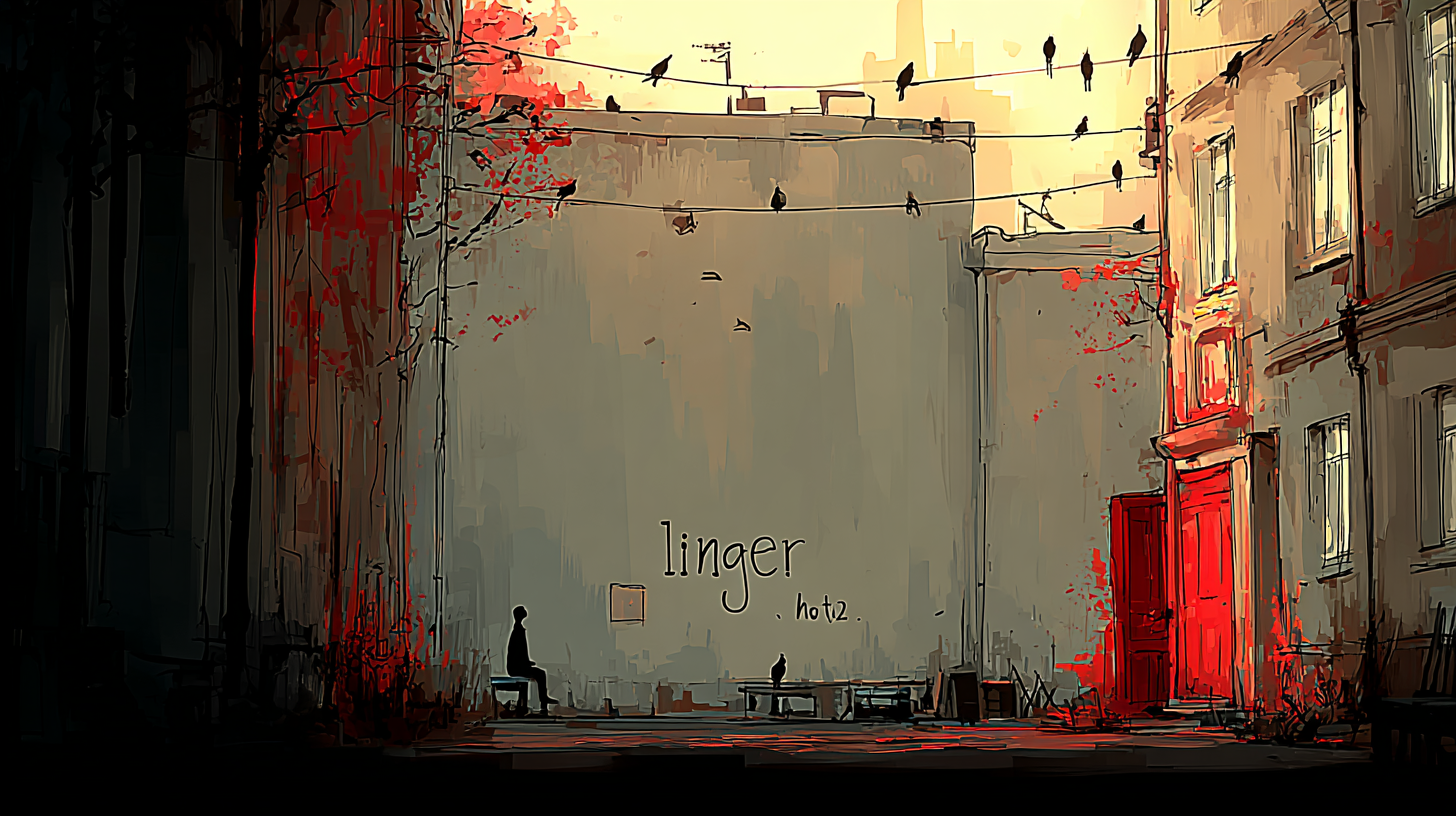
linger means “stay longer” or “continue for a while.”
linger は「帰らずに少し長く残る」「消えずにしばらく続く」という意味。
以下は英単語 “linger” に関するストーリー型学習コンテンツです。まずは大枠の意味を理解して最後の文章で確認しましょう。
「linger」の主な意味(main meaning)
| 品詞 | 意味 | 英語定義(簡潔) | 英語例文(1文) | 発音記号(IPA) |
|---|---|---|---|---|
| 動詞 | 立ち去らずに残る、長くとどまる | to stay somewhere longer than expected | She lingered in the office after the meeting ended. | /ˈlɪŋɡər/ |
| 動詞 | (感情・におい・影響などが)消えずに続く | to continue for a long time, especially in a weak way | The smell of coffee lingered in the hallway. | /ˈlɪŋɡər/ |
「linger」の語源(etymology)
Middle English の lengeren(長くする)に由来し、もともと「時間を長くのばす」イメージがあります。
核となるイメージは「本当は終わるはずなのに、時間や存在がのびて残る」です。
「linger」の類義語(synonyms)
| 類義語 | 基本的な意味 | 指定単語とのニュアンスの違い | 英語例文 |
|---|---|---|---|
| remain | 残る | linger より事実として「残っている」感じで、感情の余韻は弱い | Only two files remained on the desk. |
| stay | とどまる | linger より普通で中立的、「長くいる」理由や余韻を強く出さない | I stayed late to finish the report. |
| loiter | ぶらぶらする | linger より「目的なくうろつく」印象が強く、注意される場面もある | Someone was loitering near the entrance. |
| persist | 続く、なくならない | linger より硬い語で「問題や症状がしつこく続く」感じが強い | The error persisted even after the update. |
| hover | 近くを離れずにうろつく、そばにいる | linger より「近くにいて様子を見る」感じが強い | The manager hovered near our desks during the audit. |
「linger」の反義語(antonyms)
| 反義語 | 基本的な意味 | 英語例文 |
|---|---|---|
| leave | 去る | Please leave the room quietly. |
| depart | 出発する、立ち去る | The last train departs at 10 p.m. |
「linger」のコロケーション(collocations)
| コロケーション | 意味 | 英語例文 |
|---|---|---|
| linger on | 長く続く、なかなか終わらない | The argument lingered on for weeks. |
| linger around | 近くに残る、うろうろ残る | He lingered around the printer to ask a question. |
| linger in the air | (におい等が)空気中に残る | The scent of soap lingered in the air. |
| linger over | (食事や作業を)ゆっくり時間をかける | We lingered over lunch and talked about the project. |
| linger at | (場所に)しばらくとどまる | She lingered at the door, unsure what to say. |
「linger」の2項表現(binomials)
| 2項表現(A and B) | 意味 | 英語例文 |
|---|---|---|
| back and forth | 行ったり来たり | We went back and forth on the design until noon. |
| now and then | ときどき | I still message her now and then. |
| sooner or later | いつかは | Sooner or later, we have to solve the root problem. |
英語ストーリー(english story)
On Friday afternoon, the office felt quieter than usual. Most people wanted to leave as soon as the weekly meeting ended, because it had been a long week. But I had promised my team that I would polish the final slides for Monday’s client presentation, so I stayed at my desk.
The meeting itself had been short, yet the tension from it seemed to linger. Our manager, Ms. Tanaka, had pointed out a few weak points in our proposal, and the worry did not disappear quickly. Even after the conference room door closed, her serious words seemed to linger on in my mind like a soft echo.
I opened the slide deck and tried to focus. Only three people remained on our floor: me, Ken from sales, and Yuki from design. Ken was still near the printer, looking at his phone and waiting for copies. He didn’t seem busy, but he also didn’t go home. He simply lingered around the printer as if he might say something but couldn’t decide.
Yuki walked over and placed a small paper cup on my desk. “I made fresh coffee,” she said. “You look like you need it.”
“Thanks,” I replied. The smell was strong and comforting. It rose from the cup and seemed to linger in the air between us, mixing with the quiet humming sound of computers. For a moment, the office felt calm.
“I’m going to check the colors on slide twelve,” Yuki said. “I’ll be near.”
As she returned to her desk, Ms. Tanaka appeared again. She didn’t speak right away. She just stood near the center aisle, watching our screens from a distance. It was not exactly rude, but it made me nervous. She seemed to hover near us, as if she wanted to help but also wanted to make sure we did not miss anything.
I adjusted the chart on slide eight, then moved to the next one. Still, my thoughts kept returning to the meeting. The questions Ms. Tanaka asked were not unfair, but they were sharp. The doubt persisted, and I worried that the client would notice the same weak points.
Ken finally walked over, holding a few papers. “Hey,” he said quietly, “do you have a minute?”
I nodded. Ken lingered at the corner of my desk, shifting his weight from one foot to the other. “I think our pricing slide is too complicated,” he said. “The client may get lost.”
“I agree,” I said. “But we need to show why the cost is worth it.”
We talked for a few minutes, going back and forth on what to cut and what to keep. Ken wanted a simple message. I wanted enough detail to sound credible. We didn’t argue, but we tested ideas like we were turning a key in a lock, trying to find the right fit.
Yuki joined us and suggested a new layout. “We can keep the numbers,” she said, “but show them in a cleaner way.” She dragged elements on the screen, then paused. “Also, the photo on slide three feels cold. We should change it.”
We lingered over the design choices, even though it was already past six. It wasn’t because we enjoyed staying late. It was because the details mattered, and we could sense that sooner or later the client would ask the same tough questions Ms. Tanaka asked. We wanted to be ready.
Ms. Tanaka came closer and pointed at the headline on slide five. “This line is too long,” she said. Her voice was calmer than before. “Shorten it. Make it clearer.”
I edited the text, and the slide instantly looked better. Ms. Tanaka gave a small nod. “Good. You’re close.”
After she walked away, my shoulders relaxed. The tension began to fade, but not completely. It still lingered like a light shadow. Ken exhaled. “I’m glad she’s not angry,” he said.
“She isn’t,” Yuki replied. “She’s strict because she wants us to succeed.”
We worked quietly for another thirty minutes. When we finished, we saved the file and sent it to the team chat. I checked the time and stood up. “Okay,” I said. “Let’s go.”
Ken smiled. “Finally. I’m going to depart before I fall asleep on the train.”
Yuki laughed. “Same. But I’ll message you now and then this weekend if I notice anything.”
We turned off our monitors and walked to the elevator. As the doors closed, the smell of coffee still seemed to linger in the air behind us, and the last bits of worry still lingered in my mind. But it was a different kind of lingering now—not fear, but a quiet feeling that we had done our best.
和訳
金曜日の午後、オフィスはいつもより静かだった。週次ミーティングが終わると、ほとんどの人はできるだけ早く立ち去りたくて(leave:去る)、長い一週間だったからだ。でも私は、月曜日のクライアント向けプレゼンの最終スライドを仕上げるとチームに約束していたので、席に残った。
ミーティング自体は短かったのに、その緊張感は消えずに残る(linger)ように感じた。マネージャーの田中さんが提案の弱い点をいくつか指摘し、その不安はすぐに消えなかった。会議室のドアが閉まった後も、彼女の厳しい言葉が小さな反響のように頭の中で長く続いた(linger on:長く続く)。
私は資料を開き、集中しようとした。そのフロアに残っていた(remained:残る)のは私と営業のケン、そしてデザインのユキの3人だけだった。ケンはプリンターの近くでスマホを見ながらコピーを待っていた。忙しそうではないのに帰りもしない。ただ、何か言いたいのに決められないようにプリンターの周りにうろうろ残っていた(lingered around:近くに残る)。
ユキが来て、小さな紙コップを机に置いた。「淹れたてのコーヒーだよ。必要そうに見えた」と言った。
「ありがとう」と私は答えた。香りは強くて落ち着いた。カップから立ち上り、私たちの間の空気に**漂って残る(linger in the air:空気中に残る)**ようだった。しばらく、オフィスは穏やかに感じられた。
「12枚目の色を確認するね。近くにいるよ」とユキは言った。
彼女が席に戻ると、田中さんがまた現れた。すぐには話さず、通路の真ん中あたりに立って遠くから私たちの画面を見ていた。失礼ではないが緊張する。助けたいけれどミスを見逃したくない、そんな感じで私たちのそばに近くで様子を見ていた(hover:そばにいて見守る)。
私は8枚目のグラフを直し、次へ進んだ。それでも考えはミーティングに戻ってしまう。田中さんの質問は不公平ではないが鋭い。その疑いはしつこく続き(persisted:続く)、クライアントも同じ弱点に気づくのではと心配だった。
ケンが紙を持って近づいた。「ねえ、ちょっといい?」と小声で言った。
私はうなずいた。ケンは机の角にしばらくとどまり(lingered at:その場にとどまる)、体重を左右の足に移しながら言った。「価格のスライド、複雑すぎると思う。クライアントが迷うかも」
「同意する。でも、なぜそのコストに価値があるかは見せないと」と私は答えた。
私たちは何分か話し、何を削り何を残すかを**行ったり来たり(back and forth:行ったり来たり)**しながら検討した。ケンはシンプルなメッセージを求め、私は説得力のための十分な情報がほしかった。言い争いではなく、鍵穴に合う形を探すように考えを試した。
ユキも加わり、新しいレイアウトを提案した。「数字は残していい。でももっと見やすくできる」そう言って画面上の要素を動かし、少し止まった。「それから3枚目の写真が冷たい感じ。変えよう」
もう6時を過ぎていたのに、私たちはデザインの選択にゆっくり時間をかけた(lingered over:時間をかける)。残業が楽しいからではない。細部が大事で、**いつかは(sooner or later:いつかは)**クライアントが田中さんと同じ厳しい質問をしてくると感じていたからだ。準備しておきたかった。
田中さんが近づき、5枚目の見出しを指した。「この一文は長すぎる。短くして、もっと明確に」と言った。声はさっきより落ち着いていた。
私は文章を直し、スライドはすぐに良く見えた。田中さんは小さくうなずいた。「いいね。もう少し」
彼女が去ると、肩の力が抜けた。緊張は薄れたが完全ではない。まだ軽い影のように消えずに残っていた(lingered)。ケンが息を吐いた。「怒ってなくてよかった」
「怒ってないよ。成功してほしいから厳しいんだ」とユキが言った。
私たちはさらに30分ほど静かに作業し、終わると保存してチームチャットに送った。時間を確認して立ち上がった。「よし、行こう」
ケンは笑った。「やっとだ。電車で寝落ちする前に**出発する(depart:出発する)**よ」
ユキが笑った。「私も。同じ。だけど週末に何か気づいたら**ときどき(now and then:ときどき)**連絡するね」
私たちはモニターを消してエレベーターへ向かった。ドアが閉まると、コーヒーの香りが後ろの空気にまだ漂って残り(linger in the air:空気中に残る)、最後の不安も頭の中に少し消えずに残っていた(lingered)。でもそれはもう怖さではなく、やれるだけやったという静かな感覚の余韻だった。
「linger」のQ&A
- Qlinger はどんな意味ですか
- A
linger は「帰らずに少し長く残る」や「消えずにしばらく続く」という意味です。
- Qlinger と stay はどう違いますか
- A
stay はただ「とどまる」で中立ですが、linger は「思ったより長く残る」余韻が出ます。
- Qlinger と remain はどう違いますか
- A
remain は「残っている」という事実が中心で、linger ほど感情や余韻の感じは強くありません。
- Qlinger と loiter はどう違いますか
- A
loiter は「目的なくうろうろする」感じが強く、怪しまれる場面でも使われます。
- Qlinger と persist はどう違いますか
- A
persist は「問題や症状がしつこく続く」など硬めで、linger より強い「続く」印象です。
- Qlinger と hover はどう違いますか
- A
hover は「そばにいて様子を見る」感じで、linger より「近くで見守る」ニュアンスが出ます。
- Qlinger on はどんなときに使いますか
- A
linger on は「話や影響がなかなか終わらず続く」と言いたいときに使います。
- Qlinger around はどんなときに使いますか
- A
linger around は「その場所の近くに帰らず残っている」と言いたいときに使います。
- Qlinger in the air は何が残るイメージですか
- A
linger in the air は「においなどが空気中に漂って残る」イメージで使います。
- Q2項表現 back and forth はどんな場面で使いますか
- A
back and forth は意見や作業を「行ったり来たり」しながら決める場面で使います。


コメント