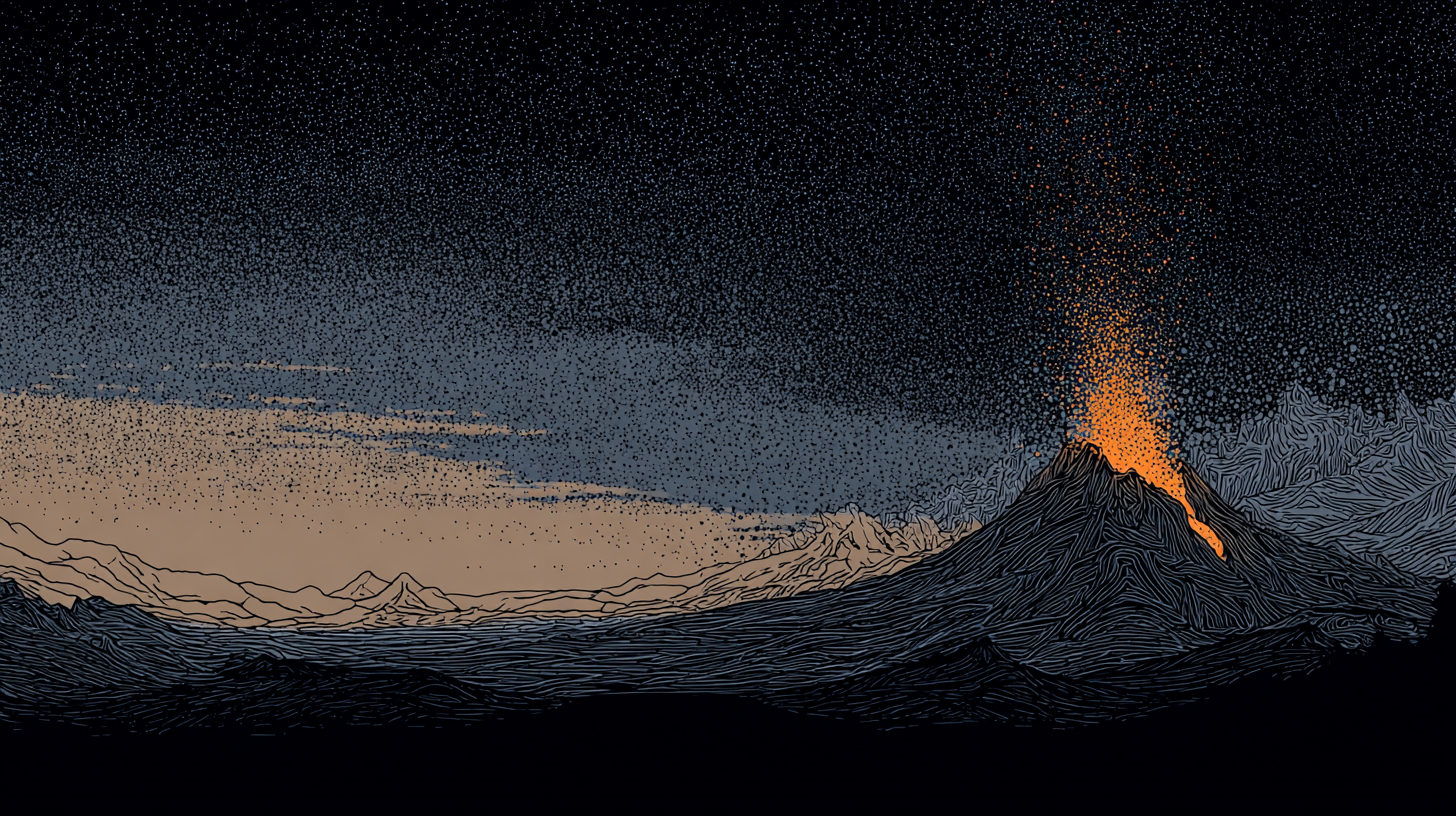
A volcano is a mountain that can erupt with lava and ash.
volcano は「熱い溶岩や灰をふき出す山」のこと。
以下は英単語 “volcano” に関するストーリー型学習コンテンツです。まずは大枠の意味を理解して最後の文章で確認しましょう。
「volcano」の主な意味(main meaning)
| 品詞 | 主要な意味 | 英語定義(簡潔) | 発音記号(IPA) | 英語例文(1文) |
|---|---|---|---|---|
| noun | 火山 | a mountain that can erupt with lava, ash, and gases | /vɑːlˈkeɪnoʊ/ | The volcano erupted and covered the town in ash. |
「volcano」の語源(etymology)
volcano は、ローマ神話の火の神 Vulcan(ウルカヌス)の名前から来ています。
核となるイメージは「地面の中の熱と力がたまって、ある時ふき出す」です。
「volcano」の類義語(synonyms)
| 類義語 | 基本的な意味 | 指定単語とのニュアンスの違い | 英語例文 |
|---|---|---|---|
| crater | 火口 | volcano は山全体、crater は山の上にある穴の部分を指す | We looked into the crater from a safe spot. |
| eruption | 噴火 | volcano は場所や山、eruption は出来事そのもの | The eruption lasted for three days. |
| lava | 溶岩 | volcano は原因の山、lava は出てくる熱い岩の液体 | The lava moved slowly down the slope. |
| ash | 火山灰 | volcano は全体、ash は噴火で空に広がる細かい灰 | Ash fell like snow on the cars. |
| magma | マグマ | volcano は外に出る山、magma は地下にある溶けた岩 | Magma collects deep underground. |
「volcano」の反義語(antonyms)
| 反義語 | 意味 | 英語例文 |
|---|---|---|
| plain | 平野 | The village is on a wide plain, not in the mountains. |
| valley | 谷 | A river runs through the valley between two hills. |
「volcano」のコロケーション(collocations)
| コロケーション | 意味 | 英語例文 |
|---|---|---|
| active volcano | 活火山 | An active volcano can erupt at any time. |
| dormant volcano | 休火山 | The island has a dormant volcano that might wake up again. |
| volcanic ash | 火山灰 | Flights were canceled because of volcanic ash. |
| volcanic eruption | 火山の噴火 | The volcanic eruption was seen from the next city. |
| lava flow | 溶岩流 | The lava flow destroyed several houses. |
「volcano」の2項表現(binomials)
| 2項表現 | 意味 | 英語例文 |
|---|---|---|
| hot and dangerous | 熱くて危険 | The area near the crater is hot and dangerous. |
| smoke and ash | 煙と灰 | Smoke and ash rose into the sky after the blast. |
| calm and quiet | 落ち着いて静か | Before the eruption, the town felt calm and quiet. |
英語ストーリー(english story)
Mika worked in the travel support office of a small company. Her job was to help business teams plan safe trips. One Monday morning, she opened her email and saw an urgent message from the sales department. They were supposed to visit an overseas client near a famous volcano.
Mika leaned back in her chair and took a deep breath. “Okay, stay calm and quiet,” she whispered to herself. She had planned many trips before, but a volcano always made her careful.
She checked the latest local reports from the government website. The volcano was still an active volcano, but there had been no eruption recently. Still, some areas were closed because of volcanic ash from earlier activity. Mika highlighted the warning and called Ken, the team leader.
“Ken, I’m looking at the situation now,” she said. “The volcano is active, but there’s no eruption today. However, flights can change if volcanic ash increases.”
Ken sounded nervous. “Are we safe to go? The client is important.”
“We can go if we follow the rules,” Mika replied. “But we must avoid the crater area. The crater is the most restricted place, and it can be hot and dangerous. Also, we need a backup plan.”
She created a new document and wrote “Plan A” and “Plan B.” Plan A included the normal route from the airport to the hotel. Plan B was an alternative route farther from the volcano, crossing a wide plain instead of the valley road that sometimes got blocked.
Then Mika sent a message to the airline desk. “If there is a volcanic eruption, what happens to our tickets?” she asked. The staff answered quickly: “If ash affects the airport, we will cancel or delay flights.”
Mika nodded. That was expected. She printed the information and walked to her manager’s desk. “We should book flexible tickets,” she said. “Even a small increase in ash can stop flights.”
Her manager agreed. “Do it. Safety first.”
Later, Ken visited Mika’s desk. “I heard some people say lava is flowing,” he said.
Mika opened another report and shook her head. “Not now. Lava flow is not reported. Sometimes people mix up lava and magma. Magma is underground; lava is what comes out. Right now, the main issue is ash.”
Ken looked relieved. “Good. I was imagining rivers of fire.”
Mika smiled a little. “It’s normal to worry. But we will be smart and prepared. If the situation changes, we switch to Plan B immediately.”
On the day of departure, the sky near the mountain was gray, but the airport was open. The team landed safely and followed Mika’s instructions. They stayed far from the crater, wore masks when needed, and watched the news.
That evening, Ken called Mika from the hotel. “Everything is fine,” he said. “The town is calm and quiet, and the client meeting is still on.”
Mika looked out the office window at the peaceful city where she worked. “Great,” she said. “Let’s keep it safe. A volcano can be quiet, but it can also surprise us.”
和訳
ミカは小さな会社の出張サポートのオフィスで働いていた。仕事は、営業チームが安全に旅行できるよう計画を助けることだった。ある月曜日の朝、彼女はメールを開き、営業部からの緊急メッセージを見た。彼らは有名な火山(volcano)の近くにある海外の取引先を訪れる予定だった。
ミカは椅子にもたれて深呼吸した。「落ち着いて静か(calm and quiet)にしよう」と自分に言った。彼女は何度も出張を計画してきたが、火山(volcano)が関わるときは特に注意した。
彼女は政府のサイトで最新の現地報告を確認した。その火山(volcano)は活火山(active volcano)だったが、最近は噴火(eruption)は起きていなかった。それでも、以前の活動で出た火山灰(volcanic ash)のため、いくつかの地域は閉鎖されていた。ミカは警告を目立たせ、チームリーダーのケンに電話した。
「ケン、今状況を見ているよ」とミカは言った。「火山(volcano)は活発だけど、今日は噴火(eruption)はない。ただ、火山灰(volcanic ash)が増えるとフライトは変わるかもしれない。」
ケンは不安そうだった。「安全に行けるの?取引先は大事なんだ。」
「ルールを守れば行けるよ」とミカは答えた。「でも火口(crater)の近くは避けないと。火口(crater)は一番立ち入りが厳しい場所で、熱くて危険(hot and dangerous)になりやすい。それに、予備プランも必要。」
ミカは新しい書類を作り、「Plan A」と「Plan B」と書いた。Plan A は空港からホテルまでの通常ルート。Plan B は火山(volcano)からより遠い別ルートで、谷(valley)の道ではなく広い平野(plain)を通る道だった。
次に、ミカは航空会社の窓口に連絡した。「火山の噴火(volcanic eruption)が起きたら、チケットはどうなりますか?」と聞いた。スタッフはすぐ答えた。「灰が空港に影響したら、欠航や遅延になります。」
ミカはうなずいた。予想通りだった。情報を印刷し、上司の机へ行った。「変更しやすいチケットにすべきです」と言った。「火山灰(ash)が少し増えるだけでもフライトが止まることがあります。」
上司は同意した。「やって。安全が最優先。」
その後、ケンがミカの机に来た。「溶岩(lava)が流れているって聞いた人がいる」と言った。
ミカは別の報告を開いて首を振った。「今は違うよ。溶岩流(lava flow)は報告されてない。lava と magma を混同する人がいるんだ。magma は地下、lava は外に出たもの。今の問題は主に灰(ash)だよ。」
ケンは安心した様子だった。「よかった。火の川を想像してた。」
ミカは少し笑った。「心配するのは普通。でも私たちは賢く準備する。状況が変わったらすぐ Plan B に切り替えるよ。」
出発の日、山の近くの空は灰色だったが、空港は開いていた。チームは無事に到着し、ミカの指示に従った。火口(crater)から離れ、必要ならマスクをし、ニュースを見続けた。
その夜、ケンがホテルからミカに電話した。「全部大丈夫」と言った。「町は落ち着いて静か(calm and quiet)で、取引先との会議も予定通りだよ。」
ミカはオフィスの窓から、静かな街を見た。「よかった」と言った。「安全を続けよう。火山(volcano)は静かでも、驚かせることがあるからね。」
「volcano」のQ&A
- Qvolcano はどんな意味ですか
- A
volcano は溶岩や灰をふき出すことがある山のことです
- Qvolcano と eruption の違いは何ですか
- A
volcano は火山そのもの、eruption は噴火という出来事のことです
- Qvolcano と crater の違いは何ですか
- A
volcano は山全体、crater は山の上の火口という穴の部分です
- Qlava と magma はどう違いますか
- A
magma は地下の熱いドロドロした岩で、lava は外に出て流れる溶岩です
- Qvolcanic ash はどんなときに使いますか
- A
volcanic ash は噴火で出た細かい灰のことを言うときに使います
- Qactive volcano と dormant volcano の違いは何ですか
- A
active volcano は噴火する可能性が高い火山で、dormant volcano は今は静かでもまた活動するかもしれない火山です
- Qlava flow はどんな意味で使いますか
- A
lava flow は溶岩が川のように流れていくことを言うときに使います
- Qsmoke and ash はどんな場面で自然ですか
- A
smoke and ash は噴火のあとに煙と灰が空に上がる場面で自然です
- Qcalm and quiet はどんな気持ちのときに使いますか
- A
calm and quiet は周りが静かで気持ちも落ち着いている状態を言うときに使います
- Qvolcano の類義語はどう使い分けますか
- A
crater は場所の一部、eruption は出来事、lava や ash は出てくる物で、volcano はそれらを出す山全体だと考えると整理できます


コメント