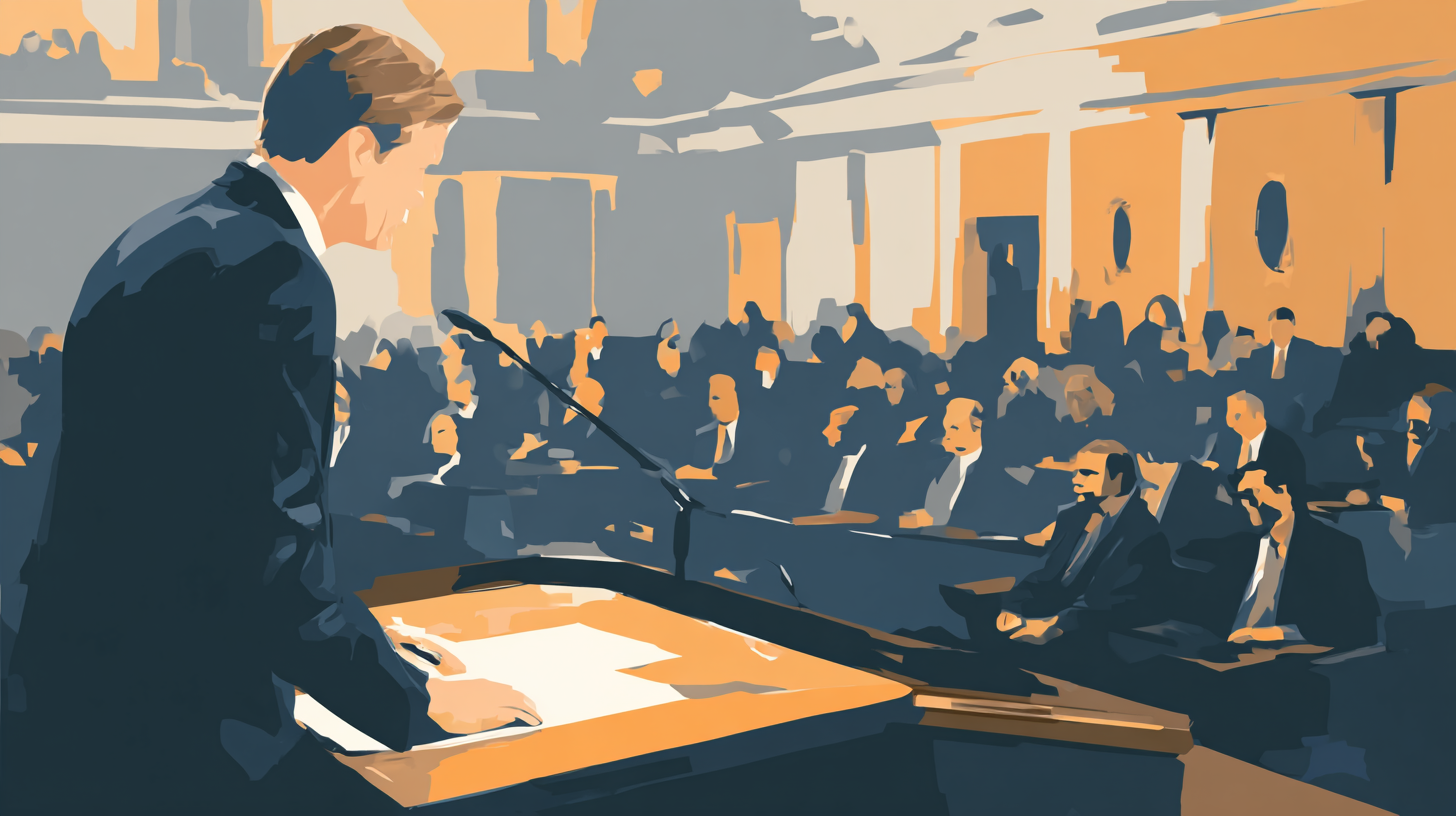
A senator is a lawmaker in a senate who helps make laws.
senatorは国や州の政治で法律を決める上院の議員のこと。
以下は英単語 “senator” に関するストーリー型学習コンテンツです。まずは大枠の意味を理解して最後の文章で確認しましょう。
「senator」の主な意味(main meaning)
| 品詞 | 意味 | 英語定義 | 英語例文(1文) | 発音記号(IPA) |
|---|---|---|---|---|
| noun | 上院議員 | a member of a senate, especially in a national or state government | The senator visited our office to discuss the new bill. | /ˈsɛnətər/ |
| noun | (古代ローマの)元老院議員 | a member of the Senate in ancient Rome | In history class, we learned how a Roman senator gained power. | /ˈsɛnətər/ |
「senator」の語源(etymology)
ラテン語の「senex(年配の人)」に由来し、「年長者の集まりで国を考える人」というイメージが核にある。
senatorは「経験のある人が大事な決まりを話し合う場にいる人」を思い浮かべると覚えやすい。
「senator」の類義語(synonyms)
| 類義語 | 基本的な意味 | senatorとのニュアンスの違い | 英語例文 |
|---|---|---|---|
| legislator | 立法をする人 | 上院に限らず、法律を作る人全体を広く言う | Legislators debated the budget for hours. |
| lawmaker | 法律を作る人 | 口語的でわかりやすく、役職より「仕事の中身」に焦点 | She wants to become a lawmaker someday. |
| parliamentarian | 議会の議員 | 主に「parliament」を使う国での言い方で、制度の違いが出る | The parliamentarian answered questions from reporters. |
| representative | 代表者、議員 | 「誰かを代表する」意味が強く、下院議員なども含む | The representative listened to local residents. |
| politician | 政治家 | 立法以外も含む広い言い方で、職業・立場全体を指す | The politician gave a speech at the town hall. |
「senator」の反義語(antonyms)
| 反義語 | 意味 | 英語例文 |
|---|---|---|
| citizen | 市民 | Every citizen has the right to vote. |
| civilian | 一般市民、軍人や公職者でない人 | The event was open to civilians and officials. |
「senator」のコロケーション(collocations)
| コロケーション | 意味 | 英語例文 |
|---|---|---|
| state senator | 州の上院議員 | A state senator spoke at our local school. |
| senior senator | (その州の)年長の上院議員 | The senior senator led the committee meeting. |
| senator-elect | 当選したばかりの上院議員 | The senator-elect thanked volunteers after the election. |
| meet with a senator | 上院議員と会う | We will meet with a senator next week. |
| the office of the senator | 上院議員事務所 | Please call the office of the senator for details. |
「senator」の2項表現(binomials)
| 2項表現 | 意味 | 英語例文 |
|---|---|---|
| checks and balances | 権力の抑制と均衡 | The teacher explained checks and balances in simple terms. |
| rights and responsibilities | 権利と責任 | Good leaders talk about rights and responsibilities together. |
| rules and regulations | 規則と規制 | Employees must follow the company’s rules and regulations. |
英語ストーリー(english story)
On Monday morning, our office felt unusually busy. I work at a small communications company in the downtown area, and we were preparing for a special visitor. A client of ours was hosting a community forum, and they had invited a senator to speak about local jobs and education.
My manager, Ms. Kato, walked into the meeting room with a thick folder. “Everyone, we need to be ready,” she said. “The office of the senator called last night. They confirmed the schedule, but they also warned us that the senator-elect might arrive early.”
I looked up from my laptop. “A senator-elect? I thought we were meeting the senior senator,” I said.
“We are,” Ms. Kato replied. “But the senior senator is bringing the senator-elect as a guest. It’s a good chance for the new person to learn how these events work.”
Our team’s job was simple on paper: prepare the slides, manage the microphones, and write a short summary for the press. But real events are never simple. At 9:30, the client sent a message saying that two reporters wanted extra time for questions. At 10:00, our sound technician found a problem with the wireless mic. And at 10:15, the building manager reminded us about strict rules and regulations for security.
By 10:30, I felt the pressure in my chest. I told myself to focus. In my notebook, I wrote a short checklist: test audio, print name tags, confirm seating, and review the schedule.
Just before 11:00, Ms. Kato asked me to stand near the entrance with our client, Mr. Sato. “You’ll greet them and guide them to the waiting room,” she said. “Be polite, but be clear. We don’t want confusion.”
When the elevator doors opened, I saw two assistants step out first. One carried a bag of documents, and the other held a small tablet. Behind them was the senator, calm and serious, wearing a simple dark suit. Next to the senator stood a younger person with bright eyes, who looked both excited and nervous.
“Thank you for having us,” the senator said. “I’m glad to meet the team.”
I shook hands and introduced myself. “Welcome. We’re honored. Please come this way.”
As we walked, the senator asked, “Who prepared the presentation?”
“Our team did,” I answered. “We tried to keep it clear for everyone, from students to business owners.”
“That’s important,” the senator said. “A good legislator should speak in a way people can understand.”
In the waiting room, Mr. Sato offered water and explained the forum plan. The senator-elect listened closely. After a few minutes, the senator said, “Before we begin, I want to confirm one thing. This forum is not a campaign event. It should focus on policy and community needs.”
Mr. Sato nodded. “Of course. We want to discuss training programs and workplace opportunities. We also want to show how local companies can cooperate with schools.”
The senator smiled slightly. “Good. People often forget that a lawmaker’s job is not only to vote, but also to listen. And listening is part of our checks and balances. It keeps leaders honest.”
The phrase sounded formal, but it felt real. I remembered my father saying that politics can be noisy, yet the best decisions happen when people speak honestly and calmly.
Soon it was time to move to the main hall. As the audience entered, I adjusted the microphone and checked the slides one last time. A reporter whispered to me, “Is it true that the politician supports a new tax?”
I stayed careful. “They will explain their position during the talk,” I said. “Please wait for the official statement.”
When the forum began, the senator stepped up and greeted the audience. The speech was steady, not dramatic. The senator talked about rights and responsibilities, saying that citizens deserve fair chances, but that schools, companies, and government must work together. The senator-elect spoke for just a few minutes, sharing a personal story about growing up in a small town and learning the value of teamwork.
After the speeches, we held a Q&A session. A representative from a local parents’ group asked about class sizes. A parliamentarian visiting from another country asked how committees worked. Then a young student stood up and said, “I’m just a citizen, not an expert. But I want adults to think about our future. What will you do for us?”
The room went quiet.
The senator took a breath and answered gently. “Thank you. Your voice matters. A civilian might feel far from government, but you are the reason government exists. I will meet with a senator from the education committee next month, and I will bring your message. And I will ask our team to report back to this community.”
In that moment, the event stopped feeling like a job task. It felt like a real bridge between everyday work and public life. When the forum ended, the senator thanked our team again.
As they left, Ms. Kato leaned toward me and whispered, “See? Even important people depend on ordinary workplaces like ours.”
I nodded, tired but proud. “Yes,” I said. “And we did our part.”
和訳
月曜の朝、私たちのオフィスはいつもより忙しく感じた。私は街の中心部にある小さな広報会社で働いていて、特別な来訪者に備えていた。私たちのクライアントが地域フォーラムを主催し、地元の仕事と教育について話すためにsenatorを招いていたのだ。
上司の加藤さんが分厚い資料を持って会議室に入ってきた。「みなさん、準備を整えてね」と言った。「the office of the senator(the office of the senator:上院議員事務所)から昨夜連絡があって、予定は確定。でもsenator-elect(senator-elect:当選したばかりの上院議員)が早めに来るかもしれないって。」
私はノートパソコンから顔を上げた。「senator-elect(senator-elect:当選したばかりの上院議員)ですか。senior senator(senior senator:年長の上院議員)に会うんだと思っていました。」
「会うわよ」と加藤さん。「でもsenior senator(senior senator:年長の上院議員)がsenator-elect(senator-elect:当選したばかりの上院議員)をゲストとして連れてくるの。新人がこういうイベントを学ぶいい機会ね。」
私たちの仕事は、紙の上では簡単だった。スライド準備、マイク管理、そして報道向けの短い要約を書くこと。でも現実のイベントはいつも簡単じゃない。9時半にクライアントから、記者が質問時間を増やしたいと連絡が来た。10時に音響担当がワイヤレスマイクの不具合を見つけた。10時15分にはビル管理者が厳しいrules and regulations(rules and regulations:規則と規制)を改めて伝えてきた。
10時半には胸のあたりにプレッシャーを感じた。私は集中しようと決めた。ノートに短いチェックリストを書いた。音のテスト、名札の印刷、座席確認、予定の見直し。
11時少し前、加藤さんは私に入口近くに立つよう頼んだ。「クライアントの佐藤さんと一緒に迎えて、控室へ案内して」と言った。「丁寧に。でもはっきりね。混乱は避けたい。」
エレベーターのドアが開くと、まず助手が二人出てきた。一人は書類のバッグを持ち、もう一人は小さなタブレットを持っていた。その後ろにsenatorが落ち着いた表情で立っていて、簡素な濃いスーツを着ていた。隣には目が輝く若い人物がいて、興奮と緊張が混ざった様子だった。
「招いてくれてありがとう」とsenatorは言った。「チームのみなさんに会えてうれしい。」
私は握手して自己紹介し、「ようこそ。光栄です。こちらへどうぞ」と案内した。
歩きながらsenatorは尋ねた。「プレゼンは誰が準備したの?」
「私たちのチームです」と私は答えた。「学生から経営者まで、みんなに分かりやすいようにしました。」
「それは大事だね」とsenator。「良いlegislator(legislator:立法をする人)は、人が理解できる言い方で話すべきだ。」
控室で佐藤さんが水を出し、フォーラムの流れを説明した。senator-elect(senator-elect:当選したばかりの上院議員)は真剣に聞いていた。数分後、senatorは言った。「始める前に一つ確認したい。これは選挙運動の場ではない。政策と地域の必要に集中すべきだ。」
佐藤さんはうなずいた。「もちろんです。研修制度と職場の機会を話し合いたい。地元企業が学校と協力できることも示したいです。」
senatorは少し笑った。「いいね。人はよく忘れるが、lawmaker(lawmaker:法律を作る人)の仕事は投票だけじゃない。聞くことも仕事だ。そして聞くことはchecks and balances(checks and balances:権力の抑制と均衡)の一部で、リーダーを正しく保つ。」
堅い言い方に聞こえたが、実感があった。政治は騒がしくなりがちでも、最良の判断は正直で落ち着いた会話から生まれるのだと父が言っていたのを思い出した。
やがて会場へ移動した。参加者が入ってくる中、私はマイクを調整し、スライドを最後にもう一度確認した。記者が小声で言った。「そのpolitician(politician:政治家)が新しい税を支持しているって本当?」
私は慎重に答えた。「発言の中で立場を説明します。公式の説明を待ってください。」
フォーラムが始まり、senatorが登壇して挨拶した。話し方は落ち着いていて、派手ではない。senatorはrights and responsibilities(rights and responsibilities:権利と責任)について語り、市民には公平な機会が必要だが、学校、企業、政府が一緒に取り組まねばならないと言った。senator-elect(senator-elect:当選したばかりの上院議員)は数分だけ話し、小さな町で育ち、協力の大切さを学んだ個人的な話をした。
その後、質疑応答を行った。保護者団体のrepresentative(representative:代表者、議員)が学級規模について質問した。別の国から来たparliamentarian(parliamentarian:議会の議員)が委員会の仕組みを尋ねた。次に若い学生が立ち上がって言った。「私はただのcitizen(citizen:市民)で専門家じゃない。でも大人に私たちの未来を考えてほしい。私たちのために何をしますか?」
会場が静まり返った。
senatorは息を整え、穏やかに答えた。「ありがとう。あなたの声は大事だ。civilian(civilian:一般市民)は政府から遠く感じるかもしれないが、政府がある理由はあなたたちだ。来月、教育委員会のsenatorと会う予定だ。私はmeet with a senator(meet with a senator:上院議員と会う)の場で、あなたのメッセージを伝える。そしてこの地域に報告が届くよう、チームにも頼む。」
その瞬間、このイベントは単なる仕事の作業ではなくなった。日常の職場と公共の世界をつなぐ本当の橋のように感じた。フォーラムが終わると、senatorは私たちのチームにもう一度礼を言った。
帰り際、加藤さんが私にささやいた。「ほらね。大事な人でも、私たちみたいな普通の職場に頼っているのよ。」
私はうなずき、疲れていたが誇らしかった。「そうですね」と言った。「私たちも役割を果たしました。」
「senator」のQ&A
- Qsenatorはどんな人のことですか
- A
senatorは国や州の上院で法律を決める議員のことです。
- Qsenatorとlegislatorはどう違いますか
- A
legislatorは法律を作る人全体で、senatorはその中でも上院議員に当たります。
- Qsenatorとlawmakerはどう使い分けますか
- A
lawmakerは口語的で、役職よりも法律を作る仕事そのものに注目するときに使います。
- Qsenatorとpoliticianの違いは何ですか
- A
politicianは政治家全般で、senatorはその中の具体的な役職名です。
- Qsenatorとrepresentativeは同じですか
- A
representativeは代表する人という意味が強く、上院だけに限らず下院なども含みます。
- Qsenatorの反対の立場に近い単語は何ですか
- A
citizenやcivilianが近く、議員などの公職ではない一般の人を表します。
- Qstate senatorはどういう意味ですか
- A
state senatorは州の上院議員のことで、国の上院議員とは区別して言います。
- Qsenator-electはいつ使いますか
- A
senator-electは選挙に勝って就任前の上院議員に使います。
- Qmeet with a senatorはどんな場面で使いますか
- A
面談や要望を伝えるために上院議員と会うときにmeet with a senatorと言います。
- Qchecks and balancesはsenatorの話とどう関係しますか
- A
checks and balancesは権力を一方に集中させない考え方で、senatorの役割の説明によく出ます。


コメント