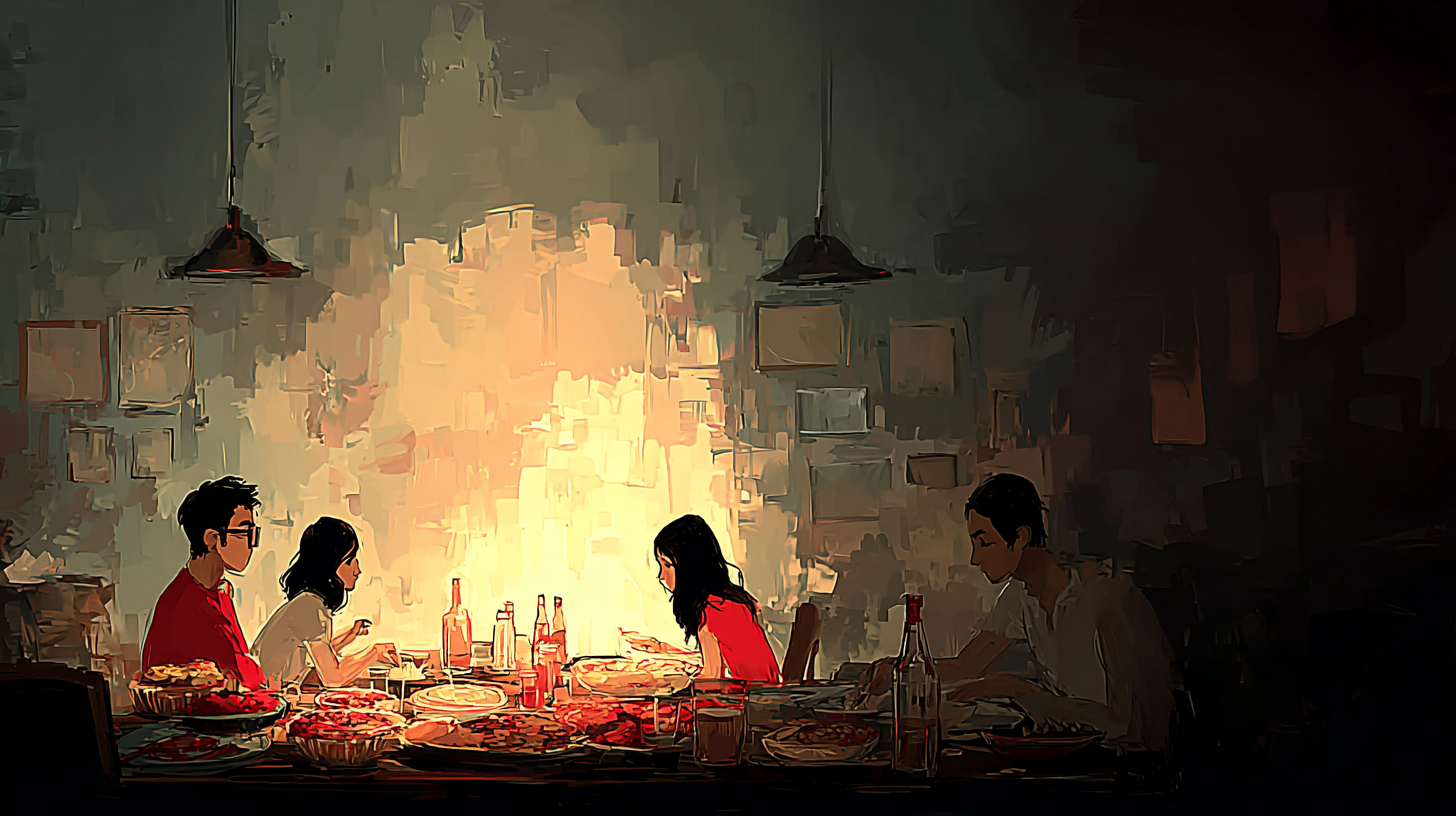
Leftovers are the food that is still there after you eat.
leftovers は 食べたあとに残った料理や余ったもの のこと。
以下は英単語 “” に関するストーリー型学習コンテンツです。まずは大枠の意味を理解して最後の文章で確認しましょう。
「leftovers」の主な意味(main meaning)
| 品詞 | 主要な意味 | 英語定義 | 例文 | 発音記号 |
|---|---|---|---|---|
| noun | 食べ残し 残り物 | food that is not eaten and is kept for later | We ate the leftovers for lunch. | /ˈlɛftˌoʊvərz/ |
| adjective | 残った 余った | remaining after the main part has been used or taken | There were leftover sandwiches after the meeting. | /ˈlɛftˌoʊvər/ |
「leftovers」の語源(etymology)
left と over が合わさった言葉で、left は「残された」、over は「余った」というイメージ。
核となるイメージは「使ったあとに、まだそこに残っているもの」。
「leftovers」の類義語(synonyms)
| 類義語 | 基本的な意味 | 指定単語とのニュアンスの違い | 英語例文 |
|---|---|---|---|
| remaining | 残っている | leftovers は特に食べ物の残り物でよく使うが、remaining はもっと広く「残り」全般に使える | Only a few cookies are remaining. |
| extra | 追加の 余分な | leftovers は「使い終わって残ったもの」だが、extra は「最初から多めに用意した余分」も含む | Do we have extra chairs for visitors? |
| surplus | 余剰 余り | leftovers より硬い言い方で、数や量が多く、計画より余った感じに使う | The store had a surplus of bread. |
| remainder | 残り | leftovers より数え方がはっきりした「残り」に使いやすい | The remainder of the budget will be saved. |
| remains | 残ったもの | leftovers より「残骸」や「跡」の感じが強く、食べ物にも使えるが少し硬い | We threw away the remains of the pizza. |
「leftovers」の反義語(antonyms)
| 反義語 | 基本的な意味 | 英語例文 |
|---|---|---|
| fresh | 新鮮な 作りたての | I prefer fresh food to leftovers. |
| new | 新しい | We bought new supplies instead of using old ones. |
「leftovers」のコロケーション(collocations)
| コロケーション | 意味 | 英語例文 |
|---|---|---|
| eat leftovers | 残り物を食べる | I often eat leftovers the next day. |
| pack up leftovers | 残り物を包んで持ち帰る | We packed up leftovers after the party. |
| store leftovers | 残り物を保存する | Store leftovers in the fridge right away. |
| reheat leftovers | 残り物を温め直す | I reheated leftovers in the microwave. |
| leftover food | 残った食べ物 | Please label the leftover food. |
「leftovers」の2項表現(binomials)
| 2項表現 | 意味 | 英語例文 |
|---|---|---|
| clean and tidy | きれいで整っている | Let’s keep the kitchen clean and tidy. |
| give and take | お互いにゆずり合うこと | Good teamwork needs give and take. |
| food and drink | 食べ物と飲み物 | The event included food and drink. |
英語ストーリー(english story)
On Friday afternoon, our office finished a long client meeting. Everyone looked tired, but the table in the break room looked happy. There were boxes of sandwiches, a big salad, and several cups of coffee. Our team leader, Ms. Tanaka, smiled and said, “Good job. Now, before we go back to our desks, let’s make the room clean and tidy.”
I started to collect paper cups and napkins. Then I noticed something on the table. There was a lot of leftover food. Some people had eaten quickly and returned to work, and others had taken only a small piece. I thought, “We can’t waste this.”
My coworker Ken walked in and pointed at the sandwiches. “Wow, there are so many leftovers,” he said. “Are we allowed to take them?”
Ms. Tanaka nodded. “Yes, but we need to do it in a safe way. We also need to share fairly. Teamwork is give and take.”
I opened the boxes and checked what was inside. There were six sandwiches remaining, two pieces of cake, and a salad bowl that was still half full. Ken said, “This is more than remaining. It’s almost a surplus.”
I laughed. “Surplus sounds like something from a factory, not a break room.”
He shrugged. “True, but it’s a lot. We should handle it well.”
We called a few people back to the break room. “If you want, you can pack up leftovers,” I said. “Just take what you will really eat.”
Mika from accounting came in and looked at the table. “I brought fresh fruit this morning,” she said. “But now I want a sandwich. Is that okay?”
“Of course,” Ms. Tanaka said. “Just write your name on the container if you take something. And if you store leftovers, put them in the fridge right away.”
While people chose food, I found a stack of small containers. I wrote labels and dates. Ken helped me, and we worked quickly. When we finished, the table looked better, but there were still a few items. Ms. Tanaka asked, “What should we do with the remainder?”
I looked at the salad bowl. “Some people may want it later. We can keep it, but only if it stays cold.”
Ken added, “And if no one takes it by the end of the day, we should throw it away. The remains of old food can cause problems.”
Mika agreed. “I don’t want anyone to get sick. I prefer fresh meals, but I don’t mind eating leftovers the next day if we manage them right.”
After that, we sent a short message to the office chat: “Leftovers are in the fridge. Please take what you want by 5 p.m.” A few minutes later, more people came. One person said, “Great, I was about to buy a new snack.” Another said, “Thanks, I’ll eat leftovers for dinner.”
Before leaving, I checked the fridge. Everything was labeled, and the break room was clean and tidy. Ms. Tanaka looked satisfied. “This is small,” she said, “but it shows how we work. We think about details. We share food and drink fairly. And we keep the office in good shape.”
Ken picked up his bag. “So, what did you take?” he asked.
“Two sandwiches,” I said. “Not extra, not too little. Just right.”
He smiled. “Nice. I took one sandwich and the cake. Give and take, right?”
On my way home, I thought about it. The meeting had been difficult, but this simple moment felt warm. Leftovers were not just food. They were a reminder that we could use what we had, avoid waste, and care for each other in an ordinary workplace day.
和訳
金曜日の午後、私たちのオフィスは長いクライアント会議を終えた。みんな疲れていたが、休憩室のテーブルは楽しそうに見えた。サンドイッチの箱、大きなサラダ、そしてコーヒーがいくつもあった。チームリーダーの田中さんは笑って言った。「お疲れさま。席に戻る前に、休憩室をきれいで整った状態にしよう(clean and tidy:きれいで整っている)。」
私は紙コップやナプキンを集め始めた。そのときテーブルに気づいた。残った食べ物がたくさんあった(leftover food:残った食べ物)。すぐに食べて仕事に戻った人もいれば、少しだけ取った人もいた。私は「これを無駄にできない」と思った。
同僚のケンが入ってきてサンドイッチを指さした。「うわ、残り物が多いね(leftovers:残り物)。持って帰っていいの?」
田中さんはうなずいた。「いいよ。でも安全にやらないとね。公平に分けることも大事。チームワークにはお互いのゆずり合いが必要だよ(give and take:お互いにゆずり合うこと)。」
私は箱を開けて中を確認した。サンドイッチは6個残っていて(remaining:残っている)、ケーキが2切れ、サラダも半分ほど残っていた。ケンは言った。「これはただの残り(remaining)じゃないよ。ほとんど余剰だね(surplus:余剰)。」
私は笑った。「surplus って工場みたいだね。休憩室には硬い言い方だよ。」
彼は肩をすくめた。「まあね。でも量が多い。うまく扱わないと。」
私たちは数人を休憩室に呼び戻した。「よければ残り物を包んで持ち帰ってください(pack up leftovers:残り物を包んで持ち帰る)。本当に食べる分だけ取ってね。」
経理のミカさんが入ってきてテーブルを見た。「今朝、新鮮な果物を持ってきたの(fresh:新鮮な)。でも今はサンドイッチが食べたいな。いい?」
「もちろん」と田中さんは言った。「持っていくなら容器に名前を書いてね。それから残り物を保存するなら、すぐ冷蔵庫に入れて(store leftovers:残り物を保存する)。」
みんなが食べ物を選んでいる間、私は小さな容器の束を見つけた。ラベルと日付を書いた。ケンも手伝い、私たちは手早く作業した。終わるとテーブルはすっきりしたが、まだ少し残っていた。田中さんが聞いた。「この残りはどうする(remainder:残り)?」
私はサラダのボウルを見た。「あとで欲しい人もいるかも。冷たいままなら保管できる。」
ケンは付け加えた。「でも今日の終わりまでに誰も取らなければ捨てよう。古い食べ物の残ったものは問題になるから(remains:残ったもの)。」
ミカさんは同意した。「誰も具合悪くなってほしくない。私は新しい(new:新しい)食事の方が好きだけど、ちゃんと管理できるなら次の日に残り物を食べるのは平気(eat leftovers:残り物を食べる)。」
その後、私たちは社内チャットに短いメッセージを送った。「残り物は冷蔵庫にあります(leftovers:残り物)。午後5時までに欲しい人は取ってください。」数分後、さらに人が来た。ある人は「助かる。新しいおやつ(new:新しい)を買うところだった」と言い、別の人は「ありがとう。夕食に残り物を食べるよ(eat leftovers:残り物を食べる)」と言った。
帰る前に私は冷蔵庫を確認した。全部にラベルがあり、休憩室はきれいで整っていた(clean and tidy:きれいで整っている)。田中さんは満足そうだった。「小さなことだけどね」と彼女は言った。「私たちの働き方が出る。細かいところまで考える。食べ物と飲み物を公平に分ける(food and drink:食べ物と飲み物)。そして職場を良い状態に保つ。」
ケンがカバンを持ち上げた。「で、何を持って帰った?」と聞いた。
「サンドイッチを2つ」と私は言った。「余分すぎず(extra:余分な)、少なすぎず、ちょうどいい。」
彼は笑った。「いいね。僕はサンドイッチ1つとケーキ。お互いのゆずり合いだね(give and take:お互いにゆずり合うこと)。」
帰り道、私は考えた。会議は大変だったが、この小さな出来事は温かく感じた。leftovers はただの食べ物ではない。あるものを活かし、無駄を減らし、普通の職場の日にお互いを思いやれるという思い出だった。
「leftovers」のQ&A
- Qleftovers はどんな意味ですか
- A
leftovers は食べたあとに残った料理や残り物のことです
- Qleftovers は単数と複数で使い方が違いますか
- A
leftovers はふつう複数形で食べ物の残り物として使います
- Qleftovers と remaining の違いは何ですか
- A
remaining は残り全般に使えて leftovers は食べ物の残り物でよく使います
- Qleftovers と extra の違いは何ですか
- A
extra は最初から多めの余分も含み leftovers は使ったあとに残ったものです
- Qleftovers と surplus の違いは何ですか
- A
surplus は硬い言い方で計画より多く余った感じで leftovers より量の多さを言いやすいです
- Qleftovers と remainder の違いは何ですか
- A
remainder は数や量がはっきりした残りに使いやすく leftovers は食べ物の残り物の感じが強いです
- Qleftovers と remains の違いは何ですか
- A
remains は残骸や跡の感じが強めで leftovers より少し硬い表現です
- Qleftovers のよくあるコロケーションは何ですか
- A
eat leftovers, pack up leftovers, store leftovers, reheat leftovers, leftover food がよく使われます
- Qleftovers の反対の言い方は何ですか
- A
fresh や new が反対のイメージとして使えます
- Q職場で leftovers を自然に使うにはどう言えばいいですか
- A
Leftovers are in the fridge. Please take what you want. のように言うと自然です


コメント