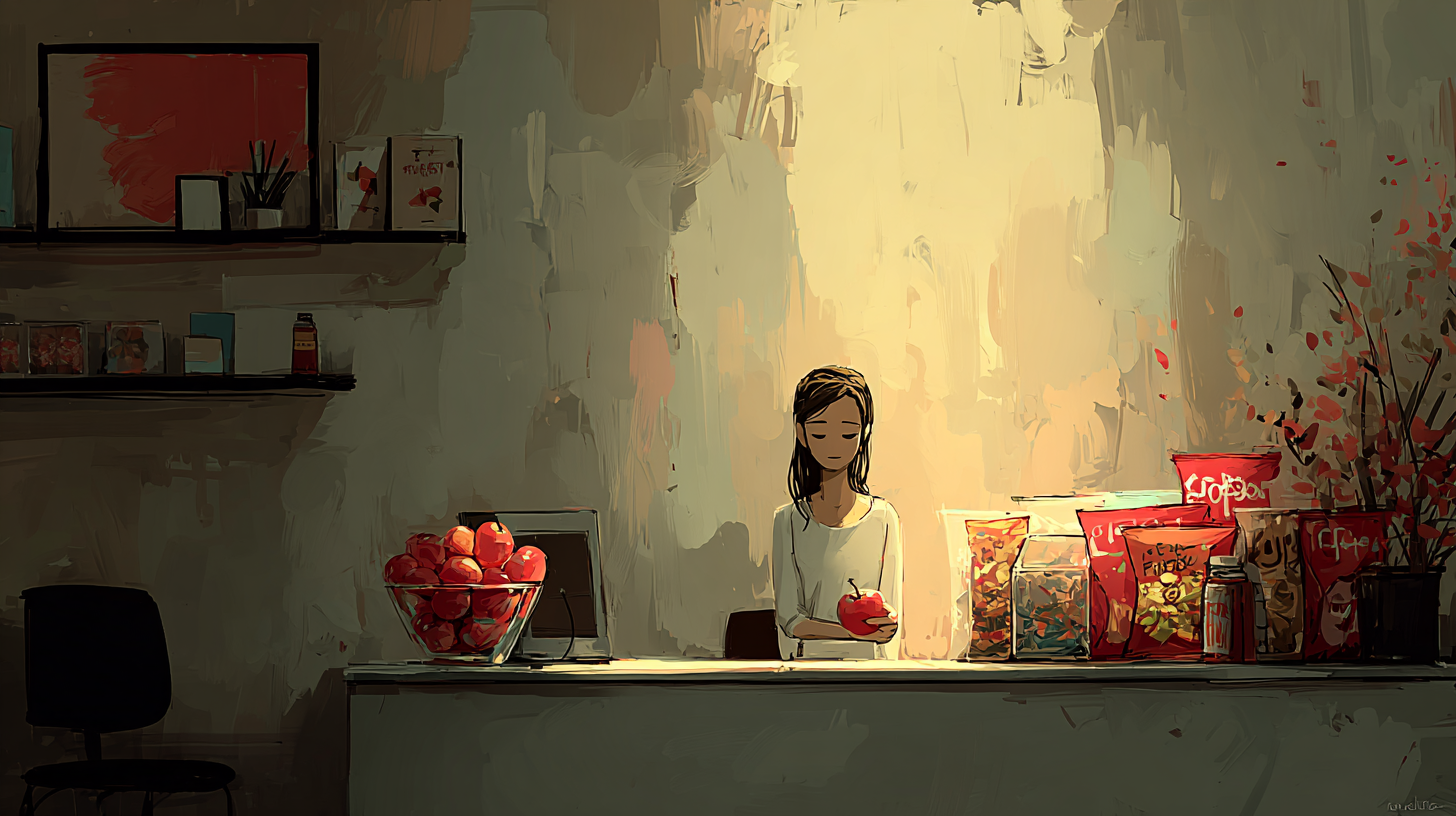
Junk food is unhealthy food that is not good for your body.
junk food は「体にあまりよくない、お菓子や脂っこい食べ物」のこと。
以下は英単語 “junk food” に関するストーリー型学習コンテンツです。まずは大枠の意味を理解して最後の文章で確認しましょう。
「junk food」の主な意味(main meaning)
| 品詞 | 意味(英語定義) | 例文(英語) | 発音(IPA) |
|---|---|---|---|
| noun (uncountable) | food that is high in fat, sugar, or salt and has little nutritional value | I try to avoid junk food during the workweek. | /ˈdʒʌŋk fuːd/ |
| noun (countable, informal) | a specific unhealthy snack or meal | He grabbed a junk food on the way to the meeting. | /ˈdʒʌŋk fuːd/ |
「junk food」の語源(etymology)
junk は「がらくた」「価値が低いもの」という意味から来ています。
junk food は「栄養よりも味や手軽さが目立つ、価値が低い食べ物」というイメージです。
核となるイメージは「おいしいけど中身(栄養)が少ない食べ物」です。
「junk food」の類義語(synonyms)
| 類義語 | 基本的な意味 | 指定単語とのニュアンスの違い | 英語例文 |
|---|---|---|---|
| fast food | 店で早く出てくる食事 | 店の種類に注目する言い方で、必ずしも不健康とは限らない | We ordered fast food because we were short on time. |
| processed food | 工場で加工された食品 | 加工の事実に注目し、健康か不健康かは幅が広い | Processed food is convenient, but I check the labels. |
| snack food | 間食用の食べ物 | 食べる場面に注目し、小さくつまむものが中心 | Snack food disappears fast in our office. |
| unhealthy food | 体に良くない食べ物 | 直接的で説明的な言い方で、強い感情は少なめ | Too much unhealthy food can make you tired. |
| empty calories | 栄養が少ない高カロリー | 「栄養が少ない」に焦点があり、栄養の話をするときに便利 | Soda is full of empty calories. |
「junk food」の反義語(antonyms)
| 反義語 | 基本的な意味 | 英語例文 |
|---|---|---|
| healthy food | 体に良い食べ物 | I bring healthy food to work to stay focused. |
| nutritious food | 栄養のある食べ物 | Nutritious food helps me avoid afternoon sleepiness. |
「junk food」のコロケーション(collocations)
| コロケーション | 意味(日本語) | 英語例文 |
|---|---|---|
| cut down on junk food | ジャンクフードを減らす | I’m trying to cut down on junk food this month. |
| crave junk food | ジャンクフードが無性に食べたくなる | When I’m stressed, I crave junk food. |
| junk food addiction | ジャンクフード依存 | He joked about his junk food addiction after lunch. |
| a junk food diet | ジャンクフード中心の食生活 | A junk food diet can hurt your energy at work. |
| junk food aisle | ジャンクフード売り場の通路 | We walked past the junk food aisle and kept going. |
「junk food」の2項表現(binomials)
| 2項表現 | 意味(日本語) | 英語例文 |
|---|---|---|
| pros and cons | 長所と短所 | Let’s talk about the pros and cons of the new snack policy. |
| health and wellness | 健康とウェルネス | The company started a health and wellness program. |
| salt and sugar | 塩と砂糖 | This snack is loaded with salt and sugar. |
英語ストーリー(english story)
On Monday morning, I arrived at the office earlier than usual. Our team had a big client meeting at ten, and I wanted to feel calm and prepared. But when I opened the kitchen cabinet, I saw a colorful mountain of snack food: chips, cookies, and chocolate bars. Someone had placed them neatly beside the coffee machine, like a silent invitation.
“New supplies?” I asked Yuki from accounting.
She laughed. “The vending company restocked. It’s mostly junk food, though.”
I nodded, trying to act casual. I had promised myself to cut down on junk food after the New Year, but the smell of salty chips made the promise feel weak. When I’m stressed, I crave junk food, and today I could already feel the stress in my shoulders.
At nine, our manager, Mr. Tanaka, gathered us for a quick check-in. “Remember,” he said, “we need clear numbers and a confident story. Think about the pros and cons of their current system and show why our plan is better.”
Everyone returned to their desks. I opened my slides and tried to focus, but the cabinet kept calling me. I told myself I would grab “just one” cookie. Then I remembered last week: I ate fast food for dinner three days in a row, and I felt tired every morning. It wasn’t only fast food; it was also a junk food diet at home—too many quick snacks, not enough real meals.
I stood up and walked to the kitchen anyway. In front of the cabinet, I read the labels like a detective. So much salt and sugar. No wonder my energy crashed in the afternoon. I thought about nutritious food: eggs, yogurt, fruit, simple rice balls. Those didn’t look as exciting as chocolate, but they helped me stay steady.
“Are you okay?” asked Ken, our new intern, who was filling his bottle with water.
“Yeah,” I said. “Just thinking.”
Ken looked at the snacks and smiled. “I have a bit of a junk food addiction. When I work late, I always buy processed food or instant noodles.”
“Convenient, but rough on your body,” I replied. “I’m trying to be smarter this year.”
Ken pointed to my desk. “You always look focused. What’s your secret?”
I almost laughed. “No secret. I just fail and try again.”
At that moment, Mr. Tanaka walked in. He picked up a bag of chips, then paused. “We should keep an eye on this,” he said quietly. “Health and wellness matters. If we want good work, we need good habits.”
That surprised me. I didn’t expect him to say something like that. He looked at Ken and me. “After the meeting, let’s talk. Not a lecture—just ideas.”
The client meeting went better than I expected. I explained the data clearly, and Yuki supported me with smooth answers. When the client asked about risks, I calmly listed the pros and cons and showed a plan to reduce problems. By the end, the client’s team smiled and said they felt confident.
Afterward, Mr. Tanaka invited us to the small meeting room. On the table, there was a box of fruit and a few cups of plain yogurt.
“No donuts today?” Ken joked.
Mr. Tanaka smiled. “Not today. I’m not banning anything. But the kitchen is full of unhealthy food, and it becomes the default choice. That’s dangerous.”
Yuki raised her hand like a student. “So what do we do? People like snacks.”
“We make it easier to choose healthy food,” Mr. Tanaka said. “Small changes. Fruit on the table. Nuts without added sugar. We can still have treats sometimes.”
I added, “Maybe we can also share quick lunch ideas. Not everyone has time to cook.”
Ken nodded. “And we can still eat fast food once in a while, but not every day.”
“Exactly,” Mr. Tanaka said. “Balance.”
Later that day, I went to the convenience store with Yuki to buy supplies for the office. We passed the junk food aisle. I felt the old pull again, but it was weaker now. I remembered how good the meeting felt when my mind was clear.
Yuki noticed my pause. “Still craving it?”
“A little,” I admitted. “But I’m okay.”
She picked up a bag of chips anyway. “For Friday,” she said. “One day. Not every day.”
On the way back, I realized something simple: junk food wasn’t my enemy. My habits were the real problem. If I could choose better most of the time, I didn’t have to feel guilty. I just had to stay honest—with my body, my schedule, and my stress.
Back at my desk, I drank water, ate an apple, and opened my next task. The afternoon was busy, but my energy stayed steady. And for once, I didn’t feel like the cabinet was in control.
和訳
月曜日の朝、私はいつもより早くオフィスに着いた。10時に大きな取引先の会議があり、落ち着いて準備したかった。しかし給湯室の棚を開けると、スナックの山が見えた。チップス、クッキー、チョコバーなどの(snack food:間食用の食べ物)が、コーヒーマシンの横にきれいに並べられていて、静かに誘ってくるようだった。
「新しい補充?」と私は経理のユキに聞いた。
彼女は笑った。「補充されたよ。でもほとんど(junk food:ジャンクフード)だね。」
私はうなずき、平気なふりをした。新年から(cut down on junk food:ジャンクフードを減らす)と決めていたのに、塩気のあるチップスの匂いでその決意が弱くなるのを感じた。私はストレスがあると(crave junk food:ジャンクフードが無性に食べたくなる)ことが多く、今日はすでに肩にストレスが乗っていた。
9時、田中部長が簡単な確認のために集めた。「いいか、数字は明確に、話は自信を持って。相手の現状の(pros and cons:長所と短所)を考えて、なぜ私たちの案が良いか示そう。」
みんなが席に戻った。私は資料を開いて集中しようとしたが、棚がずっと気になった。クッキーを「1枚だけ」取ろうとしてしまう自分がいた。すると先週のことを思い出した。夕食に(fast food:ファストフード)を3日連続で食べて、毎朝だるかったのだ。原因は(fast food:ファストフード)だけではなく、家でも(a junk food diet:ジャンクフード中心の食生活)になっていた。手軽なスナックが多く、きちんとした食事が少なかった。
それでも私は立ち上がり、給湯室へ行った。棚の前で、私は探偵のように表示を読んだ。あまりにも多い(salt and sugar:塩と砂糖)。これでは午後にエネルギーが落ちるのも当然だ。私は(nutritious food:栄養のある食べ物)を思い浮かべた。卵、ヨーグルト、果物、簡単なおにぎり。チョコほど魅力的ではないが、気持ちを安定させてくれる。
「大丈夫ですか?」と、新人インターンのケンが水を入れながら聞いた。
「うん、ただ考えてて」と私は言った。
ケンはお菓子を見て笑った。「僕、ちょっと(junk food addiction:ジャンクフード依存)なんです。残業のときは、いつも(processed food:加工食品)とかインスタント麺を買っちゃう。」
「便利だけど体にはきついよね」と私は返した。「今年はもう少し賢くなりたい。」
ケンは私の机を指した。「いつも集中しているように見えます。コツは何ですか?」
私は危うく笑いそうになった。「コツなんてないよ。失敗して、またやり直すだけ。」
そのとき田中部長が入ってきた。部長はチップスの袋を手に取ったが、少し止まった。「これ、気をつけたほうがいいな」と小さく言った。「(health and wellness:健康とウェルネス)は大事だ。良い仕事をするなら、良い習慣が必要だ。」
私は驚いた。部長がそんなことを言うとは思わなかった。部長はケンと私を見た。「会議の後で少し話そう。説教じゃない。アイデアの話だ。」
取引先の会議は思ったよりうまくいった。私はデータを分かりやすく説明し、ユキが滑らかに補足してくれた。リスクを聞かれたとき、私は落ち着いて(pros and cons:長所と短所)を並べ、問題を減らす計画を示した。最後には相手が笑顔になり、安心できたと言ってくれた。
会議後、部長は小会議室に私たちを呼んだ。机の上には果物の箱と、プレーンヨーグルトのカップがいくつかあった。
「今日はドーナツなし?」とケンが冗談を言った。
部長は笑った。「今日はなし。何かを禁止する気はない。でも給湯室が(unhealthy food:体に良くない食べ物)だらけだと、それが当たり前の選択になる。それは危険だ。」
ユキが生徒みたいに手を挙げた。「じゃあどうします?みんなスナック好きですよ。」
「(healthy food:体に良い食べ物)を選びやすくする」と部長は言った。「小さな変更でいい。机に果物。砂糖を足していないナッツ。たまには甘いものもいい。」
私は付け足した。「簡単なランチ案を共有するのもいいかも。料理する時間がない人もいますし。」
ケンもうなずいた。「それに、たまには(fast food:ファストフード)でもいいけど、毎日じゃなくて。」
「その通り。バランスだ」と部長は言った。
その日の午後、私はユキと一緒にコンビニへ備品を買いに行った。私たちは(junk food aisle:ジャンクフード売り場の通路)の前を通った。昔の引き寄せを感じたが、今日は弱かった。頭が冴えて会議がうまくいった感覚を思い出したからだ。
ユキは私の立ち止まりに気づいた。「まだ食べたくなる?」
「少しね。でも大丈夫」と私は言った。
ユキはチップスを一袋手に取った。「金曜用」と彼女は言った。「1日だけ。毎日じゃない。」
帰り道、私は気づいた。(junk food:ジャンクフード)は敵ではなかった。本当の問題は習慣だった。大半の時間で良い選択ができれば、罪悪感を持たなくていい。体と予定とストレスに対して、正直でいればいい。
席に戻ると、私は水を飲み、りんごを食べ、次の作業を開いた。午後は忙しかったが、エネルギーは安定していた。そして珍しく、棚が私を支配している感じがしなかった。
「junk food」のQ&A
- Qjunk food はどんな食べ物のことですか
- A
junk food は脂肪や砂糖や塩が多くて栄養が少ない食べ物のことです
- Qfast food と junk food は同じですか
- A
fast food は店の種類の話で、junk food は健康に良くない食べ物という意味が強いです
- Qprocessed food は必ず体に悪いのですか
- A
processed food は加工された食品全体を指し、健康的なものも不健康なものもあります
- Qsnack food は junk food とどう違いますか
- A
snack food は間食用の食べ物で、junk food は健康に良くないという評価が入ります
- Qunhealthy food と junk food はニュアンスが違いますか
- A
unhealthy food は説明的に体に悪いと言うだけで、junk food はくだけた言い方でよく使われます
- Qempty calories はどんなときに使う言い方ですか
- A
empty calories はカロリーは高いのに栄養が少ないと言いたいときに使います
- Qcut down on junk food はどういう意味ですか
- A
cut down on junk food はジャンクフードを食べる量や回数を減らすという意味です
- Qcrave junk food はどんな気持ちを表しますか
- A
crave junk food はストレスや疲れで無性にジャンクフードが食べたくなる気持ちです
- Qjunk food addiction は本当に使われる表現ですか
- A
junk food addiction は冗談っぽく言うこともあり、食べすぎの習慣を表すのに使われます
- Qjunk food aisle はどこで見かける言い方ですか
- A
junk food aisle はスーパーやコンビニでお菓子やスナックが並ぶ通路のことです


コメント