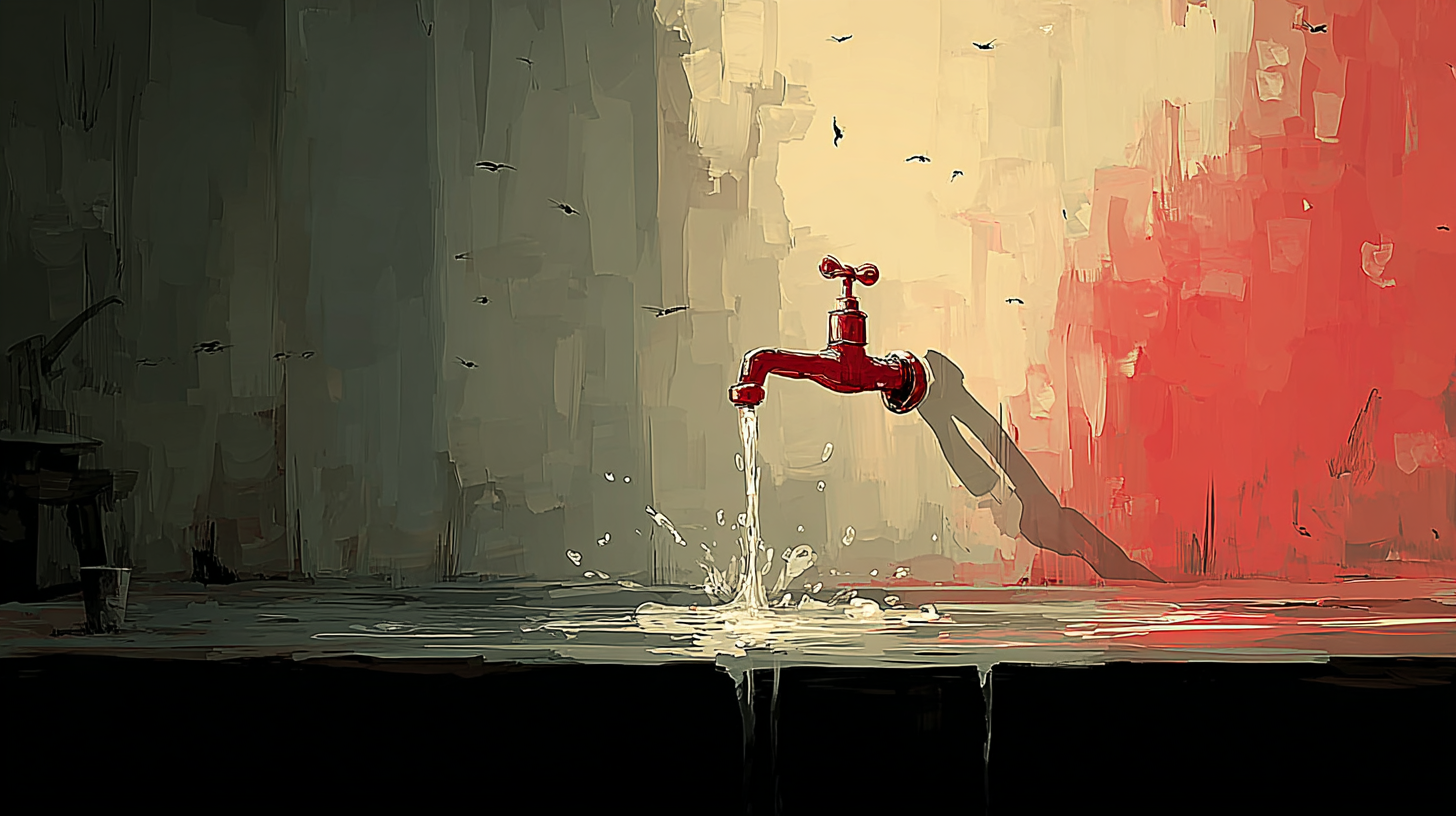
A faucet is a thing you turn to make water come out or stop.
faucetは、水を出したり止めたりする蛇口のこと。
以下は英単語 “faucet” に関するストーリー型学習コンテンツです。まずは大枠の意味を理解して最後の文章で確認しましょう。
「faucet」の主な意味(main meaning)
| 品詞 | 主要な意味 | 英語定義 | 英語例文 | 発音記号(IPA) |
|---|---|---|---|---|
| noun | 蛇口 | a device that controls the flow of water from a pipe | Please turn off the faucet after you wash your hands. | /ˈfɔː.sɪt/ |
| noun | (比喩)資金や情報などの供給源 | a source that provides something, especially money or information | The company tried to open a new faucet of revenue. | /ˈfɔː.sɪt/ |
「faucet」の語源(etymology)
faucetは古フランス語やラテン語由来の言葉につながるとされ、もともとは液体が出る口や管のイメージに近いです。
核となるイメージは「ひねると流れが出る出口」です。
「faucet」の類義語(synonyms)
| 類義語 | 基本的な意味 | 指定単語とのニュアンスの違い | 英語例文 |
|---|---|---|---|
| tap | 蛇口 | イギリス英語でよく使う言い方。意味はほぼ同じ。 | The tap in the kitchen is dripping again. |
| spigot | (屋外やホース用の)水栓 | 家の外や庭、ホース接続の水口を言うことが多い。 | The garden spigot is frozen in winter. |
| valve | 弁、流れを調整する装置 | 水だけでなくガスや機械の流れも調整する、もっと広い言葉。 | Please close the valve before you start the repair. |
| fixture | 備え付けの設備 | 蛇口そのものより、洗面台まわりの固定された設備全体を言いやすい。 | The restroom fixtures look old but clean. |
| nozzle | 先端の噴出口 | 蛇口全体ではなく、先端部分や噴き出し口に注目する言葉。 | Attach a nozzle to make the water spray softer. |
「faucet」の反義語(antonyms)
| 反義語 | 基本的な意味 | 英語例文 |
|---|---|---|
| stopper | 栓、流れを止めるもの | She used a stopper to keep the water in the sink. |
| plug | 口をふさぐ栓 | Put a plug in the drain so the water won’t escape. |
「faucet」のコロケーション(collocations)
| コロケーション | 意味 | 英語例文 |
|---|---|---|
| turn on the faucet | 蛇口をひねって水を出す | Turn on the faucet slowly to avoid splashing. |
| turn off the faucet | 蛇口を閉めて水を止める | He forgot to turn off the faucet before leaving. |
| a leaky faucet | 水漏れする蛇口 | A leaky faucet can waste a lot of water. |
| fix a faucet | 蛇口を修理する | We need to fix the faucet in the break room. |
| a dripping faucet | ポタポタ垂れる蛇口 | The dripping faucet kept me from concentrating. |
「faucet」の2項表現(binomials)
| 2項表現(A and B) | 意味 | 英語例文 |
|---|---|---|
| hot and cold | お湯と水 | This faucet has separate hot and cold handles. |
| on and off | つけたり消したり | Don’t keep turning it on and off so quickly. |
| wash and rinse | 洗ってすすぐ | Wash and rinse the mug before you put it back. |
英語ストーリー(english story)
On Monday morning, the office felt busier than usual. Our team had a client meeting in the afternoon, and everyone wanted the break room to look clean and professional. I was making coffee when I heard a small, steady sound: drip, drip, drip.
At first, I thought it was the coffee machine, but the noise came from the sink. The faucet was dripping, and a little puddle had formed near the edge. I turned off the faucet, but the dripping did not stop. It was a leaky faucet, the kind that slowly wastes water and patience.
“Not again,” I muttered.
Yuki from accounting walked in and frowned. “Is the tap broken?” she asked, using the British word she liked.
“Yeah,” I said. “The faucet won’t fully close.”
She leaned closer. “It’s probably the valve inside. My dad fixed one at home last year.”
I didn’t want to bother our manager, Mr. Sato, right before the meeting. Still, we couldn’t ignore it. The dripping faucet was getting louder in my head, like a timer counting down.
I sent a message to our office chat: “Break room sink issue. Faucet is dripping. I can try to fix it, but we may need help.”
A minute later, Mr. Sato replied: “Thanks. Please handle it if you can. Safety first.”
I opened the cabinet under the sink. There were cleaning supplies, extra paper cups, and a small toolbox. I found an adjustable wrench and a roll of tape. The faucet itself looked like an old fixture, shiny but tired. I remembered a simple rule: hot and cold water lines need to be treated carefully, and you should never force anything.
First, I turned off the water supply under the sink. Then I turned on the faucet to release pressure. It felt strange to turn on the faucet when I wanted it to stop, but the flow quickly slowed and died. After that, I tried to remove the handle.
Yuki watched, half worried and half curious. “Do you need a stopper or a plug?” she asked. “If water comes out, we can block it.”
“Good idea,” I said. “Let’s keep them ready.”
We found a rubber plug in the cleaning box and put it near the drain. I worked slowly, turning the screw and lifting the handle. Inside, a small part looked worn. I wasn’t sure if it was the washer or something else, but it clearly didn’t fit tightly anymore.
At that moment, Ken from IT entered, holding a laptop. “What’s going on?”
“Emergency plumbing,” Yuki said. “The spigot is acting up.”
Ken laughed. “Spigot? Are we in a garden?”
“Close enough,” I said, trying not to smile. “Can you search a quick guide? Just basic steps.”
Ken nodded and pulled up a video. “It says the washer might be damaged. Replace it if you have one.”
We didn’t have spare parts, but we did have tape. I wrapped a little tape around the thread and reassembled the handle. It wasn’t a perfect solution, but sometimes offices survive on temporary fixes.
When I turned the water supply back on, I held my breath. I turned on the faucet slowly. Water flowed smoothly, not too strong. I turned it off. For a second, the sink was quiet.
Then one small drop fell.
“Still dripping,” Yuki said.
“Less than before,” Ken added.
Mr. Sato walked in right then. He looked at the sink and the tools. “Thank you for trying,” he said calmly. “We’ll call maintenance after the meeting. For now, can we reduce the problem?”
I thought for a moment. “We can put a cup under it, so it won’t make a puddle. And we can tell everyone to avoid turning it on and off too much.”
Mr. Sato nodded. “Good. Also, please put a sign: ‘Use gently. Wash and rinse quickly.’”
Yuki wrote the sign and taped it above the sink. Ken placed a cup under the faucet. The drip, drip sound continued, but it was softer, almost polite.
Later that day, the client visited. The break room looked neat, and nobody slipped on water. After the meeting, maintenance arrived with proper parts. In fifteen minutes, they fixed the faucet completely.
As I washed my mug, I smiled at the quiet sink. A small problem had brought us together, and we handled it with care. In an office, even a faucet can teach you something about teamwork.
和訳
月曜の朝、オフィスはいつもより忙しく感じた。午後に取引先との会議があり、みんな休憩室をきれいでちゃんとして見えるようにしたかった。私がコーヒーを作っていると、小さくて一定の音が聞こえた。ポタ、ポタ、ポタ。
最初はコーヒーメーカーだと思ったが、音はシンクからだった。蛇口(faucet)が水を垂らしていて、端の近くに小さな水たまりができていた。私は蛇口を閉めた(turn off the faucet: 蛇口を閉めて水を止める)が、水は止まらなかった。それは水漏れする蛇口(a leaky faucet: 水漏れする蛇口)で、水と集中力を少しずつ無駄にするタイプだった。
「またか」と私はつぶやいた。
会計のユキが入ってきて、顔をしかめた。「その蛇口(tap: 蛇口)は壊れてるの?」と、彼女はイギリス英語の言い方で聞いた。
「うん」と私は言った。「蛇口(faucet)が完全に閉まらない。」
ユキは近づいて言った。「たぶん中の弁(valve: 流れを調整する装置)だよ。うちで父が去年直してた。」
会議の直前に佐藤マネージャーに迷惑をかけたくなかった。でも放っておけない。ポタポタ垂れる蛇口(a dripping faucet: ポタポタ垂れる蛇口)の音が、締め切りを数えるタイマーみたいに頭の中で大きくなっていった。
私は社内チャットに「休憩室のシンク問題。蛇口(faucet)が水を垂らしています。直せそうならやってみますが、助けが必要かも」と送った。
すぐに佐藤さんから「ありがとう。できるなら対応して。安全第一で」と返事が来た。
私はシンク下の棚を開けた。洗剤、紙コップの予備、小さな工具箱があった。モンキーレンチとテープを見つけた。蛇口そのものは、光っているけれど疲れた感じの古い備え付け設備(fixture: 備え付けの設備)みたいだった。私は簡単なルールを思い出した。お湯と水(hot and cold: お湯と水)の配管は注意が必要で、無理に力を入れてはいけない。
まず、シンク下で給水を止めた。それから圧を抜くために蛇口をひねって水を出した(turn on the faucet: 蛇口をひねって水を出す)。止めたいのに出すのは変な感じだが、水の流れはすぐ弱くなって止まった。その後、取っ手を外そうとした。
ユキは心配そうでもあり、興味もある様子で見ていた。「栓(stopper: 栓)か、ふさぐ栓(plug: 口をふさぐ栓)はいる?」と彼女が言った。「水が出たらふさげるよ。」
「いいね」と私は言った。「すぐ使えるようにしておこう。」
掃除用の箱からゴムのふさぐ栓(plug: 口をふさぐ栓)を見つけて、排水口のそばに置いた。私はゆっくりネジを回して取っ手を持ち上げた。中の小さな部品がすり減っているように見えた。パッキンかどうかは確信がなかったが、きつく合っていないのは明らかだった。
そのときITのケンがノートPCを持って入ってきた。「何してるの?」
「緊急の配管作業よ」とユキが言った。「水栓(spigot: 屋外やホース用の水栓)が変なの。」
ケンは笑った。「spigot?ここは庭なの?」
「まあ似たようなもの」と私は笑いそうになるのをこらえた。「簡単な手順を調べてくれる?基本だけでいい。」
ケンはうなずいて動画を出した。「パッキンが傷んでるかも。予備があるなら交換って。」
予備部品はなかったけど、テープはあった。私は少しテープを巻いて、取っ手を組み直した。完ぺきではないが、オフィスは時々こういう仮の対応で回っている。
給水を戻したとき、私は息をのんだ。蛇口をゆっくりひねって水を出した(turn on the faucet: 蛇口をひねって水を出す)。水はなめらかに出て、強すぎない。私は蛇口を閉めた(turn off the faucet: 蛇口を閉めて水を止める)。一瞬、シンクは静かだった。
でも、1滴だけ落ちた。
「まだ垂れてるね」とユキ。
「前よりは少ない」とケン。
そこへ佐藤さんが入ってきて、シンクと工具を見た。「やってくれてありがとう」と落ち着いて言った。「会議の後で修理業者を呼ぶよ。今は問題を小さくできるかな?」
私は少し考えた。「コップを下に置けば、水たまりになりません。それと、あまり何度もつけたり消したり(on and off: つけたり消したり)しないように伝えます。」
佐藤さんはうなずいた。「いいね。あと、貼り紙をして。『やさしく使って。洗ってすすいですぐ終える(wash and rinse: 洗ってすすぐ)』って。」
ユキが貼り紙を書いて、シンクの上にテープで貼った。ケンは蛇口の下にコップを置いた。ポタ、ポタという音は続いたが、前より小さく、なんだか丁寧な感じだった。
その日の午後、取引先が来た。休憩室は整っていて、誰も水で滑らなかった。会議の後、修理業者がちゃんとした部品を持って来て、15分で蛇口(faucet)を完全に直した。
私はマグカップを洗いながら、静かなシンクを見て少し笑った。小さな問題が私たちを一つにして、私たちは落ち着いて対応できた。オフィスでは、蛇口(faucet)一つでもチームワークを教えてくれる。
「faucet」のQ&A
- Qfaucetはどんな意味ですか
- A
faucetは水を出したり止めたりする蛇口のことです
- Qfaucetとtapはどう違いますか
- A
tapは同じく蛇口ですがイギリス英語でよく使われます
- Qspigotはどんな場面で使いますか
- A
spigotは家の外や庭でホースにつなぐ水の出口を言うことが多いです
- Qvalveはfaucetと同じ意味ですか
- A
valveは水だけでなくガスなどの流れも調整する装置で範囲が広いです
- Qfixtureはfaucetとどう関係しますか
- A
fixtureは蛇口だけでなく洗面台まわりの備え付け設備全体を言いやすいです
- Qstopperとplugはどう違いますか
- A
stopperは中に水をためるための栓でplugは穴や口をふさぐ栓です
- Qturn on the faucetはどういう意味ですか
- A
turn on the faucetは蛇口をひねって水を出すという意味です
- Qa leaky faucetはどんな状態ですか
- A
a leaky faucetは蛇口から水が漏れて止まりきらない状態です
- Qfix a faucetはどんなときに使いますか
- A
fix a faucetは壊れた蛇口を修理するときに使います
- Qhot and coldはどんな文で使えますか
- A
hot and coldはお湯と水のように二つをセットで言うときに使えます


コメント