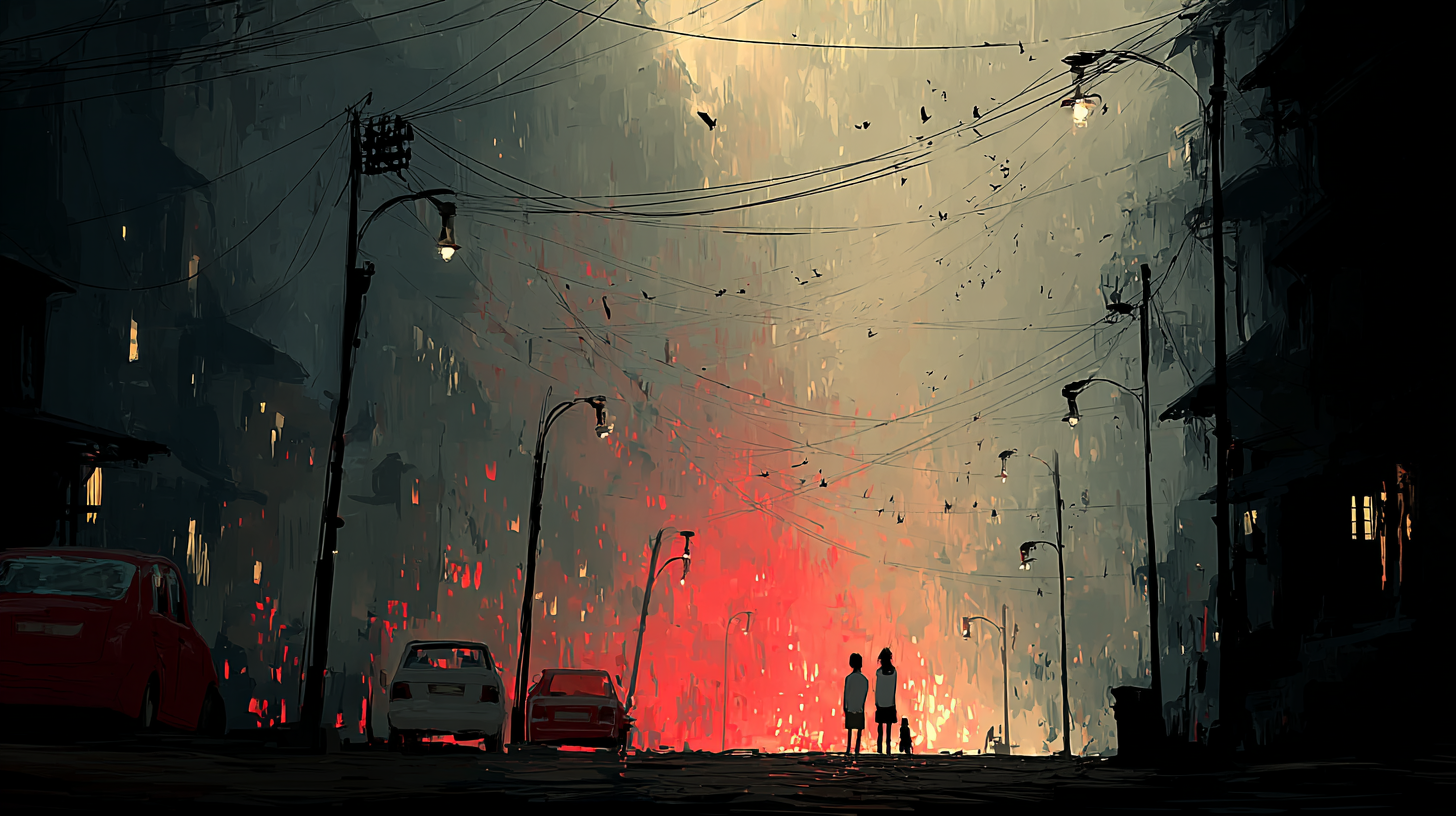
A curfew is a rule that you must stay inside after a certain time at night.
curfew は「夜の決まった時間以降は外に出ちゃだめ」というルールだよ。
以下は英単語 “curfew” に関するストーリー型学習コンテンツです。まずは大枠の意味を理解して最後の文章で確認しましょう。
「curfew」の主な意味(main meaning)
| 品詞 | 主要な意味 | 英語定義(簡潔) | 英語例文(1文) | 発音記号(IPA) |
|---|---|---|---|---|
| noun | 夜間外出禁止令 門限 | an official rule that people must stay indoors after a certain time | The city announced a curfew starting at 10 p.m. | /ˈkɝːfjuː/ |
| verb | 外出禁止にする 門限を課す | to put someone or a place under a curfew | The authorities curfewed the area for two nights. | /ˈkɝːfjuː/ |
「curfew」の語源(etymology)
curfew は古フランス語の表現(「火を消せ」という意味)から来ています。昔は夜になると火事を防ぐために、決まった時間に家の火を消す合図がありました。
核となるイメージは「夜になったら終わり 合図が出たら家に戻る」です。
「curfew」の類義語(synonyms)
| 類義語 | 基本的な意味 | 指定単語とのニュアンスの違い | 英語例文 |
|---|---|---|---|
| lockdown | 封鎖 外出や営業を強く止める | curfew は「時間で区切る」感じだが、lockdown は「広く強く止める」感じ | The city went into lockdown after the storm. |
| restriction | 制限 | restriction は幅広い「制限」で、時間に限らない curfew は時間が中心 | There are restrictions on visitors after 8 p.m. |
| ban | 禁止 | ban は「完全にダメ」と言い切る強さがある curfew は「その時間だけダメ」になりやすい | The company banned personal calls during meetings. |
| closing time | 閉店時間 終了時刻 | closing time は店や施設の終わる時刻で、法律の強制ではないことが多い | Closing time is at 9 p.m., so please head to the register. |
| night limit | 夜の制限 | 意味は近いが一般的な決まり文句ではない curfew の方が自然でよく使う | The camp has a night limit for going outside. |
「curfew」の反義語(antonyms)
| 反義語 | 基本的な意味 | 英語例文 |
|---|---|---|
| liberty | 自由 | People value liberty, but they also want safety. |
| permission | 許可 | You need permission to enter that room. |
「curfew」のコロケーション(collocations)
| コロケーション | 基本的な意味 | 英語例文 |
|---|---|---|
| impose a curfew | 外出禁止令を課す | The mayor decided to impose a curfew after the clashes. |
| strict curfew | 厳しい外出禁止 | A strict curfew was announced for the downtown area. |
| curfew hours | 外出禁止の時間帯 | During curfew hours, only emergency workers can travel. |
| the curfew is in effect | 外出禁止が実施中だ | The curfew is in effect until Monday morning. |
| violate the curfew | 外出禁止に違反する | He was fined for trying to violate the curfew. |
「curfew」の2項表現(binomials)
| 2項表現(A and B) | 意味 | 英語例文 |
|---|---|---|
| law and order | 法と秩序 | The police said the goal was to keep law and order. |
| safe and sound | 無事で | We arrived home safe and sound after the blackout. |
| give and take | お互いにゆずり合うこと | Good teamwork needs give and take. |
英語ストーリー(english story)
The office felt unusually quiet for a Thursday afternoon. Outside the windows, the sky had turned the color of wet concrete, and the wind kept pushing rain against the glass. Aya checked the news on her phone and looked up at her manager, Mr. Collins.
“They just announced a curfew,” she said. “Starting at ten tonight.”
Mr. Collins nodded, but his eyes stayed on the spreadsheet on his screen. “I saw. The city wants to keep law and order if the streets flood and traffic lights fail again.”
At Kanda Design Studio, deadlines were normal, but today felt different. The team was preparing a presentation for a new client, and the final slides still needed corrections. On top of that, the train schedule was already delayed.
Ken, who sat across from Aya, leaned back in his chair. “So it’s basically a lockdown, right? Like we can’t go out.”
“Not exactly,” Aya said. “A lockdown is stronger. A curfew is about time. But still, I don’t want to be outside late.”
Mr. Collins finally turned away from the spreadsheet. “Everyone, listen up. The curfew is in effect at ten. That means we need a plan. I’m not interested in anyone trying to violate the curfew just because we’re chasing perfection.”
Some people laughed softly, but the tension stayed in the room. Mr. Collins stood and tapped the whiteboard with a marker.
“First, we finish the main storyline of the slides by six,” he said. “Second, we do a quick review, then we leave early. If trains stop, I want you home safe and sound.”
Ken raised a hand. “Are we allowed to stay later if we want? Like, do we have permission?”
“The city isn’t giving special permission for designers,” Mr. Collins said. “Emergency workers, maybe. For us, no. Also, this building has a closing time at eight-thirty. So even if you had liberty to stay, the doors won’t.”
Aya appreciated the clear answer. She had moved to Tokyo for this job, and she was still learning how to balance hard work with a normal life. A strict curfew made that balance feel even more important.
They went back to work. Aya adjusted the color palette on the final slide, while Ken rewrote a short section about user feedback. In the corner, Mei checked the client’s brand rules, which were full of small restrictions: no bright red, no playful fonts, and no photos with crowds.
“It feels like a ban on fun,” Ken whispered.
Mei smiled without looking up. “It’s not a ban. It’s their style. We can still be creative.”
Mr. Collins walked by and listened for a moment. “Remember,” he said, “good work is give and take. We respect the client’s rules, but we also protect our own standards.”
At five-forty, Aya opened the group chat. Train delays were getting worse. She typed, “Should we leave even earlier?” and then watched the typing bubbles appear.
Ken wrote first: “If the trains stop, we’re stuck. I don’t want that.”
Mei wrote: “Agreed. During curfew hours, taxis will be crowded too.”
Mr. Collins read the messages and made a decision. “Okay,” he said, clapping his hands once. “We’ll finish the slide order by six, do a fast check, and export by seven. After that, we leave. Sooner or later, every project ends, and today it ends early.”
The team moved faster. Aya found two small mistakes in the charts. Ken fixed a title that didn’t match the client’s tone. Mei replaced one photo with a cleaner image of a simple workspace. Mr. Collins reviewed the overall flow, looking for anything that could confuse the client.
At six-fifty-five, the final file uploaded successfully. Aya felt her shoulders drop for the first time all day.
“Nice work,” Mr. Collins said. “Now go home. I’d rather lose one extra hour than have someone risk getting caught outside.”
As they packed their bags, Aya thought about the difference between safety and freedom. She valued liberty, but she also understood why the city would impose a curfew during a dangerous storm. A curfew wasn’t a punishment; it was a line drawn to protect people.
In the elevator, Ken said quietly, “You know, I complained at first, but I get it. I just want everyone to make it home.”
Mei nodded. “Same. Let’s not test the rules.”
They stepped outside into the wet evening. The streetlights reflected on the road like long gold lines. Aya checked the time: 7:30 p.m. If they hurried, they would catch an earlier train and avoid the worst of the weather.
As they walked to the station together, Aya felt grateful for a workplace that cared. Not every company would adjust plans for a city rule. Tonight, the team chose caution, teamwork, and a simple goal: get home safe and sound before the curfew.
和訳
木曜日の午後なのに、オフィスはいつもより静かだった。窓の外では空が濡れたコンクリートのような色になり、風が雨をガラスに押しつけていた。アヤはスマホでニュースを確認し、マネージャーのコリンズさんを見た。
「夜間外出禁止令(curfew)が出たそうです。今夜10時からです。」
コリンズさんはうなずいたが、視線は画面の表計算のままだった。「見たよ。街は、洪水で信号がまた止まったときに備えて、法と秩序(law and order)を守りたいんだろう。」
神田デザインスタジオでは締め切りは当たり前だが、今日は違った。新しいクライアント向けの提案資料を準備していて、最終スライドにはまだ修正が必要だった。さらに、電車のダイヤもすでに遅れていた。
向かいの席のケンが椅子にもたれた。「つまり封鎖(lockdown)みたいなものだよね 外に出られないってこと?」
「完全に同じじゃないよ」とアヤは言った。「封鎖(lockdown)はもっと強い。夜間外出禁止令(curfew)は時間で区切る感じ。でも、遅くに外にいたくないのは同じ。」
コリンズさんはようやく画面から顔を上げた。「みんな、聞いて。外出禁止は実施中(the curfew is in effect)が10時からだ。だから計画を立てる。完璧を追うために外出禁止に違反する(violate the curfew)なんてことは絶対にしないでほしい。」
何人かが小さく笑ったが、空気の張りつめた感じは残った。コリンズさんは立ち上がり、ホワイトボードをマーカーで指した。
「まず、スライドの大筋を6時までに仕上げる。次に、さっと見直して早めに帰る。電車が止まったら困る。無事で(safe and sound)家に着いてほしい。」
ケンが手を挙げた。「もし残りたかったらどうですか つまり許可(permission)はあるんですか?」
「街がデザイナーに特別な許可(permission)を出すわけじゃない」とコリンズさんは言った。「緊急対応の人なら別かもしれないが、私たちは違う。それに、このビルは閉店時間(closing time)が8時半だ。だから、たとえ自由(liberty)があったとしても、ドアは閉まる。」
アヤははっきりした答えに安心した。彼女はこの仕事のために東京に来たばかりで、仕事の頑張りと普通の生活のバランスを学んでいる途中だった。厳しい外出禁止(strict curfew)は、そのバランスの大切さを強く感じさせた。
彼らは作業に戻った。アヤは最終スライドの色合いを調整し、ケンはユーザーの反応に関する短い文章を書き直した。隅ではメイがクライアントのブランド規定を確認していたが、そこには小さな制限(restriction)がたくさんあった。明るい赤はだめ、遊び心のあるフォントはだめ、人混みの写真もだめ。
「楽しさ禁止(ban)みたいだな」とケンが小声で言った。
メイは顔を上げずに笑った。「禁止(ban)じゃないよ。あれは相手のスタイル。私たちは工夫できる。」
コリンズさんが通りかかり、少し聞いてから言った。「覚えておいて。良い仕事はゆずり合い(give and take)だ。クライアントのルールは尊重する。でも私たちの基準も守る。」
5時40分、アヤはグループチャットを開いた。電車の遅れはさらに悪化していた。「もっと早く出た方がいい?」と打ち、入力中の表示を見つめた。
最初にケンが返した。「電車が止まったら詰む。そうなりたくない。」
次にメイが返した。「同意。外出禁止の時間帯(curfew hours)はタクシーも混むよ。」
コリンズさんはメッセージを読み、決めた。「よし。6時までに構成を固めて、素早くチェックして、7時までに書き出す。その後は帰る。遅かれ早かれ(sooner or later)、どの案件も終わる。今日は早く終わるだけだ。」
チームはスピードを上げた。アヤはグラフの小さなミスを2つ見つけた。ケンはクライアントの雰囲気に合わない見出しを直した。メイは写真を、よりすっきりした作業机の画像に差し替えた。コリンズさんは全体の流れを見て、クライアントが混乱しそうな点がないか確認した。
6時55分、最終ファイルのアップロードが完了した。アヤはその日初めて肩の力が抜けるのを感じた。
「よくやった」とコリンズさんは言った。「さあ帰って。1時間余分に作業を減らす方が、誰かが外で捕まる危険を取るよりずっといい。」
荷物をまとめながら、アヤは安全と自由の違いを考えた。彼女は自由(liberty)を大事にしている。でも危険な嵐のときに街が外出禁止令を課す(impose a curfew)理由も理解できた。外出禁止令(curfew)は罰ではなく、人を守るために引かれた線なのだ。
エレベーターの中で、ケンが小さな声で言った。「最初は文句言ったけど、分かったよ。みんながちゃんと家に着いてほしいだけだ。」
メイもうなずいた。「同じ。ルールを試すのはやめよう。」
彼らは濡れた夕方の外に出た。街灯の光が道路に長い金色の線のように映っていた。アヤは時間を見た。午後7時30分。急げば早い電車に乗れて、天候のひどい時間帯を避けられる。
一緒に駅へ歩きながら、アヤは職場への感謝を感じた。街のルールに合わせて計画を変える会社ばかりではない。今夜チームが選んだのは、用心と協力と、ただ一つの目標だった。外出禁止令(curfew)の前に、無事で(safe and sound)家に帰ること。
「curfew」のQ&A
- Qcurfew って何の意味?
- A
curfew は「決まった時間以降は外出してはいけない」というルールです。
- Qcurfew はいつ使うの?
- A
curfew は夜の外出が制限される話題やニュースでよく使います。
- Qcurfew は法律の感じが強いの?
- A
はい、curfew は行政や警察などが出すルールとして使われやすいです。
- Qlockdown と curfew はどう違うの?
- A
lockdown は広い範囲で強く外出や活動を止めることで、curfew は特定の時間だけ外出を止めることが多いです。
- Qrestriction と curfew はどう違うの?
- A
restriction は一般的な「制限」で、curfew は特に夜の時間制限を表します。
- Qban と curfew はどう違うの?
- A
ban は「全面的に禁止」の強さがあり、curfew は「その時間だけ禁止」になりやすいです。
- Qclosing time と curfew はどう違うの?
- A
closing time は店や施設が終わる時間で、curfew は街や地域の外出ルールです。
- Qimpose a curfew はどういう意味?
- A
impose a curfew は「外出禁止令を出す 課す」という意味です。
- Qviolate the curfew はどういう意味?
- A
violate the curfew は「外出禁止令に違反する」という意味です。
- Qcurfew hours はどういう意味?
- A
curfew hours は「外出禁止の時間帯」という意味です。


コメント