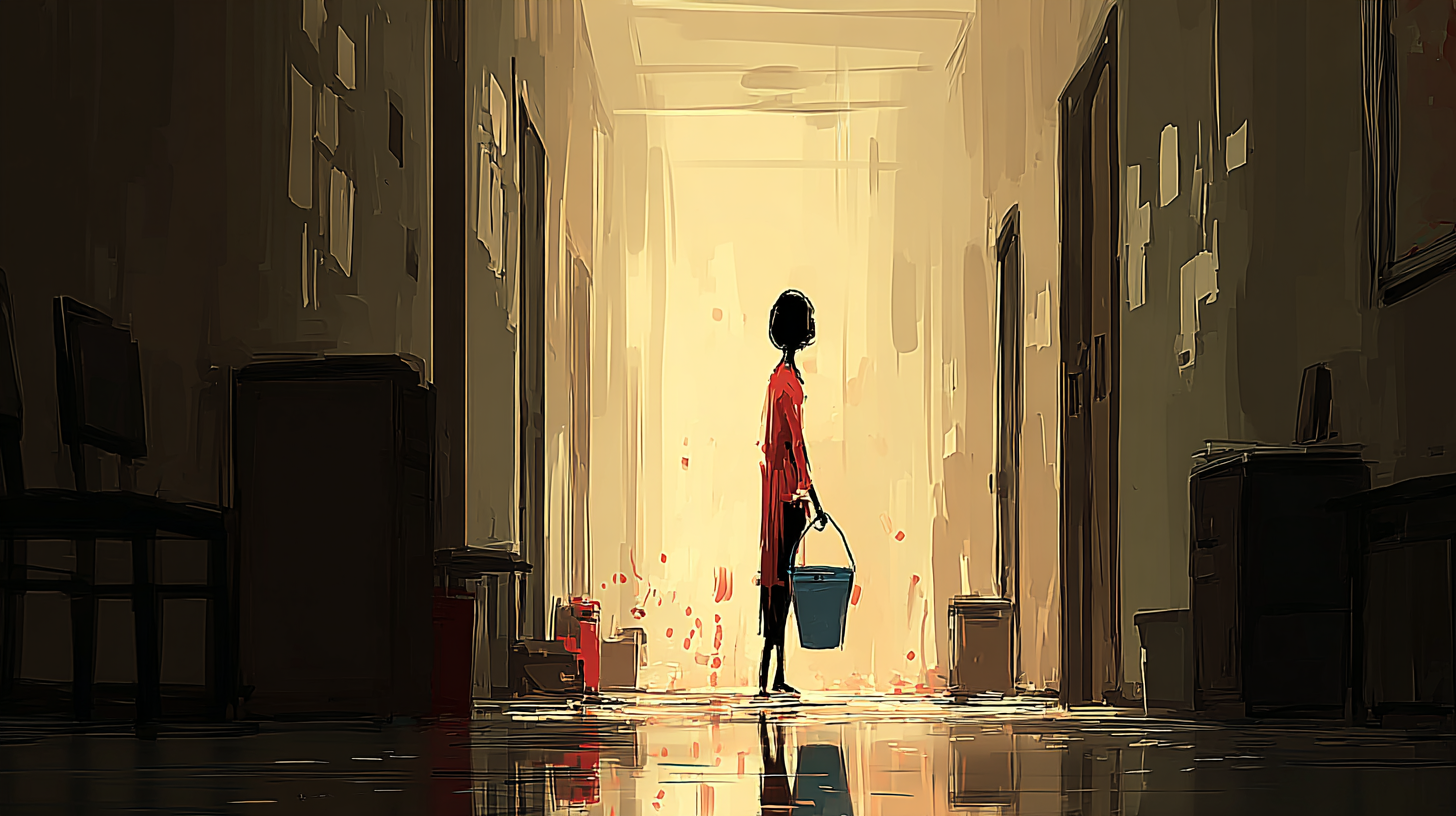
A bucket is a container with a handle, often for water.
bucketは、持ち手がついた入れ物のバケツのこと。
以下は英単語 “buck” に関するストーリー型学習コンテンツです。まずは大枠の意味を理解して最後の文章で確認しましょう。
「buck」の主な意味(main meaning)
| 品詞 | 意味 | 英語定義(短く) | 例文(1文) | 発音(IPA) |
|---|---|---|---|---|
| noun | バケツ | a container with a handle used to carry liquids or things | He filled a bucket with water. | /ˈbʌk.ɪt/ |
| noun | バケツ1杯の量 | an amount that a bucket can hold | Add a bucket of sand to the mix. | /ˈbʌk.ɪt/ |
| verb | (足で)蹴る | to kick something hard | The boy bucketed the ball across the yard. | /ˈbʌk.ɪt/ |
「buck」の語源(etymology)
はっきりした語源は確定していないが、英語で昔から使われてきた「水や物を入れる容器」を指す語。
核のイメージは、手で持って運べる入れ物に、液体や物をまとめて入れること。
「buck」の類義語(synonyms)
| 類義語 | 基本的な意味 | bucketとのニュアンスの違い | 英語例文 |
|---|---|---|---|
| pail | バケツ | bucketより少し小さめで、家庭や掃除の場面でよく聞く | She carried a pail of water to the garden. |
| container | 容器 | 形や用途が広い言い方で、バケツに限らない | Put the rice in a clean container. |
| tub | 大きめのたらい | 取っ手がないことも多く、広く浅い形を想像しやすい | The clothes are soaking in a tub. |
| bin | 箱、入れ物 | ふた付きや四角いことが多く、ゴミ箱や収納の感じが強い | Throw the paper in the bin. |
| bucketful | バケツ1杯 | bucketそのものではなく、量を言う | We need one bucketful of water. |
「buck」の反義語(antonyms)
| 反義語 | 基本的な意味 | 英語例文 |
|---|---|---|
| emptiness | 空っぽの状態 | After the storm, the room felt full of emptiness. |
| void | 何もない空間 | The box was just a void inside. |
「buck」のコロケーション(collocations)
| コロケーション | 意味 | 英語例文 |
|---|---|---|
| fill a bucket | バケツをいっぱいにする | Please fill a bucket with water. |
| carry a bucket | バケツを運ぶ | He carried a bucket up the stairs. |
| a bucket of water | 水のバケツ一杯 | She poured a bucket of water on the floor. |
| empty a bucket | バケツを空にする | Empty the bucket after you finish cleaning. |
| bucket list | 死ぬまでにやりたいことリスト | Traveling abroad is on my bucket list. |
「buck」の2項表現(binomials)
| 2項表現 | 意味 | 英語例文 |
|---|---|---|
| wash and rinse | 洗ってすすぐ | First wash and rinse the cups. |
| pick and choose | 選り好みする | You can’t always pick and choose your tasks at work. |
英語ストーリー(english story)
It was a busy Monday morning at the office. Our team was preparing for a small event in the meeting room, and everyone had a different task. I was in charge of cleaning up after the weekend, so I went to the storage area to find supplies.
On the top shelf, I saw a dusty bucket. Next to it there was a pail, which looked smaller and newer. I hesitated for a second. The pail seemed easier to carry, but the bucket looked stronger. In the end, I decided to use the bucket because we needed a lot of water.
I started by asking my coworker Mina, “Do we have a clean container for the snacks?” She pointed to a plastic box and said, “Use that one. And don’t forget to wash and rinse it first.” I nodded and went back to my job.
In the kitchen, I turned on the tap and began to fill a bucket. While the water was running, my manager walked in and said, “We’re short on time. Can you move faster?” I tried to stay calm. I didn’t want to rush and make a mistake. If I spilled water on the floor, it would create a safety problem.
When the bucket was full, I carefully carried a bucket toward the meeting room. Halfway there, I saw Ken near the hallway, looking frustrated. He was trying to organize chairs, but they were in the wrong place. He said, “I feel like I’m doing this with a spoon. We need help.”
I wanted to help him, but my hands were busy. “I’ll come back,” I said. “First I have to empty a bucket in the cleaning area and mop the floor.”
In the meeting room, there were paper decorations on the table. Some were fine, but others were messy. I didn’t want to pick and choose only the easy parts. I decided to fix everything step by step.
Then a small accident happened. One chair fell over loudly. Ken kicked it by mistake while turning around. He looked embarrassed and said, “Sorry, I almost bucketed that chair across the room.” We both laughed, and the tension finally softened.
Mina came in with a tub of wet cloths. “These cloths are ready,” she said. “Let’s finish quickly.” I poured a bucket of water into the mop sink. We used one bucketful after another until the floor looked clean.
As we worked, Ken said, “After this event, I need a break. Traveling is on my bucket list.” Mina replied, “Same here. But right now, our goal is simple: a clean room.”
In the end, the meeting room looked bright and organized. The stress was gone, replaced by quiet satisfaction. When everything was finished, I looked at the bucket in my hands. A simple tool, but it helped us solve a real problem. Without it, we might have ended in emptiness and confusion, with no progress at all.
和訳
月曜日の朝、オフィスはとても忙しかった。私たちのチームは会議室で小さなイベントの準備をしていて、みんなそれぞれ違う仕事を担当していた。私は週末のあと片付けの担当だったので、備品を探しに倉庫へ行った。
棚の上にほこりをかぶったbucket(バケツ)が見えた。その横には、もっと小さくて新しそうなpail(小さめのバケツ)があった。少し迷った。pailは運びやすそうだったが、bucketのほうが丈夫そうだった。結局、水をたくさん使うのでbucketを選んだ。
私は同僚のミナに「お菓子を入れるcontainer(容器)はある?」と聞いた。彼女はプラスチックの箱を指して「それを使って。まずwash and rinse(洗ってすすぐ)を忘れないでね」と言った。私はうなずいて自分の作業に戻った。
キッチンで蛇口をひねり、fill a bucket(バケツをいっぱいにする)を始めた。水が出ている間に上司が入ってきて「時間が足りない。もっと早くできる?」と言った。私は落ち着こうとした。焦ってミスをしたくなかった。水をこぼしたら危険になってしまう。
bucketがいっぱいになったので、私は慎重にcarry a bucket(バケツを運ぶ)して会議室へ向かった。途中の廊下で、ケンがいらだっているのが見えた。椅子を整理していたが、場所が合っていなかったのだ。「スプーンでやってるみたいだ。助けが必要だよ」と言った。
助けたかったが、私は両手がふさがっていた。「あとで戻るよ」と言った。「まず掃除の場所でempty a bucket(バケツを空にする)をして、床を拭かないと。」
会議室には紙の飾りがテーブルに置いてあった。きれいなものもあったが、ぐちゃぐちゃのものもあった。私はpick and choose(選り好みする)して簡単なところだけやりたくなかった。全部を一つずつ直すことにした。
そのとき小さな事故が起きた。椅子が大きな音を立てて倒れた。ケンは振り向いた拍子に間違えて蹴ってしまったのだ。彼は気まずそうに「ごめん、あの椅子をbucketed(強く蹴って飛ばす)しそうだった」と言った。私たちは笑って、緊張がやわらいだ。
ミナがtub(たらい)にぬれた布を入れて持ってきた。「布の準備できたよ。早く終わらせよう」と言った。私はa bucket of water(水のバケツ一杯)をモップ用の流しに注いだ。bucketful(バケツ一杯)を何回も使って、床はきれいになった。
作業しながらケンは「このイベントが終わったら休みたい。海外旅行はbucket list(死ぬまでにやりたいことリスト)に入ってるんだ」と言った。ミナは「私も。でも今は目標はシンプル。部屋をきれいにすること」と返した。
最後に会議室は明るく整った。ストレスは消え、静かな満足感に変わった。終わったあと、私は手にしたbucketを見た。単純な道具だが、本当の問題を解決するのに役立った。これがなければ、進みのない空っぽの状態emptiness(空虚)や混乱に終わっていたかもしれない。
「buck」のQ&A
- Qbucketはどういう意味?
- A
bucketは、持ち手がついた入れ物のバケツという意味です。
- Qbucketとpailの違いは何?
- A
pailはbucketより小さめのことが多く、掃除など家庭の場面でよく使われる言い方です。
- Qcontainerはbucketとどう違う?
- A
containerは容器全体を指す広い言い方で、bucketはその中でも持ち手のあるバケツです。
- Qtubはどんなときにbucketの代わりに使う?
- A
tubは広くて浅めの入れ物をイメージしやすく、取っ手がないことも多いので、浸け置きなどでよく使います。
- Qbinはbucketとどう違う?
- A
binは箱っぽい入れ物で、ゴミ箱や収納箱の感じが強く、水を運ぶバケツとは用途が違うことが多いです。
- Qbucketfulはどういう意味?
- A
bucketfulはバケツ1杯分の量という意味です。
- Qbucketでよく一緒に使う言い方は何?
- A
fill a bucket、carry a bucket、a bucket of water、empty a bucketなどがよく使われます。
- Qbucket listはどういう意味?
- A
bucket listは死ぬまでにやりたいことのリストという意味です。
- Qbucketを簡単に覚えるコツは?
- A
オフィスの廊下で水の入ったbucketを運んで掃除している場面を想像すると覚えやすいです。
- Q類義語を知るとbucketをどう使い分けられる?
- A
pailは小さめ、containerは一般的、binは箱やゴミ箱の感じなど違いがあるので、場面に合う語を選べます。


コメント