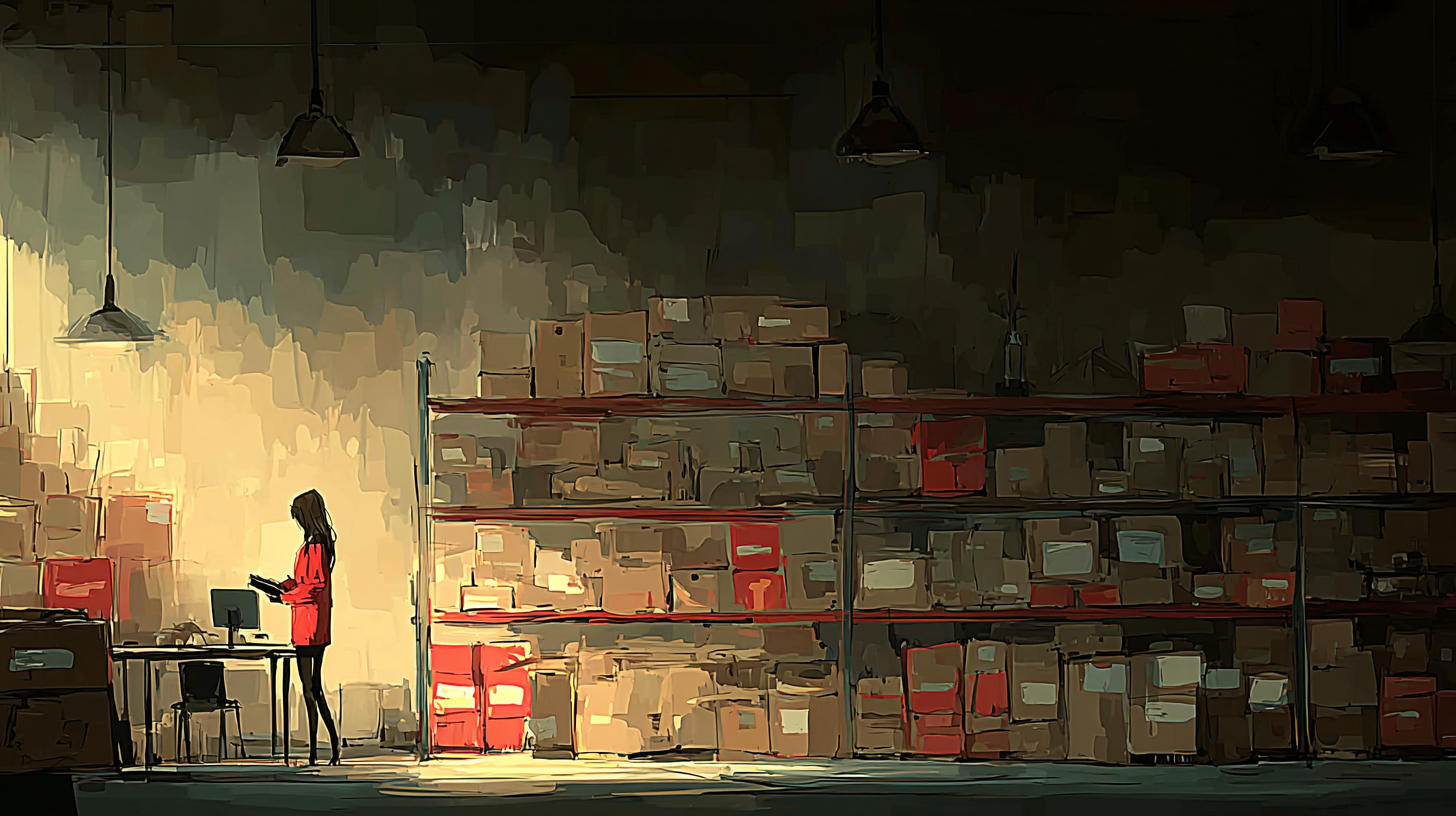
A warehouse is a big place where many goods are stored.
warehouse は「たくさんの物をまとめて置いておく大きな倉庫」のこと。
以下は英単語 “warehouse” に関するストーリー型学習コンテンツです。まずは大枠の意味を理解して最後の文章で確認しましょう。
「warehouse」の主な意味(main meaning)
| 品詞 | 意味 | 英語定義(簡潔) | 例文(1文) | 発音記号(IPA) |
|---|---|---|---|---|
| noun | 倉庫 | a large building for storing goods | The company keeps spare parts in a warehouse near the port. | /ˈwɛərhaʊs/ |
| verb | 倉庫に保管する | to store goods in a warehouse | They warehouse the products until the stores need them. | /ˈwɛərhaʊz/ |
「warehouse」の語源(etymology)
warehouse は「ware(商品)」と「house(家)」が合わさった言葉です。
核となるイメージは「商品を家みたいにまとめて安全にしまう場所」です。
「warehouse」の類義語(synonyms)
| 類義語 | 基本的な意味 | 指定単語とのニュアンスの違い(中学生向け日本語) | 英語例文 |
|---|---|---|---|
| storage facility | 保管施設 | warehouse より広い言い方で、倉庫以外の保管場所も含む | The museum uses a storage facility for old exhibits. |
| depot | 集積所、拠点 | 物流の出発点や中継点の感じが強い | The depot sends trucks to nearby towns every morning. |
| stockroom | 在庫室 | 店やオフィスの中にある小さめの保管部屋 | We keep extra paper in the stockroom. |
| distribution center | 配送センター | 保管より「仕分けして届ける」役割が中心 | The distribution center ships orders within 24 hours. |
| repository | 保管場所、集積所 | 物だけでなく情報やデータにも使える堅めの語 | The server is a repository for project files. |
「warehouse」の反義語(antonyms)
| 反義語 | 基本的な意味 | 英語例文 |
|---|---|---|
| storefront | 店先、販売の場 | The new storefront attracts many walk-in customers. |
| showroom | 展示室 | We visited the showroom to see the latest models. |
「warehouse」のコロケーション(collocations)
| コロケーション | 意味 | 英語例文 |
|---|---|---|
| warehouse worker | 倉庫作業員 | A warehouse worker scanned each box before loading it. |
| warehouse management system | 倉庫管理システム | Our warehouse management system reduced picking errors. |
| warehouse inventory | 倉庫在庫 | We checked the warehouse inventory before accepting new orders. |
| warehouse space | 倉庫スペース | We need more warehouse space during the busy season. |
| warehouse district | 倉庫街 | The office moved near the warehouse district for faster deliveries. |
「warehouse」の2項表現(binomials)
| 2項表現 | 意味 | 英語例文 |
|---|---|---|
| pick and pack | 商品を取り出して梱包する | The team must pick and pack 300 orders today. |
| load and unload | 積み込みと荷下ろし | Drivers load and unload the pallets carefully. |
| ship and receive | 出荷と受け取り | Our department handles ship and receive tasks daily. |
英語ストーリー(english story)
On Monday morning, Aya walked into the logistics office with a coffee and a notebook. The team had a big goal this week: reduce late deliveries without hiring extra staff. Their manager, Mr. Sato, pointed to a simple chart on the wall.
“Our main issue is inside the warehouse,” he said. “Not outside. Not traffic. Not customers. We need to fix our process.”
Aya nodded. She had visited the warehouse many times, but today she would spend the whole day there. The building sat in a quiet warehouse district behind the train tracks. From the outside, it looked plain, but inside it was full of movement: forklifts, scanners, labels, and voices calling out shelf numbers.
At the entrance, Ken, a senior warehouse worker, gave Aya a spare safety vest. “Welcome to the storage facility,” he joked. “We store more than products here. We store stress, too.”
Aya smiled, but she also saw what he meant. A pile of boxes waited near the loading area, and another pile waited near the return desk. Some items were supposed to go to the retail store downtown, where customers could buy them that same day. But instead, they were sitting here.
Ken walked her to a small screen near the main aisle. “This is our warehouse management system,” he said. “It tells us where everything is. In theory.”
“In theory?” Aya asked.
Ken tapped the screen. “Sometimes the location is wrong. Someone moves a box in a hurry, and they forget to scan it. Then the system says it’s on Shelf B-12, but it’s actually in the stockroom near the packing tables.”
Aya wrote that down. “So we lose time searching.”
“Exactly. And during peak hours, searching becomes a habit,” Ken said. “People think it’s normal.”
They stopped near the packing tables. Two new staff members were learning how to pick and pack orders. One of them, Mika, looked nervous as she matched labels to boxes.
Aya watched quietly. The steps were clear, but the area felt crowded. “How much warehouse space do we have for finished orders?” Aya asked.
Ken pointed to a corner where cartons were stacked close together. “Not enough. When we run out of space, we place boxes anywhere. That’s when mistakes happen.”
Aya asked to see the warehouse inventory report. Ken opened the system and showed her the numbers. Something felt strange. The inventory for a popular item was high, but the office kept saying it was out of stock.
“Can we check the actual shelves?” Aya said.
They went to Shelf B-12. The item was not there. They checked the next shelf, and then the next. Ken frowned. “This happens too often.”
After ten minutes, Mika called out from the packing tables. “Ken, I found two cases of that item in the stockroom!”
Ken exhaled. “See? The system said B-12, but reality said ‘hidden behind tape and bubble wrap.’”
Aya took photos and notes, then walked to the loading area where drivers load and unload pallets. A driver named Omar was waiting. “I can leave on time if the orders are ready,” he said, “but if the boxes are late, my whole route becomes late.”
Back in the office corner of the warehouse, Aya gathered the team. “We need a simple rule,” she said. “If you move a box, you scan it. No exceptions. Also, we should separate ‘ready to ship’ from ‘waiting to be checked.’ Right now, they look the same.”
Mr. Sato joined them and listened carefully. “What about the long term?” he asked.
Aya pointed to the workflow. “Today, we act like this place is only a warehouse, but it also works like a distribution center. We store goods, but we also sort and send them fast. We need clear zones: receiving, checking, packing, and shipping.”
Ken nodded. “Ship and receive should never block pick and pack,” he said. “People bump into each other.”
They all agreed to test a new layout for one week. Aya also suggested a short training: how to scan correctly, how to label clearly, and how to report mistakes without blame. “If we treat errors like secrets, they will grow,” she said.
At the end of the day, Aya walked outside and looked across the road. A bright showroom displayed the company’s newest products under clean lights. It felt like a different world from the busy warehouse behind her. But she understood something important: the showroom could shine only if the warehouse worked well.
Back at her desk, Aya wrote a final note: “A warehouse is not just a place to keep things. It is a repository of time. If we manage it well, we save time for everyone.”
和訳
月曜の朝、アヤはコーヒーとノートを持って物流オフィスに入った。今週の大きな目標は、人手を増やさずに遅配を減らすことだった。上司の佐藤さんは壁の簡単な図を指さした。
「問題の中心は倉庫(warehouse)の中だ」と彼は言った。「外ではない。渋滞でもない。お客さんでもない。やり方を直そう。」
アヤはうなずいた。倉庫(warehouse)には何度も行ったことがあったが、今日は一日中そこにいる予定だった。建物は線路の向こうの倉庫街(warehouse district:倉庫街)にあり、外見は地味だった。しかし中は動きでいっぱいだった。フォークリフト、スキャナー、ラベル、そして棚番号を呼ぶ声。
入口で、先輩の倉庫作業員(warehouse worker:倉庫作業員)ケンが安全ベストを渡した。
「保管施設(storage facility:保管施設)へようこそ」と彼は冗談を言った。「ここには商品だけじゃなく、ストレスも保管してる。」
アヤは笑ったが、言いたいことも分かった。積み込み場所の近くに箱の山があり、返品カウンターの近くにも別の山があった。本当は街の小売店(retail store)に行くはずの商品も、ここで止まっていた。
ケンは通路のそばの小さな画面へ案内した。
「これが倉庫管理システム(warehouse management system:倉庫管理システム)だよ。理屈では全部の場所が分かる。」
「理屈では?」とアヤは聞いた。
ケンは画面を指で叩いた。
「時々、場所が間違う。急いで箱を動かして、スキャンし忘れるんだ。そうするとシステムはB-12棚って言うのに、実際は梱包台の近くの在庫室(stockroom:在庫室)にある。」
アヤはメモした。
「探す時間が増えるってことだね。」
「その通り。混む時間帯だと、探すのが当たり前になる」とケンは言った。「それが普通だと思ってしまう。」
2人は梱包台の近くで止まった。新人2人が注文を取り出して梱包する(pick and pack:ピッキングと梱包)練習をしていた。ミカはラベルと箱を合わせながら不安そうだった。
手順は分かりやすいのに、周りは狭く感じた。
「完成品を置く倉庫スペース(warehouse space:倉庫スペース)はどれくらい?」とアヤは聞いた。
ケンは段ボールがぎゅうぎゅうに積まれた角を指した。
「足りない。スペースがなくなると、どこにでも置いてしまう。そこでミスが起きる。」
アヤは倉庫在庫(warehouse inventory:倉庫在庫)の報告を見せてもらった。数字に違和感があった。人気商品の在庫が多いはずなのに、オフィスでは在庫切れだと言っていた。
「実際の棚を見よう」とアヤは言った。
B-12棚には商品がなかった。次の棚も、その次もない。ケンは顔をしかめた。
「こういうことが多すぎる。」
10分後、ミカが梱包台から声を上げた。
「ケン、その商品が在庫室(stockroom:在庫室)に2ケースありました!」
ケンは息を吐いた。
「ほらね。システムはB-12って言うけど、現実は『テープと緩衝材の陰に隠れてた』だ。」
アヤは写真とメモを取り、次に積み込みと荷下ろし(load and unload:積み込みと荷下ろし)をする場所へ行った。ドライバーのオマールが待っていた。
「注文が準備できていれば時間通りに出られる。でも箱が遅れると、ルート全部が遅れる」と彼は言った。
倉庫(warehouse)の中のオフィス側のスペースに戻り、アヤはチームを集めた。
「簡単なルールが必要です。箱を動かしたら必ずスキャン。例外なし。それと『出荷準備完了』と『確認待ち』を分けましょう。今は見た目が同じです。」
佐藤さんも来て、よく聞いた。
「長い目で見ると?」と彼は聞いた。
アヤは流れを指した。
「今はここをただの倉庫(warehouse)だと思っているけど、実際は配送センター(distribution center:配送センター)としても動いています。保管もしつつ、仕分けして速く送る。だから受け取り、確認、梱包、出荷のゾーンをはっきり分けるべきです。」
ケンはうなずいた。
「出荷と受け取り(ship and receive:出荷と受け取り)が、取り出しと梱包(pick and pack:ピッキングと梱包)を邪魔しないようにしないと」と彼は言った。「人がぶつかる。」
全員で1週間、新しい配置を試すことにした。アヤは短い研修も提案した。正しいスキャン、分かりやすいラベル、そして責めずにミスを報告するやり方だ。
「ミスを秘密みたいに扱うと、もっと大きくなります」とアヤは言った。
一日の終わり、アヤは外に出て道の向こうを見た。明るいショールーム(showroom:展示室)には新商品がきれいな照明で並んでいた。忙しい倉庫(warehouse)とは別世界に感じた。でもアヤは大事なことを理解した。ショールーム(showroom:展示室)が輝けるのは、倉庫(warehouse)がうまく回っているときだけだ。
自分の机に戻ると、アヤは最後にこう書いた。
「倉庫(warehouse)は物を置くだけの場所じゃない。時間をためる保管場所(repository:集積所)でもある。うまく管理できれば、みんなの時間を節約できる。」
「warehouse」のQ&A
- Qwarehouse はどんな意味ですか
- A
warehouse は商品や荷物をたくさん保管する大きな倉庫のことです
- Qwarehouse と storage facility の違いは何ですか
- A
storage facility は保管場所全体を広く指し、warehouse は特に倉庫の建物を言うことが多いです
- Qwarehouse と depot はどう使い分けますか
- A
depot は物流の拠点や集積所の感じが強く、warehouse は保管する建物そのものの意味が中心です
- Qwarehouse と stockroom は同じですか
- A
stockroom は店やオフィス内の小さな在庫室で、warehouse はもっと大きな保管施設です
- Qwarehouse と distribution center の違いは何ですか
- A
distribution center は仕分けしてすぐ配送する役割が強く、warehouse は保管の役割がより中心です
- Qwarehouse の反対のイメージの言葉はありますか
- A
storefront は販売の場、showroom は展示の場で、保管する warehouse と反対のイメージです
- Qwarehouse inventory はどういう意味ですか
- A
warehouse inventory は倉庫にある在庫の数や種類のことです
- Qwarehouse management system は何をするものですか
- A
warehouse management system は倉庫内の場所や在庫を管理してミスや無駄を減らす仕組みです
- Qpick and pack はどんな場面で使いますか
- A
注文に合わせて商品を棚から取り出して梱包するときに pick and pack を使います
- Qwarehouse を使った自然な言い方を覚えるコツはありますか
- A
warehouse worker や warehouse space のような組み合わせごと覚えると会話や文章で使いやすくなります


コメント