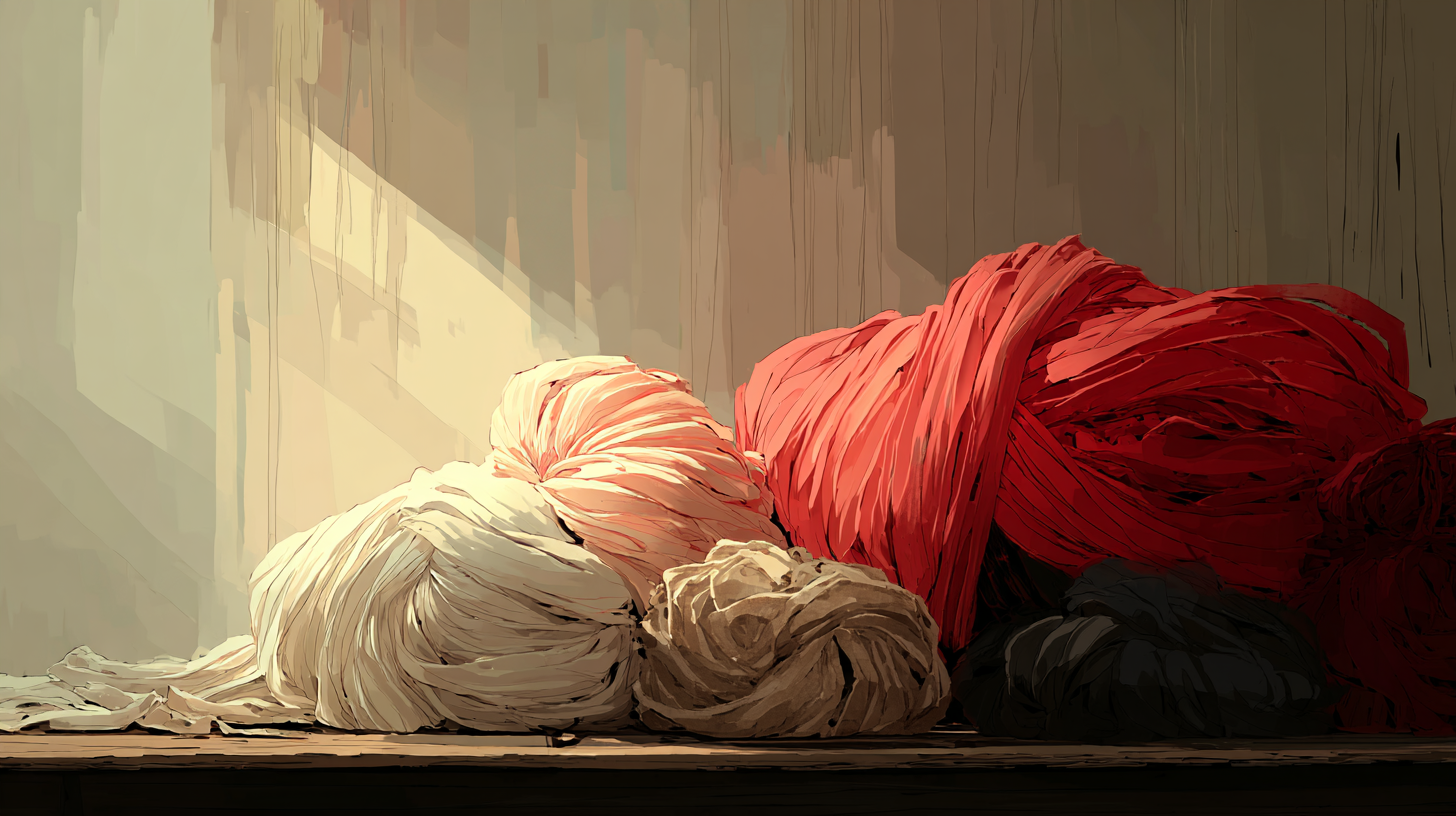
“Texture” means how something feels or looks on the surface.
「texture」は、ものの表面のさわりごこちや見た目のことです。
以下は英単語 “texture” に関するストーリー型学習コンテンツです。まずは大枠の意味を理解して最後の文章で確認しましょう。
「texture」の主な意味(main meaning)
| 品詞 | 意味(英語) | 発音記号(IPA) | 英語例文 |
|---|---|---|---|
| 名詞 (noun) | the feel or appearance of a surface | /ˈtɛkstʃər/ | The texture of the fabric is very soft. |
| 動詞 (verb) | to give a surface a particular feel or appearance | /ˈtɛkstʃər/ | The artist textured the wall to make it look rough. |
「texture」の語源(etymology)
「texture」はラテン語の「textura(織り方、構造)」に由来します。
核となるイメージは「織り込まれた感じ」や「表面の作られ方」です。
「texture」の類義語(synonyms)
| 類義語 | 英語例文 |
|---|---|
| feel | I like the feel of this smooth stone. |
| surface | The surface of the table is polished. |
| grain | The grain of the wood is fine and even. |
| pattern | The fabric has a nice pattern and texture. |
| finish | The finish on the metal is very glossy. |
「texture」の反義語(antonyms)
| 反義語 | 英語例文 |
|---|---|
| smoothness | The rough texture contrasts with the smoothness of glass. |
| flatness | The 3D painting loses its effect if there’s too much flatness. |
「texture」のコロケーション(collocations)
| コロケーション | 英語例文 |
|---|---|
| rough texture | The rock has a rough texture. |
| soft texture | This blanket has a soft texture. |
| texture of the skin | The lotion improved the texture of the skin. |
| rich texture | The soup has a rich texture. |
| change in texture | There was a change in texture after drying. |
「texture」の2項表現(binomials)
| 表現 | 英語例文 |
|---|---|
| rough and smooth | The sculpture has both rough and smooth surfaces. |
| soft and hard | This pillow feels both soft and hard in different areas. |
英語ストーリー(english story)
Title: The Texture Test at Work
At a design company in Tokyo, Emma was testing different materials for a new sofa. She needed to find the perfect texture for the fabric. Her boss said, “People care a lot about the feel of their furniture. A soft texture is usually better.”
Emma touched many samples. One was rough and hard. Another had a smooth and soft texture. She took notes on each material’s surface, finish, and even the grain of the wood that would be used.
Her coworker Ken said, “This one has a rich texture, and it feels warm. That’s a good combination.”
Emma nodded. “Yes, it’s not just about the look, but the texture of the skin when people touch it.”
Later, they compared the rough and smooth samples. “This one changed in texture after we washed it,” Ken noted.
In the end, they chose a fabric with the perfect texture. It felt nice, looked great, and was easy to clean. Their boss smiled, “Excellent work. The balance of soft and hard materials makes this sofa special.”
和訳
タイトル:職場でのテクスチャーテスト
東京のデザイン会社で、エマは新しいソファのためにいろいろな素材を試していました。彼女は布の完璧な**texture(手ざわり・見た目)を見つけなければなりませんでした。上司はこう言いました。「人は家具のfeel(さわりごこち)**をとても気にするよ。**soft texture(やわらかい手ざわり)**が普通はいいね。」
エマはいくつものサンプルを触りました。あるものはざらざらして硬く、別のものはsmooth(なめらか)でsoft texture(やわらかい手ざわり)でした。彼女はそれぞれの素材のsurface(表面)、finish(仕上がり)、そして**grain(木目)**までもメモしました。
同僚のケンが言いました。「これは**rich texture(豊かな手ざわり)**で、暖かく感じるよ。いい組み合わせだね。」
エマはうなずきました。「見た目だけじゃなくて、**texture of the skin(肌にふれたときの感じ)**も大事ね。」
その後、彼らはざらざらしたものとなめらかなサンプルを比べました。「これは洗ったらtexture(手ざわり)が変わったね」とケンが言いました。
最後に、彼らは完璧な**texture(手ざわり)**の布を選びました。心地よくて、見た目もよく、掃除もしやすいものでした。上司は笑顔で言いました。「すばらしい仕事だよ。**soft and hard(やわらかさと硬さ)**のバランスがこのソファの特長だね。」
「texture」のQ&A
- Qtextureと似た意味の単語にはどんなものがありますか?
- A
“feel”, “surface”, “grain”, “pattern”, “finish” などがあります。どれも表面の見た目や手ざわりに関係しています。
- Q「feel」はどういうときに使いますか?
- A
「feel」は、触ったときの感じ(やわらかさ、冷たさなど)を指す言葉です。”I like the feel of this smooth stone.”(このなめらかな石のさわりごこちが好き)というように使います。
- Q「surface」と「texture」はどう違いますか?
- A
「surface」は物の外側や表面そのもの、「texture」はその表面の感じ(ざらざら、つるつるなど)を表します。
- Q「grain」はどんなときに使いますか?
- A
「grain」は木材などの細かい模様や線のことです。手ざわりというより、見た目の細かい質感に関係します。
- Q「texture」の反対の意味をもつ単語には何がありますか?
- A
「smoothness(なめらかさ)」や「flatness(平らさ)」などが反対の意味として使えます。
- Q「smoothness」と「texture」はどう対比されますか?
- A
「texture」はざらざらやデコボコなどのある状態、「smoothness」はそれがなく、つるつるしている状態です。例:”The rough texture contrasts with the smoothness of glass.”(そのざらざらした手ざわりはガラスのなめらかさと対照的だ)
- Q「rough texture」はどういう意味ですか?
- A
「rough texture」はざらざらした手ざわりのことです。例:”The rock has a rough texture.”(その岩はざらざらしている)
- Q「soft texture」はどんな場面で使いますか?
- A
やわらかくて心地よい手ざわりを表します。例:”This blanket has a soft texture.”(この毛布はやわらかい手ざわりです)
- Q「texture of the skin」は何を意味しますか?
- A
肌の手ざわりやなめらかさを指します。美容やスキンケアの文脈でよく使われます。
- Q「change in texture」はどんなときに使う表現ですか?
- A
素材の手ざわりや見た目が変わったときに使います。例:”There was a change in texture after drying.”(乾かした後、手ざわりが変わった)
| 類義語 | 和訳 | ニュアンス・特徴 | 掲載例文 |
|---|---|---|---|
| texture | 手ざわり・質感 | 表面の「感じ」全般(ざらざら、なめらか、しっとりなど)。触覚・視覚の両方を含む。 | The fabric has a soft texture. |
| feel | 感触 | 実際に触ったときの触覚的な感覚に重点。物理的な印象を直接伝える。 | I like the feel of this smooth stone. |
| surface | 表面 | 物の外側・外観の構造や状態。視覚的な特徴にも使われる。 | The surface of the table is polished. |
| grain | 木目 | 木材や織物の細かい模様や織り目。手ざわりよりも見た目重視。 | The grain of the wood is fine and even. |
| pattern | 模様 | 色や形の繰り返しによる視覚的装飾。textureとは異なり、装飾性が主。 | The fabric has a nice pattern and texture. |
| finish | 仕上がり | 表面の最終的な状態や加工(光沢、マットなど)に焦点。質感・見た目両方に関連。 | The finish on the metal is very glossy. |


コメント