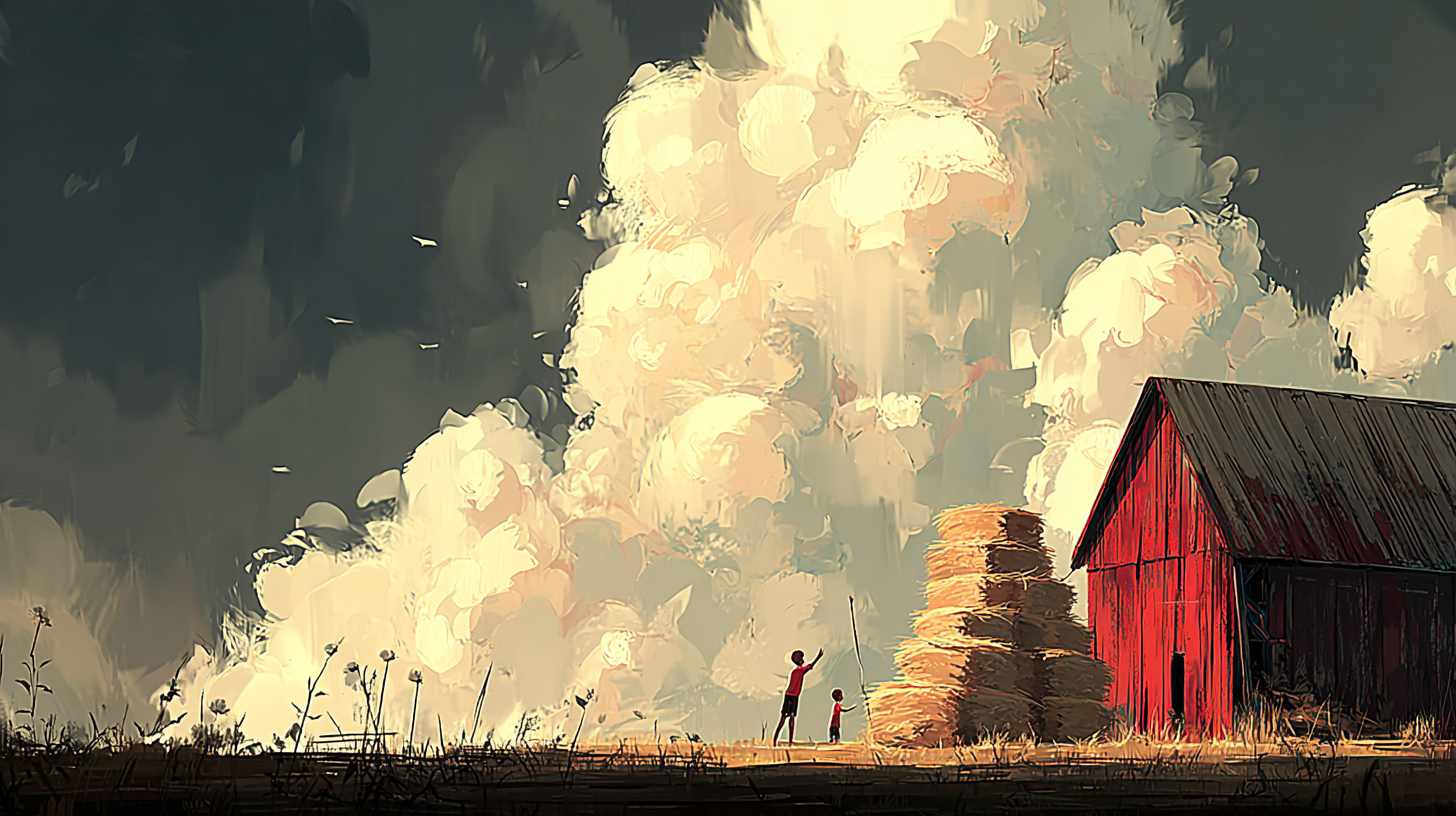
“Hay” is grass that has been dried and is used to feed animals.
「hay」は、動物に食べさせるための干した草のことです。
以下は英単語 “hay” に関するストーリー型学習コンテンツです。まずは大枠の意味を理解して最後の文章で確認しましょう。
「hay」の主な意味(main meaning)
| 品詞 | 意味 | 発音記号(IPA) | 英文例 |
|---|---|---|---|
| 名詞 | 乾草(家畜のえさに使う干した草) | /heɪ/ | The farmer stored the hay in the barn. |
| 動詞 | (草などを)干し草にする | /heɪ/ | They hay the fields every summer. |
「hay」の語源(etymology)
“Hay” は古英語の hīeg や hēg に由来し、意味は「干し草」。
イメージの核は「乾燥させた草(草の収穫物)」。
「hay」の類義語(synonyms)
| 類義語 | 英文例 |
|---|---|
| straw | The cow lay down on the straw. |
| fodder | The farmer bought some fodder for the cattle. |
| forage | The animals went out to find forage. |
| silage | Silage is stored in large containers for the winter. |
「hay」の反義語(antonyms)
| 反義語 | 英文例 |
|---|---|
| grain | Unlike hay, grain is mainly used for human food. |
| turf | The turf was still green, unlike the dry hay. |
「hay」のコロケーション(collocations)
| コロケーション | 英文例 |
|---|---|
| bale of hay | He lifted a heavy bale of hay onto the truck. |
| hay field | They ran through the hay field in the morning. |
| hay barn | The hay barn was full by the end of summer. |
| cut hay | We need to cut hay before it rains. |
| dry hay | Dry hay is stored to feed the animals in winter. |
「hay」の2項表現(binomials)
| 表現 | 英文例 |
|---|---|
| hay and straw | The stable was filled with hay and straw. |
| fields and hay | They worked all day in the fields and hay. |
英語ストーリー(english story)
Title: A Summer on the Farm
Last summer, Kenji visited his uncle’s farm in the countryside. He had never been on a farm before, so everything was new and exciting. On the first day, his uncle showed him the hay field and explained how they cut hay to make food for the animals. Kenji helped stack bales of hay in the hay barn. It was hard work, but he enjoyed it.
One afternoon, they saw a storm coming. “We must finish drying the hay before it rains,” his uncle said. They worked fast. Kenji learned that hay must be dry to keep well, or it can rot.
Later, they talked about other types of animal food. His uncle said, “We also store silage, fodder, and forage.” Kenji asked, “Is that like grain?” “No,” his uncle smiled, “grain is for people. These are for animals.”
After dinner, they walked past the fields and hay, and Kenji said, “I never knew farms had so much work!” His uncle laughed, “Yes, but it’s peaceful here.”
At the end of the week, Kenji went home with a photo of him on a bale of hay. It was a summer he would never forget.
和訳
タイトル:農場での夏
去年の夏、ケンジは田舎にあるおじさんの農場を訪れました。農場に行くのは初めてだったので、すべてが新鮮でワクワクしました。初日、おじさんは**干し草畑(hay field)を見せてくれて、どうやって干し草を刈って(cut hay)動物のえさを作るか教えてくれました。ケンジは干し草の束(bale of hay)を干し草小屋(hay barn)**に積むのを手伝いました。大変でしたが、楽しかったです。
ある日の午後、嵐が近づいているのが見えました。「雨が降る前に干し草を乾かし終えないと」とおじさんが言いました。2人は急いで作業しました。ケンジは**干し草(hay)**はしっかり乾かさないと腐ることを学びました。
その後、動物のえさについて話しました。おじさんは「サイレージ(silage)、飼料(fodder)、**草のえさ(forage)も保管している」と言いました。ケンジが「それって穀物(grain)**みたいなもの?」と聞くと、「違うよ」とおじさんは笑い、「**grain(穀物)**は人間の食べ物だよ。これは動物用だ」と答えました。
夕食の後、**畑と干し草(fields and hay)**の間を歩きながら、ケンジは「農場ってこんなに仕事があるんだね」と言いました。おじさんは笑って「でもここは平和なんだよ」と言いました。
一週間の終わりに、ケンジは**干し草の束(bale of hay)**の上に座った写真を持って帰りました。それは決して忘れない夏になりました。
「hay」のQ&A
- Q「hay」と「straw」の違いは何ですか?
- A
「hay」は動物が食べるための干し草で、「straw」は主に小麦などの収穫後に残る茎で、動物の寝床などに使われます。栄養価があるのは「hay」です。
- Q「hay」と「fodder」の違いは何ですか?
- A
「fodder」は動物用のエサ全般を指し、「hay」はその中の一種で、干した草だけを指します。「fodder」には穀物や飼料も含まれます。
- Q「hay」と「forage」の違いは何ですか?
- A
「forage」は動物が野外で探して食べる自然のエサを指し、「hay」は人が刈り取って乾かして保存する草です。つまり「forage」は自然のまま、「hay」は加工されたものです。
- Q「hay」と反対の意味を持つ「grain」とは何ですか?
- A
「grain」は主に人間が食べるための穀物(米、小麦など)を指し、「hay」は動物が食べる干し草です。用途と対象が異なります。
- Q「hay」と「turf」の違いは何ですか?
- A
「turf」は地面の表面にある芝や草がついた土のことで、自然な状態の草地です。「hay」はそれを刈って乾かしたものです。つまり、「turf」は生きた草、「hay」は乾かした草です。
- Q「bale of hay」とは何ですか?
- A
「bale of hay」は干し草を束ねてまとめたものです。四角や円形に圧縮して保存・運搬しやすくしています。
- Q「hay field」はどんな意味ですか?
- A
「hay field」は干し草を育てるための草地を意味します。刈って干し草にする目的で管理されています。
- Q「hay barn」の役割は何ですか?
- A
「hay barn」は干し草を雨や湿気から守って保存する納屋です。冬の間の動物のエサを保管するために重要です。
- Q「cut hay」とは何を指しますか?
- A
「cut hay」は草を刈り取って干し草にする作業を指します。天気がよく、乾燥しやすい時期に行います。
- Q「dry hay」はなぜ重要なのですか?
- A
「dry hay」はカビや腐敗を防ぐために完全に乾かされた干し草です。湿ったままだと動物が食べられず、健康にも悪影響を与えます。
| 類義語 | 和訳 | ニュアンス・特徴 | 掲載例文 |
|---|---|---|---|
| hay | 干し草 | 動物の餌用に刈り取り・乾燥された草。保存が可能。 | The farmer stored the hay in the barn. |
| straw | 藁 | 穀物収穫後の茎部分。主に寝床用で栄養価は低い。 | The cow lay down on the straw. |
| fodder | 飼料 | 動物用の餌全般の総称。「hay」を含む広義の表現。 | The farmer bought some fodder for the cattle. |
| forage | 草のえさ | 野外で動物が自然に見つけて食べる草類。加工されていない。 | The animals went out to find forage. |
| silage | サイレージ | 発酵させて保存された飼料。主に冬期に備える高栄養価な餌。 | Silage is stored in large containers for the winter. |


コメント