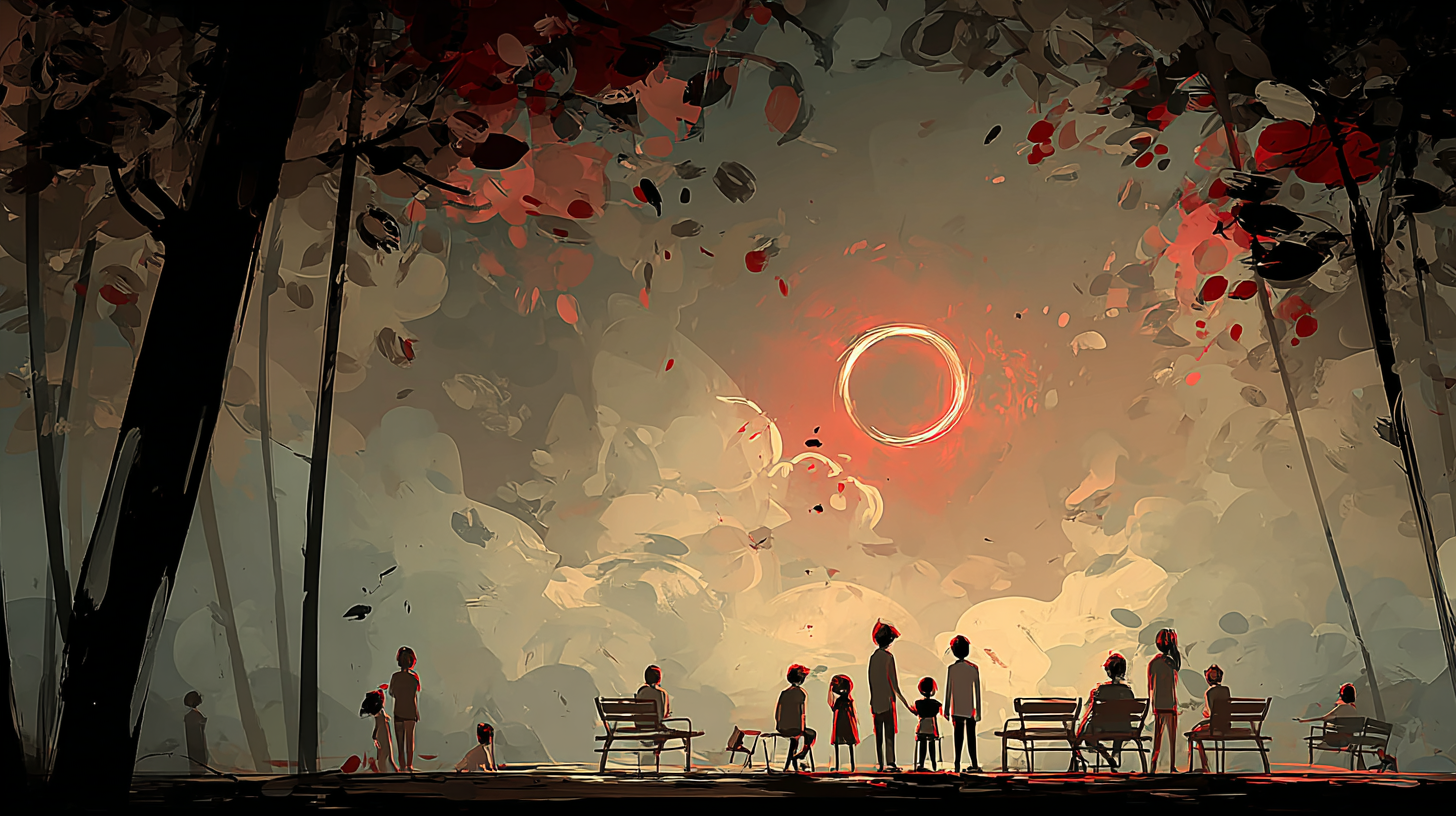
“Eclipse” means when the moon or sun is hidden. It can also mean when something becomes more important than something else.
「eclipse」は、ギリシャ語の「ekleipsis(消えること)」から来ています。”ek-“(外へ)+”leipein”(残す、去る)が合わさって、「光が外に出て消える」というイメージです。
以下は英単語 “eclipse” に関するストーリー型学習コンテンツです。まずは大枠の意味を理解して最後の文章で確認しましょう。
「eclipse」の主な意味(main meaning)
| 品詞 | 意味(簡潔) | 発音記号(IPA) | 英語例文 |
|---|---|---|---|
| 名詞 | 太陽や月が隠れること(天体の食) | /ɪˈklɪps/ | We watched the lunar eclipse last night. |
| 動詞 | 見えなくする、しのぐ | /ɪˈklɪps/ | Her performance eclipsed all the others. |
「eclipse」の語源(etymology)
「eclipse」は、ギリシャ語の「ekleipsis(消えること)」から来ています。”ek-“(外へ)+”leipein”(残す、去る)が合わさって、「光が外に出て消える」というイメージです。
「eclipse」の類義語(synonyms)
| 類義語 | 英語例文 |
|---|---|
| overshadow | The new movie overshadowed the older ones. |
| outshine | Her talent outshines everyone else in the class. |
| block | Clouds blocked the sun during the eclipse. |
| dim | The clouds dimmed the light from the sun. |
「eclipse」の反義語(antonyms)
| 反義語 | 英語例文 |
|---|---|
| highlight | The teacher highlighted her achievements in front of the class. |
| reveal | The clouds parted to reveal the sun. |
「eclipse」のコロケーション(collocations)
| コロケーション | 英語例文 |
|---|---|
| solar eclipse | A solar eclipse happens when the moon blocks the sun. |
| lunar eclipse | A lunar eclipse occurs when the Earth blocks sunlight to the moon. |
| total eclipse | We experienced a total eclipse for the first time. |
| partial eclipse | A partial eclipse is still interesting to see. |
| eclipse of the sun | The eclipse of the sun lasted for several minutes. |
「eclipse」の2項表現(binomials)
| 表現 | 英語例文 |
|---|---|
| rise and eclipse | A new star will rise and eclipse the old ones. |
| light and shadow | During an eclipse, light and shadow play across the sky. |
英語ストーリー(english story)
Title: A Rare Day at Work
One sunny morning, Emma arrived at the observatory where she worked as a technician. She was especially excited because today was the day of a total solar eclipse. The event was rare, and many people were visiting to see it.
As Emma set up the telescope, she remembered when she first saw a lunar eclipse as a child. That memory inspired her to study space. Her boss, Mr. Grant, said, “Emma, your careful planning has really eclipsed all our past efforts. Great job!”
While the eclipse of the sun began, visitors cheered. The sky slowly turned dark as the moon moved in front of the sun. “It’s like light and shadow are dancing,” one child said. Emma smiled.
Later, when the partial eclipse ended, Mr. Grant announced that Emma would lead the next public event. “You really outshone everyone today,” he said.
Emma felt proud. Not only had she helped others see the wonder of the universe, but she had also stepped into the spotlight herself—without overshadowing anyone.
和訳
題名:職場での特別な日
ある晴れた朝、エマは自分が働く天文台に到着しました。今日は**皆既日食(total eclipse)**の日で、彼女はとてもわくわくしていました。この珍しい出来事を見ようと、多くの人々が訪れていました。
望遠鏡を設置しながら、エマは子どもの頃に初めて見た**月食(lunar eclipse)**を思い出しました。その記憶が、宇宙を学ぶきっかけになったのです。上司のグラントさんは言いました。「エマ、君の準備は過去最高だね。完全に(eclipsed)他の努力を超えているよ。すばらしい!」
**太陽の食(eclipse of the sun)**が始まると、訪問者たちは歓声をあげました。月が太陽の前を通ると、空がゆっくり暗くなっていきました。「光と影(light and shadow)が踊ってるみたい」とある子どもが言いました。エマはにっこりしました。
**部分日食(partial eclipse)**が終わった後、グラントさんは次の公開イベントの責任者にエマを指名しました。「今日は君がみんなよりも輝いていた(outshone)よ」と言いました。
エマは誇らしく思いました。人々に宇宙の不思議を見せられただけでなく、自分自身も、誰かをかき消す(overshadow)ことなく、光を浴びることができたのです。
「eclipse」のQ&A
- Qeclipse の類義語に “overshadow” があるけど、どう違うの?
- A
どちらも「目立たなくする」という意味だけど、”eclipse” は完全に隠すイメージ、”overshadow” は他と比べて目立たなくするという意味合いが強いよ。
- Q“outshine” と “eclipse” の違いは何?
- A
“outshine” は「輝きで勝る」、つまり他より優れて明るく見えること。”eclipse” は相手の存在を消してしまうくらいの強いイメージで使われるよ。
- Q“block” も類義語だけど、eclipse とはどう違うの?
- A
“block” は物理的に遮ることに使うよ。eclipse も天体が光を遮るときに使うけど、block はもっと広く一般的な遮断を表す単語だよ。
- Q反義語に “highlight” があるけど、なぜそれが反対なの?
- A
“eclipse” が何かを目立たなくするなら、”highlight” は逆に何かを強調して目立たせるという意味だから、反対の関係になるんだ。
- Q“reveal” はどうして eclipse の反義語になるの?
- A
eclipse は太陽や月を「隠す」現象だから、”reveal”(見えるようにする・明らかにする)はその逆の意味になるんだよ。
- Q“solar eclipse” と “lunar eclipse” の違いは何?
- A
“solar eclipse” は月が太陽を隠す現象(日食)、”lunar eclipse” は地球が月に影を落とす現象(月食)だよ。
- Q“total eclipse” と “partial eclipse” はどう違うの?
- A
“total eclipse” は太陽や月が完全に隠れること、”partial eclipse” は一部だけが隠れる現象だよ。
- Q“eclipse of the sun” は “solar eclipse” と同じ意味?
- A
うん、意味は同じ。「solar eclipse」のほうが少し科学的な言い方で、”eclipse of the sun” はより説明的な言い方だよ。
| 類義語 | 和訳 | ニュアンス・特徴 | 掲載例文 |
|---|---|---|---|
| eclipse | 覆い隠す、凌駕する | 何かを完全に隠す、または他を圧倒して目立たなくする。視覚的・比喩的両方で使用可能。 | Her performance eclipsed all the others. |
| overshadow | 見劣りさせる | 他より目立って、相手を目立たなくさせる。eclipseより比較的で段階的な印象が強い。 | The new movie overshadowed the older ones. |
| outshine | 上回る、輝きを放つ | 比較対象よりも明るく見える・優れているという意味。ポジティブな文脈でよく使われる。 | Her talent outshines everyone else in the class. |
| block | 遮る | 物理的に「光や視界を遮断する」。天体現象などでeclipseと似るが、より一般的な語。 | Clouds blocked the sun during the eclipse. |
| dim | 薄暗くする | 光を「弱くする・暗くする」表現。明るさを徐々に落とすニュアンス。 | The clouds dimmed the light from the sun. |
ポイントまとめ
- eclipse:完全に隠す、または圧倒的に上回って存在感を消す
- overshadow:他より優れているために相手を目立たなくさせる(段階的)
- outshine:輝きや能力で他を凌ぐ、肯定的なニュアンスが強い
- block:物理的に光や視界を遮る、最も中立的な語
- dim:光を弱くして「見えづらくする」


コメント