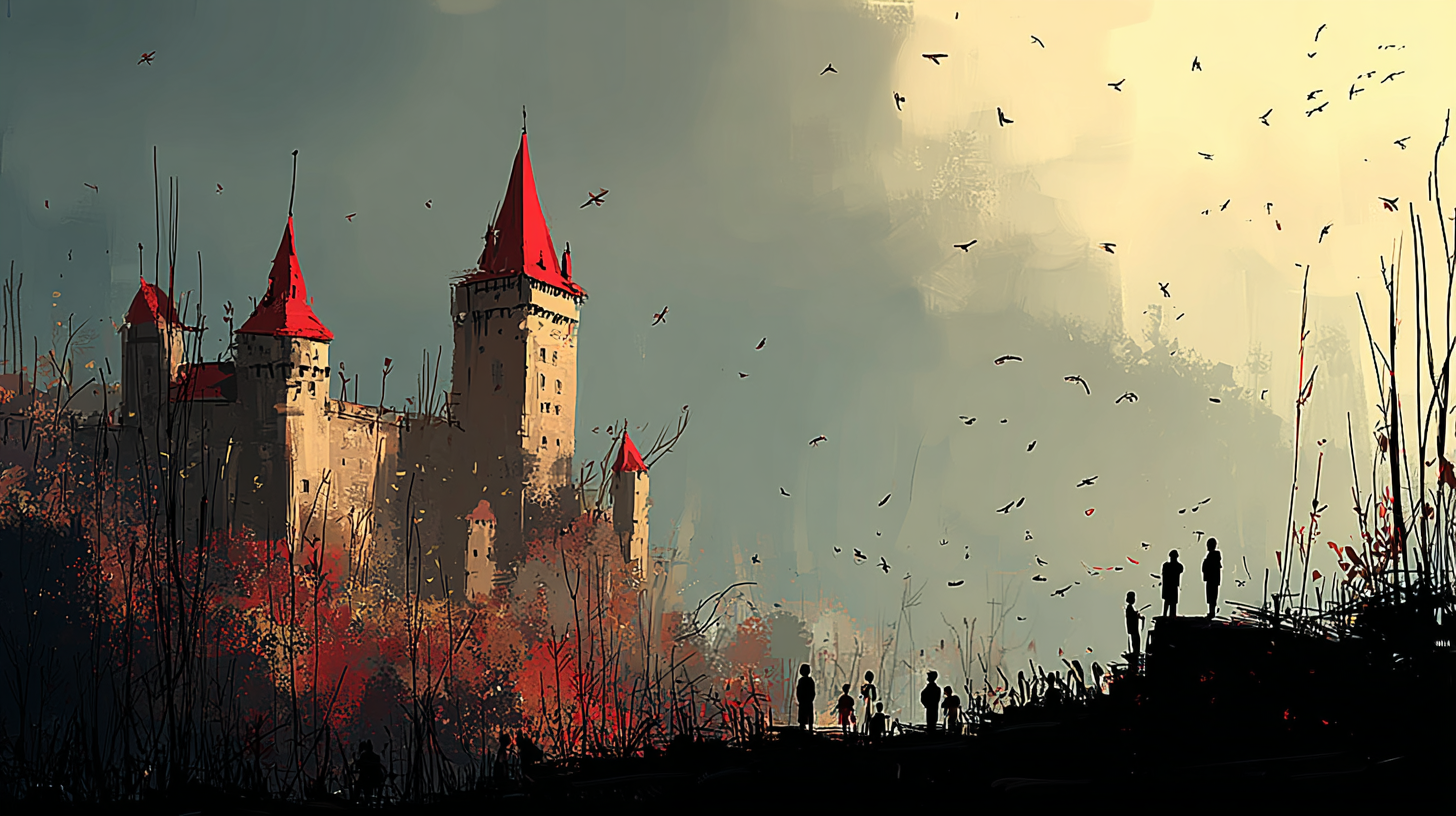
The Middle Ages means the medieval time in Europe long ago.
Middle Ages は、ヨーロッパの昔の「中世」という時代のことです。
以下は英単語 “Middle Ages” に関するストーリー型学習コンテンツです。まずは大枠の意味を理解して最後の文章で確認しましょう。
「Middle Ages」の主な意味(main meaning)
| 品詞 | 意味 | 英語定義 | 例文 | 発音記号 |
|---|---|---|---|---|
| 名詞句 | 中世(主にヨーロッパ史で、古代末期からルネサンス前までの時代) | the period in European history between ancient times and the Renaissance | Many castles were built in the Middle Ages. | /ˌmɪdəl ˈeɪdʒɪz/ |
「Middle Ages」の語源(etymology)
Middle は「真ん中」、Ages は「時代」という意味です。
古代と近代の真ん中にある時代という考え方から生まれた呼び名です。
核となるイメージは、古代と近代の間にある長い時代です。
「Middle Ages」の類義語(synonyms)
| 類義語 | 基本的な意味 | 指定単語とのニュアンスの違い | 英語例文 |
|---|---|---|---|
| medieval period | 中世の時代 | Middle Ages より少しかたい言い方で、歴史の説明文でよく使う | The museum focuses on the medieval period in Europe. |
| medieval era | 中世の時代 | era は「一区切りの時代」という感じが強く、歴史の区分を意識する | She wrote a report about the medieval era. |
| medieval times | 中世のころ | times は「そのころ」という日常的でやわらかい言い方 | Life was very different in medieval times. |
| Dark Ages | 暗黒時代 | 今では使い方に注意が必要で、早い中世を悪く言う感じが出ることがある | Some people call the early Middle Ages the Dark Ages. |
| feudal era | 封建の時代 | 社会の仕組みが領主と農民の関係だった面を強調する | The film shows the feudal era with lords and peasants. |
「Middle Ages」の反義語(antonyms)
| 反義語 | 基本的な意味 | 英語例文 |
|---|---|---|
| modern era | 近代 現代の時代 | Technology changed life in the modern era. |
| contemporary period | 現代の時期 | We study the contemporary period in social studies. |
「Middle Ages」のコロケーション(collocations)
| コロケーション | 基本的な意味 | 英語例文 |
|---|---|---|
| in the Middle Ages | 中世に | In the Middle Ages, many people worked on farms. |
| during the Middle Ages | 中世の間に | Trade grew during the Middle Ages. |
| medieval society | 中世社会 | Medieval society had strong social classes. |
| medieval castle | 中世の城 | We visited a medieval castle on our trip. |
| medieval Europe | 中世ヨーロッパ | The book explains daily life in medieval Europe. |
「Middle Ages」の2項表現(binomials)
| 2項表現 | 基本的な意味 | 英語例文 |
|---|---|---|
| kings and queens | 王と女王たち | The story is about kings and queens in a distant land. |
| lords and ladies | 領主と貴婦人たち | The play shows lords and ladies at a feast. |
| war and peace | 戦争と平和 | The lecture compared war and peace in history. |
英語ストーリー(english story)
At Westbridge Publishing, Aya started her morning by checking the schedule on her laptop. She worked as an editor, and today her team had a big task. They were preparing a new English learning book about history, and the main chapter was called “The Middle Ages.”
When Aya arrived at the office, her manager, Mr. Stone, was already standing by the meeting room door. “Good timing,” he said. “We need to decide the tone of the chapter. Some drafts feel too academic.”
Inside, Ken from design and Maria from marketing were waiting. On the screen, the draft showed headings like “medieval period,” “medieval era,” and “medieval times.” Aya noticed that the writer used different expressions in each section.
Mr. Stone began, “We want readers to feel the world, not just memorize dates. Aya, can you guide the language?”
Aya nodded. “We can keep ‘Middle Ages’ as the main term, then use ‘medieval period’ when we explain facts, because it sounds formal. ‘Medieval times’ works better for daily life scenes. ‘Medieval era’ is useful when we compare periods.” She pointed at a paragraph. “But we should be careful with ‘Dark Ages.’ It can sound like we are judging the past too strongly.”
Maria agreed. “Marketing also prefers a neutral tone. Our readers are high school students and Eiken learners. We can mention the phrase, but explain that it is sometimes used for the early Middle Ages.”
Ken clicked to the next slide. It showed pictures of a medieval castle, a busy market, and a map of medieval Europe. “These images are strong,” he said. “But we need a workplace example to connect history with modern life.”
Aya smiled. “We can create a scene where office workers plan an exhibition. They can compare the modern era with the Middle Ages.” She typed quickly. “For example, we can show how communication changed. In the Middle Ages, messages traveled slowly. In the modern era, we send an email in seconds.”
Mr. Stone leaned forward. “Good. Add a short story box. Also include key phrases like ‘in the Middle Ages’ and ‘during the Middle Ages.’ Teachers love those.”
As they continued, the team debated how to explain medieval society. Aya suggested they focus on roles. “Students often remember it if we describe ‘lords and ladies’ and how people worked under them,” she said. “We can also mention ‘kings and queens’ to show the top of the system.”
Ken looked thoughtful. “Should we include battles? Those visuals are popular.”
“We can,” Aya said, “but balance it with daily life. We can show ‘war and peace’ as a contrast, not only violence. People still married, traded, cooked, and learned.”
Maria opened a spreadsheet of feedback from teachers. “Many teachers want simple comparisons with the contemporary period,” she said. “They ask students to think about what changed and what stayed the same.”
Mr. Stone tapped the table. “All right. Aya, revise the chapter introduction. Ken, adjust the visuals. Maria, prepare a short note for teachers.”
After the meeting, Aya returned to her desk and began rewriting the introduction. She started with a clear line: “The Middle Ages was a long period in Europe between ancient times and the Renaissance.” Then she added a warm example: “During the Middle Ages, towns grew, and merchants brought new ideas across medieval Europe.” She placed a photo caption under the picture of a medieval castle: “Many medieval castles were built for protection.”
She also added a careful sentence: “Some people once called the early Middle Ages the Dark Ages, but today many historians avoid the term because it can be unfair.” She checked the tone again. It felt calm, fair, and easy to read.
In the afternoon, Mr. Stone visited her desk. “How is it going?”
Aya showed him the new version. “I used different synonyms for different purposes,” she said. “I also added a comparison with the modern era and the contemporary period.”
Mr. Stone read silently for a moment, then nodded. “This is what we need. The chapter feels alive. It’s not just facts. It’s a bridge.”
Aya watched the office around her. People were sending messages, sharing files, and planning campaigns. She thought about the readers who would open the book. If they could picture the Middle Ages clearly, they would remember the words naturally, and history would feel closer than they expected.
和訳
Westbridge Publishing で、アヤは朝、ノートパソコンで予定を確認して仕事を始めた。彼女は編集者で、今日は大きな作業があった。歴史についての新しい英語学習本を作っていて、主な章のタイトルは「The Middle Ages(中世)」だった。
アヤがオフィスに着くと、上司のストーンさんが会議室のドアのそばに立っていた。「ちょうどいい」と彼は言った。「章の雰囲気を決めないといけない。学術的すぎる下書きがあるんだ。」
中に入ると、デザイン担当のケンとマーケ担当のマリアが待っていた。画面には “medieval period(中世の時代)” “medieval era(中世の時代)” “medieval times(中世のころ)” という見出しが並んでいた。アヤは、書き手が各所で違う言い方を使っているのに気づいた。
ストーンさんが言った。「読者に世界を感じてほしい。日付を暗記するだけじゃなくてね。アヤ、言葉の使い方を見てくれる?」
アヤはうなずいた。「基本は ‘Middle Ages(中世)’ を中心にします。そのうえで、事実説明には ‘medieval period(中世の時代)’ を使うと少しかたい文章になります。日常生活の場面には ‘medieval times(中世のころ)’ がやわらかくて合います。時代区分を比べるなら ‘medieval era(中世の時代)’ が便利です。」彼女は段落を指した。「ただ ‘Dark Ages(暗黒時代)’ は注意が必要です。昔を強く悪く言う感じが出ることがあります。」
マリアも同意した。「マーケティングも中立の表現がいいです。読者は高校生や英検学習者ですから。言葉自体は紹介しても、初期の中世に対して使われることがある、と説明しましょう。」
ケンが次のスライドを開いた。そこには medieval castle(中世の城)、にぎやかな市場、medieval Europe(中世ヨーロッパ)の地図が映っていた。「画像は強いね」と彼は言った。「でも、歴史を現代の生活につなぐために、職場の例がほしい。」
アヤは笑った。「オフィスの人たちが展示を企画する場面にできます。modern era(近代 現代の時代)と Middle Ages(中世)を比べるんです。」彼女は素早く打ち込んだ。「たとえば連絡の変化。in the Middle Ages(中世に)は伝言がとても遅い。でも modern era(近代 現代の時代)ではメールを数秒で送れる。」
ストーンさんが身を乗り出した。「いいね。短いストーリー欄も入れよう。それと ‘in the Middle Ages(中世に)’ や ‘during the Middle Ages(中世の間に)’ みたいな表現も入れて。先生はそういうのが好きだ。」
話し合いが進む中で、チームは medieval society(中世社会)をどう説明するかも議論した。アヤは役割に注目しようと提案した。「‘lords and ladies(領主と貴婦人たち)’ のように、人々がどう関わっていたかで覚えやすくなります。」と彼女は言った。「頂点を示すために ‘kings and queens(王と女王たち)’ も入れられます。」
ケンは考え込んだ。「戦いも入れる?ああいう絵は人気だよ。」
「入れてもいいけど」とアヤは言った。「日常生活とのバランスが大事。‘war and peace(戦争と平和)’ を対比として扱えば、暴力だけになりません。人々は結婚し、商売し、料理し、学びもしていました。」
マリアは先生からの意見をまとめた表を開いた。「多くの先生は contemporary period(現代の時期)との簡単な比較を求めています」と彼女は言った。「何が変わって、何が変わらないかを考えさせたいんです。」
ストーンさんが机を軽くたたいた。「よし。アヤは導入を直して。ケンはビジュアル調整。マリアは先生向けメモを作って。」
会議後、アヤは自分の机に戻り、導入を書き直し始めた。最初ははっきりとこう書いた。「The Middle Ages(中世)は、古代とルネサンスの間にあるヨーロッパの長い時代です。」次に、温かい例を足した。「during the Middle Ages(中世の間に)、町が成長し、商人が medieval Europe(中世ヨーロッパ)を越えて新しい考えを運びました。」medieval castle(中世の城)の写真には説明文をつけた。「多くの medieval castles(中世の城)は守るために建てられました。」
さらに、丁寧な一文も加えた。「昔は初期の Middle Ages(中世)を Dark Ages(暗黒時代)と呼ぶ人もいましたが、今は不公平になりやすいので避ける歴史家が多いです。」彼女はもう一度文の調子を確認した。落ち着いていて、公平で、読みやすかった。
午後、ストーンさんが机に来た。「進み具合はどう?」
アヤは新しい版を見せた。「目的に合わせて類義語を使い分けました」と彼女は言った。「modern era(近代 現代の時代)と contemporary period(現代の時期)との比較も入れました。」
ストーンさんはしばらく黙って読み、うなずいた。「これが必要だった。章が生きている。事実だけじゃない。橋になっている。」
アヤは周りのオフィスを見た。人々が連絡し、ファイルを共有し、企画を進めている。彼女は本を開く読者のことを思った。Middle Ages(中世)をはっきり思い浮かべられれば、単語も自然に覚えられて、歴史が思ったより身近になるはずだ。
「Middle Ages」のQ&A
- QMiddle Ages はどんな意味ですか
- A
Middle Ages はヨーロッパの昔の中世という時代のことです
- QMiddle Ages はいつごろの時代を指しますか
- A
だいたい古代の終わりからルネサンスの前までのヨーロッパの時代を指します
- Qmedieval period と Middle Ages はどう違いますか
- A
意味はほぼ同じですが medieval period は少しかたい言い方で説明文に向きます
- Qmedieval times と Middle Ages はどう使い分けますか
- A
medieval times はそのころという感じで日常生活の話に使いやすいです
- Qmedieval era と Middle Ages のニュアンスの違いは何ですか
- A
medieval era は時代区分をはっきりさせて他の時代と比べたいときに便利です
- QDark Ages は Middle Ages と同じですか
- A
近い意味で使われることもありますが暗い時代と決めつける感じが出るので注意が必要です
- Qfeudal era は Middle Ages と同じ意味ですか
- A
同じ中世でも封建制度の仕組みを強調したいときに feudal era を使います
- Qin the Middle Ages はどういうときに使いますか
- A
中世に起きたことを言うときに in the Middle Ages を使います
- Qduring the Middle Ages は in the Middle Ages とどう違いますか
- A
どちらも中世の間という意味ですが during は期間の中で起きた流れを言いやすいです
- QMiddle Ages を覚えるコツはありますか
- A
中世の城や市場や騎士などのイメージと一緒に思い浮かべると覚えやすいです


コメント