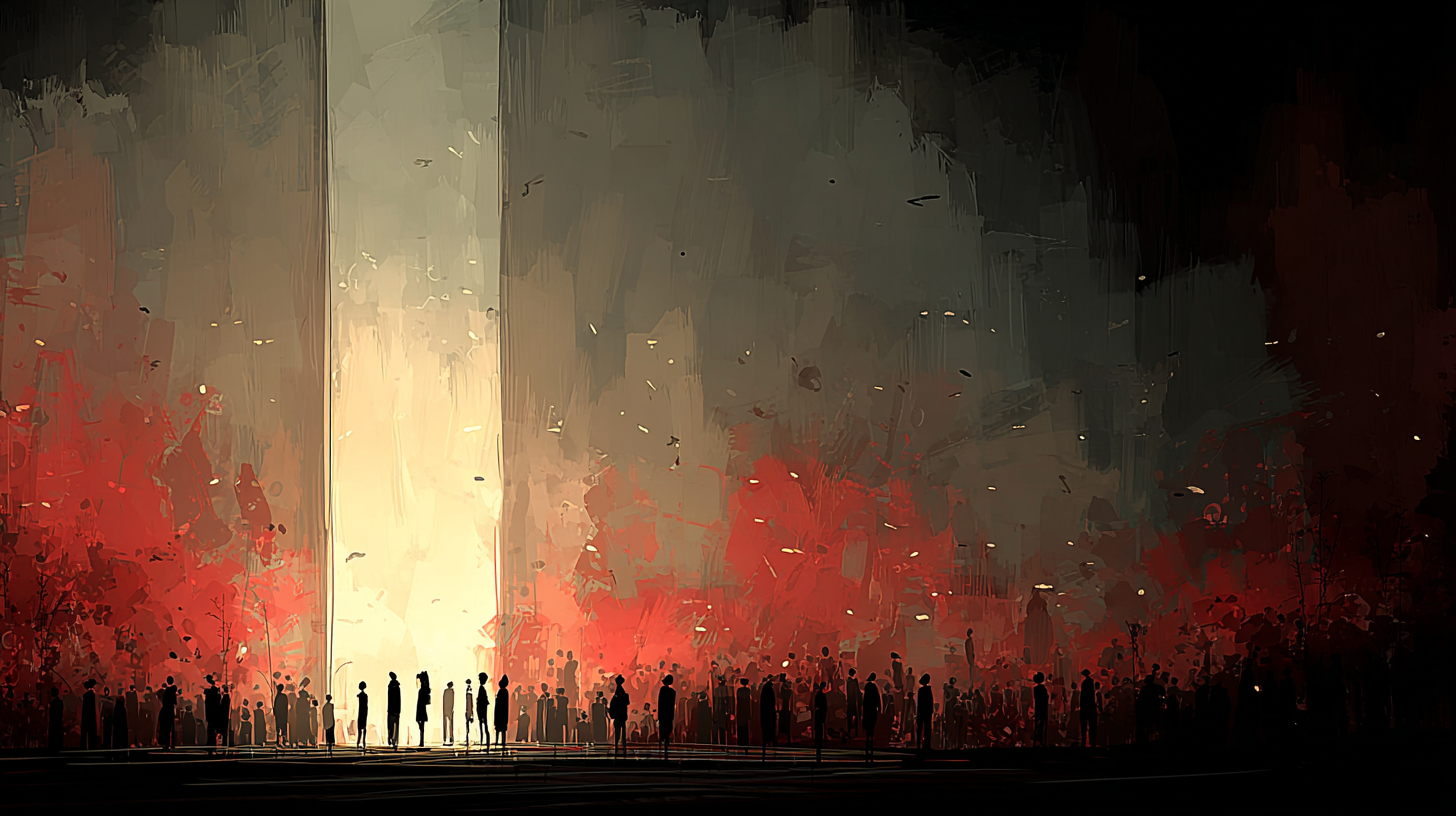
Invasion means entering a place or space by force or without permission.
invasion は「勝手に入ってくること」や「力で入りこむこと」を表す名詞です。
以下は英単語 “invasion” に関するストーリー型学習コンテンツです。まずは大枠の意味を理解して最後の文章で確認しましょう。
「invasion」の主な意味(main meaning)
| 品詞 | 主要な意味 | 英語定義(簡潔) | 英語例文(1文) | 発音記号(IPA) |
|---|---|---|---|---|
| noun | 侵入、侵略(入ってくること) | the act of entering a place by force or without permission | The invasion shocked people across the country. | /ɪnˈveɪʒən/ |
| noun | (領域への)入り込み、踏み込み(比喩) | an unwanted action that enters someone’s space, rights, or privacy | She felt it was an invasion of her privacy. | /ɪnˈveɪʒən/ |
| noun | (医療)浸潤(病気が周りに広がること) | the spread of a disease or tumor into nearby tissue | The report mentioned invasion into surrounding tissue. | /ɪnˈveɪʒən/ |
「invasion」の語源(etymology)
invasion はラテン語の「中へ入る」という意味の語(in-「中へ」+vadere「進む、行く」)がもとです。
核のイメージは「境界線をこえて、ぐいっと中に入ってくる」です。
「invasion」の類義語(synonyms)
| 類義語 | 基本的な意味 | 指定単語とのニュアンスの違い(中学生向け日本語) | 英語例文 |
|---|---|---|---|
| incursion | (短い)侵入、急な入り込み | invasion より「短時間で小規模な入り込み」によく使う | There was an incursion across the border at night. |
| intrusion | 立ち入り、侵害 | invasion より「プライバシーや個人の領域にずかずか入る」感じが強い | The constant calls felt like an intrusion. |
| assault | 攻撃 | invasion より「攻撃そのもの」に焦点があり、入って占領する意味は弱い | The team prepared for an assault on the main gate. |
| occupation | 占領 | invasion の「入ってくる」後の状態で、「居座って支配する」こと | The city faced years of occupation. |
| encroachment | じわじわ侵食 | invasion より「少しずつ境界を押し広げる」感じ | Noise from the street was an encroachment on our peace. |
「invasion」の反義語(antonyms)
| 反義語 | 基本的な意味 | 英語例文 |
|---|---|---|
| retreat | 退却 | The soldiers began a retreat at dawn. |
| withdrawal | 撤退、引き上げ | The company announced a withdrawal from the market. |
「invasion」のコロケーション(collocations)
| コロケーション | 基本的な意味 | 英語例文 |
|---|---|---|
| military invasion | 軍事侵攻 | The news reported a military invasion near the border. |
| foreign invasion | 外国からの侵略 | The museum had an exhibit about foreign invasion in history. |
| full-scale invasion | 大規模侵攻 | People feared a full-scale invasion after the warnings. |
| repel an invasion | 侵略を撃退する | They worked together to repel an invasion. |
| invasion force | 侵攻部隊 | The invasion force moved quickly along the coast. |
「invasion」の2項表現(binomials)
| 2項表現(A and B) | 基本的な意味 | 英語例文 |
|---|---|---|
| attack and defense | 攻撃と防御 | In training, we studied attack and defense strategies. |
| peace and security | 平和と安全 | The leader spoke about peace and security for all citizens. |
| rights and privacy | 権利とプライバシー | The policy protects rights and privacy at work. |
英語ストーリー(english story)
On a rainy Monday, our office felt unusually quiet. I work in the IT department of a mid-sized company, and we had just started a new project to improve customer support. At 9:10 a.m., an alert popped up on my screen. It wasn’t the usual small warning. It looked like the beginning of an invasion.
At first, it was only a minor incursion: a strange login attempt from an overseas location. Our system blocks most of them automatically, but this one was different. The attacker tried again and again, changing passwords in a pattern that suggested a real plan. I called my manager, Ms. Kato, and explained what I saw.
She came to my desk and frowned. “Is this just a random intrusion,” she asked, “or something bigger?”
“I’m not sure yet,” I said. “But if they get inside, it could become a full-scale invasion of our customer data.”
We moved to the meeting room and set up a quick response. Our team believed in attack and defense: you don’t panic, and you don’t chase the attacker blindly. You protect the most important systems first. Ms. Kato asked me to check access logs while another colleague, Ken, contacted the cloud provider. A third teammate started preparing messages for staff, because confusion can help an attacker.
Within minutes, the situation grew worse. The attacker reached a test server that wasn’t fully updated. It was like an assault on a weak gate. From there, they tried to jump into our main network. We could almost feel the invasion force pushing forward, even though it was only code.
Ken whispered, “If they succeed, it could lead to a long occupation of our systems. They might hide and steal data for months.”
That word hit me—occupation. I imagined our company working under pressure every day, not knowing what was safe. I also thought about rights and privacy. Our customers trusted us. A breach would be more than a technical problem; it would be an invasion of people’s lives.
Ms. Kato kept her voice calm. “We will repel an invasion,” she said. “Step by step.”
We tightened firewall rules and shut down the vulnerable test server. Then we forced password resets for accounts that showed unusual activity. Still, the attacker did not give up. They tried new methods, probing our systems the way water slowly eats away stone. It was an encroachment—quiet, patient, and dangerous.
As we worked, someone from HR knocked on the door. “Sorry to interrupt,” she said, “but there are rumors spreading. People think we’re under a foreign invasion—like a real-world crisis.”
Ms. Kato nodded. “Tell them the truth in simple terms,” she replied. “We have a serious security incident. We are handling it. They should not click unknown links.”
By lunchtime, we had contained the threat. The attacker’s attempts slowed down, and then stopped. We watched the monitoring screen in silence, waiting for another wave. None came. It felt like the enemy had chosen retreat.
I leaned back and finally breathed. “So… they’re gone?”
“For now,” Ms. Kato said. “But we should prepare for withdrawal on their side to be only temporary. Sometimes attackers leave and return when people relax.”
That afternoon, we held a short all-staff briefing. Ms. Kato explained what happened without scary details. She reminded everyone to update devices and use strong passwords. Then she said something I won’t forget: “Technology matters, but trust matters too. Our goal is peace and security for our customers and for each other.”
After the meeting, I walked back to my desk and looked at the rain outside. The office felt normal again—phones ringing, keyboards clicking, people laughing softly. But I knew something had changed. We had seen how quickly a small incursion can turn into an invasion. And we had learned that the best response is not fear, but clear thinking, teamwork, and respect for the boundaries that protect people.
和訳
雨の月曜日の朝、オフィスはいつもより静かだった。私は中規模の会社のIT部門で働いていて、ちょうど顧客サポートを改善する新しいプロジェクトを始めたばかりだった。午前9時10分、画面に警告が出た。それはよくある小さな注意ではなく、invasion(侵入、侵略)が始まったように見えた。
最初は小さなincursion(短い侵入、急な入り込み)だった。海外の場所から、見慣れないログインが試されたのだ。多くは自動で止まるが、今回は違った。攻撃者は何度も試し、パスワードを一定のパターンで変えてきた。そこには計画があるように見えた。私は上司の加藤さんに電話して、見えていることを説明した。
加藤さんは私の席に来て眉をひそめた。「これはただのintrusion(立ち入り、侵害)なの?それとももっと大きいの?」と聞いた。
「まだ確信はありません。でも中に入られたら、顧客データへのfull-scale invasion(大規模侵攻)になるかもしれません」と私は言った。
私たちは会議室に移り、すぐに対応を組み立てた。私たちのチームはattack and defense(攻撃と防御)を大事にしている。慌てないし、むやみに追いかけない。まず最重要のシステムを守る。加藤さんは私にアクセスログの確認を任せ、同僚の健はクラウド提供会社に連絡した。別のメンバーは、社内向けの連絡文を準備した。混乱は攻撃者の助けになるからだ。
数分で状況は悪化した。攻撃者は更新が不十分なテスト用サーバーに到達した。弱い門へのassault(攻撃)のようだった。そこから、社内の本番ネットワークへ飛び移ろうとした。目に見えるのはコードだけなのに、invasion force(侵攻部隊)が押し込んでくる感じがした。
健が小声で言った。「もし成功したら、システムが長いoccupation(占領)状態になるかもしれない。何か月も潜んでデータを盗む可能性がある。」
occupation(占領)という言葉が胸に刺さった。毎日ずっと緊張し、何が安全か分からないまま働く会社の姿が浮かんだ。同時に、rights and privacy(権利とプライバシー)のことも思った。お客様は私たちを信じてくれている。情報漏えいは技術の問題だけではなく、人の生活へのinvasion(侵入、侵略)にもなる。
加藤さんは落ち着いた声のままだった。「repel an invasion(侵略を撃退する)わよ。順番に」と言った。
私たちはファイアウォールの規則を強化し、弱いテストサーバーを停止した。その後、怪しい動きがあったアカウントにはパスワードの再設定を強制した。それでも攻撃者はあきらめない。水が石を少しずつ削るように、新しい方法で探ってきた。それはencroachment(じわじわ侵食)だった。静かで、粘り強く、危険だった。
作業中、人事の人がドアをノックした。「すみません、邪魔して。噂が広がっていて、みんな『foreign invasion(外国からの侵略)みたいな危機なんじゃないか』って言ってます。」
加藤さんはうなずいた。「簡単な言葉で事実を伝えて。深刻なセキュリティ事故だけど、対応中。知らないリンクはクリックしないように」と答えた。
昼過ぎまでに、私たちは脅威を封じ込めた。攻撃者の試行は減り、やがて止まった。私たちは監視画面を黙って見つめ、次の波を待った。でも来なかった。相手がretreat(退却)を選んだように感じた。
私は椅子にもたれて、やっと息をついた。「じゃあ……もういないんですか?」
加藤さんは言った。「今はね。でも相手のwithdrawal(撤退、引き上げ)が一時的なこともある。油断した頃に戻ってくる攻撃者もいるから。」
午後、私たちは全社員向けに短い説明をした。加藤さんは怖がらせる細部は避けつつ、起きたことを説明した。各自の端末の更新、強いパスワードの使用も促した。そして忘れられない言葉を言った。「技術も大事。でも信頼はもっと大事。私たちの目標は、お客様と仲間のpeace and security(平和と安全)よ。」
会議後、私は席に戻り、窓の外の雨を見た。オフィスはまた普通に戻っていた。電話が鳴り、キーボードが鳴り、静かな笑い声がする。でも私は知っていた。何かが変わったのだ。小さなincursion(短い侵入、急な入り込み)が、どれほど早くinvasion(侵入、侵略)に変わりうるかを見た。そして最善の対応は恐怖ではなく、冷静な考え、チームワーク、そして人を守る境界線への敬意だと学んだ。
「invasion」のQ&A
- Qinvasion はどんな意味ですか
- A
invasion は「力で入ってくる」「勝手に入りこむ」という意味の名詞です
- Qinvasion と intrusion の違いは何ですか
- A
invasion は広い意味での「侵入や侵略」、intrusion は特に「プライバシーや個人の領域にずかずか入る」感じが強いです
- Qinvasion と incursion の違いは何ですか
- A
incursion は「短時間で小規模な入り込み」によく使い、invasion はもっと大きく長い影響を感じる言い方です
- Qinvasion と occupation の違いは何ですか
- A
invasion は「入ってくる行為」、occupation は「入った後に居座って支配する状態」を表します
- Qinvasion と encroachment の違いは何ですか
- A
encroachment は「少しずつ境界を押し広げる」感じで、invasion は「一気に入りこむ」感じが出やすいです
- Qinvasion の反対の言葉は何ですか
- A
よく使われる反対語は retreat(退却)や withdrawal(撤退)です
- Qrepel an invasion はどういう意味ですか
- A
repel an invasion は「侵略や侵入を撃退する」という意味で、攻めてきたものを押し返すときに使います
- Qfull-scale invasion はどんな場面で使いますか
- A
full-scale invasion は「大規模侵攻」で、規模が大きく本格的に攻め込む状況を表すときに使います
- Qmilitary invasion と foreign invasion はどう違いますか
- A
military invasion は「軍事侵攻」で軍が中心、foreign invasion は「外国からの侵略」で出所が外国である点を強く言います
- Qattack and defense と peace and security はどう覚えればいいですか
- A
attack and defense は「攻撃と防御」で対立の場面、peace and security は「平和と安全」で守る目標を言う場面で覚えると使い分けやすいです

コメント