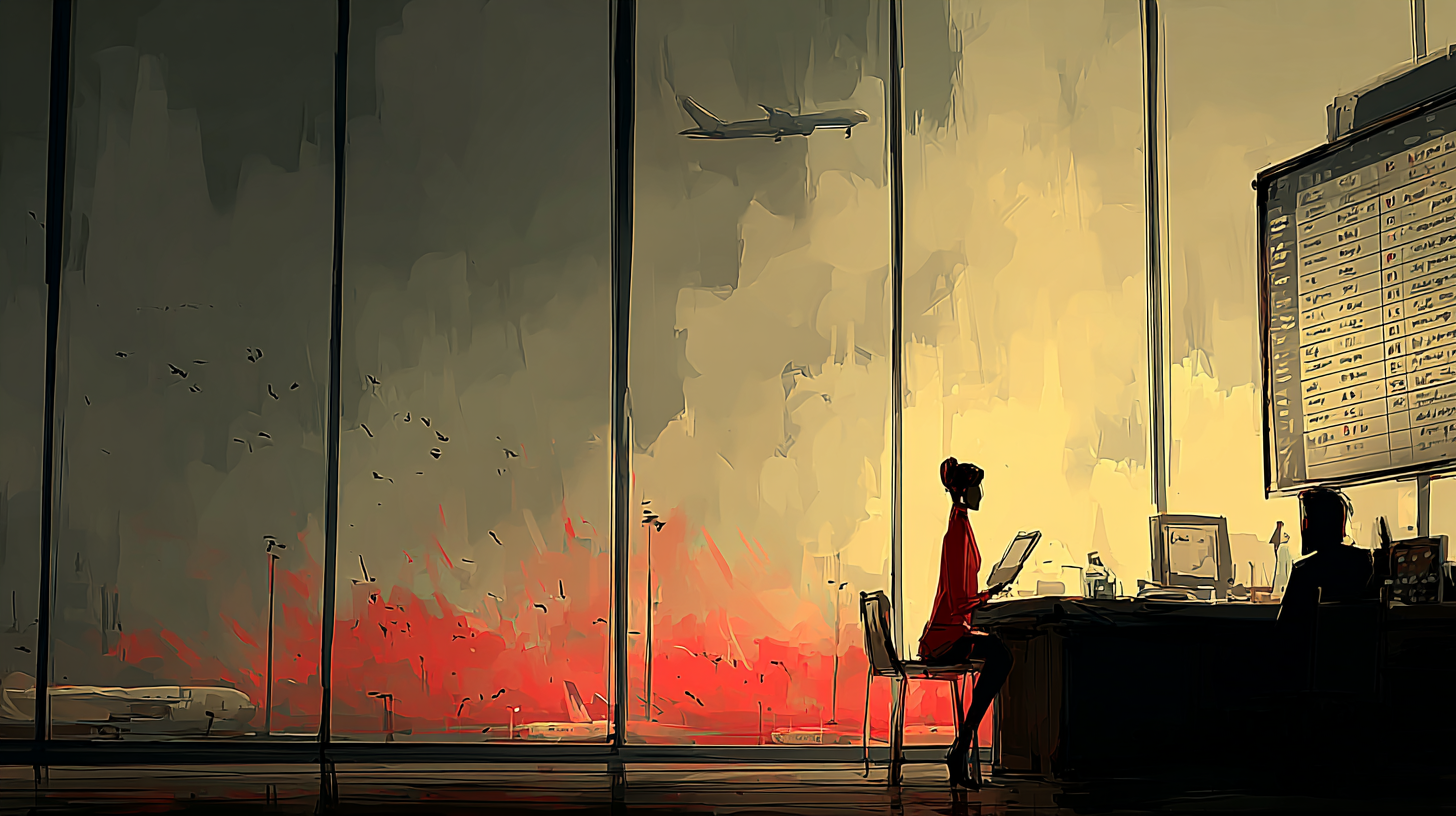
Aviation means flying by plane and the world of planes.
aviation は「飛行機で飛ぶこと」や「航空の仕事や世界」のこと。
以下は英単語 “aviation” に関するストーリー型学習コンテンツです。まずは大枠の意味を理解して最後の文章で確認しましょう。
「aviation」の主な意味(main meaning)
| 品詞 | 意味 | 英語定義 | 例文 | 発音記号 |
|---|---|---|---|---|
| noun | 航空、航空業界、航空学 | the activity or industry of flying aircraft, or the study of it | She works in aviation and helps improve flight schedules. | /ˌeɪviˈeɪʃən/ |
「aviation」の語源(etymology)
aviation は、ラテン語の avis(鳥)につながる語の流れから来たと言われます。
核のイメージは「鳥のように空を飛ぶこと」。飛行機や空の仕事を思い浮かべると覚えやすいです。
「aviation」の類義語(synonyms)
| 類義語 | 基本的な意味 | 指定単語とのニュアンスの違い | 英語例文 |
|---|---|---|---|
| air travel | 飛行機での旅行 | 旅行としての移動に焦点。仕事や業界全体は含みにくい | Air travel can be tiring during holiday seasons. |
| aeronautics | 航空学、航空工学 | 学問や技術の話で使う。業界や運航全体より専門的 | He studied aeronautics to design safer aircraft. |
| flying | 飛ぶこと、飛行 | 行為そのものをカジュアルに言う。産業や制度の広さは弱い | Flying in bad weather requires skill. |
| air transport | 航空輸送 | 人や物を運ぶ「輸送」に焦点。物流や輸送手段として硬い言い方 | Air transport is important for urgent medical supplies. |
| flight industry | 航空産業 | ビジネスとしての業界に焦点。aviation より経済・企業の匂いが強い | The flight industry is investing in new technology. |
「aviation」の反義語(antonyms)
| 反義語 | 基本的な意味 | 英語例文 |
|---|---|---|
| ground transportation | 陸上交通 | Ground transportation is cheaper for short distances. |
| maritime transport | 海上輸送 | Maritime transport is slower but can carry large cargo. |
「aviation」のコロケーション(collocations)
| コロケーション | 意味 | 英語例文 |
|---|---|---|
| aviation industry | 航空業界 | The aviation industry is trying to cut carbon emissions. |
| aviation safety | 航空安全 | Aviation safety depends on clear communication. |
| aviation fuel | 航空燃料 | The company is testing a cleaner aviation fuel. |
| civil aviation | 民間航空 | Civil aviation rules protect passengers and crews. |
| aviation authority | 航空当局 | The aviation authority inspected the new system. |
「aviation」の2項表現(binomials)
| 2項表現 | 意味 | 英語例文 |
|---|---|---|
| takeoff and landing | 離陸と着陸 | Pilots focus most during takeoff and landing. |
| safety and security | 安全と保安 | The meeting covered safety and security at the airport. |
| rules and regulations | 規則と規制 | We must follow the rules and regulations every day. |
英語ストーリー(english story)
Mika worked in a small office inside Haneda Airport. Her team supported the aviation world behind the scenes, even though they rarely met passengers. On the wall, a big screen showed flights arriving and departing every minute. Mika’s job was to coordinate with different departments so that everything ran smoothly.
That Monday morning started with a problem. A strong winter wind was coming, and the weather team warned that some flights might be delayed. Mika opened her email and saw a message from the aviation authority about a new inspection schedule. At the same time, her manager, Mr. Sato, walked in with a serious face.
“We need to protect aviation safety today,” he said. “Let’s check our plan for takeoff and landing, especially for the smaller aircraft.”
Mika nodded and called a quick meeting. Ken from operations joined online, and Aya from customer support sat beside Mika. The goal was simple: reduce confusion and keep information clear. Mika wrote on the whiteboard, “safety and security,” and underlined it twice.
Ken explained, “If the wind gets stronger, flying will be difficult for some routes. We may need to change the order of departures.”
Aya added, “Passengers will ask why their flights are late. If we explain it well, they will feel calmer.”
Mika agreed. She had learned that good communication was as important as technology in aviation. She also knew the difference between air travel and the broader world of aviation. Air travel was what passengers experienced, but aviation included the people, systems, and decisions that made those experiences possible.
Before lunch, another issue appeared. A cargo partner reported that an urgent medical package could miss its connection. “We depend on air transport for this,” the message said. “If it arrives late, the hospital may not get it in time.”
Mika felt pressure, but she stayed focused. She called Ken again. “Can we move that cargo to an earlier flight?”
Ken checked the system. “Possible, but we must follow the rules and regulations. Also, the aircraft needs fuel planning. Aviation fuel limits and weight balance matter.”
Mika understood. She remembered a training session where an engineer talked about aeronautics. He explained how small changes in weight could affect performance. Mika was not an engineer, but she respected the science behind every decision.
She contacted the cargo team and offered two options. The first was to send the package by another flight with a slightly different route. The second was to send it by ground transportation to a nearby airport and then fly it from there. The second option was slower and risky because roads could be crowded.
“We should keep it in the flight industry network if we can,” Ken said. “But safety comes first.”
Mika replied, “Yes. Let’s choose the safest plan that still meets the deadline.”
In the afternoon, the wind grew stronger. A few flights changed gates, and one departure was delayed. Mika walked to the operations center and watched the screen. She noticed how quickly the team reacted. They were calm, but not relaxed. Every message had to be accurate, and every decision had to be recorded.
A supervisor pointed to a report. “Civil aviation standards require an extra check for this type of weather,” he said.
Mika thanked him and updated the shared document. Then she sent a clear announcement to customer support, using simple words so staff could explain it to passengers. She also reminded everyone that maritime transport was not an option for urgent medical items today.
Near the end of her shift, Ken called again. “Good news. The medical package is on an earlier flight now. We adjusted the schedule, and the captain approved it.”
Mika smiled for the first time that day. “Great. Please send the final confirmation.”
After the call, Mr. Sato stopped by her desk. “You handled a difficult day well,” he said. “Aviation is not only about planes. It’s about people making careful choices.”
Mika looked at the screen again, watching a plane lift into the gray sky. She thought about the teamwork that made it possible: the pilots, the engineers, and the office workers like her. Even on a windy day, the system moved forward, step by step, guided by safety and security, and supported by rules and regulations.
和訳
ミカは羽田空港の中にある小さなオフィスで働いていた。彼女のチームは、乗客と直接会うことは少ないが、航空(aviation:航空)の世界を裏側で支えていた。壁の大きな画面には、到着と出発の便が毎分のように表示されていた。ミカの仕事は、いろいろな部署と調整して、すべてがスムーズに進むようにすることだった。
その月曜の朝は問題から始まった。強い冬の風が来ていて、気象チームは遅延が出るかもしれないと警告した。ミカがメールを開くと、航空当局(aviation authority:航空当局)から新しい点検日程の連絡が来ていた。同時に、上司の佐藤さんが真剣な顔で入ってきた。
「今日は航空安全(aviation safety:航空安全)を守らないといけない」と彼は言った。「特に小さめの機体の離陸と着陸(takeoff and landing:離陸と着陸)について、計画を確認しよう。」
ミカはうなずき、急いで短い会議を開いた。運航担当のケンはオンラインで参加し、カスタマーサポートのアヤはミカの隣に座った。目的はシンプルで、混乱を減らし、情報をはっきり伝えることだった。ミカはホワイトボードに安全と保安(safety and security:安全と保安)と書き、二重線を引いた。
ケンは説明した。「風が強くなれば、飛行(flying:飛ぶこと)はいくつかの路線で難しくなります。出発の順番を変える必要があるかもしれません。」
アヤは言った。「乗客はなぜ遅れるのか聞いてきます。うまく説明できれば、落ち着いてもらえます。」
ミカも同意した。航空(aviation:航空)では、技術だけでなく、良いコミュニケーションも同じくらい大事だと学んでいた。彼女は、空の旅(air travel:飛行機での旅行)と、もっと広い航空(aviation:航空)の違いも分かっていた。空の旅(air travel:飛行機での旅行)は乗客が体験するものだが、航空(aviation:航空)には、その体験を支える人や仕組み、判断が含まれる。
昼前、別の問題が出た。貨物のパートナーが、緊急の医療用荷物が乗り継ぎに間に合わないかもしれないと連絡してきた。「この件は航空輸送(air transport:航空輸送)に頼っています。遅れたら病院が間に合わないかもしれません。」
ミカはプレッシャーを感じたが、集中した。彼女は再びケンに電話した。「その貨物をもっと早い便に移せますか。」
ケンはシステムを確認した。「可能ですが、規則と規制(rules and regulations:規則と規制)を守らないといけません。それに燃料計画も必要です。航空燃料(aviation fuel:航空燃料)の制限や重量バランスが関係します。」
ミカは理解した。以前の研修で、航空学(aeronautics:航空学)の話を聞いたことを思い出した。少しの重さの違いが性能に影響する、と説明されていた。ミカは技術者ではないが、すべての判断の裏にある科学を尊重していた。
彼女は貨物チームに連絡し、二つの案を出した。一つ目は少し違う経路の別便で送ること。二つ目は、近くの空港まで陸上交通(ground transportation:陸上交通)で運び、そこから飛ばすことだった。二つ目は遅くなりやすく、道路が混むと危険だった。
「できるなら航空産業(flight industry:航空産業)のネットワーク内で動かしたい」とケンは言った。「でも安全が最優先です。」
ミカは答えた。「はい。期限に間に合いそうで、いちばん安全な計画を選びましょう。」
午後、風はさらに強くなった。いくつかの便はゲートが変わり、ある出発は遅れた。ミカは運航センターへ行き、画面を見守った。チームが素早く対応するのが分かった。落ち着いているが、油断はない。すべての連絡は正確で、すべての判断は記録されなければならなかった。
監督者が報告書を指した。「民間航空(civil aviation:民間航空)の基準では、この天候では追加の確認が必要です。」
ミカは礼を言い、共有ドキュメントを更新した。その後、サポートチームに向けて、乗客に説明しやすいように簡単な言葉で案内文を送った。また、今日は海上輸送(maritime transport:海上輸送)は緊急の医療品には使えないことも共有した。
勤務の終わりごろ、ケンからまた電話が来た。「良い知らせです。医療用の荷物は早い便に載せ替えできました。日程を調整して、機長の承認も得ました。」
ミカはその日初めて笑った。「よかったです。最終確認を送ってください。」
通話のあと、佐藤さんが机に立ち寄った。「難しい一日だったけど、よく対応したね」と彼は言った。「航空(aviation:航空)は飛行機だけじゃない。人が慎重に選択することなんだ。」
ミカはもう一度画面を見た。灰色の空へ飛び立つ飛行機が映っていた。彼女は、それを可能にするチームワークを思った。パイロット、技術者、そして自分のようなオフィスの人たち。風の強い日でも、仕組みは一歩ずつ前に進む。安全と保安(safety and security:安全と保安)に導かれ、規則と規制(rules and regulations:規則と規制)に支えられながら。
「aviation」のQ&A
- Qaviation ってどういう意味?
- A
aviation は飛行機で飛ぶことや航空の仕事や業界全体を指す言葉です。
- Qair travel と aviation の違いは?
- A
air travel は旅行として飛行機で移動すること、aviation は航空の仕組みや仕事も含む広い言い方です。
- Qaeronautics は aviation と同じ?
- A
aeronautics は航空の学問や技術の話で使い、aviation は業界や運航など全体を指しやすいです。
- Qflying は aviation の代わりに使える?
- A
flying は飛ぶ行為そのものを言うことが多く、aviation のように業界全体を表す力は弱いです。
- Qair transport はどんな場面で使う?
- A
air transport は人や物を運ぶ輸送の話で使い、物流や緊急輸送などでよく出ます。
- Qflight industry と aviation はどう違う?
- A
flight industry はビジネスとしての航空産業に焦点があり、aviation はもっと広く航空全体を指せます。
- Qaviation の反対っぽい言い方はある?
- A
ground transportation は陸の移動、maritime transport は船の移動で、空の移動と対比できます。
- Qaviation safety って何?
- A
aviation safety は航空の安全のことで、運航の手順や確認、連絡の正確さなどが関係します。
- Qよく一緒に使う語の組み合わせは?
- A
aviation industry、aviation safety、aviation fuel、civil aviation、aviation authority などがよく使われます。
- Qtakeoff and landing はどう覚える?
- A
takeoff は離陸、landing は着陸で、飛行の最重要場面をセットで言う自然な表現です。
コメント