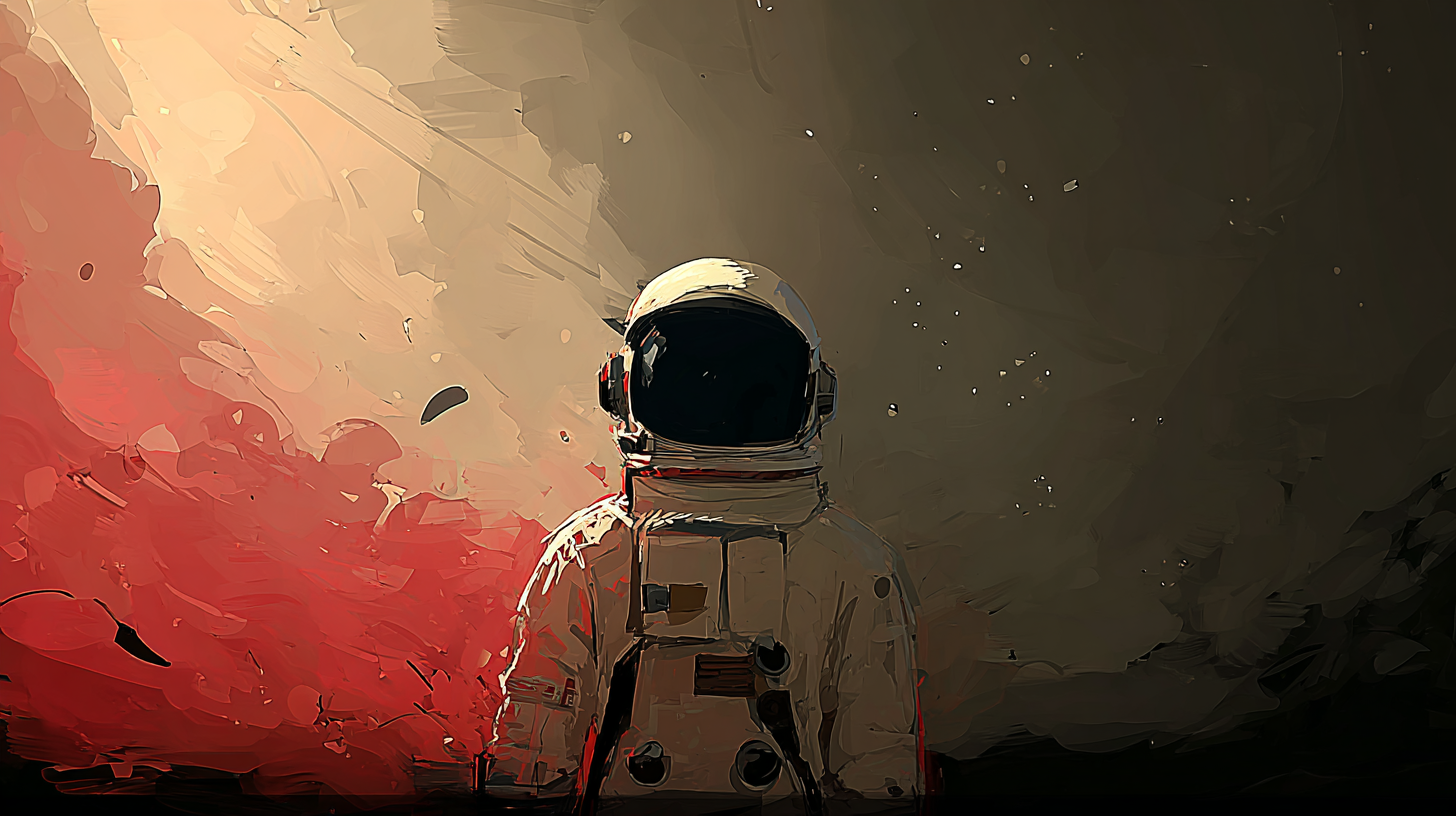
An astronaut is a person trained to work in space.
astronaut は「宇宙に行って仕事をするために訓練した人」です。
以下は英単語 “astronaut” に関するストーリー型学習コンテンツです。まずは大枠の意味を理解して最後の文章で確認しましょう。
「astronaut」の主な意味(main meaning)
| 品詞 | 主要な意味 | 簡潔な英語定義 | 英語例文(1文) | 発音記号(IPA) |
|---|---|---|---|---|
| noun | 宇宙飛行士 | a person trained to travel and work in space | She became an astronaut and joined a space mission. | /ˈæs.trə.nɔːt/ |
| noun(修飾用法) | 宇宙飛行士の(としての) | relating to astronauts (used before a noun) | He is in astronaut training this year. | /ˈæs.trə.nɔːt/ |
「astronaut」の語源(etymology)
ギリシャ語の astron(星)と nautes(船乗り)から来た語です。
核となるイメージは「星の海を旅する船乗り」です。
「astronaut」の類義語(synonyms)
| 類義語 | 基本的な意味 | 指定単語とのニュアンスの違い | 英語例文 |
|---|---|---|---|
| spaceman | 宇宙飛行士 | 少し昔っぽく、カジュアルに聞こえることがある | The kids drew a picture of a spaceman on the wall. |
| space traveler | 宇宙を旅する人 | 仕事よりも「旅」に焦点があり、広い意味で使える | A space traveler might visit the Moon one day. |
| cosmonaut | 宇宙飛行士 | ロシアなどで使われる呼び方として有名 | The cosmonaut spoke about life on the station. |
| taikonaut | 宇宙飛行士 | 中国の宇宙飛行士を指す呼び方として使われる | The taikonaut answered questions from students. |
| space explorer | 宇宙探検者 | 「探検」の感じが強く、未知への挑戦を強調する | She wants to be a space explorer, not just a pilot. |
「astronaut」の反義語(antonyms)
| 反義語 | 基本的な意味 | 英語例文 |
|---|---|---|
| earthbound | 地上から離れられない | I feel earthbound when I watch launches on TV. |
| ground-based | 地上で行う | Our ground-based team monitors the system all day. |
「astronaut」のコロケーション(collocations)
| コロケーション | 意味 | 英語例文 |
|---|---|---|
| astronaut training | 宇宙飛行士の訓練 | Astronaut training tests both the body and the mind. |
| astronaut suit | 宇宙服 | The astronaut suit looked heavier than I expected. |
| space mission | 宇宙ミッション | Their space mission will last six months. |
| become an astronaut | 宇宙飛行士になる | He studied hard because he wanted to become an astronaut. |
| veteran astronaut | ベテラン宇宙飛行士 | A veteran astronaut shared practical advice with us. |
「astronaut」の2項表現(binomials)
| 2項表現(A and B) | 意味 | 英語例文 |
|---|---|---|
| research and development | 研究開発 | The company invests in research and development every year. |
| risk and reward | 危険と見返り | In space work, risk and reward are always discussed. |
| trial and error | 試行錯誤 | We improved the design through trial and error. |
英語ストーリー(english story)
On Monday morning, I arrived at the public relations office of Kibo Space Center with a cup of coffee and a long to-do list. Our team was preparing for a special event: a veteran astronaut would visit our building and talk to employees and local students. My manager, Ms. Sato, said the talk had to feel friendly, not too technical, because many visitors would be first-timers.
At 9:10, Ms. Sato called me to her desk. “We need a clear program,” she said. “Also, check the display area. The astronaut suit must be clean and the signs must be easy to read.” I nodded and opened my notebook. I had joined the company only three months earlier, and I still felt earthbound when everyone talked about space as if it were a normal workplace.
In the meeting room, my coworker Ken was already setting up chairs. “We should avoid old words like spaceman in the official script,” he whispered. “But maybe we can use it once in a fun story for kids.” That sounded reasonable. We wanted the event to be accurate, but also warm.
At 10:00, we had a video call with an overseas partner. A cosmonaut from a training center in Russia would send a short recorded message, and a taikonaut from China might join live for a few minutes if the schedule allowed. Ms. Sato reminded us, “Please keep the tone respectful. They are all professionals.” I wrote down the key point: astronaut is the general word, but the others have specific country connections.
After the call, I walked to the display area. A large poster showed a space mission plan, from launch day to return. Next to it stood the astronaut suit behind glass. I checked the labels and noticed one sentence was confusing. It said, “This suit is used for all flights,” which was not true. I asked the ground-based engineering team, and they confirmed the suit on display was for training and certain operations, not every situation. I changed the sign to a simpler and more correct line.
Back at my desk, Ken and I worked on the script. We wanted to explain astronaut training without making it sound like a movie. Ken suggested a short part about daily routines: exercise, language study, teamwork drills, and safety checks. “It’s not magic,” he said. “It’s research and development, and a lot of trial and error.” I liked that. It sounded honest and professional.
At lunch, Ms. Sato joined us and asked, “Why do you think people want to become an astronaut?” Ken answered quickly: “Adventure.” I hesitated, then said, “Maybe they want to help others by solving problems. Not only exploring space, but improving life on Earth.” Ms. Sato smiled. “Good. That idea fits our message.”
In the afternoon, we practiced the stage flow. I would introduce the guest, then guide a short Q and A. Ken would handle the slides. Another coworker would manage the live stream. We discussed risk and reward carefully. We did not want to scare kids, but we also did not want to lie. The veteran astronaut had requested that we mention both the dangers and the strict safety culture.
Just before 5:00, an email arrived with the astronaut’s updated profile. It included a small personal story: as a child, the astronaut had been a “space traveler” in imagination, building paper rockets at a tiny kitchen table. Later, the dream became real through study, training, and support from many people. I decided to use that story, because it felt close to everyday life.
When the day ended, I looked around the office. Monitors showed schedules, checklists, and messages from different teams. It was still a normal workplace, with printers, meetings, and deadlines. Yet the work connected to something larger. I realized that the word astronaut did not only mean a person in a spacecraft. It also carried a quiet promise: careful preparation, teamwork, and a steady hope to explore the unknown.
和訳
月曜日の朝、私はコーヒーを片手に、やることがたくさん書かれたメモを持って、きぼう宇宙センターの広報オフィスに着いた。私たちのチームは特別なイベントの準備をしていた。ベテランの宇宙飛行士(astronaut:宇宙飛行士)が建物を訪れ、社員や地元の生徒に話をするのだ。上司の佐藤さんは、話は親しみやすく、難しすぎないようにしてほしいと言った。初めて来る人が多いからだ。
9時10分、佐藤さんが私を席に呼んだ。「わかりやすい進行が必要ね。それと展示エリアも確認して。宇宙服(astronaut suit:宇宙服)はきれいにして、案内表示は読みやすくしてね。」私はうなずいてノートを開いた。入社して3か月で、みんなが宇宙の話を普通の職場の話みたいにするたびに、私はどこか地上から離れられない気分(earthbound:地上から離れられない)だった。
会議室では同僚のケンが椅子を並べていた。「公式の原稿では、spaceman(spaceman:昔っぽい言い方の宇宙飛行士)は避けたいね。でも子ども向けの楽しい話の中なら一回くらい使ってもいいかも。」それは納得できた。正確さも大事だが、温かさも必要だった。
10時、海外パートナーとビデオ通話をした。ロシアの訓練施設の宇宙飛行士(cosmonaut:ロシアなどの宇宙飛行士)が短い録画メッセージを送り、中国の宇宙飛行士(taikonaut:中国の宇宙飛行士)が数分だけ生出演できるかもしれない。佐藤さんは「敬意あるトーンでね。全員プロだから」と念を押した。私は、astronaut は一般的な言い方で、ほかは国の呼び方の違いがあるとメモした。
通話後、私は展示エリアへ行った。大きなポスターには宇宙ミッション(space mission:宇宙ミッション)の計画が、打ち上げから帰還まで示されていた。隣にはガラスケースの中に宇宙服(astronaut suit:宇宙服)が立っていた。説明文を確認すると、まぎらわしい文があった。「この宇宙服はすべての飛行で使われます」と書いてあったが、それは正しくない。地上チーム(ground-based:地上で行う)の技術者に確認すると、展示の宇宙服は訓練や特定の作業向けで、すべての場面ではないとわかった。私はもっと簡単で正しい文に直した。
デスクに戻って、ケンと原稿を作った。宇宙飛行士の訓練(astronaut training:宇宙飛行士の訓練)を映画みたいにしないで説明したい。ケンは日々のルーティンの短い説明を提案した。運動、語学、チームワークの訓練、安全確認などだ。「魔法じゃない。研究開発(research and development:研究開発)で、試行錯誤(trial and error:試行錯誤)が山ほどある。」私はそれが気に入った。正直で仕事らしい言い方だった。
昼休み、佐藤さんが私たちに「どうして人は宇宙飛行士になる(become an astronaut:宇宙飛行士になる)と思う?」と聞いた。ケンはすぐ「冒険」と答えた。私は少し考えてから、「問題を解決して誰かの役に立ちたいのかもしれません。宇宙を探検するだけでなく、地球の生活をよくするために」と言った。佐藤さんは笑って「いいね。その考えは私たちのメッセージに合う」と言った。
午後は進行の練習をした。私はゲスト紹介と質疑応答を担当し、ケンはスライド担当、別の同僚は配信担当だ。私たちは危険と見返り(risk and reward:危険と見返り)についても丁寧に話し合った。子どもを怖がらせたくはないが、うそもつきたくない。ベテランの宇宙飛行士(veteran astronaut:ベテラン宇宙飛行士)は、危険と厳しい安全文化の両方に触れてほしいと頼んでいた。
5時前、宇宙飛行士の最新プロフィールがメールで届いた。そこには小さな個人エピソードがあった。子どものころ、その人は想像の中で宇宙の旅人(space traveler:宇宙を旅する人)で、狭い台所のテーブルで紙のロケットを作っていたという。のちに、その夢は勉強と訓練、そして多くの人の支えで現実になった。私はその話を使おうと決めた。日常に近い感じがしたからだ。
仕事が終わり、私はオフィスを見回した。モニターには予定表、チェックリスト、各チームからの連絡が映っている。プリンターも会議も締め切りもある、普通の職場だ。けれどその仕事は、もっと大きなものにつながっていた。astronaut(astronaut:宇宙飛行士)という言葉は、宇宙船に乗る人というだけではない。丁寧な準備、チームワーク、そして未知を探る静かな希望を運んでいるのだと、私は思った。
「astronaut」のQ&A
- Qastronaut はどんな意味ですか
- A
astronaut は宇宙に行って仕事をするために訓練した人という意味です
- Qastronaut と spaceman の違いは何ですか
- A
astronaut は正式で一般的ですが spaceman は少し昔っぽくカジュアルに聞こえることがあります
- Qastronaut と space traveler の使い分けはどうしますか
- A
仕事として宇宙で活動する人なら astronaut で 宇宙を旅するイメージを強めたいなら space traveler が合います
- Qcosmonaut はいつ使いますか
- A
cosmonaut はロシアなどの宇宙飛行士を指す呼び方として使われることが多いです
- Qtaikonaut はいつ使いますか
- A
taikonaut は中国の宇宙飛行士を指す呼び方として使われることがあります
- Qspace explorer は astronaut とどう違いますか
- A
space explorer は探検の感じが強く未知に挑むニュアンスを出したいときに向きます
- Qastronaut training はどういう意味ですか
- A
astronaut training は宇宙飛行士になるための訓練という意味で体力や知識や安全の練習を含みます
- Qastronaut suit は何ですか
- A
astronaut suit は宇宙で体を守るための宇宙服のことです
- Qspace mission はどんな場面で使いますか
- A
space mission は打ち上げから任務の活動までを含む宇宙での計画や仕事を言うときに使います
- Qrisk and reward はストーリーでどう役立ちますか
- A
risk and reward は危険と見返りをセットで考える表現で宇宙の仕事の現実を自然に伝えられます

コメント