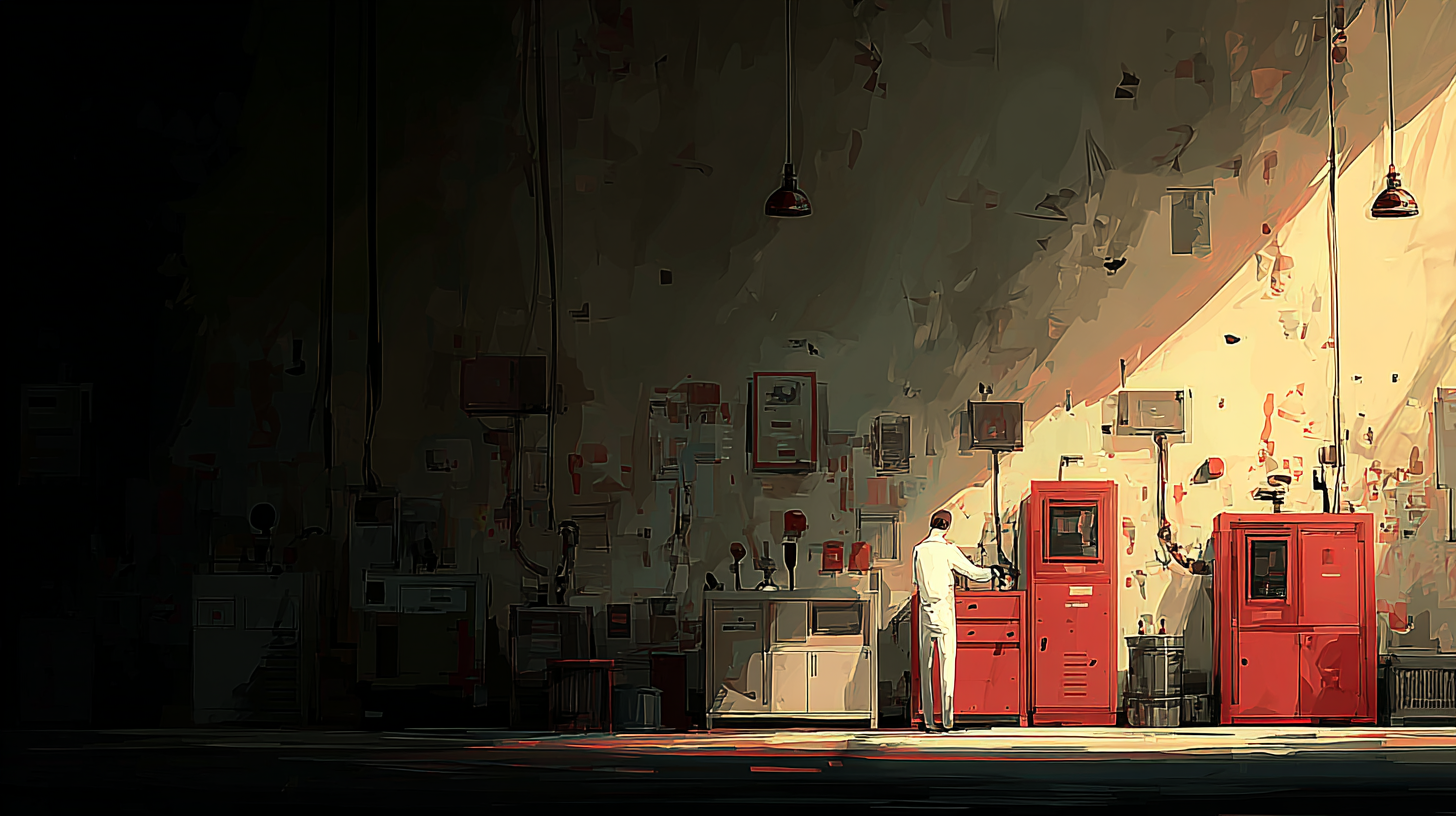
Machinery means a group of machines used to do work.
machinery は「仕事をするための機械がまとめてそろっているもの」という意味。
以下は英単語 “machinery” に関するストーリー型学習コンテンツです。まずは大枠の意味を理解して最後の文章で確認しましょう。
「machinery」の主な意味(main meaning)
| 品詞 | 主要な意味 | 英語定義(簡潔) | 英語例文(1文) | 発音記号(IPA) |
|---|---|---|---|---|
| noun | 機械類(工場などの機械のまとまり) | the machines and parts used to do work, especially in a factory or industry | The factory bought new machinery to speed up production. | /məˈʃiːnəri/ |
| noun | (比喩)仕組み、制度の動くしくみ | the system or process that makes something work | The machinery of government can be slow. | /məˈʃiːnəri/ |
「machinery」の語源(etymology)
machinery は machine(機械)に「〜の集まり」を表す -ery がついた形です。machine はフランス語を通って、もとはギリシャ語由来の「道具、しかけ」のイメージにつながります。
核となるイメージは「人の力を助けて、仕事を進めるための仕組みがまとまって動く」です。
「machinery」の類義語(synonyms)
| 類義語 | 基本的な意味 | 指定単語とのニュアンスの違い | 英語例文 |
|---|---|---|---|
| equipment | 必要な道具や装備 | machinery より広く、機械以外(道具や保護具など)も含む | The team checked the safety equipment before work. |
| apparatus | (特定目的の)装置一式 | かたい語で、実験や医療など「専門的な装置」によく使う | The lab uses a special apparatus to test materials. |
| machine | 1台の機械 | machinery は「機械のまとまり」、machine は「1つ」 | This machine stops automatically when it overheats. |
| mechanism | 仕組み、作動する構造 | 物の内部の動く「仕組み」に焦点。machinery より中身の構造寄り | The locking mechanism is simple but strong. |
| plant | 工場(設備を含む) | 場所としての工場を指しやすい。machinery は中の機械そのもの | The plant runs 24 hours a day. |
「machinery」の反義語(antonyms)
| 反義語 | 基本的な意味 | 英語例文 |
|---|---|---|
| manual labor | 手作業の労働 | Manual labor is still needed when the power is out. |
| handwork | 手仕事、手作業 | Her handwork looks careful and neat. |
「machinery」のコロケーション(collocations)
| コロケーション | 意味 | 英語例文 |
|---|---|---|
| heavy machinery | 大型機械 | Only trained workers can use heavy machinery. |
| industrial machinery | 産業用機械 | The company exports industrial machinery to Asia. |
| agricultural machinery | 農業機械 | Agricultural machinery helps farmers save time. |
| operate machinery | 機械を操作する | You must wear gloves when you operate machinery. |
| maintain machinery | 機械を整備する | We maintain machinery every Friday to prevent accidents. |
「machinery」の2項表現(binomials)
| 2項表現 | 意味 | 英語例文 |
|---|---|---|
| machinery and equipment | 機械と設備 | The budget covers machinery and equipment for the new line. |
| tools and machinery | 道具と機械 | Keep tools and machinery clean after each shift. |
英語ストーリー(english story)
On Monday morning, Mika arrived at BrightWorks Factory earlier than usual. She worked in the maintenance team, so her job was to keep the machinery running safely. The factory made small metal parts for home appliances, and even a short stop could delay many orders.
At the daily meeting, their supervisor, Mr. Tanaka, showed a simple schedule. “Today we will check the new press line,” he said. “It includes heavy machinery, so please follow the safety rules. Also, we need to maintain machinery in the packaging area after lunch.”
Mika nodded and wrote notes. Next to her, Kenta whispered, “I heard the new line has a modern machine with an automatic sensor system.” Mika smiled. “One machine is important, but the whole machinery has to work together,” she replied. “If one part fails, the entire line slows down.”
They walked to the press line with their tools and machinery ready in a cart. The cart also carried extra equipment like safety glasses, ear protection, and a small meter for checking temperature. Mika liked to be prepared, because she had seen too many accidents caused by rushed work.
When they reached the new line, a delivery engineer from another company was waiting. “Good morning,” he said. “This is the main apparatus for shaping the metal sheets. The mechanism inside is designed to reduce vibration.”
Mika listened carefully. She noticed that he used the word apparatus instead of machinery. To her, it sounded more technical, as if he was talking about one special system. She asked, “Can we open the panel and see the mechanism?” The engineer agreed and showed the inside. The moving parts were clean, and the sensor wires were neatly fixed.
Kenta pointed at a small switch. “What happens if this sensor stops?” he asked.
“The machine will stop automatically,” the engineer answered. “It is safer, but it can also stop too easily if dust builds up. That is why regular cleaning is necessary.”
Mika wrote this down. “So we should add it to our plan to maintain machinery weekly,” she said.
Before they started the test run, Mr. Tanaka reminded them, “Only certified staff can operate machinery on this line. Mika, you will stand by and watch the readings. Kenta, you will check for unusual sounds.”
The press started with a low, steady rhythm. Mika watched the numbers on the screen. At first, everything looked normal. Then she noticed the temperature rising faster than expected. She raised her hand. “Stop, please,” she said clearly.
The engineer pressed the emergency stop, and the press became silent. “What did you see?” he asked.
“The temperature near the motor is increasing too quickly,” Mika replied. “Maybe the ventilation is blocked.”
They opened the side cover. A thin plastic sheet from the packaging area had been sucked into the air vent. It was not a big problem, but if they had continued, the motor could have overheated.
Kenta exhaled. “Good catch. Without machinery, we would need manual labor to do this shaping, and it would take forever,” he said. “But with machinery, one small mistake can cause a big stop.”
Mika agreed. “That’s why we need both speed and safety,” she said. “It’s not only about production. It’s about people.”
After removing the plastic, they restarted the line. This time the temperature stayed stable. Mr. Tanaka looked relieved. “Nice work. This is exactly why maintenance matters,” he said.
At lunch, the team ate together in the break room. A poster on the wall showed photos of the company’s first workshop. Back then, the workers used simple handwork to finish each part. Mika imagined the careful hands and slow process. The parts were probably beautiful, but the orders today were much larger.
In the afternoon, Mika and Kenta moved to the packaging area to maintain machinery there. The packaging machines were smaller than the press, but they were still industrial machinery, and they could pinch fingers if someone was careless. Mika checked the belts and cleaned the rollers. Kenta tightened a loose bolt and replaced a worn wheel.
While they worked, Mr. Tanaka shared news. “The main plant plans to expand next year. If it happens, we may also get new agricultural machinery orders from a partner company,” he said. “So we should improve our inspection system now.”
Mika felt tired, but also proud. She liked being part of the machinery of the workplace, in a good way: a system where each person supported the next. When the shift ended, she looked back at the quiet factory floor. Everything was clean, the lines were ready, and tomorrow’s work could start smoothly.
As she left, she said to Kenta, “Good job today. Let’s keep our machinery and equipment in top condition.”
Kenta laughed. “Yes, and let’s keep our tools and machinery organized too. My desk is a mess.”
Mika laughed as well, and they walked out together, ready for the next day.
和訳
月曜の朝、ミカはいつもより早くブライトワークス工場に着いた。彼女は保全チームで働いていて、機械類(machinery:機械類)を安全に動かし続けるのが仕事だった。工場は家庭用電化製品の小さな金属部品を作っており、少し止まるだけでも多くの注文が遅れてしまう。
朝のミーティングで、上司の田中さんは簡単な予定を示した。「今日は新しいプレスラインを点検する。大型機械(heavy machinery:大型機械)を含むから、安全ルールを守ってくれ。それと、昼食後に包装エリアの機械を整備する(maintain machinery:機械を整備する)必要がある。」
ミカはうなずいてメモを取った。隣のケンタが小声で言った。「新しいラインには自動センサーの最新の機械(machine:1台の機械)があるらしいよ。」ミカは少し笑った。「1台の機械(machine:1台の機械)も大事だけど、機械類(machinery:機械類)全体が一緒に動かないとね。どこか一つが故障したら、ライン全部が遅くなる。」
二人は台車に道具と機械(tools and machinery:道具と機械)を用意してプレスラインへ向かった。台車には保護メガネや耳栓などの装備(equipment:装備)や、温度を調べる小さな計測器も積まれていた。ミカは準備しておくのが好きだった。急いだ作業が原因で起きた事故を、これまでに何度も見てきたからだ。
新しいラインに着くと、別会社の納入エンジニアが待っていた。「おはようございます。これが金属板を成形する主な装置(apparatus:装置一式)です。中の仕組み(mechanism:仕組み)は振動を減らす設計になっています。」
ミカは注意深く話を聞いた。彼が機械類(machinery:機械類)ではなく装置(apparatus:装置一式)という言葉を使ったのに気づいた。ミカには、より専門的で、特別な一つのシステムを指している感じがした。彼女は「パネルを開けて仕組み(mechanism:仕組み)を見てもいいですか」と尋ねた。エンジニアは同意し、中を見せてくれた。可動部はきれいで、センサーの配線も整っていた。
ケンタが小さなスイッチを指さした。「このセンサーが止まったらどうなりますか」
「機械(machine:1台の機械)は自動で止まります。安全ですが、ほこりがたまると止まりやすくもなります。だから定期的な清掃が必要です。」
ミカは書き留めた。「では、毎週の機械整備(maintain machinery:機械を整備する)計画に入れましょう。」
試運転を始める前に、田中さんが念を押した。「このラインで機械を操作する(operate machinery:機械を操作する)のは資格者だけだ。ミカは待機して数値を見てくれ。ケンタは変な音がないか確認してくれ。」
プレスが低く一定のリズムで動き始めた。ミカは画面の数値を見つめた。最初は問題なかった。だが、温度が予想より早く上がっているのに気づいた。彼女は手を上げた。「止めてください。」とはっきり言った。
エンジニアが非常停止を押し、プレスは静かになった。「何が見えましたか」と彼は聞いた。
「モーター付近の温度が上がりすぎています。換気がふさがれているのかもしれません。」
側面カバーを開けると、包装エリアから来た薄いビニール片が吸気口に入り込んでいた。大きな問題ではないが、続けていたらモーターが過熱していたかもしれない。
ケンタは息を吐いた。「よく見つけたね。機械類(machinery:機械類)がなければ、この成形は手作業の労働(manual labor:手作業の労働)でやるしかなくて、終わらないよ。でも機械類(machinery:機械類)があると、小さなミスが大きな停止につながるんだ。」
ミカは同意した。「だからスピードと安全の両方が必要。生産だけの話じゃない。人のためでもある。」
ビニールを取り除いた後、彼らはラインを再起動した。今度は温度は安定した。田中さんはほっとした表情を見せた。「よくやった。これが保全の大切さだ。」
昼食では、チームは休憩室で一緒に食べた。壁のポスターには会社の最初の作業場の写真が貼られていた。当時は、作業者が一つ一つを丁寧な手仕事(handwork:手仕事)で仕上げていた。ミカは、慎重な手つきとゆっくりした工程を想像した。部品は美しかっただろうが、今の注文量ははるかに多い。
午後、ミカとケンタは包装エリアへ移動し、機械を整備する(maintain machinery:機械を整備する)作業をした。包装機はプレスより小さいが、それでも産業用機械(industrial machinery:産業用機械)であり、不注意なら指をはさむ危険がある。ミカはベルトを点検し、ローラーを清掃した。ケンタは緩んだボルトを締め、すり減った車輪を交換した。
作業中、田中さんがニュースを話した。「本社工場(plant:工場)は来年、拡張を計画している。実現すれば、提携先から農業機械(agricultural machinery:農業機械)の注文も入るかもしれない。だから今のうちに点検体制を良くしておこう。」
ミカは疲れていたが、誇らしくもあった。彼女は職場の良い意味での仕組みの一部だと感じた。つまり、一人ひとりが次の人を支えるシステムだ。勤務が終わると、彼女は静かな工場フロアを振り返った。すべてがきれいで、ラインは準備完了で、明日の仕事もスムーズに始められる。
帰り際、彼女はケンタに言った。「今日はお疲れさま。機械と設備(machinery and equipment:機械と設備)を最高の状態に保とうね。」
ケンタは笑った。「うん。それと道具と機械(tools and machinery:道具と機械)も整理しないと。僕の机、ぐちゃぐちゃだ。」
ミカも笑い、二人は一緒に外へ出た。次の日に備えて。
「machinery」のQ&A
- Qmachinery はどんな意味ですか
- A
machinery は工場などで使う機械がまとめてそろっているものを指します
- Qmachinery は machine とどう違いますか
- A
machine は1台の機械で、machinery は機械全体のまとまりを指します
- Qmachinery は数えられますか
- A
ふつう machinery は数えられない名詞として使い、many machineries とは言いません
- Qequipment と machinery の違いは何ですか
- A
equipment は機械以外の道具や装備も含む広い言葉で、machinery は主に機械を指します
- Qapparatus と machinery の使い分けは何ですか
- A
apparatus はかたい言い方で、実験や医療などの特定目的の装置一式に使われやすいです
- Qmechanism と machinery の違いは何ですか
- A
mechanism は中の動く仕組みや構造に注目し、machinery は機械のまとまりに注目します
- Qmachinery の反対っぽい言い方はありますか
- A
manual labor や handwork のように手作業を表す語が、machinery と対比で使われます
- Qheavy machinery はどんな場面で使いますか
- A
heavy machinery は建設や工場などの大型で強い機械を言うときに使います
- Qoperate machinery はどういう意味ですか
- A
operate machinery は機械を操作するという意味で、安全ルールと一緒に使われやすいです
- Qmachinery and equipment はどんなときに使う表現ですか
- A
機械と設備をまとめて言いたいときに machinery and equipment を使います


コメント