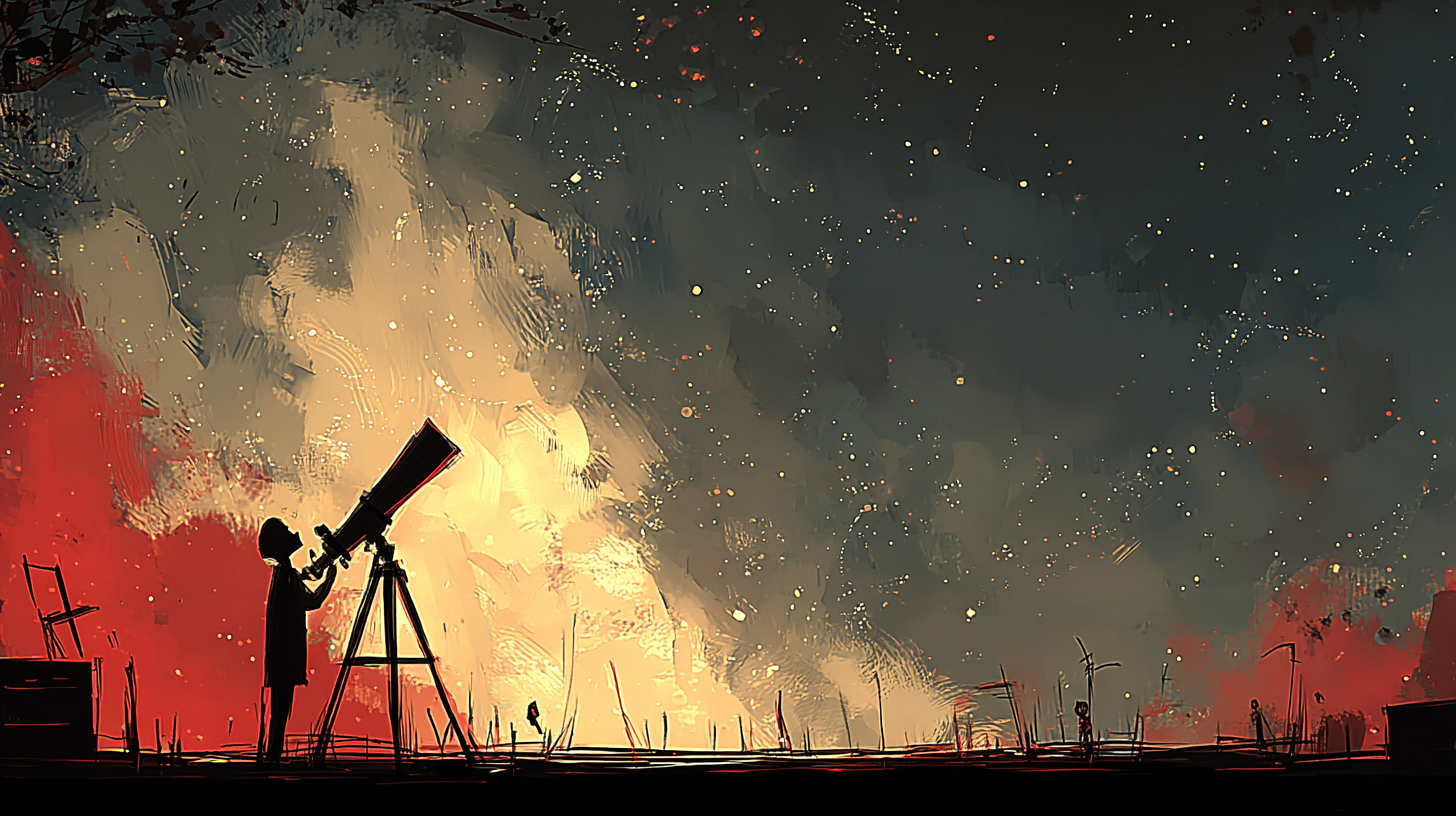
An astronomer is a person who studies space and stars.
astronomer は、星や宇宙を研究する人のこと。
以下は英単語 “astronomer” に関するストーリー型学習コンテンツです。まずは大枠の意味を理解して最後の文章で確認しましょう。
「astronomer」の主な意味(main meaning)
| 品詞 | 意味 | 英語定義 | 例文 | 発音記号(IPA) |
|---|---|---|---|---|
| noun | 天文学者 | a scientist who studies stars, planets, and space | The astronomer explained the new images of a distant galaxy. | /əˈstrɑːnəmər/ |
「astronomer」の語源(etymology)
ギリシャ語の astro(星)と nomos(法則・決まり)に由来する語がもとになっています。
核となるイメージは「星の決まりごとを見つける人」です。星をただ眺めるのではなく、動きやしくみのルールを調べる感じです。
「astronomer」の類義語(synonyms)
| 類義語 | 基本的な意味 | 指定単語とのニュアンスの違い | 英語例文 |
|---|---|---|---|
| astrophysicist | 宇宙物理学者 | astronomer よりも、物理の理論や計算で宇宙を説明する感じが強い | The astrophysicist built a model to explain black holes. |
| stargazer | 星を眺める人 | 研究者というより、趣味で星を見る人に近い | We became stargazers during the summer camping trip. |
| researcher | 研究者 | 分野が広い言葉で、天文学に限らない | The researcher collected data for the project. |
| scientist | 科学者 | 研究者全般で、天文学専門とは限らない | The scientist presented her findings at the meeting. |
| observer | 観測者 | 研究の中でも、特に「観測する役割」に焦点が当たる | The observer noted a sudden change in the sky. |
「astronomer」の反義語(antonyms)
| 反義語 | 基本的な意味 | 例文 |
|---|---|---|
| layperson | 専門家ではない一般の人 | As a layperson, I needed a simple explanation of the telescope data. |
| amateur | 職業ではなく趣味でやる人 | He is an amateur who studies the night sky on weekends. |
「astronomer」のコロケーション(collocations)
| コロケーション | 基本的な意味 | 例文 |
|---|---|---|
| professional astronomer | 職業の天文学者 | A professional astronomer checked the schedule for tonight’s observation. |
| radio astronomer | 電波天文学者 | The radio astronomer analyzed signals from deep space. |
| astronomer at an observatory | 観測所の天文学者 | She works as an astronomer at an observatory near the mountains. |
| aspiring astronomer | 天文学者を目指す人 | He is an aspiring astronomer who reads science books every day. |
| astronomer on duty | 当番の天文学者 | The astronomer on duty responded to the alert quickly. |
「astronomer」の2項表現(binomials)
| 2項表現 | 基本的な意味 | 例文 |
|---|---|---|
| stars and planets | 星と惑星 | In the training, we reviewed stars and planets using new charts. |
| research and development | 研究開発 | Our team discussed research and development during the morning meeting. |
| facts and figures | 事実と数値 | The report was full of facts and figures about the new instrument. |
英語ストーリー(english story)
Mika arrived at the observatory office at 8:30 a.m. and put her laptop on the desk. She was a professional astronomer, and today she was also the astronomer on duty. The night team had left a short note: “Possible unusual signal detected. Please review.”
Before opening the data, Mika joined the morning meeting in the small conference room. Mr. Tanaka, the manager, pointed to the whiteboard. “We need clear facts and figures for the visiting teachers next week,” he said. “They want to understand what we do here. Let’s keep it simple.”
Aya, a researcher from another department, raised her hand. “Should we focus on the new receiver system? It’s part of our research and development plan.”
Mika nodded. “Yes, and we can explain how a radio astronomer works differently from someone who uses optical telescopes. Many people think we only take pretty pictures, but a lot of our work is careful measurement.”
After the meeting, Mika returned to her desk and opened the alert file. She checked the time stamps, compared the graphs, and took a deep breath. The signal looked real, but it could still be noise. She remembered how often science required trial and error, even though the public did not always see that side.
Just then, Ken, an aspiring astronomer who was doing an internship, walked in carrying a box of printed charts. “Good morning, Mika,” he said. “I organized the charts about stars and planets for the teachers. Is there anything else I can help with?”
Mika smiled. “Yes. Could you bring me the calibration logs from last night? I want to confirm the instrument status. As a layperson, the teachers might not notice small details, but we must be accurate.”
Ken hurried away. While she waited, Mika messaged Dr. Sato, an astrophysicist on the theory team. “Can you look at this candidate signal when you have time? If it’s related to a known event, your model might help.”
A few minutes later, Ken returned with the logs. Mika scanned them line by line. The temperature changes were normal, and the timing matched the signal. “Interesting,” she said quietly.
Aya stopped by Mika’s desk. “How’s the alert?”
“It’s promising,” Mika said, “but I don’t want to overreact. An observer can mistake patterns if we rush. I’ll double-check with another dataset.”
Aya leaned closer to the screen. “Sometimes I feel like an amateur when I look at your graphs,” she joked.
Mika laughed. “Don’t say that. You’re a scientist, and you have strong research skills. We just specialize in different things.”
By noon, Mika had compared three different recordings. The signal appeared again, weak but consistent. Dr. Sato replied: “If the frequency is stable, it might match a known source. I’ll run calculations this afternoon.”
Mika wrote a short summary for Mr. Tanaka. She kept the language careful: “Possible detection; needs confirmation.” She also added a plan for the teachers’ visit: a simple explanation of what an astronomer at an observatory does, plus a short activity. Ken suggested a safe outdoor session where visitors could learn basic sky directions. “We could even do a quick stargazer moment after sunset,” he said, “just to make it memorable.”
“That’s a nice idea,” Mika said. “We can show them the real work and also let them enjoy the sky.”
In the afternoon, the team gathered again. Mika presented her findings with clear charts, and she explained what they knew and what they did not know. Mr. Tanaka looked relieved. “This is exactly what I wanted,” he said. “Clear, honest, and understandable.”
As Mika closed her laptop, she felt tired but satisfied. Being an astronomer was not only about discovering something new. It was also about steady work, careful checks, and communicating well, so that people outside the field could share the wonder without confusion.
和訳
ミカは午前8時30分に観測所のオフィスに着き、机にノートパソコンを置いた。彼女は職業の天文学者(professional astronomer)で、今日は当番の天文学者(astronomer on duty)でもあった。夜勤チームが短いメモを残していた。「いつもと違う信号の可能性。確認してください。」
データを開く前に、ミカは小さな会議室で朝のミーティングに参加した。田中さんはホワイトボードを指した。「来週来る先生たちのために、はっきりした事実と数値(facts and figures)を用意したい」と彼は言った。「私たちの仕事がわかるように、わかりやすくしよう。」
別部署の研究者(researcher)であるアヤが手を挙げた。「新しい受信システムを中心にしますか。研究開発(research and development)の計画の一部ですし。」
ミカはうなずいた。「はい。それに、電波天文学者(radio astronomer)がどう働くかを説明できます。多くの人は、私たちがきれいな写真を撮るだけだと思いがちですが、実際は細かい測定が多いです。」
会議の後、ミカは席に戻り、警告ファイルを開いた。時刻の記録を確認し、グラフを比べ、深呼吸した。信号は本物に見えたが、まだノイズの可能性もあった。世間には見えにくいが、科学は試行錯誤(trial and error)が多いことを彼女は思い出した。
ちょうどそのとき、インターンとして来ている天文学者志望の人(aspiring astronomer)であるケンが、印刷した図表の箱を持って入ってきた。「おはようございます、ミカさん。星と惑星(stars and planets)についての図表を先生たち用にまとめました。ほかに手伝えることはありますか。」
ミカは笑って言った。「はい。昨夜の校正ログを持ってきてくれる? 装置の状態を確認したいの。先生たちは一般の人(layperson)として細かい違いに気づかないかもしれないけれど、私たちは正確でないといけないから。」
ケンは急いで取りに行った。待っている間、ミカは理論チームの宇宙物理学者(astrophysicist)である佐藤先生にメッセージを送った。「この候補の信号を時間があるときに見てもらえますか。既知の現象に関係するなら、モデルが助けになるかもしれません。」
数分後、ケンがログを持って戻ってきた。ミカは1行ずつ確認した。温度変化は正常で、タイミングも信号と一致していた。「面白い」と彼女は小さく言った。
アヤがミカの机に立ち寄った。「警告はどう?」
「期待はできるけど、過剰に反応したくない」とミカは言った。「観測する人(observer)は、急ぐとパターンを見間違えることがある。別のデータでも確認するよ。」
アヤは画面に近づいた。「あなたのグラフを見ると、自分が趣味レベルの人(amateur)みたいに感じることがある」と彼女は冗談を言った。
ミカは笑った。「そんなこと言わないで。あなたは科学者(scientist)だし、研究の力も強い。ただ専門が違うだけだよ。」
正午までに、ミカは3つの別の記録を比べた。信号は弱いが一定して、また現れた。佐藤先生から返信が来た。「周波数が安定しているなら、既知の発生源と一致するかもしれない。午後に計算する。」
ミカは田中さんに短い要約を書いた。言い方は慎重にした。「検出の可能性。確認が必要。」そして先生たちの訪問計画も付け加えた。観測所の天文学者(astronomer at an observatory)が何をするかを簡単に説明し、短い体験も入れる。ケンは安全な屋外セッションを提案し、来訪者が空の基本的な方角を学べるようにしたいと言った。「日没後に、ちょっと星を見る時間(stargazer)っぽい時間も作れます。思い出になりますし。」
「いいね」とミカは言った。「本当の仕事も見せて、空も楽しんでもらおう。」
午後、チームはまた集まった。ミカはわかりやすい図で結果を示し、わかっていることと、まだわかっていないことを説明した。田中さんは安心した顔をした。「これが欲しかった。はっきりしていて、正直で、わかりやすい。」
ミカがノートパソコンを閉じると、疲れていたが満足していた。天文学者(astronomer)であることは、新発見だけではない。地道な作業、丁寧な確認、そして専門外の人にも混乱なく驚きを共有できるように伝えることでもあるのだ。
「astronomer」のQ&A
- Qastronomer はどんな意味ですか
- A
astronomer は星や宇宙を研究する天文学者のことです
- Qastronomer と scientist はどう違いますか
- A
scientist は科学者全般で、astronomer は天文学に専門がしぼられています
- Qastronomer と researcher はどう使い分けますか
- A
researcher は分野を言わない研究者で、astronomer は宇宙や星を研究する人だと分かる言い方です
- Qastronomer と astrophysicist の違いは何ですか
- A
astrophysicist は物理の理論や計算の色が強く、astronomer は観測や研究全体を広く指せます
- Qstargazer は astronomer と同じですか
- A
stargazer は趣味で星を見る人に近く、astronomer は仕事として研究する人です
- Qobserver は astronomer の代わりに使えますか
- A
observer は観測する役に焦点があり、astronomer は天文学の専門家全体を表します
- Qastronomer の反対の言い方はありますか
- A
完全な反対語は少ないですが、専門家ではない layperson や職業ではない amateur を対比として使えます
- Qprofessional astronomer はどういうときに使いますか
- A
趣味ではなく職業として天文学をしていることをはっきり言いたいときに使います
- Qastronomer on duty はどういう意味ですか
- A
当番として対応する担当者のことで、観測所などでその日の担当の天文学者を言うときに使います
- Qstars and planets のような言い方はよく使いますか
- A
はい、stars and planets は自然なセット表現で、宇宙の基本をまとめて言いたいときによく使います

コメント