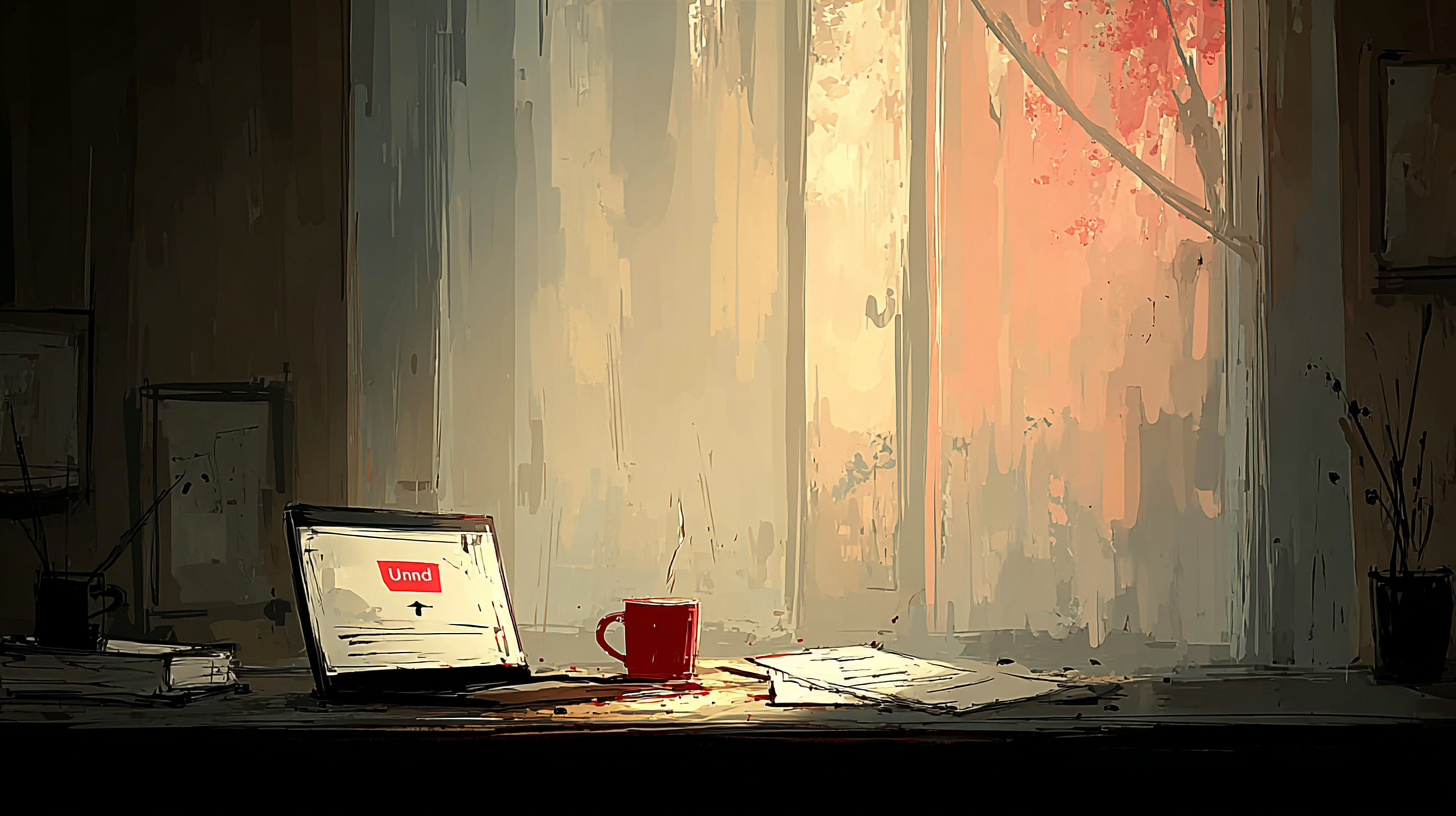
Undo means you make an action go back, like it never happened.
undoは、やったことをなかったことにして元に戻すことだよ(ボタンを外す意味もある)。
以下は英単語 “undo” に関するストーリー型学習コンテンツです。まずは大枠の意味を理解して最後の文章で確認しましょう。
「undo」の主な意味(main meaning)
| 品詞 | 主要な意味 | 英語定義(簡潔) | 英語例文(1文) | 発音記号(IPA) |
|---|---|---|---|---|
| 動詞 | 元に戻す、取り消す | to reverse an action so it is as if it never happened | I clicked the wrong button, so I tried to undo it. | /ʌnˈduː/ |
| 動詞 | ほどく、外す(ボタン・結び目など) | to unfasten or loosen something that was fastened | He undid his tie before the meeting started. | /ʌnˈduː/ |
| 名詞 | 取り消し(ソフトのUndo機能) | the command or function that reverses the last action | Use Undo if you delete the wrong line. | /ˈʌn.duː/ |
「undo」の語源(etymology)
undo は un-(反対にする)+ do(する) からできた、とても素直な単語です。
核となるイメージは「いったんやったことを、逆向きにたどって元に戻す」です。
だから、ミスの取り消しにも、結んだものをほどくことにも使えます。
「undo」の類義語(synonyms)
| 類義語 | 基本的な意味 | 指定単語とのニュアンスの違い(中学生向け日本語) | 英語例文 |
|---|---|---|---|
| reverse | 逆にする | undoは「なかったことにする」感じ。reverseは「向き・順番・流れを逆にする」感じ。 | The company reversed its decision. |
| cancel | 取り消す | cancelは「予定や契約をやめる」場面が多い。undoは「作業や行動を元に戻す」。 | We had to cancel the meeting. |
| rectify | 正す、直す | rectifyは「間違いを正しい状態に直す」。undoは「元に戻す」なので、必ずしも正しくするとは限らない。 | She rectified the error in the report. |
| unravel | ほどく、解きほぐす | unravelは「糸・問題」を少しずつ解いていく感じ。undoはもっと直接的に「元に戻す」。 | The mystery began to unravel. |
| unfasten | 外す、ほどく | unfastenは「留め具を外す」ことに特化。undoはそれに加えて「取り消し」全般にも使える。 | Please unfasten your seat belt. |
「undo」の反義語(antonyms)
| 反義語 | 基本的な意味 | 英語例文 |
|---|---|---|
| do | する、実行する | First, do the task carefully. |
| fasten | 留める、固定する | Please fasten your seat belt. |
「undo」のコロケーション(collocations)
| コロケーション | 意味 | 英語例文 |
|---|---|---|
| undo a mistake | ミスを取り消す | I tried to undo a mistake in the spreadsheet. |
| undo the damage | 被害を元に戻す | A quick apology can’t always undo the damage. |
| undo a button | ボタンを外す | She undid a button on her jacket. |
| undo changes | 変更を取り消す | You can undo changes with one shortcut key. |
| undo your seat belt | シートベルトを外す | He undid his seat belt and got out. |
「undo」の2項表現(binomials)
| 2項表現(A and B) | 意味 | 英語例文 |
|---|---|---|
| trial and error | 試行錯誤 | We improved the plan by trial and error. |
| pros and cons | 長所と短所 | Let’s list the pros and cons before we decide. |
| back and forth | 行ったり来たり | The emails went back and forth all morning. |
英語ストーリー(english story)
On Monday morning, Mika arrived at the office early to finish a proposal for a new client. The team had promised to send the final version by noon, and the client was known to be strict about details. Mika opened the file and started making small edits. She liked working quietly, but today her desk was surrounded by sticky notes, coffee cups, and reminders about deadlines.
At 9:10, her manager, Mr. Sato, walked in and said, “We need to talk about the meeting schedule. The client might ask us to change the time.”
Mika nodded and replied, “I’ll check the calendar. We can cancel the afternoon meeting if we have to.”
Mr. Sato frowned. “Before we cancel anything, let’s look at the pros and cons. If we cancel, they may feel we are not prepared. If we keep it, we may not finish the proposal.”
Mika agreed. She opened the calendar app and compared the times. While she was switching between windows, she accidentally selected a large section of the proposal and pressed the delete key. A whole paragraph disappeared. For a second, her mind went blank. Then she remembered the simplest solution.
“Please tell me I can undo that,” she whispered.
She pressed the shortcut to undo changes, and the missing paragraph came back immediately. Mika let out a small sigh. It felt like rewinding time. In her head, she pictured her action moving in reverse, like a movie played backward.
Mr. Sato noticed her expression. “Everything okay?”
“Yes,” Mika said. “I just deleted the wrong part, but I undid it.”
“Good,” he said. “Still, be careful. Sometimes we can’t undo the damage once an email is sent.”
That sentence stayed with her. She had seen mistakes turn into long problems, especially in client communication. Last month, a rushed message had caused confusion, and the team had spent days trying to rectify the situation. They had exchanged messages back and forth until everyone finally agreed on the correct plan.
At 9:40, Mika’s coworker Ken arrived, looking tired. He loosened his tie and undid the top button of his shirt. “I ran for the train,” he said. “I’m not ready for Monday.”
Mika smiled. “Sit down. We’ll survive by trial and error.”
Ken opened his laptop and asked, “Where are we with the proposal?”
Mika shared her screen. “I’m checking the numbers now. If anything looks wrong, we can reverse the change or undo it.”
Ken leaned closer. “I like ‘undo’ better. ‘Reverse’ sounds too big, like we are changing the whole direction.”
Mika laughed. “True. Undo is like fixing a small mistake before it becomes a big one.”
They worked for an hour. Mika checked the budget table line by line. Ken reviewed the wording for a key paragraph. At 10:55, he said, “This sentence is unclear. It might unravel the logic of the whole section.”
Mika read it again. He was right. If the client misunderstood, the team could lose trust. She rewrote the sentence in simpler English. Then she saved the file and sent it to Mr. Sato for review.
A few minutes later, Mr. Sato replied, “Looks good. But please remove the old chart and insert the updated one.”
Mika opened the chart folder and dragged the new file into the document. At the same moment, Ken’s phone rang. He answered quickly, then covered the microphone and said, “The client is on the line. They want to move the meeting earlier.”
Mika’s heart jumped. “Earlier? We’re almost done, but not fully.”
Ken spoke into the phone again, then nodded. “They can do 11:30 instead of 14:00.”
Mr. Sato stepped over. “Okay. We won’t cancel. We’ll adjust. Mika, send the final proposal in ten minutes.”
Mika focused on the last tasks. She removed the old chart, inserted the new one, and checked the formatting. She almost pressed “Send” before finishing, but she stopped herself. She remembered Mr. Sato’s warning: once an email goes out, you can’t always undo the damage. So she read everything one more time.
At 11:15, Ken stood up. “Let’s go to the meeting room.”
Mika saved the file again and attached it to the email, but she waited. She checked the recipient list carefully. Then she sent it.
As they walked, Mika felt calm. She could not control everything, but she could control her habits. In the elevator, Ken fastened his bag and said, “Today went better than expected.”
Mika replied, “Because we caught mistakes early. Undo is small, but it saves us.”
At the meeting room door, she took a deep breath. The client arrived, smiling politely. Mika sat down, ready to explain the proposal. Whatever happened next, she knew she had done her best, and that was something no one needed to undo.
和訳
月曜日の朝、ミカは新しい取引先の提案書を仕上げるために早くオフィスに来た。チームは正午までに最終版を送ると約束していて、その取引先は細部に厳しいことで知られていた。ミカはファイルを開き、小さな修正を始めた。静かに作業するのが好きだが、今日は付せんやコーヒーカップ、締め切りのメモが机の周りに散らばっていた。
9時10分、佐藤さんが入ってきて言った。「打ち合わせの予定について話そう。取引先が時間変更を求めるかもしれない」
ミカはうなずいて答えた。「カレンダーを確認します。必要なら午後の打ち合わせを取り消せます(cancel:取り消す)」
佐藤さんは顔をしかめた。「取り消す前に(cancel:取り消す)、長所と短所(pros and cons:長所と短所)を見よう。取り消したら(cancel:取り消す)、準備不足だと思われるかもしれない。続けたら、提案書が間に合わないかもしれない」
ミカは同意した。カレンダーアプリを開いて時間を比べた。ウィンドウを切り替えているとき、誤って提案書の大きな部分を選択し、削除キーを押してしまった。段落が丸ごと消えた。一瞬、頭が真っ白になった。だが、いちばん簡単な解決策を思い出した。
「お願い、あれを元に戻せる(undo:元に戻す)よね」と彼女は小声で言った。
変更を取り消す(undo changes:変更を取り消す)ショートカットを押すと、消えた段落はすぐ戻ってきた。ミカは小さく息をついた。時間を巻き戻したようだった。頭の中では、行動が逆向きに進む(reverse:逆にする)映像を思い浮かべた。映画を逆再生するように。
佐藤さんが表情に気づいた。「大丈夫?」
「はい」とミカは言った。「間違って消しましたけど、元に戻しました(undo:元に戻す)」
「よかった」と佐藤さんは言った。「ただ、気をつけて。メールを送った後は、被害を元に戻せない(undo the damage:被害を元に戻す)こともあるから」
その言葉がミカの心に残った。ミスが長い問題になるのを見たことがある。特に取引先との連絡では。先月、急いで送ったメッセージが混乱を生み、チームは状況を正す(rectify:正す)ために何日も使った。メールが朝からずっと行ったり来たりし(back and forth:行ったり来たり)、ようやく全員が正しい計画に同意したのだ。
9時40分、同僚のケンが疲れた様子で来た。彼はネクタイをゆるめ、シャツのいちばん上のボタンを外した(undo a button:ボタンを外す)。「電車に間に合うよう走った」と彼は言った。「月曜の準備ができてない」
ミカは笑った。「座って。試行錯誤(trial and error:試行錯誤)で乗り切ろう」
ケンはノートパソコンを開いて尋ねた。「提案書はどこまで?」
ミカは画面共有した。「いま数字を確認してる。変なところがあれば、変更を逆にする(reverse:逆にする)か、元に戻す(undo:元に戻す)かできる」
ケンは身を乗り出した。「『undo』のほうが好きだな。『reverse』は大きすぎる感じで、方向全体を変えるみたいだ」
ミカは笑った。「確かに。undoは、小さなミスを大きくなる前に直す感じだね」
二人は1時間作業した。ミカは予算表を1行ずつ確認し、ケンは重要な段落の表現を見直した。10時55分、彼が言った。「この文、わかりにくい。ここが崩れると(unravel:ほどけて崩れる)、この章全体の筋が崩れるかもしれない」
ミカはもう一度読んだ。彼の言う通りだった。取引先が誤解したら、信頼を失いかねない。彼女はもっと簡単な英語に書き直した。そして保存し、佐藤さんにレビュー用に送った。
数分後、佐藤さんから返事が来た。「いいね。ただ、古いグラフを消して、新しいグラフに差し替えて」
ミカはグラフのフォルダを開き、新しいファイルを文書に入れた。その瞬間、ケンの電話が鳴った。彼はすぐ出て、口元を押さえて言った。「取引先が電話だ。打ち合わせを早めたいって」
ミカの心臓が跳ねた。「早める? ほぼ終わってるけど、完全じゃない」
ケンはまた電話で話し、うなずいた。「14時じゃなくて11時30分ならいけるって」
佐藤さんが近づいた。「よし。取り消さない(cancel:取り消す)で調整しよう。ミカ、10分で最終版を送って」
ミカは最後の作業に集中した。古いグラフを消し、新しいグラフを入れ、体裁を確認した。完成前に送信を押しそうになったが、手を止めた。佐藤さんの警告を思い出した。メールを送ったら、被害を元に戻せない(undo the damage:被害を元に戻す)ことがある。だから彼女はもう一度、全部を読み直した。
11時15分、ケンが立ち上がった。「会議室へ行こう」
ミカはもう一度保存し、メールに添付したが、すぐには送らなかった。宛先リストを注意深く確認した。それから送信した。
歩きながら、ミカは落ち着いていた。すべてをコントロールできるわけではないが、習慣はコントロールできる。エレベーターでケンはバッグを留め(fasten:留める)、「今日は思ったよりうまくいったな」と言った。
ミカは答えた。「早めにミスを見つけたから。undoは小さいけど、私たちを助けてくれる」
会議室の扉の前で、彼女は深呼吸した。取引先が丁寧に笑って入ってきた。ミカは座り、提案書を説明する準備をした。この先どうなっても、ベストを尽くした。そのことを元に戻す(undo:元に戻す)必要はない、と彼女は思った。
「undo」のQ&A
- Qundoってどういう意味?
- A
undoは「やったことを元に戻す、取り消す」という意味だよ。
- Qundoは動詞と名詞で意味が違うの?
- A
動詞は「元に戻す」、名詞はパソコンなどの「取り消し機能」のことが多いよ。
- Qundoはどんな場面でよく使う?
- A
ミスを直したいときや、操作をやり直したいときに使うよ。
- Qreverseとundoはどう違う?
- A
undoは「なかったことにする」感じで、reverseは「向きや流れを逆にする」感じだよ。
- Qcancelとundoはどう違う?
- A
cancelは予定や契約をやめることで、undoは作業や行動を元に戻すことだよ。
- Qrectifyとundoはどう使い分ける?
- A
rectifyは「正しい状態に直す」で、undoは「元に戻す」なので目的が少し違うよ。
- Qundo a mistakeはどんな意味?
- A
undo a mistakeは「ミスを取り消す、ミスを元に戻す」という意味だよ。
- Qundo changesは何をする操作?
- A
undo changesは「した変更を前の状態に戻す」という意味だよ。
- Qundo a buttonはどんなときに使う?
- A
undo a buttonは「ボタンを外す」で、服やジャケットのボタンに使うよ。
- Qpros and consやtrial and errorはストーリーでどう役立つ?
- A
pros and consは判断の材料になり、trial and errorは仕事を改善する進め方として役立つよ。


コメント